
Since the nose sits in the center of the face, it tends to draw the eye as a focal point. With the nose as the center, the face is divided into left and right sides, and if it is not straight but instead bent, the overall impression can look unrefined. That is why you can find reviews of A-TOP Plastic Surgery discussing deviated nose revision surgery to correct left-right symmetry and improve the face to a straighter impression. There are various reasons for nose revision surgery and many different types, so it is important to analyze the cause and improve it accordingly.

What causes a deviated nose?
Some people naturally have a crooked nose, while in other cases the nose becomes crooked after plastic surgery. First, as a person grows from childhood into adolescence and adulthood, if the cartilage overgrows, the nose can become bent. There is a structure called the septal cartilage that divides the left and right sides of the nose, and because it is not bone but a slightly soft, elastic tissue, it can bend.
As you grow, if the nose takes a blow or suffers trauma, the septal cartilage can become distorted and the nose can become deviated. The nasal bones can also bend during the process of breaking and healing, so some people need deviated nose revision surgery after an operation.
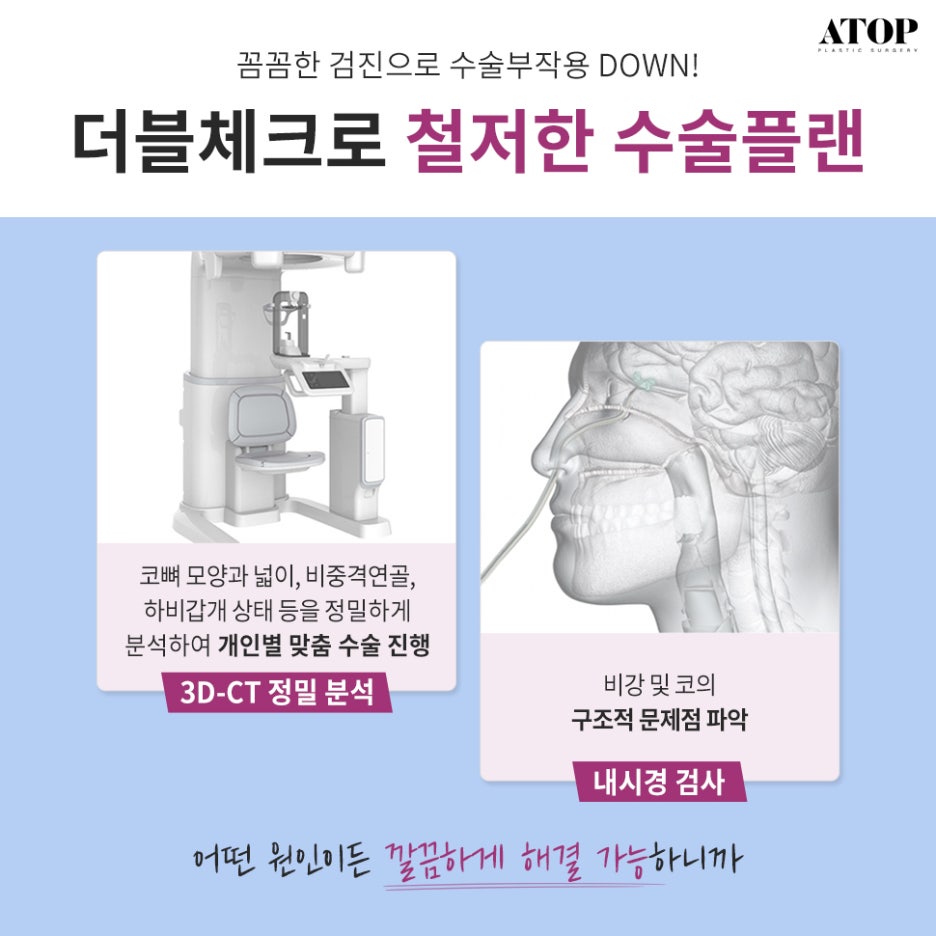
The cause of a deviated nose differs from person to person, and the degree of deviation also varies. Therefore, the cause must be analyzed and the internal structure of the nose must be accurately understood before planning the first surgery or a deviated nose revision surgery. Also, while the cosmetic aspect is an issue, a crooked nose can also cause functional discomfort, so it may need to be corrected surgically.
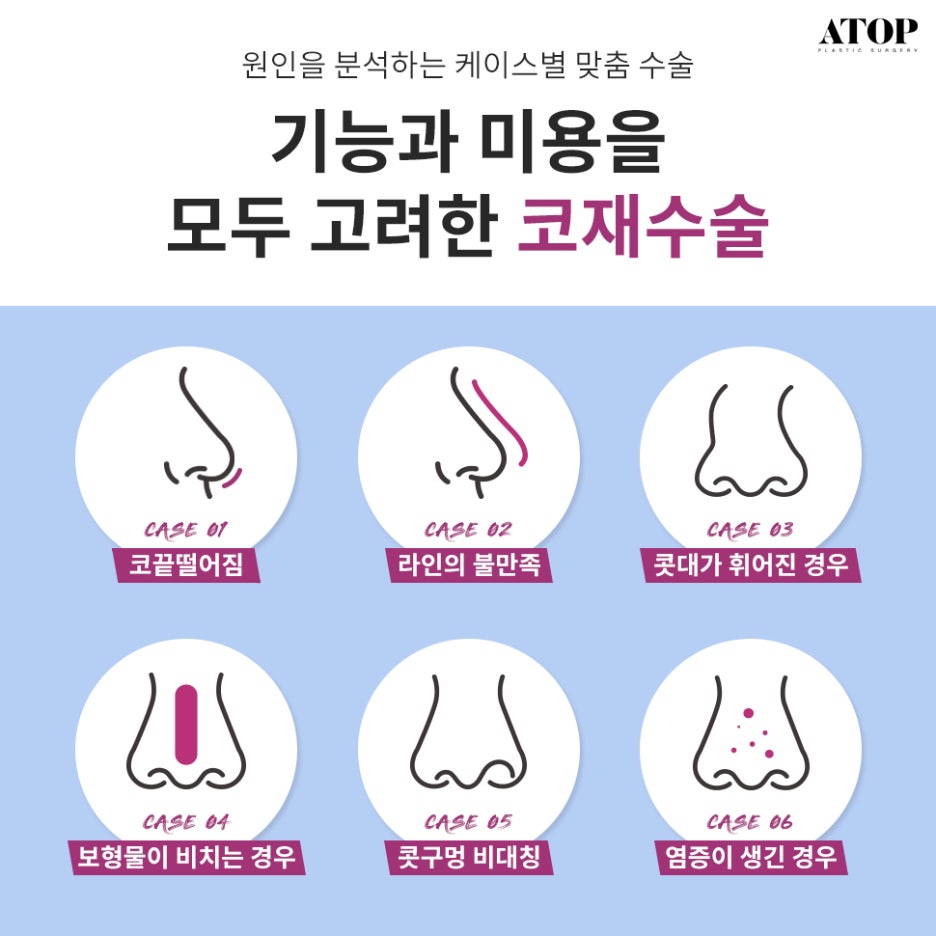
Different types of nose revision surgery
If the result of a previous surgery did not turn out as desired and is unsatisfactory, or if a problem has occurred, then not only deviated nose revision surgery but also the appropriate type of revision surgery should be performed again. In particular, if the surgery is causing functional problems with the nose or the shape itself has been deformed, it should not be left as is. Not only will stress increase, but the nose may also fail to properly perform functions such as smell and breathing.
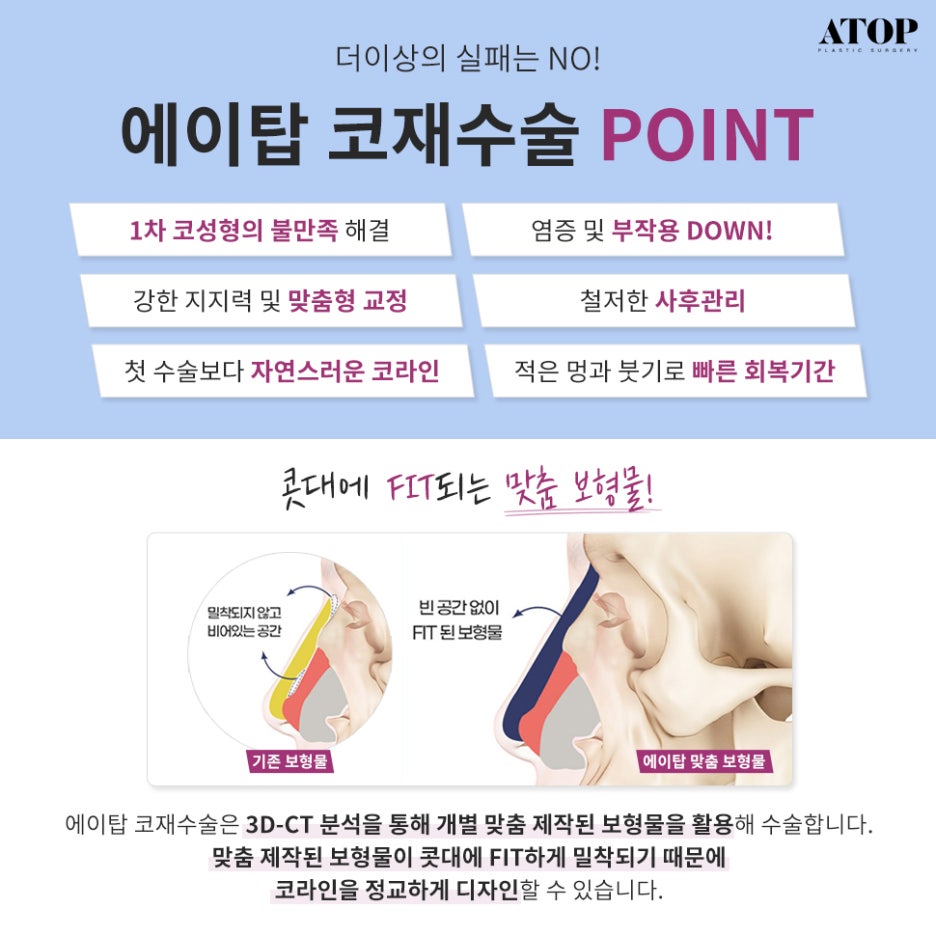
In cases requiring nose revision surgery, such as deviated nose revision surgery or implant visibility, the inserted implant may be the cause. This can be improved through revision surgery that repositions or removes the implant.
A representative problematic type is contracture nose. As the capsule surrounding the implant thickens and inflammation develops, the nose gradually turns up and its shape becomes deformed. Even when viewed from the front, the nostrils may be visible, the tip of the nose may be lifted, and breathing inside the nose may feel uncomfortable. Since this is a type that makes revision surgery unavoidable, it is necessary to carefully analyze the problem and reconstruct it again.
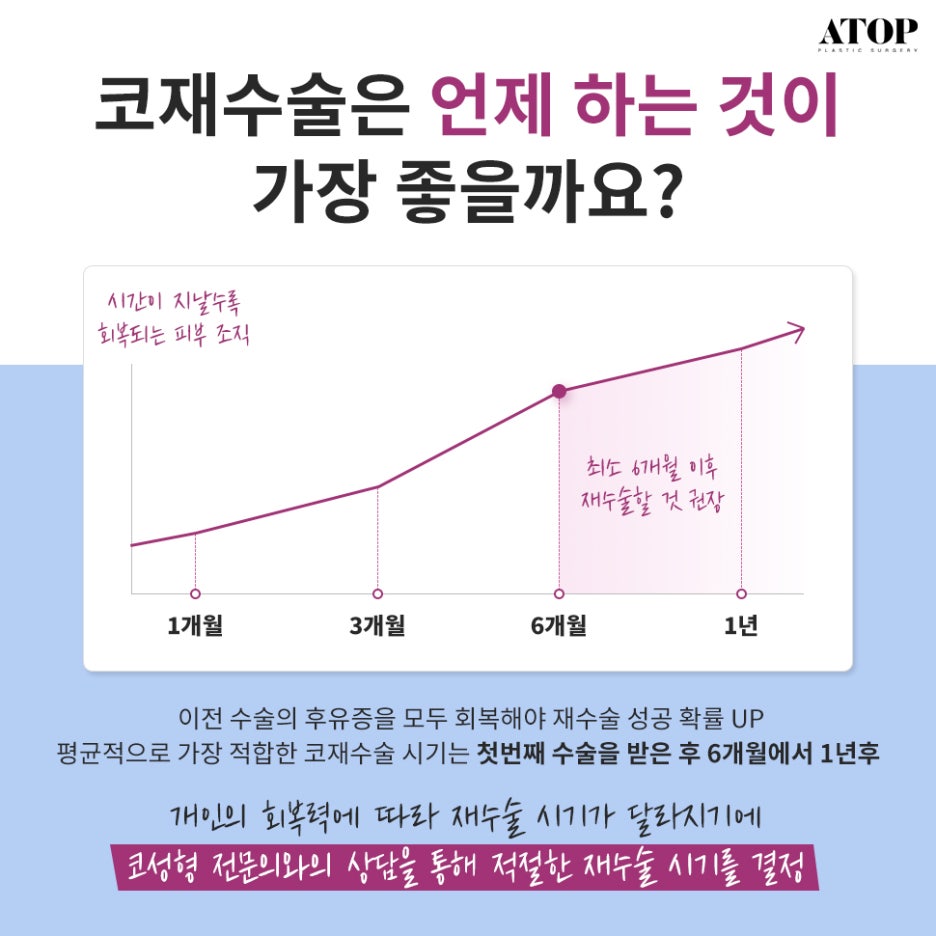
When should nose revision surgery be done?
Revision surgery is more difficult than the first surgery. In plastic surgery, especially when performing a second operation such as deviated nose revision surgery, it is important to analyze the problems from the previous surgery and make a plan so that the same issues do not happen again.
If inflammation is severe and an immediate problem is apparent, visit the clinic for a consultation and plan the revision surgery according to the appropriate timing. Otherwise, in most cases, surgery should be performed again after at least 6 months have passed since the previous operation. Because the internal tissue has not yet stabilized, making another incision and performing surgery again can cause problems.
The average time for the tissue to regenerate and stabilize softly after the previous surgery is about 6 months. Having surgery at this time can help ensure stability and reduce side effects. Please allow for a period of 6 months to 1 year, receive consultations during that time, and carefully decide on revision surgery at an appropriate time so that the same problems do not recur.
Improving the philtrum as well with triple-line rhinoplasty
When considering revision surgery, of course the existing nasal bridge and nasal tip shape are important, but the philtrum line should not be overlooked. This nasolabial angle, which extends from the columella at the end of the nose to the philtrum, can change the appearance of both the nose and the mouth. When performing various types of surgery or deviated nose revision surgery, if you choose a “triple-line rhinoplasty” that considers the nasal bridge, nasal tip, and philtrum line together, you may be able to expect such changes.
If the nasolabial angle is too wide, the nose may look upturned; if it is too narrow, the nose may appear drooped and the middle of the face may look longer. So the angle in this area is important. The rhinoplasty we generally know raises the nasal bridge while slightly lifting the tip of the nose. However, if this method is used, the nasolabial angle may not be properly adjusted. Therefore, through triple-line rhinoplasty, the design should be made more naturally so that the facial features blend well with the face as a whole.
This angle varies somewhat from person to person, and there may also be differences by sex, but it is said to be around 95 to 105 degrees. If the most optimized angle within that range is achieved, the surgery can be finished naturally. It can create a look that enhances the three-dimensional quality of the nose without any sense of foreignness or awkwardness, resulting in a refined yet natural beauty. If surgery is performed with the philtrum line in mind, a protruding-looking mouth area may appear to be drawn inward, which can be especially helpful for those worried about a mouth that looks like a bird’s beak.
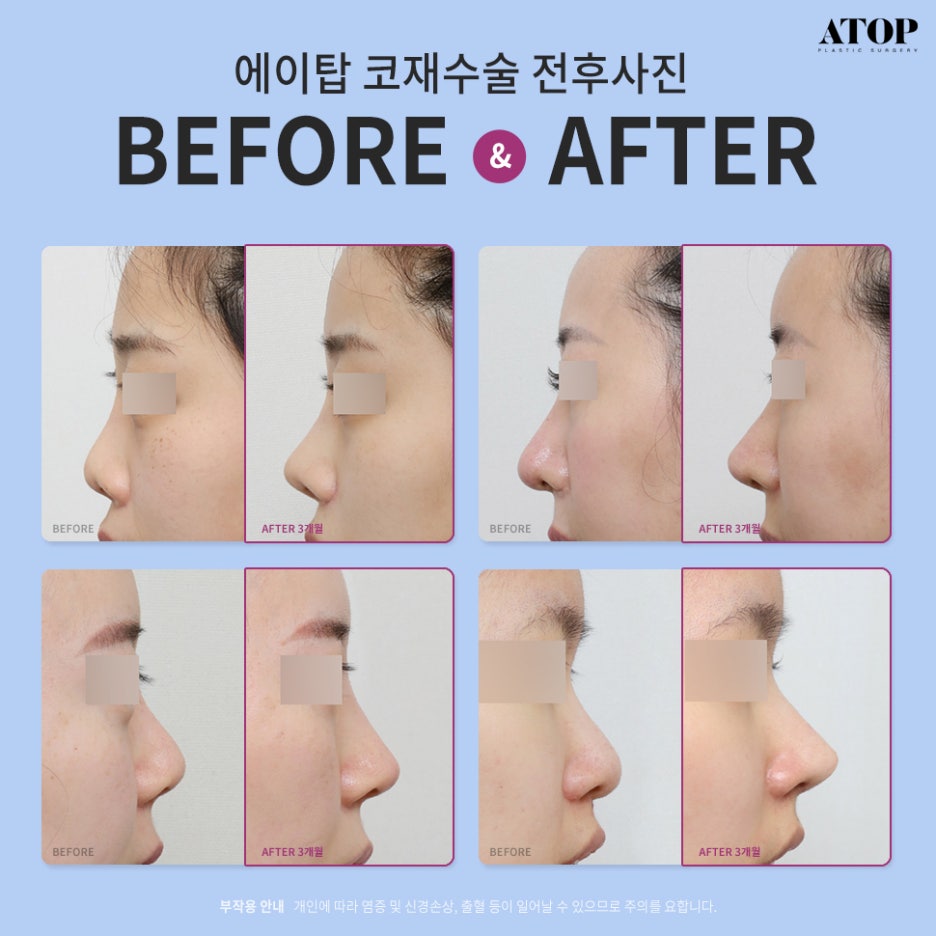
Revision surgery should be the last one you need. Since the nasal tissue has its limits in how much can be used, I hope this deviated nose revision surgery can be the final step, allowing you to be reborn with a beautiful nose.










 Previous image
Next image
Previous image
Next image









 Previous image
Next image
Previous image
Next image