
Having a second surgery after cosmetic surgery is by no means an easy decision. The first surgery already takes considerable resolve, and if you are having a second or even a third surgery, you need to approach it even more carefully and make sure that no further revisions are repeated. However, in the case of double eyelid surgery, since it is one of the most commonly performed cosmetic procedures, revision surgery is also frequently done in reviews of so-called sausage eyes. After systematically identifying the cause of the previous surgery’s failure, the review should be one of ATOP Plastic Surgery in which no one ever has to go back to the operating table because of their double eyelids again.
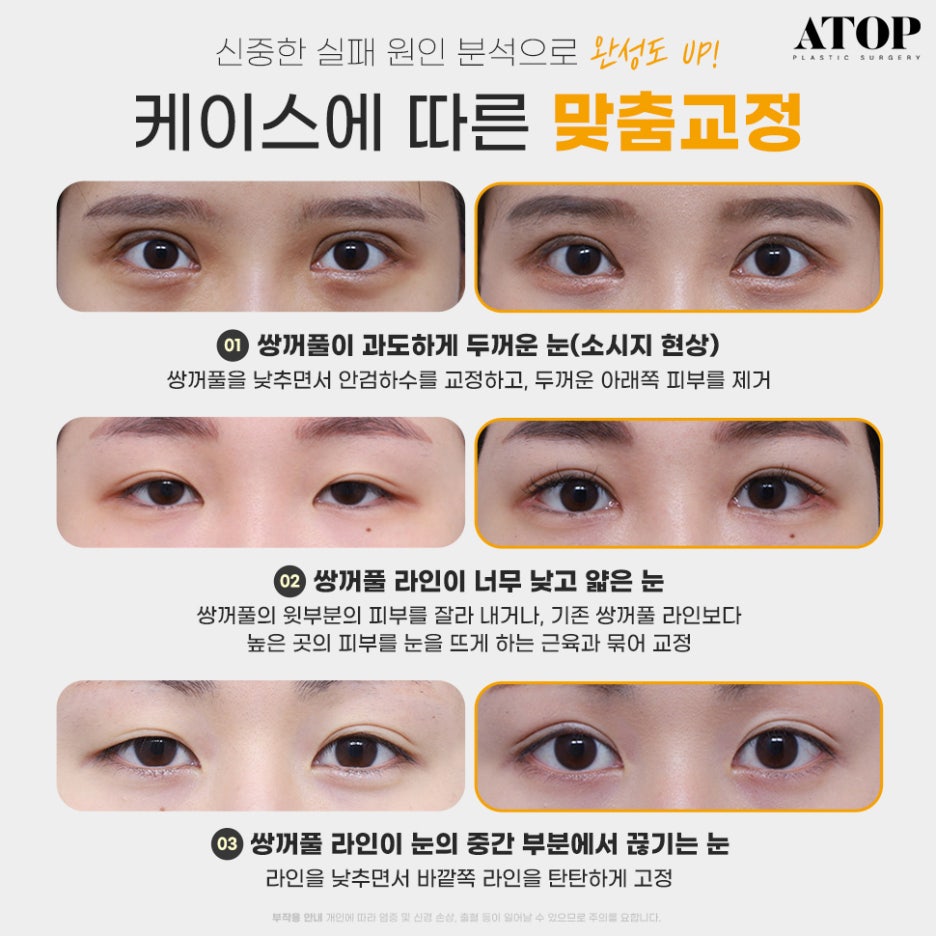
Cases and surgical methods for eye revision surgery
The cases of eye revision surgery vary from person to person, and there are many different types. The more experience a surgeon has handling reviews of sausage-eye revision surgery, the more likely they are to apply the appropriate surgical method for each case. You need to identify which type you fall into and systematically analyze the cause of failure and the reason revision surgery is needed before proceeding, so the same problem does not repeat.
First, one common case is the so-called "sausage eye," where the double eyelid line is overly high and thick. This can happen when the double eyelid crease is set too high or when ptosis is present but overlooked and not corrected during surgery. The existing double eyelid line should be lowered, ptosis corrected, and then the thick lower skin removed to improve the eye shape naturally.
Next is the case of a low and thin double eyelid line. Except for those who intentionally choose a low line for a more natural look, this type usually means the correction was not done properly or the surgery was forced even though the buried-suture method was not suitable. This is also a common case seen in reviews of sausage-eye revision surgery. The double eyelid line may collapse or the eyelid may droop, so surgery can be performed by removing the upper skin or by attaching the tissue to a muscle located higher than the existing line to correct it.

Some people have a double eyelid line that breaks in the middle of the eye. In cases where the orbital bone is prominent, if the line is set too high, part of the double eyelid may loosen. Surgery is needed to lower the line and firmly secure the outer line.
If the height of the double eyelids differs between the two sides, the eyes can be corrected by balancing them symmetrically, or by releasing all of the existing lines and then creating a new crease to match. There are also cases where the line has completely come undone. This can happen if adhesion was not properly formed. Because the eye condition must be accurately assessed and the appropriate method selected from buried sutures, partial incision, or full incision surgery to create a firm line, analysis in a review of sausage-eye revision surgery is necessary.
After the previous surgery, some eyes may look uneven, as if scars remain along the double eyelid line. This appearance can occur when suturing was not done carefully or when too much skin tissue was removed. No further tissue should be removed; instead, the line height should be kept as it is, and only the scar tissue should be removed and carefully sutured so that the double eyelid looks cleaner.
The key to revision surgery: releasing adhesions without damage and restoring the line
When performing double eyelid revision surgery, the operation is not carried out simply to improve the current problematic appearance with a new design. In reviews of sausage-eye revision surgery, the adhesions are released first at the start of surgery. This is because the eye must first be returned to the state before double eyelid surgery—in other words, to the original appearance of the eyes. After that, the desired line is recreated and the surgery is performed using the appropriate method.
Creating a double eyelid means artificially adhering the skin. To return to the original eyes, the adhesions must be released, and this requires delicate dissection. The surrounding tissue must not be damaged so that no scar tissue remains and a natural line can be formed. After restoring it cleanly, the surgery should be performed by finding the signature line.

When is the right time for eye revision surgery?
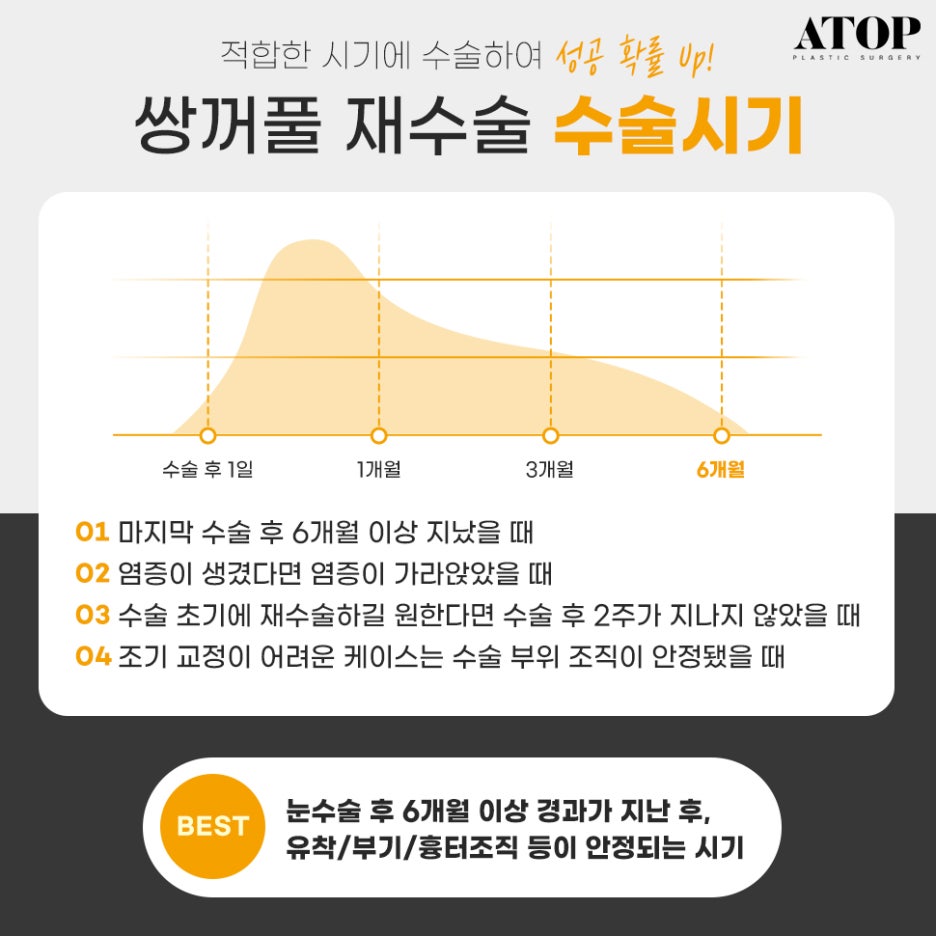
Even if you are unhappy with your current eye appearance and believe there is a problem, you cannot freely choose any time you want for surgery. Most reviews of sausage-eye revision surgery recommend waiting at least six months after the last operation before undergoing revision. If there is inflammation in the eyes, surgery is recommended after it has subsided. If someone wants revision surgery very soon after the operation, it should be done before the tissue becomes hard, which is within about two weeks after surgery.
If more than six months have passed since the previous surgery, most of the adhesions, swelling, and scar tissue have stabilized. It is best to consult with the medical staff, analyze the condition of the eyes, and then decide on the timing of the revision surgery.
For revision surgery that does not look overly operated on
Revision surgery is difficult for any cosmetic procedure. In particular, when surgery is repeated, some people think that because the tissue must be handled again, the result may still look somewhat surgical. However, the purpose of revision surgery is to achieve a natural look with minimal visible signs and to prevent further problems from recurring.
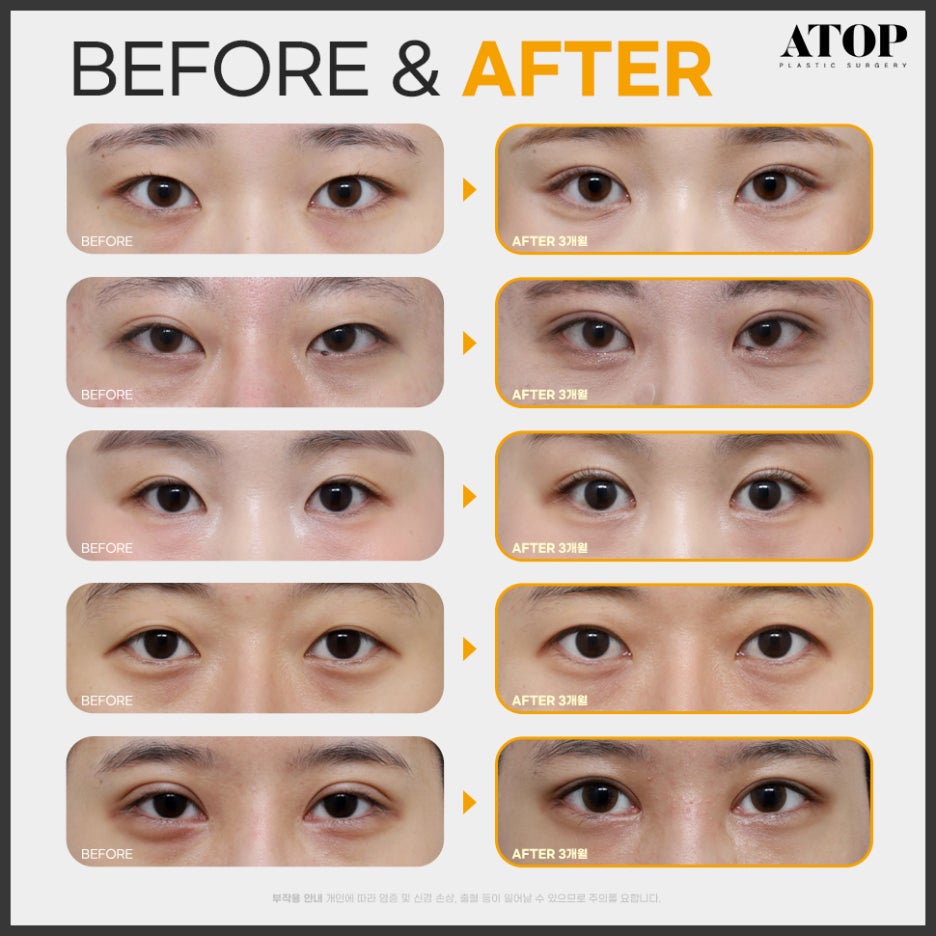
If you are considering double eyelid revision surgery, do not focus only on making the eyes bigger; think about the harmony and balance of the entire face as well. In reviews of sausage-eye revision surgery, the height and length of the double eyelid are adjusted according to the face’s image and eye size, and at this time it is important to create an eye shape that fits well. Since the eye shape, double eyelid height, and design that suit each person are different, I hope you can take this into account and end up with a natural review of ATOP Plastic Surgery.










 Previous image
Next image
Previous image
Next image










Previous image
Next image