
When we fail at something we have set our sights on, it is only natural to feel discouraged for a moment, but it is very important to analyze the cause of the failure and work toward succeeding again. The same applies to cosmetic surgery, which many people undergo. Among the reviews of A-TOP Plastic Surgery, there were many revision surgeries and reasons for natural improvements because the clinic systematically analyzed what went wrong in the previous surgery and established a revision plan so that the same problems would not recur. Among those who have had nose surgery, some are also planning to visit a revision rhinoplasty hospital. Unless the original nose itself was short, this would be a case in which the nose became deformed after the previous surgery, becoming shorter and turning upward, so steps should be taken to prevent further deformation and return it to its original appearance.
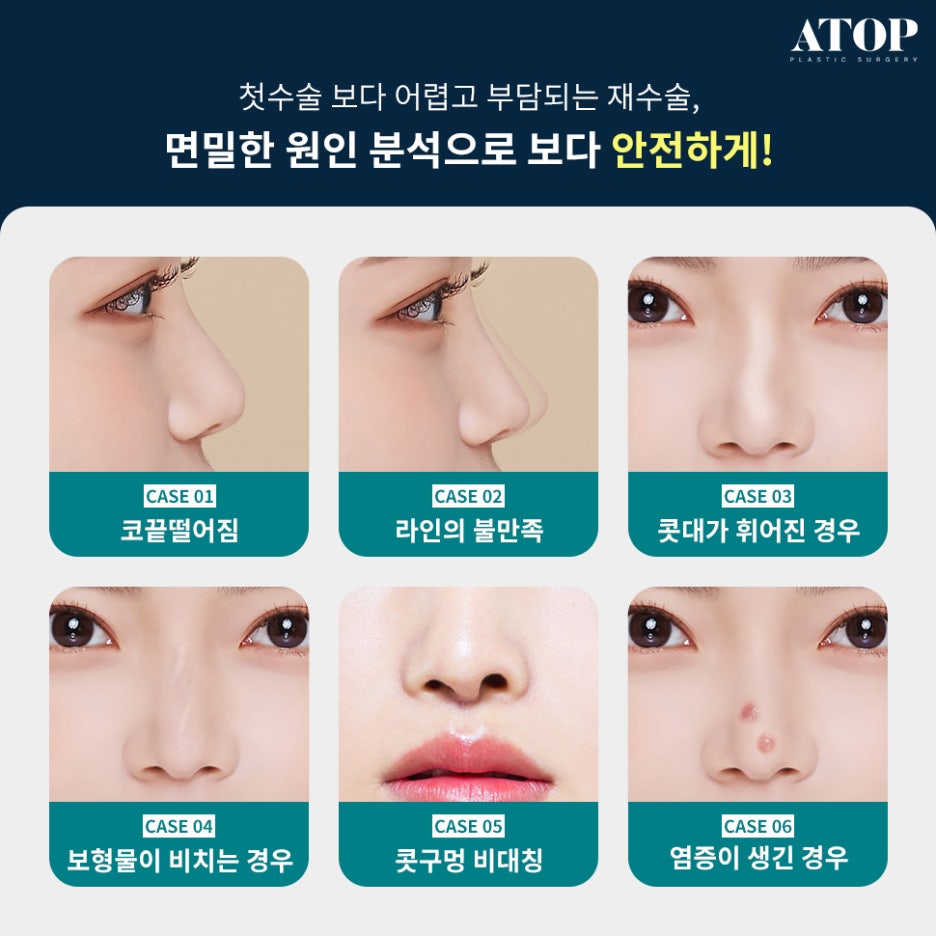
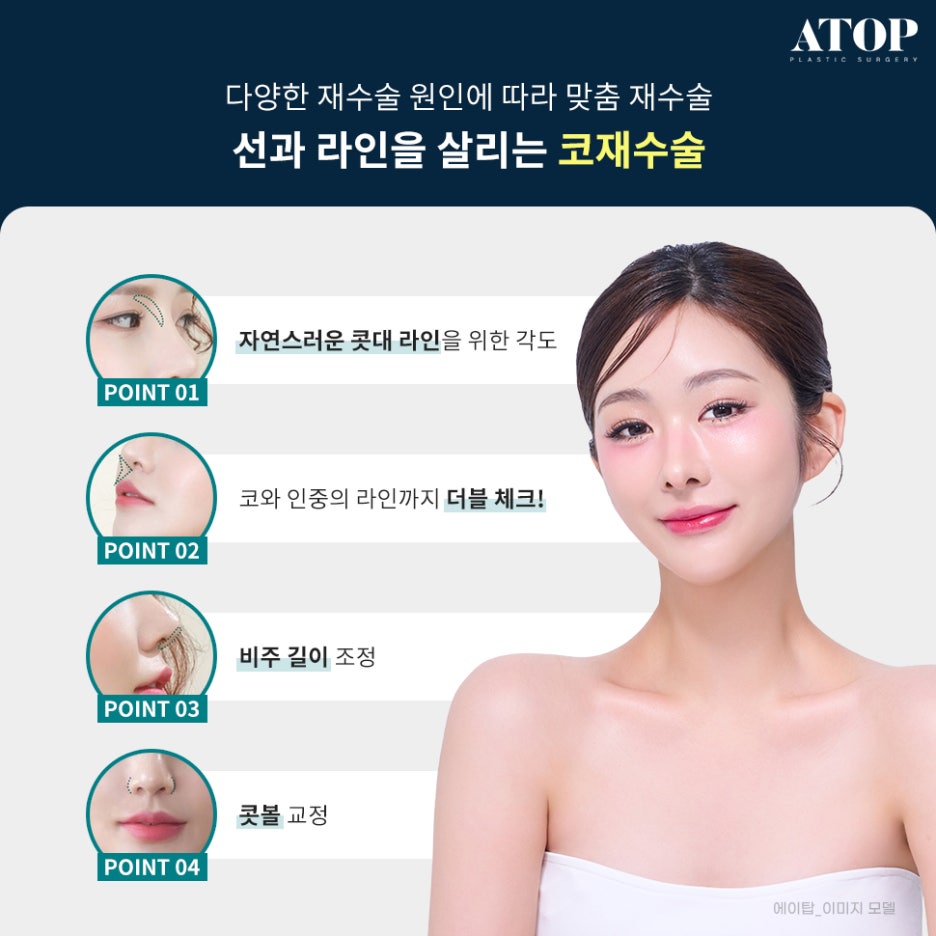
Customized revision surgery for various causes
The reasons people decide on revision nose surgery vary from person to person. In some cases, there is no serious problem, but they undergo surgery again to improve the nose into a more pleasing shape because it is not what they wanted, in other words, for subjective satisfaction. Since the surgery is being done solely for personal satisfaction without any objective functional or aesthetic problem, design factors are extremely important.
Excluding that, most cases involve functional problems with the nose or deformation of the nose shape, which is why a revision rhinoplasty hospital is needed. In detail, the types are divided and classified by specifics such as length, angle, and degree of deviation. Because the causes of revision rhinoplasty are diverse, complex, and different for each individual, the cause must be properly analyzed and an individualized revision plan carried out.
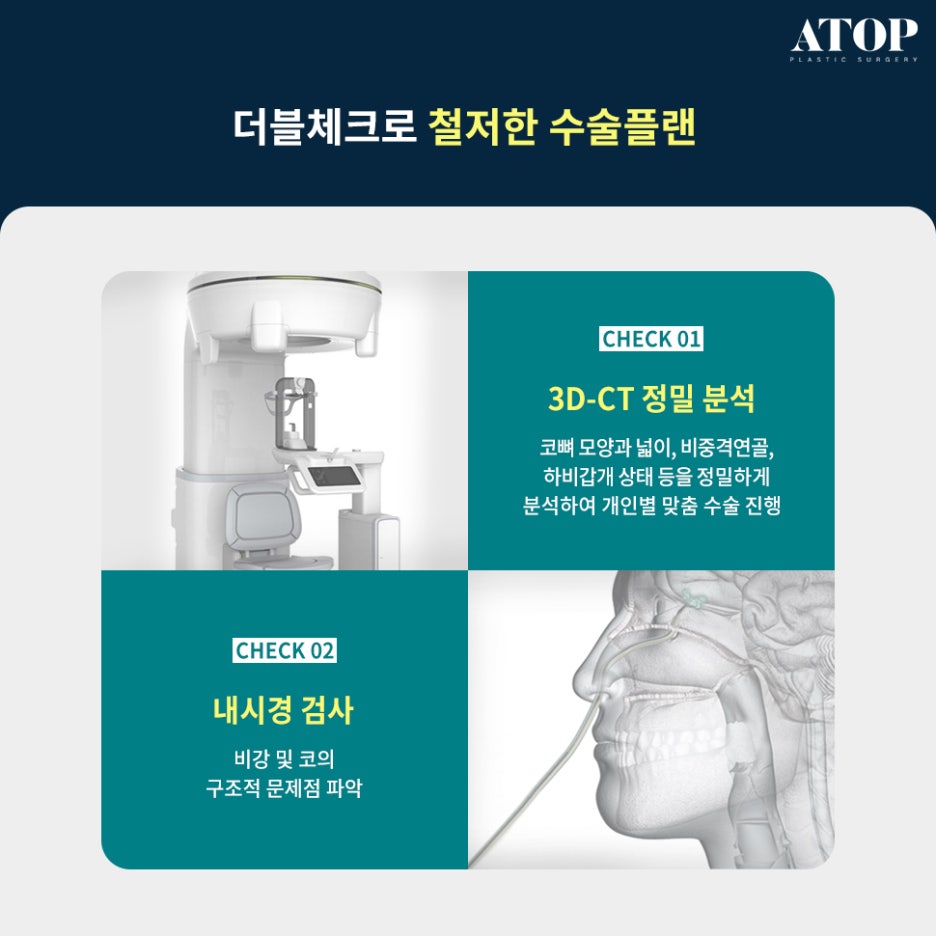
If surgery is performed according to uniform standards, design, and methods, there is a high possibility that the next result will also be unsatisfactory. Therefore, please undergo a thorough examination of cosmetic dissatisfaction, functional issues, and the presence of side effects through 3D-CT imaging and establish a surgical plan so that a better result can be achieved.
Types of revision rhinoplasty that require cause analysis
Because the reason revision rhinoplasty is needed differs for each person, systematic analysis is necessary. There are several types: in cases of a drooping nasal tip, this may occur when the tip cartilage is weak and the columella is short, so improvement is possible by extending the septum to strengthen the columella. Being dissatisfied with the line is not necessarily a problem, but rather stems from a drop in subjective satisfaction. In such cases, correction can be done by designing the desired bridge and tip while considering the overall proportions.
One of the problematic cases is at a revision rhinoplasty hospital. If the original nose was not short, after an implant is inserted, it may cause an inflammatory reaction, leading to contracture that shortens the nose and causes the tip to turn upward. After removing the implant, revision surgery should be performed using autologous cartilage, etc., to restore the nose’s original shape and length. However, there may be other causes for the nose becoming shorter, so please first undergo a detailed examination.
If the implant shifts out of position, the nasal bridge will become crooked, so it can be corrected by replacing it with a new implant or repositioning it correctly to make it straight again. Or, if the implant is visibly transparent through the skin, its position can be adjusted deeper and covered with temporal fascia; if you do not want that, the implant can also be removed.
Among those with inflammation, there are cases where treatment at a revision rhinoplasty hospital is also needed. If the surgical site is bulging or pain is felt, it may be a reaction caused by inflammation, and if it is left untreated, the nose shape may become deformed, becoming shorter and turning upward, so please visit as soon as possible.
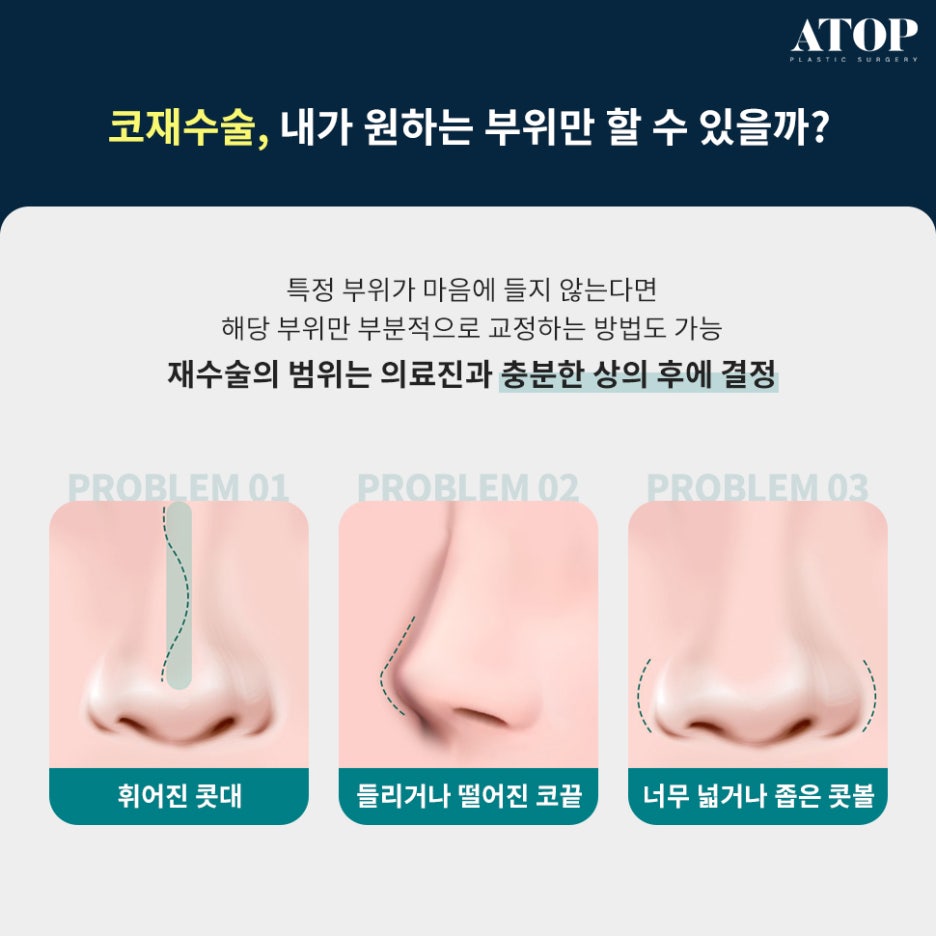
Revision surgery: Can I only have the part I want done?
The various problems that can occur after nose surgery are all different. Some people may dislike a specific area such as the nasal tip, bridge, or alar, and others may want to undergo revision rhinoplasty because the nose is not harmonious overall.
This allows for a method that selectively corrects only the unsatisfactory parts rather than the entire nose surgery. This is because concerns can differ, such as only a crooked bridge, only an upturned or drooping tip, or wide or narrow alar.
However, the scope of revision surgery should be planned and the design refined after sufficient consultation with the medical team so that future revision surgeries can be prevented.
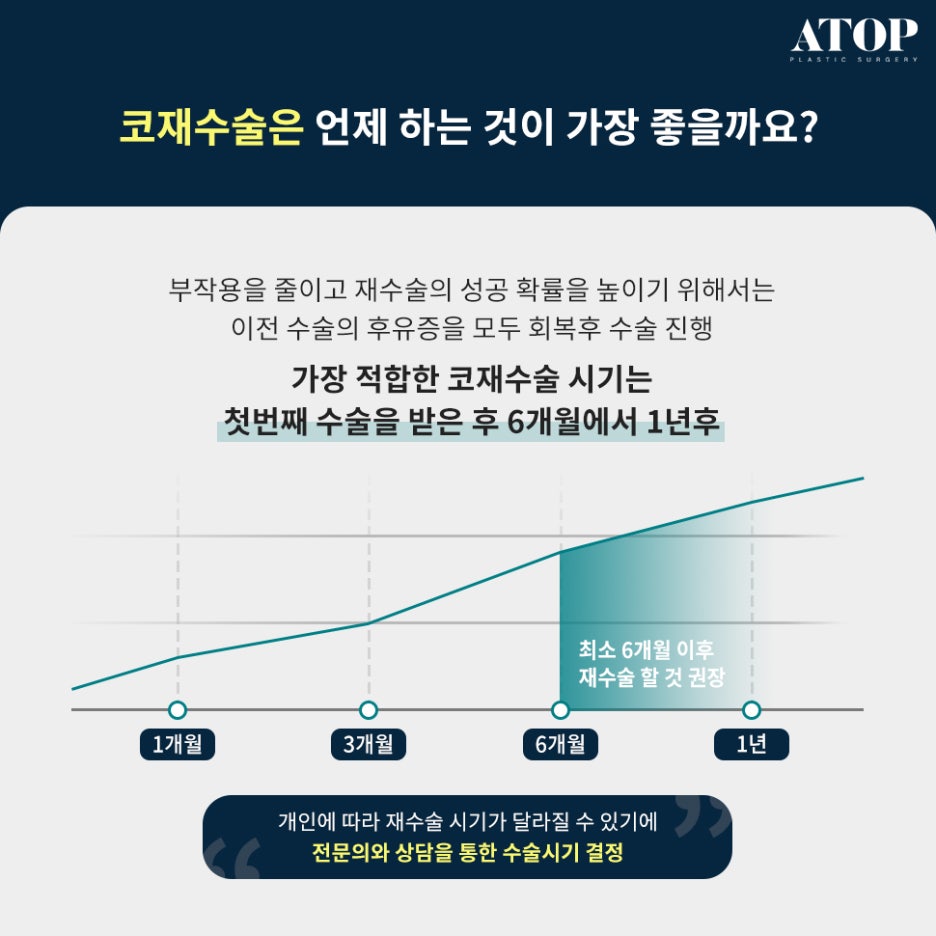
The timing of revision surgery also affects the outcome and process, so it is important. Skin tissue recovers over time, and after cosmetic surgery, it is generally safest once about 6 months have passed. On average, the most appropriate time for revision surgery is 6 months to 1 year after the previous operation, so it is best to determine the timing through consultation with the medical team performing the nose surgery.
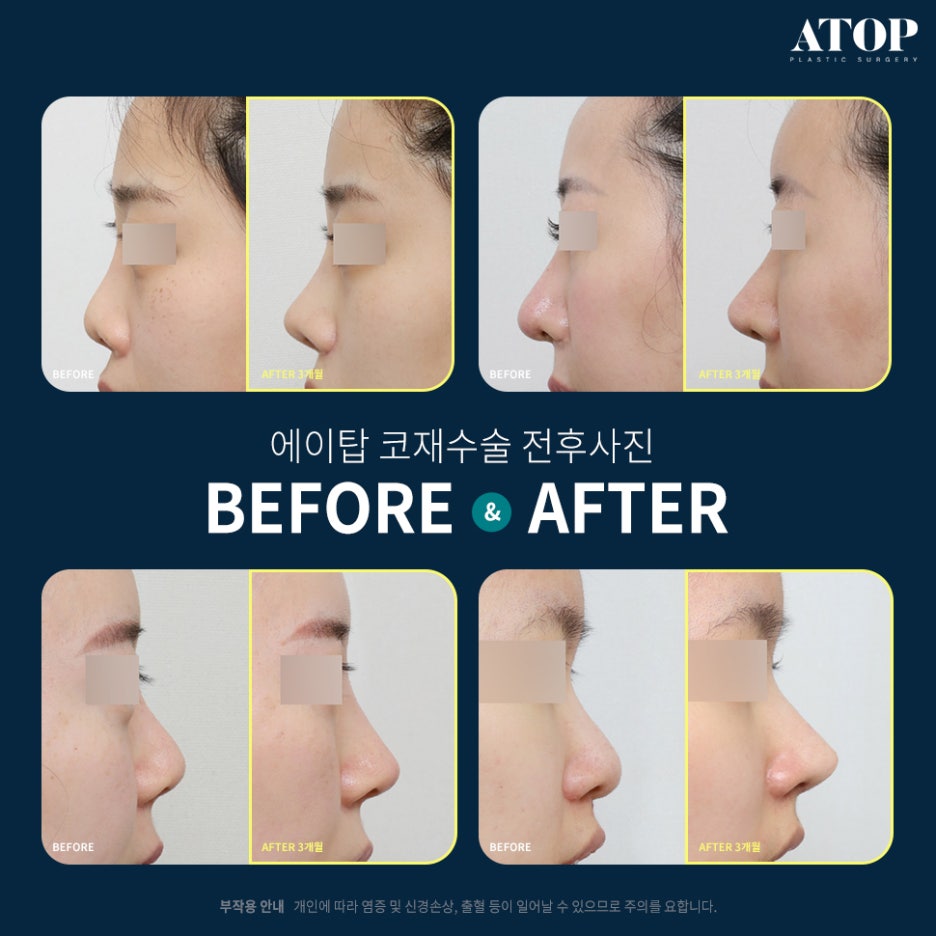
To make it the final nose surgery
Basically, revision surgery is meant to resolve dissatisfaction with the previous primary nose surgery and create a more natural nose line than before, improving satisfaction. Please ensure the surgery becomes the final one by making a definite correction, providing strong support, and carrying out thorough aftercare so that inflammation and side effects do not occur. There are many types, including revision rhinoplasty hospital cases, crooked nose cases, and inflamed nose cases, so it would be good to refer to the reviews of A-TOP Plastic Surgery and proceed with the method that is appropriate for you.










 Previous image
Next image
Previous image
Next image










Previous image
Next image