
The philtrum is the area that connects the nose and the lips. It does not have a function like the eyes, nose, or mouth, but because it is located in the center of the face and sits between the midface and lower face, it affects overall facial balance. Looking at philtrum reduction reviews, you can see that even reducing only the philtrum length can make the impression look different. If the area is excessively long, it can make you look older or make the face appear longer, so it is a good idea to adjust the philtrum length at A-TOP Plastic Surgery to achieve better balance.
If your philtrum is on the long side?
The causes can be divided into congenital and acquired factors. Some people naturally have a long philtrum, and among acquired factors, aging has a major influence. In addition, the length can also increase after procedures that correct the midface or lower face, such as orthodontic treatment, double jaw surgery, or contouring surgery.
As you age, skin elasticity gradually decreases, causing the skin to sag and wrinkles to form. The philtrum line becoming less distinct and the length increasing are also among these changes. Normally, the area is moderately indented inward, but as people reach middle and older age, many notice that the area below the nose becomes flat and lacks much definition. In cases where double jaw surgery or orthodontic treatment has been performed, the protruding teeth or lip line may move inward, which can contribute to sagging skin and the lengthening of this area.
Because the causes differ from person to person, and the proportion and length within the face also vary, you should receive thorough consultation before deciding on surgery. For a natural philtrum reduction review, it is important to reduce it to the ideal length that matches the proportions of your own face.

Philtrum reduction surgery, because finding the ideal proportion matters
Looking at philtrum reduction reviews, you can see that the face appears smaller and younger than before surgery. For better results, rather than simply reducing the philtrum as much as possible, the face length and proportions should be analyzed and adjusted accordingly. The ideal ratio is 1:3 between the area below the nose and the lip line, and from the lips to the chin tip. To create a beautiful midface and lower face, the correction should be made so that the length from below the nose to the lips and from the lips to the chin tip follows a 1:2 ratio.
A philtrum that is long relative to the face can make a person look older and make the face appear longer. If the proportions are checked properly and adjusted to an appropriate degree, you can achieve satisfying results like those seen in philtrum reduction reviews. In particular, the philtrum should not only be shortened, but its harmony with the nasal tip and lip line should also be considered so that the overall impression improves in a refined and natural way.
Philtrum reduction surgery method, what should you be careful about?
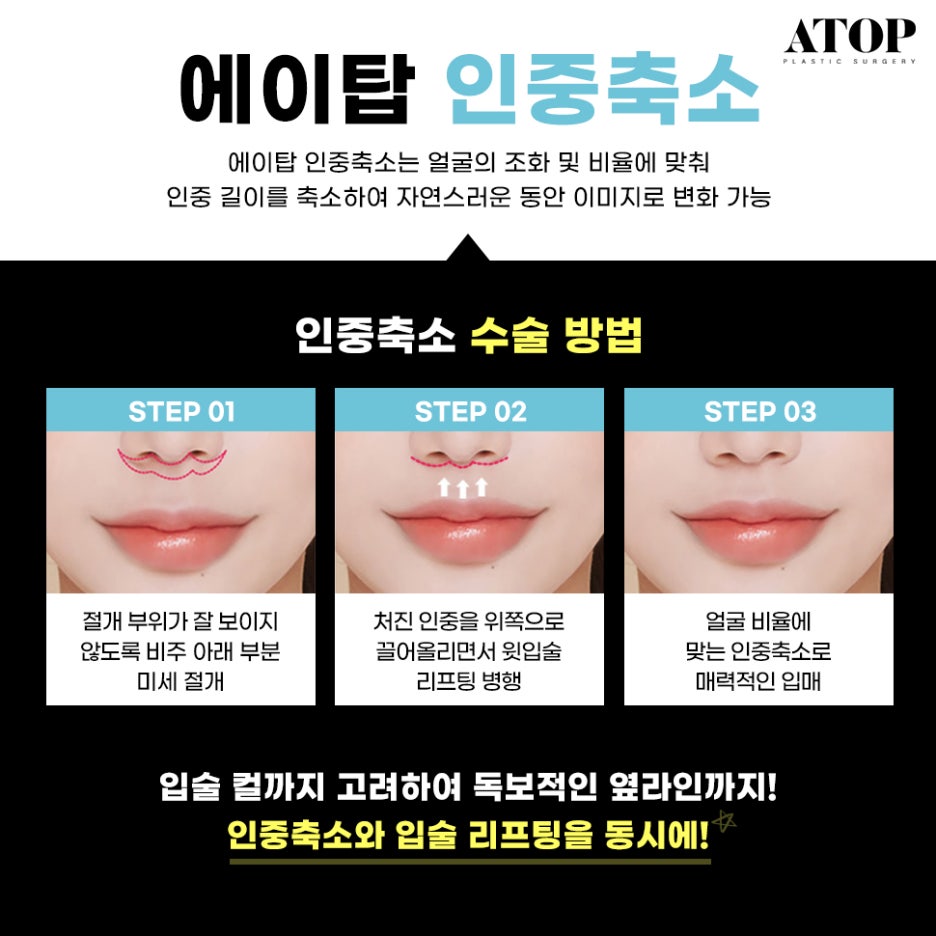
This surgery is performed using an incision method. A fine incision is made along the curved area under the nose and below the columella, and then the sagging tissue is pulled upward so that both length reduction and a lifting effect of the upper lip can be observed.
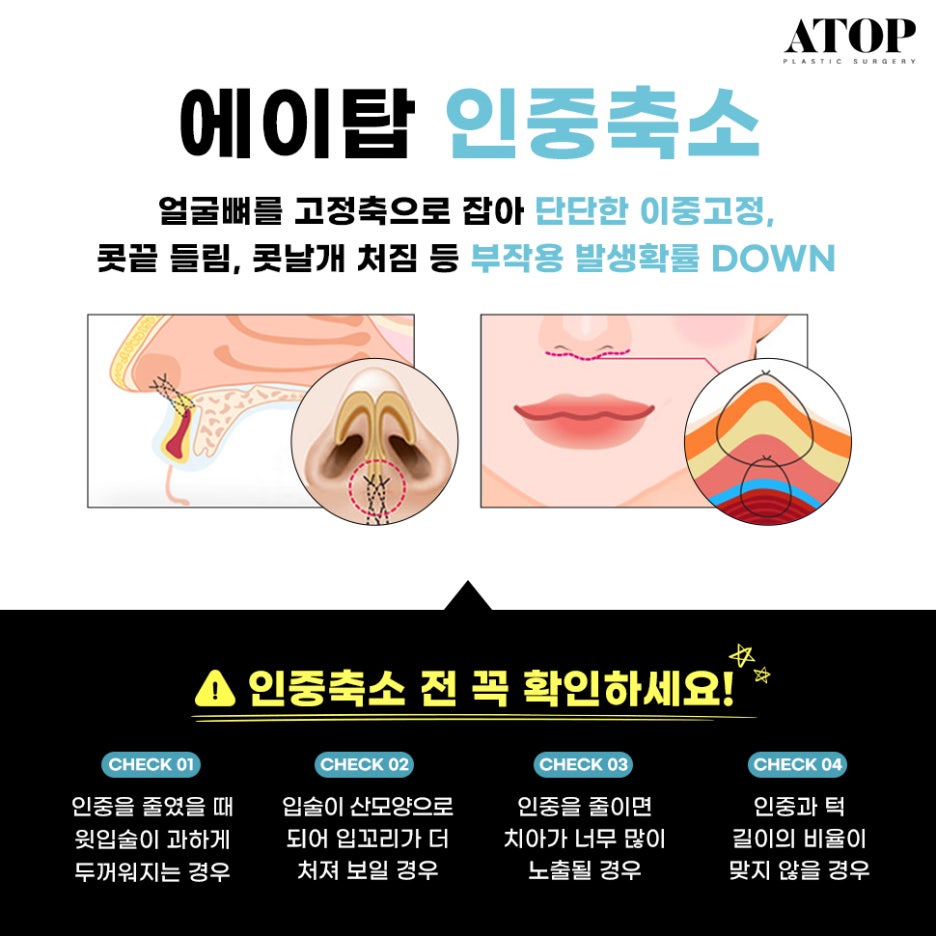
If the reduction is too excessive, it can create an unnatural appearance, so it is important to leave at least about 10 to 10.5 mm of length. For a satisfying philtrum reduction review, surgery may be difficult in cases where the upper lip would become excessively thick, the lips would take on a peaked shape that makes the corners of the mouth look droopy, there is a risk that many teeth will be exposed after reduction, or the proportions between the philtrum and chin length do not match. In such cases, you should first have a careful consultation with the medical team.

A firm double-fixation method that keeps the philtrum length stable for a long time
For people with a long philtrum and a thin upper lip, reducing the length while also pulling up the upper lip can help create a fuller-looking lip curve and improve lip volume as well.
At our clinic, we use a double-suturing method that fixes the fascia, dermis, and epidermis all at once, using the facial bone as a fixed axis for strong and firm fixation. This can help prevent symptoms such as the nasal tip lifting or the alar base sagging. Through a suturing technique that preserves the shape of the nostrils, you can achieve results where the nose, philtrum, and even the upper lip and philtrum line are naturally connected, as seen in philtrum reduction reviews.

Why both the inner and outer areas need to be treated together
The philtrum is divided into an inner area and an outer area. The inner area is the central hollow part that people generally think of, and the outer area refers to the wider parts on both sides. In some cases, both areas need to be reduced together during surgery. This applies not only when the philtrum is simply long, but also when the lips are thin, the lip line is not distinct or unclear, and drooping at the corners of the mouth is present.
If you have these complex concerns, it is not enough to simply pull up only the inner area and shorten the length. The outer area should also be treated so that the area from under the nose to the upper lip can be improved overall. This does not mean the inner and outer areas must always be treated together, but many people who undergo philtrum reduction surgery also have issues involving the lip area, so treating both areas at the same time is a way to increase satisfaction.
The most important thing is to first understand the current facial image and balance accurately. If the design is carefully tailored to each person’s structure, an aged-looking impression can naturally be reduced and replaced with a clear yet soft impression. Rather than simply “changing” a feature, the direction that brings out the original charm of the face tends to last the longest.
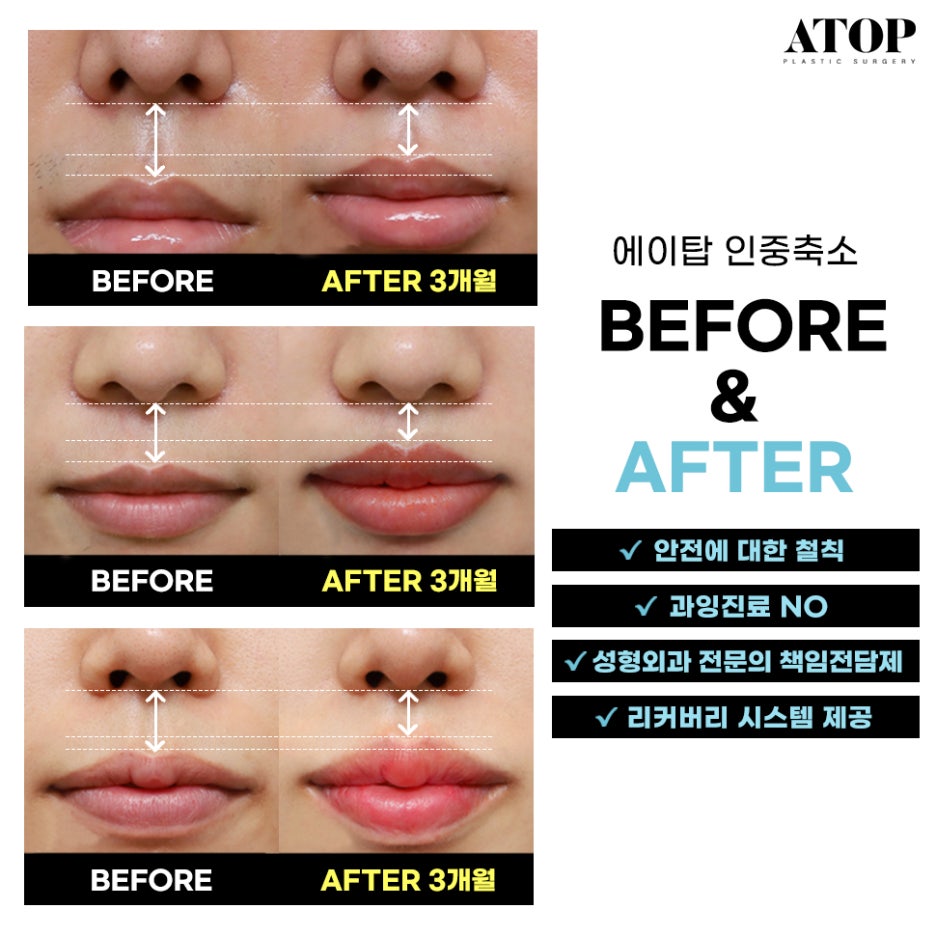
If you are looking for a place with many philtrum reduction reviews, please visit A-TOP Plastic Surgery to receive a consultation about philtrum length, where the before-and-after difference is clear.










 Previous image
Next image
Previous image
Next image









 Previous image
Next image
Previous image
Next image