Non-open rhinoplasty: Enhancing naturalness with an invisible incision line

Because Koreans are East Asians, the face tends to have less dimensionality, and the facial features are rounder and somewhat softer. One of the facial features that plays a major role in this appearance is the nose. Since the nose sits at the center of the face, a low bridge or a blunt tip can make the face look less defined and flatter overall, which is why many people consider rhinoplasty. If you want a slightly sharper, more balanced look than you have now, and do not want visible scarring, as in reviews of ATOP Plastic Surgery, you can consider improvement through non-open rhinoplasty.

Open vs. non-open rhinoplasty by incision method
Rhinoplasty can largely be divided into open and non-open methods depending on the surgical technique. The two methods differ in the extent of the incision, visibility, the types of noses they can be applied to, and also in surgery time and cost. It is the same nose surgery, but the method is different.
Open surgery is performed by making an incision in the columella, the part of the nose between the tip and the philtrum that separates the nostrils left and right, and then directly looking inside. Because the nose is fully opened, the advantage is excellent visibility of the internal tissue. Since the surgeon can operate while checking the tissue and nasal structure in real time, implant position can also be adjusted. Another advantage is that it can be applied to most nose types; however, because the columella is incised, a scar may be visible when the nose is slightly lifted. In addition, the recovery period is relatively longer than with non-open rhinoplasty.
Non-open rhinoplasty involves making an incision not in the columella but inside the nostril, in the inner nasal mucosa, and inserting implants or other materials. It is also called scarless rhinoplasty because the scar is not visible from the outside. Visibility during surgery may be somewhat limited, so it is suitable for relatively simple rhinoplasty or localized procedures such as tip refinement. The surgery time is short, around one hour, and recovery is also relatively fast, which is a major advantage of non-open rhinoplasty.
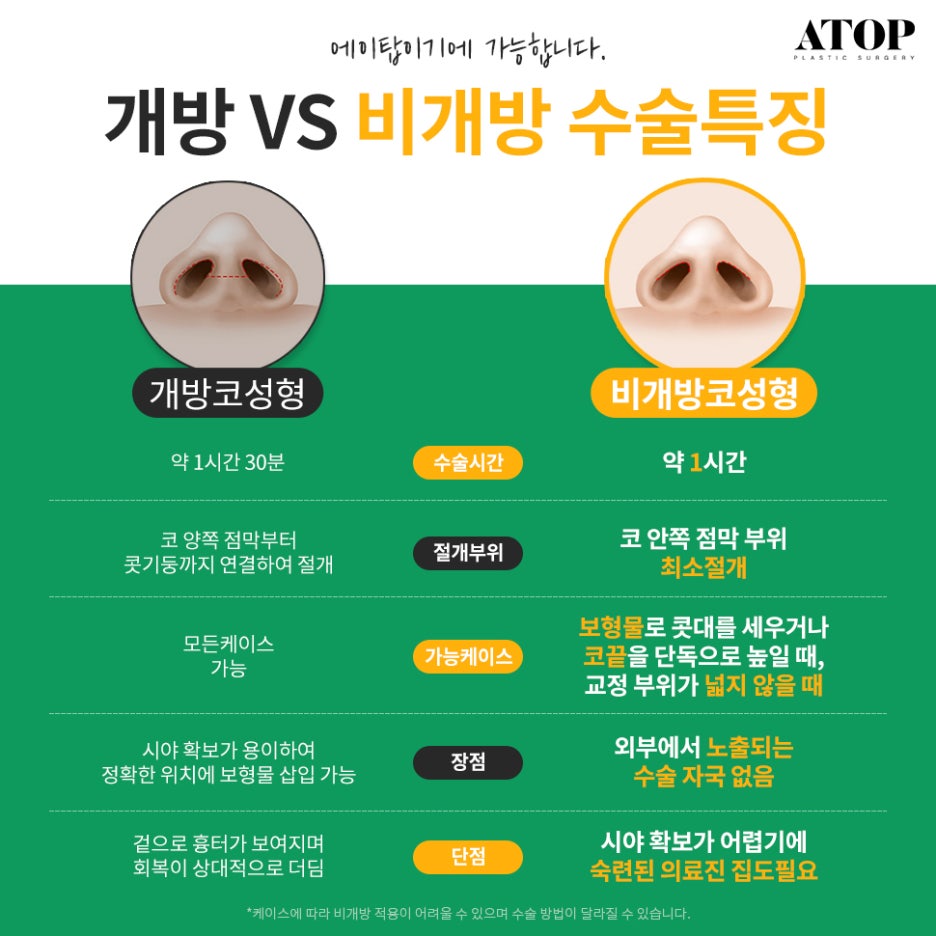
How non-open rhinoplasty hides scars
Non-open rhinoplasty is performed through the inside of the nostrils, so the incision site is not visible from the outside. This reduces concerns about surgical marks. In some people who have undergone surgery through a columellar incision, the scar on the columella can be faintly noticeable from the side or when the head is tilted upward. By contrast, non-open rhinoplasty involves incising the inner nasal mucosa, and then separating the cartilage and skin in the alar area. After that, suitable materials such as a silicone implant, autologous cartilage, or autologous dermis are used to create the bridge and tip line. Once the overall design and shape are confirmed, the operation is completed with suturing.
In this way, scarless nose surgery itself involves delicate incision and suturing, helping the scar remain inconspicuous and producing a natural result. Because it does not fully open the nose and is a relatively simple process, it is a surgical method that can be performed with less burden.
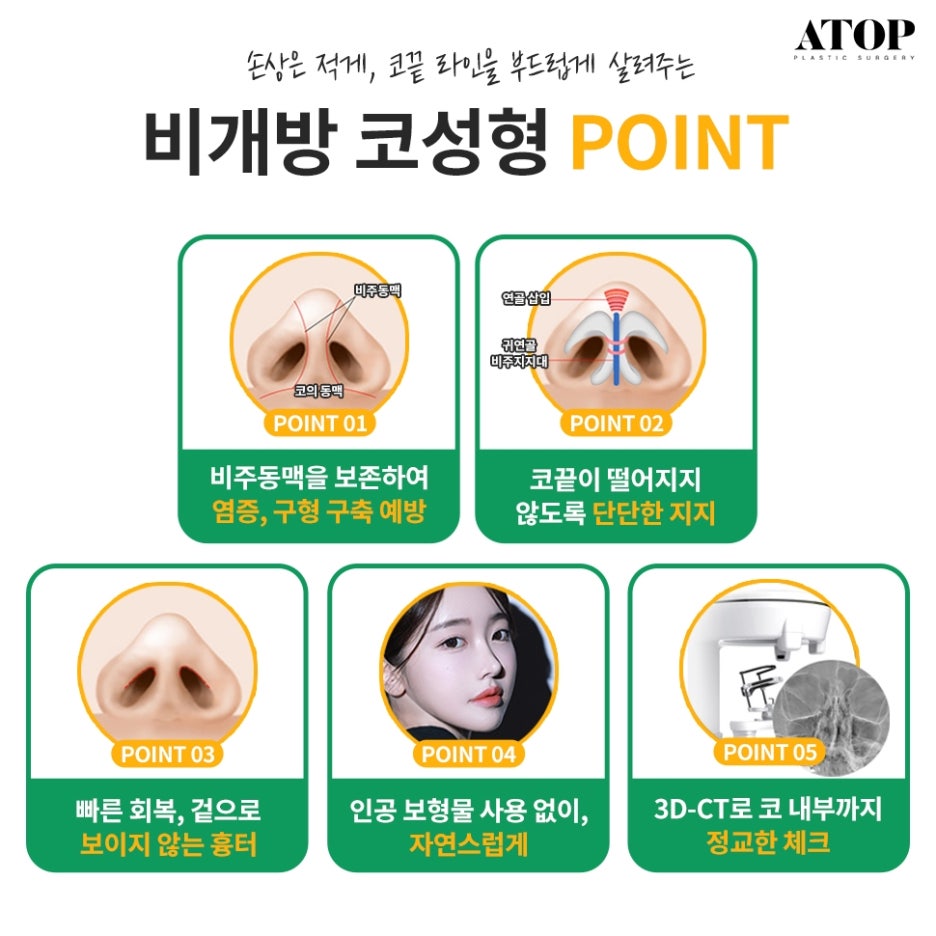
Types that can be treated with scarless rhinoplasty
Compared with open surgery, non-open rhinoplasty may have a somewhat narrower range of applicable cases, but in fact this depends on the skill and experience of the medical team. Even without opening the nose, it is possible to expect improvements in a wide variety of nose shapes. However, because there are some limitations in visibility, the procedure should be performed by experienced medical professionals who have sufficient experience with non-open rhinoplasty and a deep understanding of nasal anatomy. It is not simply a matter of which types can or cannot be treated; even for the same type, the outcome can vary depending on which surgeon analyzes and performs the procedure.
Applicability also differs depending on each person’s nasal characteristics and conditions. Since anatomical factors such as tip skin thickness, cartilage size and shape, and skin elasticity all vary, the surgical feasibility and method may also differ. Through a thorough consultation, you should confirm the line you want and the expected results, and then seek improvement toward an ideal shape.
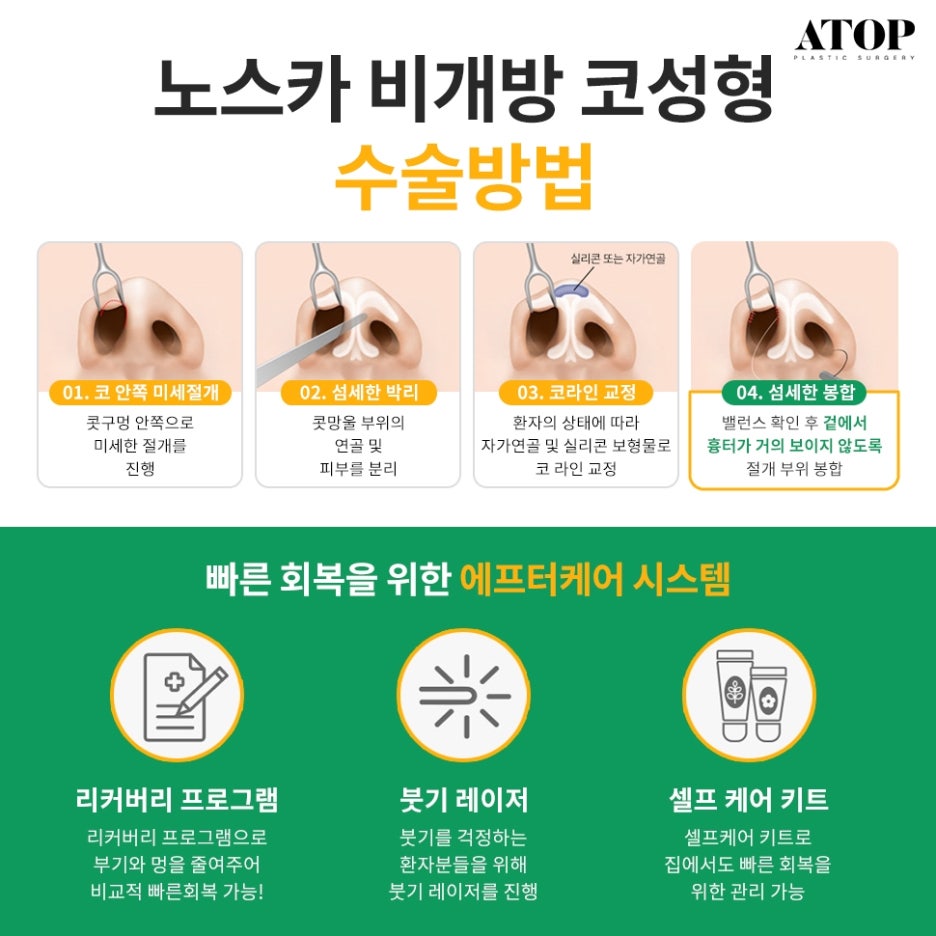
Non-open rhinoplasty should be planned by setting an ideal angle and height that take the overall balance of the face into account, preventing tip drooping and allowing both the bridge and the tip to look refined yet natural.

Reducing tissue damage for natural results
Most patients who want nose surgery hope for a natural change that does not reveal that they had surgery. A nose that is too dramatically high can look unnatural and artificial. The shape of the nose is important, but if scars or incision marks are exposed externally, it no longer looks natural, which is why non-open rhinoplasty can be considered.
With non-open nose surgery, there is no damage to the columellar artery, which is preserved, and blood circulation to the tip of the nose remains smooth. As a result, swelling and bleeding are relatively less than with open surgery, and the risk of side effects such as inflammation and contracture can also be reduced. Since there is no external incision, tip drooping after surgery is also less likely, and a more natural, rounder, and higher-looking nose can be expected.
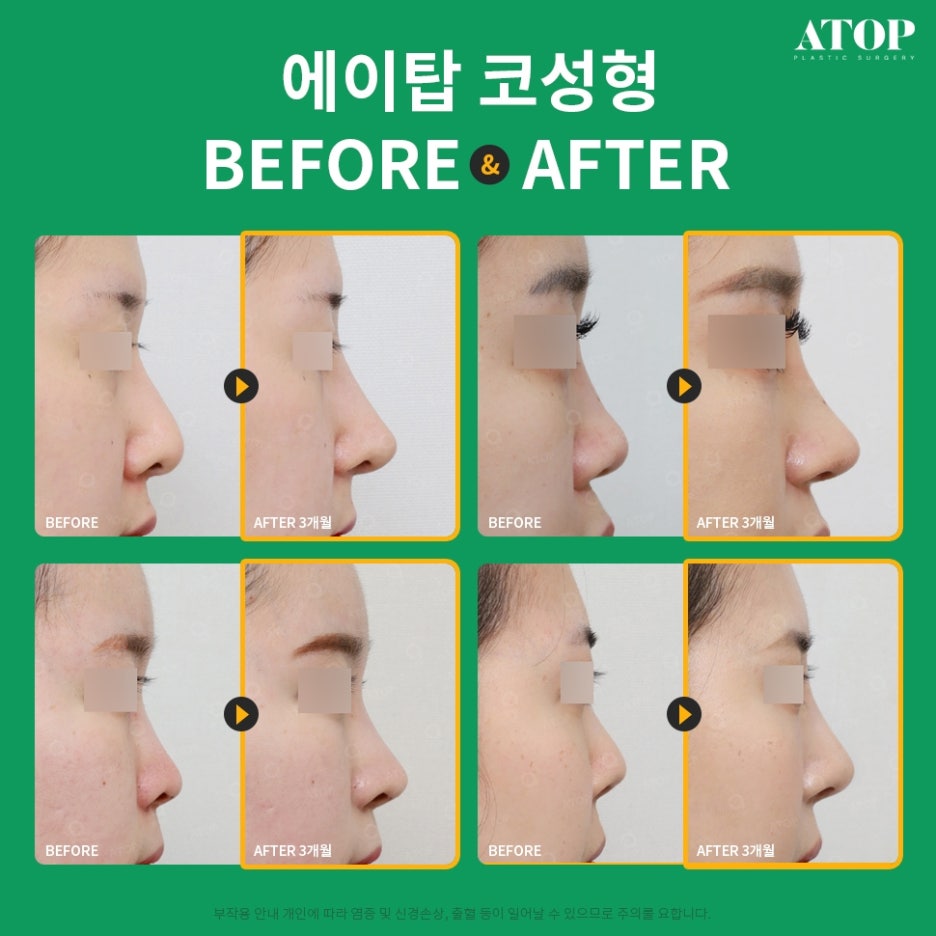
If you choose the non-open method for a safe procedure and a satisfying result, you may be able to expect a natural appearance, as in reviews of ATOP Plastic Surgery. I hope scarless rhinoplasty can help you set aside the concerns you have had about nose surgery.











 Previous image
Next image
Previous image
Next image








 Previous image
Next image
Previous image
Next image
 Previous image
Next image
Previous image
Next image