
Many people consider plastic surgery to achieve the look they want. There are many different types, but eye and nose surgeries are especially popular and rank among the top procedures. In particular, each person’s nose has a different height and shape, and because it is a three-dimensional area, it is difficult to fully cover with makeup the way you might with the eyes. For that reason, nose surgery is often performed to enhance the bridge and tip of the nose, and you can find reviews from ATOP Plastic Surgery about using autologous tissue, such as artificial implants like silicone, ear cartilage, septal cartilage, or self-rib rhinoplasty. It is worth carefully checking methods that can raise the nose neatly while reducing issues such as inflammation.

Characteristics of Materials Used in Nose Surgery
Among the various materials used in nose surgery, it is not very meaningful to simply judge which one is good or bad. That is because you can expect a more natural result by carefully considering your current nose shape, structural form, functional issues, and whether this is a revision surgery, then selecting the necessary implant and proceeding with the surgery according to the desired direction.
In the past, artificial implants were widely used, and even recently silicone has still been commonly used. However, as preference has shifted more toward autologous tissue when considering foreign-body reactions and other issues, more people are using ear cartilage, septal cartilage from inside the nose, or self-rib rhinoplasty, which can also be used in revision surgery.
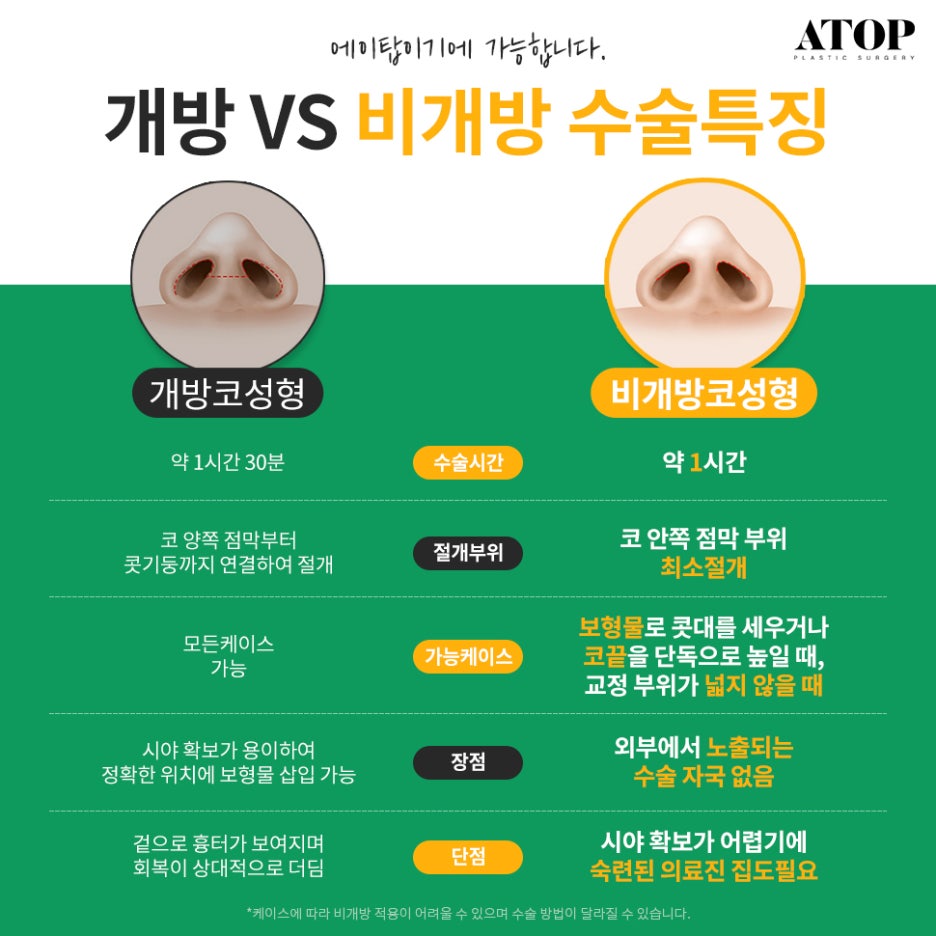
In the case of ear cartilage, it is soft and flexible, making it a good material for naturally shaping the tip of the nose. Septal cartilage is slightly thicker and stronger than ear cartilage, so it is used to correct the bridge and tip of the nose. Because it is harvested from inside the nose, no scar remains and there is no separate deformation of the nasal structure. Rib cartilage, also called chest cartilage, is the firmest type of cartilage and is often used in self-rib rhinoplasty reviews for revision surgery.
Among autologous tissues, dermis is also widely used. This involves harvesting tissue from the area near the buttocks. By separately collecting dermis from between the buttocks, the scar is not easily visible, and it can be used to improve naturally when the skin is thin.
Advantages of Self-Rib Cartilage
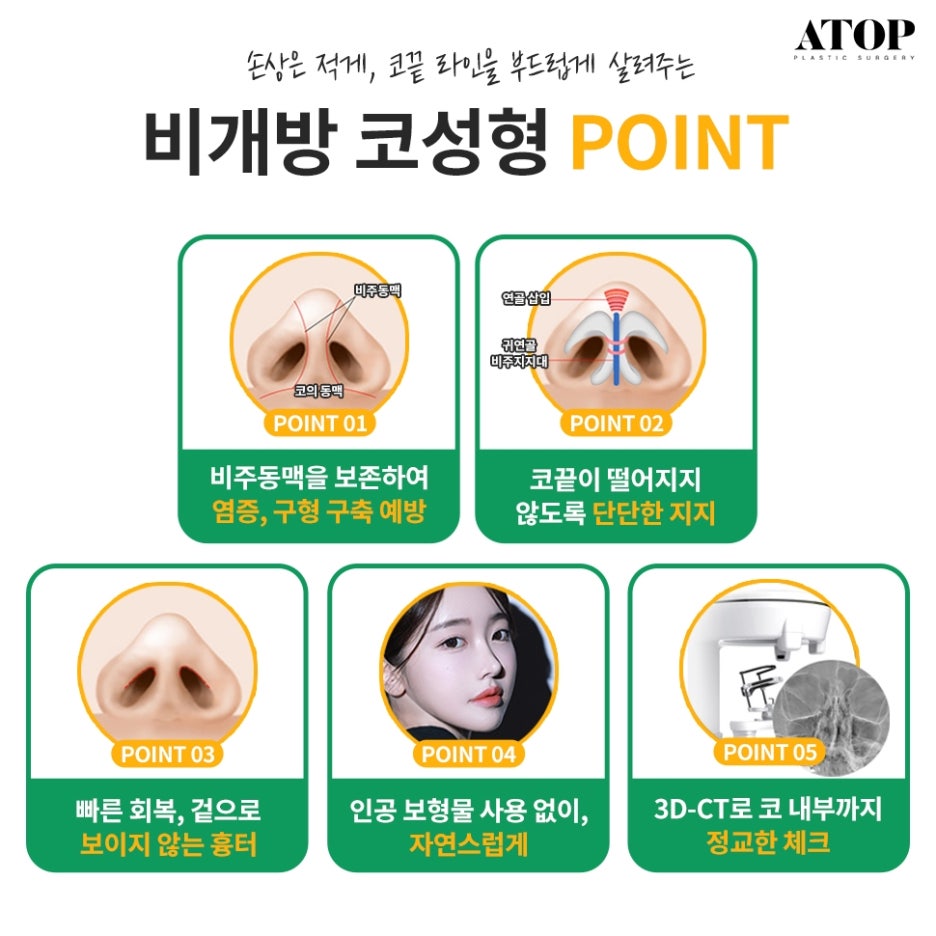
We briefly looked at rib cartilage above, but to explain it in more detail, it is cartilage located at the end of the ribs. Due to its location, it is harder and has better support than cartilage from other areas, so it is often used as a material for nose surgery. In particular, self-rib rhinoplasty is often used in revision surgery.
Because it is firmer and maintains its shape better than other materials, it can help reconstruct noses in cases where the nose is small, the shape has changed, or complications such as contracture nose have occurred. For people with a small nose, the skin cannot easily stretch as much as desired, so if the tip of the nose is raised too aggressively, it is difficult to achieve the desired improvement. In such cases, a material with strong support is needed, and rib cartilage more firmly supports the tip of the nose and helps improve it.
One reason self-rib rhinoplasty reviews are used in revision surgery among cartilage materials is that a relatively large amount can be harvested. Ear cartilage and septal cartilage are limited in quantity and are used in the first surgery. If a revision surgery is needed and you want to use autologous tissue, but ear or septal cartilage was already used in the previous surgery, it is difficult to reuse them. In that case, surgery can be performed by harvesting a more sufficient amount of self-rib cartilage.
If You Want to Properly Raise the Nose: “Triple Line Nose Surgery”
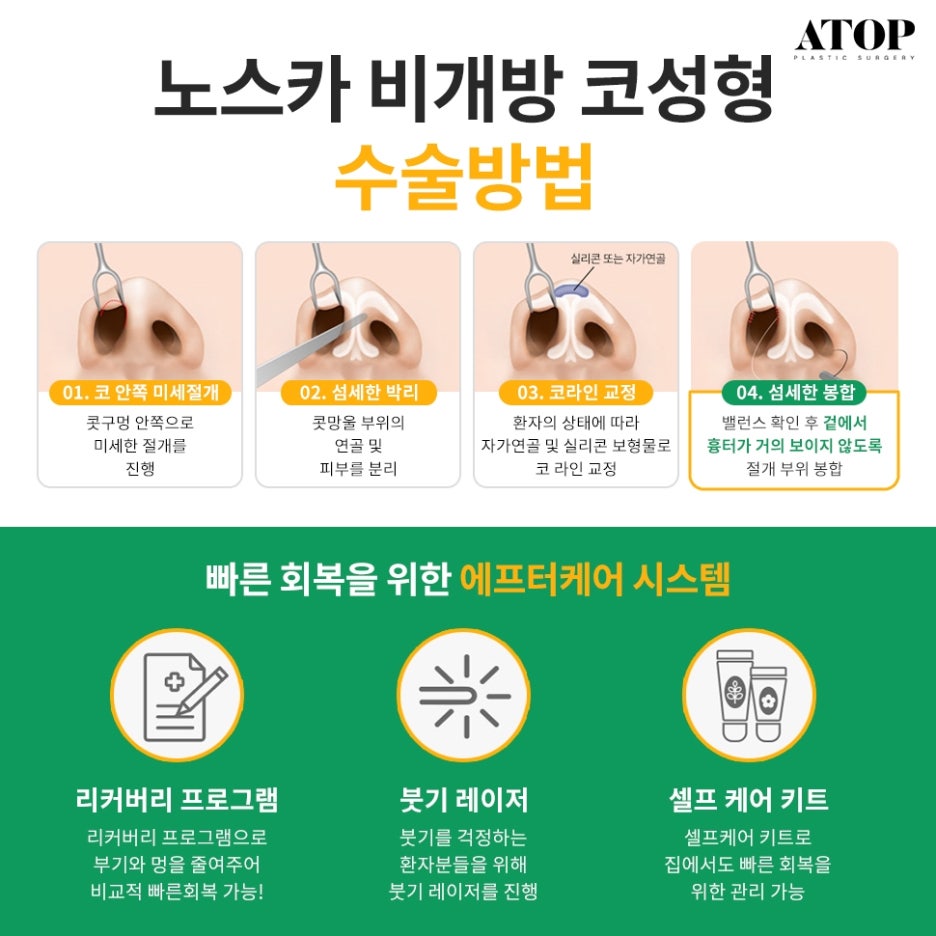
In nose surgery, the choice of material is very important, but the method used to plan and perform the surgery also has a major effect on the result. The focus is often on raising the bridge and tip of the nose, and if you choose “Triple Line Nose Surgery,” which can improve the philtrum line at the same time, you can complete a more three-dimensional self-rib rhinoplasty line.
Even at the same nasal tip, correcting the septum can make the nose appear higher, and improving the philtrum area can create a side profile that flows from the forehead to the tip of the nose and to the lips, giving a more pronounced three-dimensional look. By simultaneously correcting the nasolabial angle, the philtrum line can become less convex, helping improve the appearance of a protruding mouth or the look of a protruding mouth.
To complete this surgery, it is necessary to thoroughly analyze not only isolated parts of the nose, but also the nose height, width, length, angle, the forehead and nasal bridge, the nasal tip and columella, and the philtrum angle. After that, the ideal nose line is designed. By correcting the nose and nasolabial angle at the same time and naturally shaping the nostrils, adding volume to the nasolabial angle area can bring out the three-dimensional quality of the nasal tip and philtrum area even more.

Self-Rib Rhinoplasty Review Combined with Triple Line
Triple Line Nose Surgery is a method that can be applied to both first-time surgery and revision surgery. In revision surgery, for many cases the reason is not simply a low bridge, but rather a sagging, upturned, or deformed nasal tip, so before surgery it is important to consider changes in the nasal tip and philtrum line.
Therefore, if you plan and proceed by combining self-rib rhinoplasty reviews with Triple Line, you can expect a more natural, softer nose without a foreign-body sensation. The bridge should flow smoothly into the tip of the nose, with a slight angle preserved at the nasolabial angle so that even the philtrum looks natural, resulting in a nose that is far more harmoniously changed.
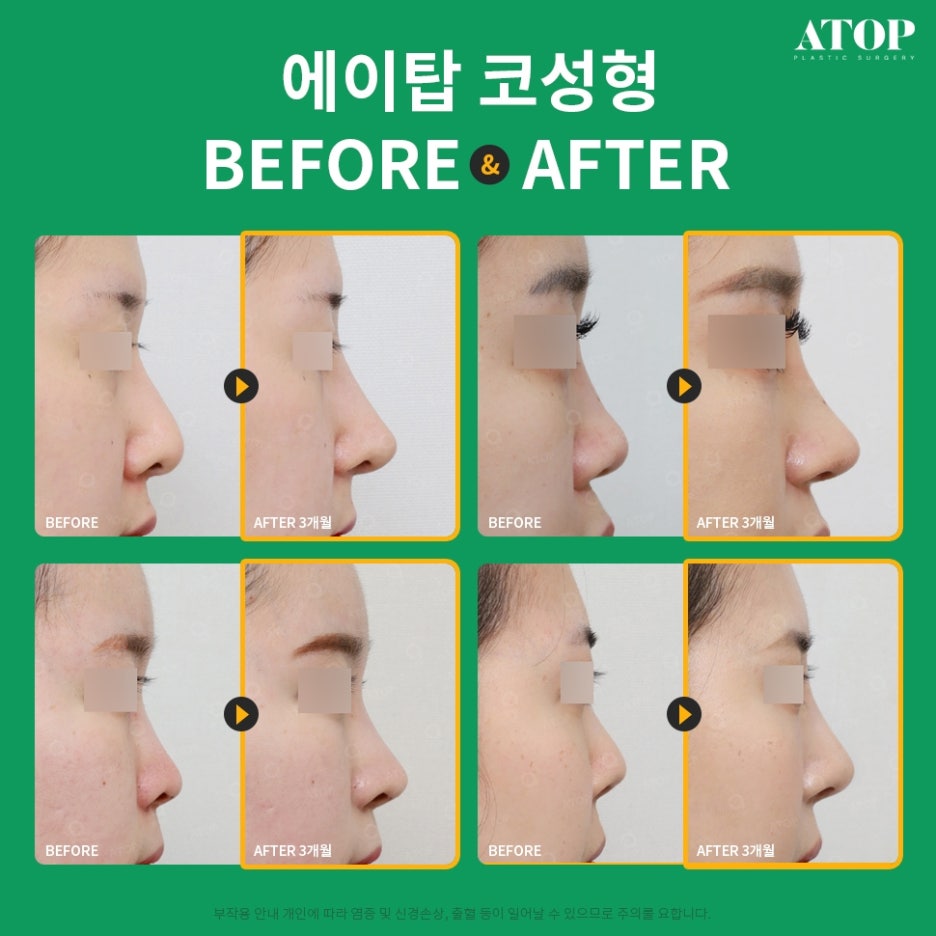
I hope this can be a review of ATOP Plastic Surgery that presents an ideal nose by considering the overall shape, including the nasal tip and nasolabial angle, nose height, nostril line, and nose length.











 Previous image
Next image
Previous image
Next image










Previous image
Next image