
The face shape is largely determined by the harmony of three bones: the cheekbones, square jaw, and chin. Among them, the cheekbones affect the width and side line of the face, while the square jaw line that runs from below the ears to the front of the jaw is an important structure that influences facial contours. The chin is related to the length and proportions of the face, and the impression it gives can change depending on whether it protrudes or not. In fact, if you look at reviews of chin implant surgery or osteotomy on ATOP Plastic Surgery, many cases are performed together with cheekbone and square jaw surgery, because the facial bone structure is closely connected. If contour surgery is performed by correcting these mutually influential areas together, a more harmonious and balanced result can be expected.
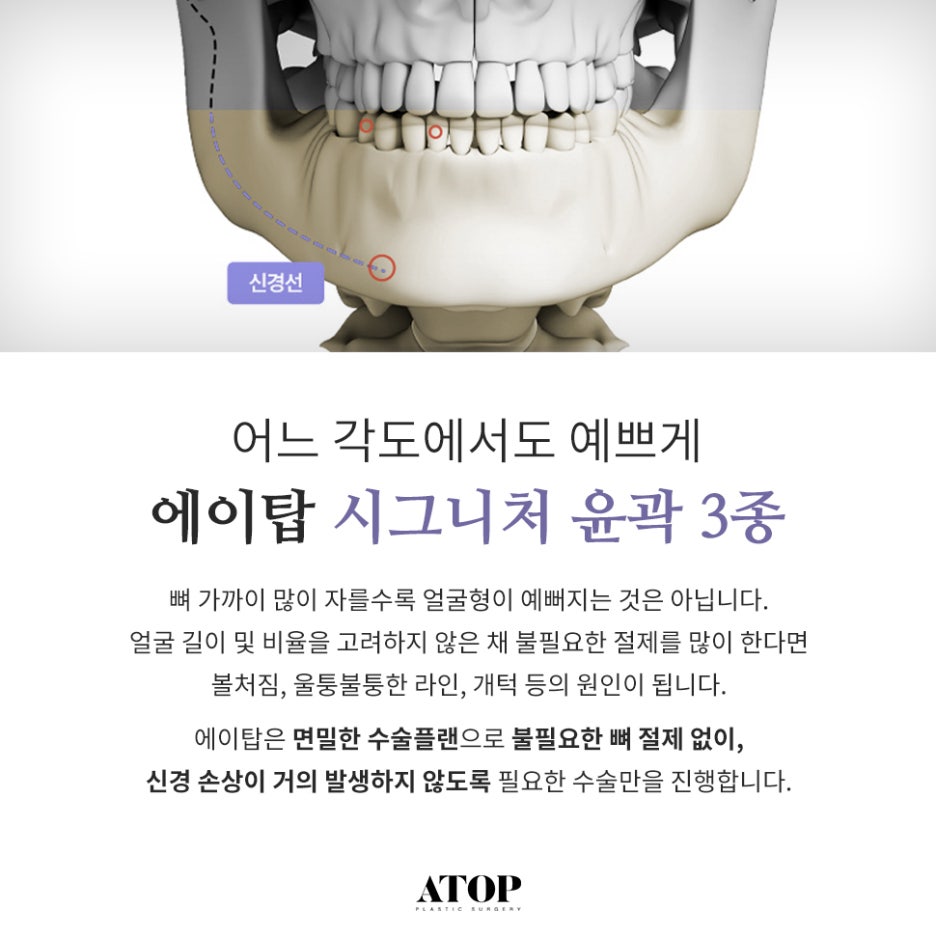
Types of Chin Surgery That Create a Soft Line
The facial contour bones that run from the cheekbones to the square jaw and chin are all organically connected and affect one another. Some people may only be dissatisfied with a specific area, but in many cases several areas do not create harmony together. That is why many people undergo two or more procedures at the same time when having facial contour surgery. In particular, if there is disharmony not only in the cheekbone or square jaw line but also in the chin, correction can be considered through chin implant surgery or, depending on the position and shape of the chin, advancement, setback, or T-shaped osteotomy.
Chin advancement is applied when the lower jaw appears to be set back, and it moves the chin bone forward to properly balance the proportions of the face. On the other hand, when the chin protrudes too far forward, chin setback surgery can reduce the length or width by removing bone and moving it backward. If the chin sticks out in front, the impression can seem strong, and it may look like a prognathic jaw.
If the chin is developed in a wide, angular shape, T-shaped osteotomy can be considered. This surgery cuts the chin bone in a T shape, removes the central bone segment, and brings the bones on both sides together and fixes them in place, creating a slimmer facial shape. Since the square jaw is often developed together with the chin, many cases are improved with T-shaped osteotomy rather than chin implant surgery.
If the chin is flat and lacking definition, it can also be improved through chin implant surgery. This method involves making an incision inside the mouth and inserting an implant. It is suitable for cases where the bone has not developed enough or where advancement surgery alone cannot create sufficient dimensionality. As the overall facial dimension is enhanced, it can lead to a more natural change.
Square Jaw Surgery That Connects a Curved Line
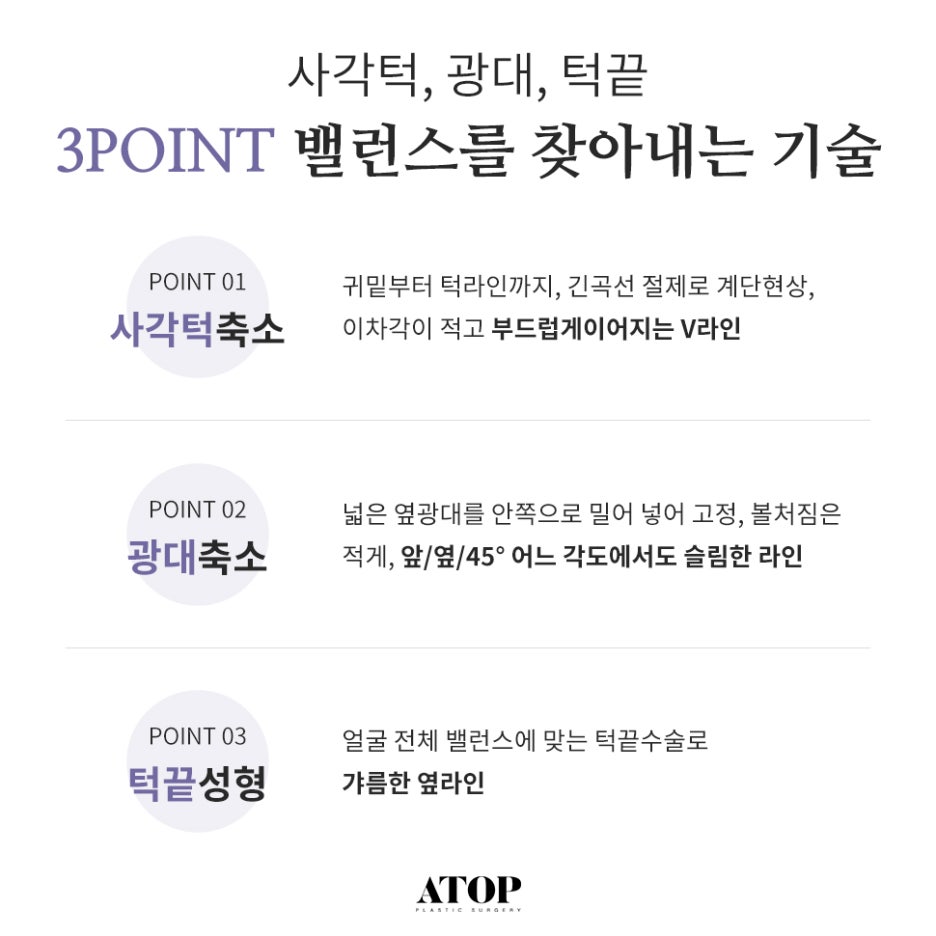
Among contour surgeries, square jaw surgery is a method chosen by many people. It trims the developed angular bone below the ears, but if that area alone is removed indiscriminately, the jawline may not flow smoothly and the uneven bone shape may remain. This is called a step deformity or secondary angle, and to prevent it, a "long curved resection" is needed to contour the bone into a curve that naturally extends toward the front of the jaw.
Long curved resection smooths the bone structure from beside the ear to the front of the chin, creating a soft contour without step deformities. If the front chin is underdeveloped, balance can also be achieved by combining the procedure with chin implant surgery or osteotomy.
However, the cause of a square jaw is not always just the shape of the bone. If the bone itself is thick, especially the outer cortical bone, it can give the face a wide and heavy impression. In such cases, performing cortical bone reduction surgery to refine the line by reducing the unnecessary outer part of the bone can make the jawline look much more refined.
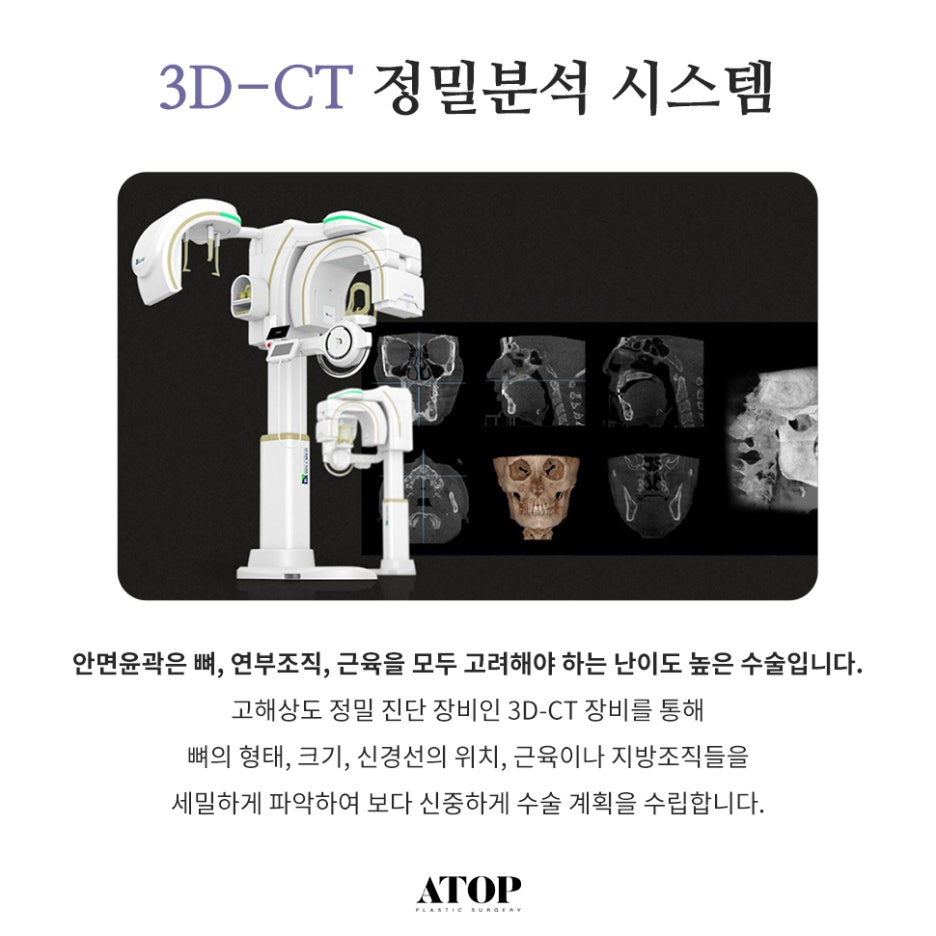
In addition, there are many cases where the face looks like a square jaw, but the real cause is not bone; it is muscle or fat. This is because developed muscles or excess fat can also make the face appear angular and bulky. After identifying the cause through a 3D-CT scan, if the main cause is muscle or fat, surgery can be performed to reduce those tissues. If necessary, combining chin osteotomy and chin implant surgery can help balance the face and may lead to more satisfying results.
If the chewing muscles, called the masseter muscles, are excessively developed, bone surgery alone will not be enough to define the jawline, so masseter reduction surgery should be performed. If fat such as buccal fat is located deep in the face, simple liposuction may not be enough to improve it, so a method that precisely removes fat from deeper areas is needed to refine the facial line.
Reducing a Pronounced Cheekbone Line with Cheekbone Reduction Surgery
Protruding cheekbones are bones located higher than the chin or square jaw. If unnecessary cheekbone bone is removed and the remaining bone is pushed inward, taking overall facial balance into account, the face shape can be refined more smoothly. In particular, if osteotomy is performed around the MMP, the prominent part of the cheekbone, with the high point as the center, a visible reduction effect can be expected without excessive resection. At this time, if the osteotomy is performed in an oblique direction rather than vertically, the range of bone movement can be widened and step deformities that make the osteotomy shape stand out can also be prevented.

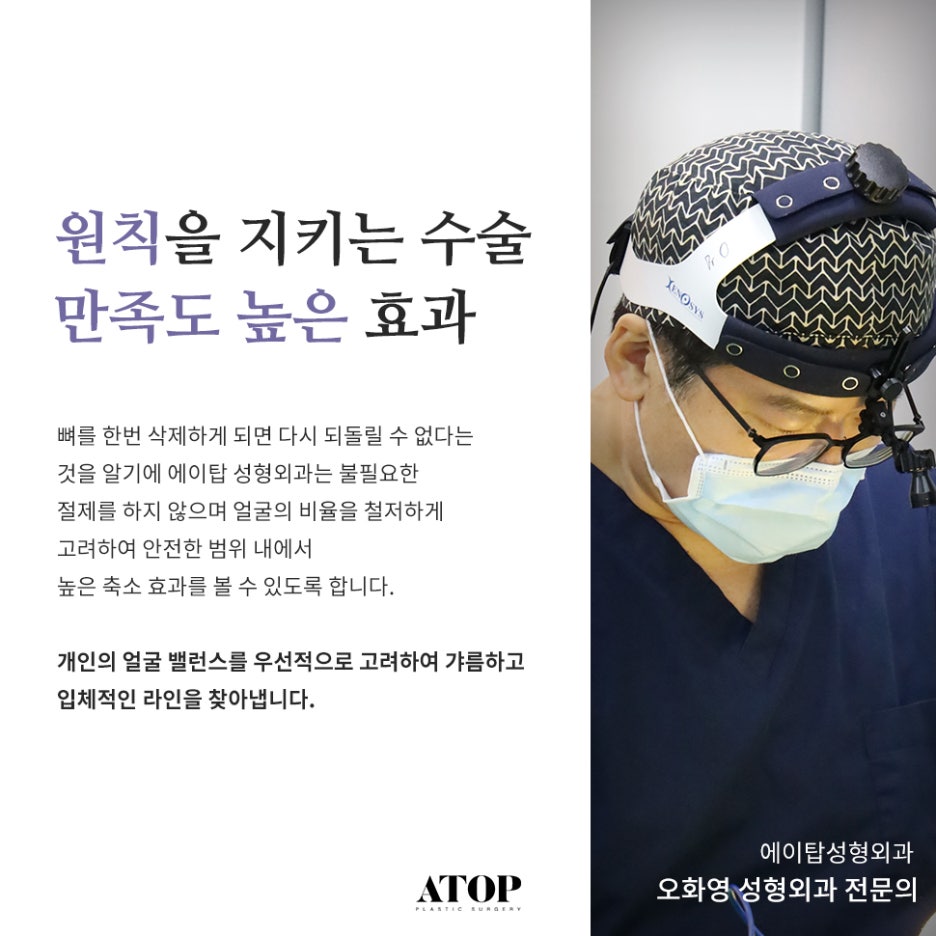
In this way, facial contours can be improved through triple procedures such as cheekbone reduction surgery, square jaw surgery, and chin surgeries like chin implant surgery. Since each person has a different face shape and different problem areas and causes, I hope you will also refer to ATOP Plastic Surgery reviews, have enough consultations, and then proceed with the surgery.










 Previous image
Next image
Previous image
Next image









 Previous image
Next image
Previous image
Next image