A board-certified plastic surgeon explains it directly.
"Doctor, I just want to lift my jawline a little..."
"I heard full-face lifting is too much, and thread lifting has only a weak effect."
"If I get a mini lift, will my nasolabial folds improve too? Or do I need a different surgery?"
These are the questions I have received most often over the past 10 years while performing thousands of facial lifting surgeries.
People in their late 30s to 50s often want results that are both natural and clearly visible.
Today, I’d like to speak honestly about two methods of "Yeo-woo Lifting (Fox Lifting)" that I have developed through years of surgical experience.
I will clearly explain how it started, why it was improved, and which method is right for which person.
Mini facelift Yeo-woo Lifting: how it began...
"With a 2 cm incision at the sideburn, I wanted to create a slim, fox-like jawline."
Existing mini lifts often had limited results, longer-than-expected recovery periods, or noticeable scars.
I looked for a method that could satisfy all three.
That led to a technique in which I make only a small incision of about 2 cm along the sideburn hairline border, properly dissect the SMAS layer,
and lift naturally by the amount needed for the scalp incision.
Because the patient’s jawline changes into a slimmer shape after surgery, similar to a fox’s sharp jawline, I named it "Yeo-woo Lifting."
But as I repeated the surgery, I discovered one drawback.
The jawline and side cheek line improved satisfactorily, but the nasolabial folds and sagging in the front cheekbone area did not improve as much as I had hoped.
In cases where midface sagging was also present, especially in patients in their late 40s and older, it was difficult to show the degree of improvement they wanted.
"There must be a better way."
I began to redesign the surgical method from the ground up.
Fox Lifting-V (type 1) and Fox Lifting-Deep (type 2)
Key points in improving the mini facelift lifting technique
Existing mini lifts often had limited results, longer-than-expected recovery periods, or noticeable scars.
I looked for a method that could satisfy all three.
The limitation of the existing method was that there was a limit to how much the SMAS could be dissected, so the midface retaining ligaments could not be properly released.
So I slightly changed the incision method, created an incision opening along the sideburn border, and decided to perform the surgery using the same method as deep plane technique.
Along the line connecting the outer canthus (outer corner of the eye) and the mandibular angle (jaw angle), I thoroughly dissect the layer beneath the SMAS,
with wide dissection extending to the zygomatic ligament and the upper masseteric cutaneous ligament
With this method, the nasolabial folds improved much more noticeably.
I found a way to fundamentally address sagging in the front cheekbone area.
So I clearly divided the two methods:
TYPE 1: Fox Lifting-V, the existing method, a vertical lift focused on the jawline
TYPE 2: Fox Lifting-Deep, the improved method, a deep lift that includes the midface
Fox Lifting-V vs Fox Lifting-Deep detailed comparison
Differences between the two mini facelift methods
Existing mini lifts often had limited results, longer-than-expected recovery periods, or noticeable scars.
I looked for a method that could satisfy all three.
| Fox Lifting-V | Fox Lifting-Deep |
|---|
| Incision location | 2 cm at the sideburn | Sideburn border (2-2.5 cm) |
| Surgical method | Superficial SMAS dissection + scalp excision | Deep plane technique (deep SMAS dissection) |
| Ligament management | Partial dissection | Complete dissection of the zygomatic and masseteric ligaments, and the maintaining ligaments of the masseteric skin |
| Recovery period | 5-7 days (return to daily life) | 7-10 days (return to daily life) |
| Duration of effect | 3-5 years | 5-7 years or more |
| Suitable age range | Late 30s to early/mid-40s | Late 40s to 50s |
TYPE 1: Fox Lifting-V, the standard for vertical lifting
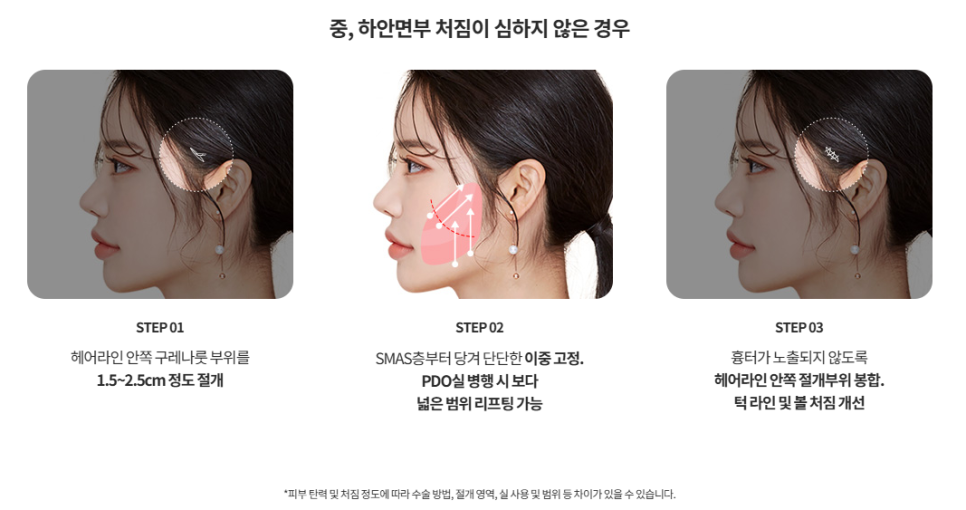
Among mini facelift lifts, for cases where sagging of the mid and lower face is not severe
Make an incision of about 2 cm at the sideburn, and dissect the SMAS layer only within the appropriate range. Then lift it naturally upward by the amount of scalp removed.
Advantages
-
Relatively fast recovery (most return to daily life within 7 days)
-
Less concern about scars due to the relatively small incision
-
High level of improvement in the lower face and jawline
-
Natural results
Limitations
TYPE 2: Fox Lifting-Deep, capable of improving the midface as well
Among mini facelift lifts, for cases where sagging of the mid and lower face is severe or the nasolabial folds are deep
Incise along the sideburn border and perform the surgery through a small window using the same deep plane technique as a full facelift.
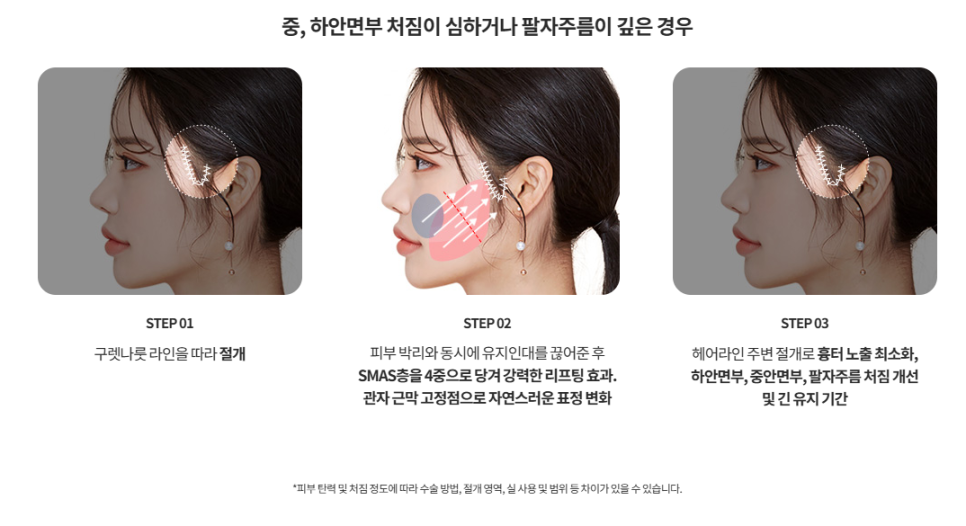
The key is complete dissection of the retaining ligaments
Advantages:
-
Noticeable improvement in nasolabial folds
-
Helps fundamentally address sagging in the front cheekbone area
-
Three-dimensional lifting of the entire midface
-
The effect tends to last relatively long (5-7 years or more)
-
Includes V-lift effects on the mid and lower face
Real surgical cases of mini facelift Yeo-woo Lifting
Customized surgery for each person, natural lifting results
Case 1: Fox Lifting-V, mid-30s
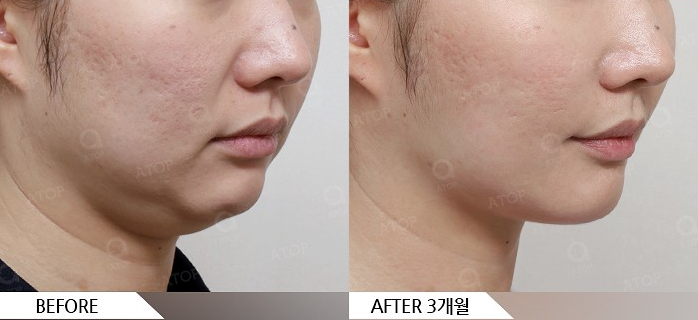
Pre-surgery condition:
-
Age 43, with jawline sagging and side cheek sagging as the main concerns
-
Nasolabial folds were moderate, and midface sagging was mild
Surgery chosen: Fox Lifting-V + facial liposuction + buccal fat removal + Botox
Progress:
2 weeks after surgery: "It’s amazing every time I look in the mirror. My jawline really came back!"
1 month later: Most of the swelling had gone down, and a natural line was completed
6 months later: Noticeable improvement in the line
Long-term follow-up after 2 years: The jawline is still maintained in a slim shape, with very high satisfaction
Real surgical cases of mini facelift Yeo-woo Lifting
Customized surgery for each person, natural lifting results
Case 2: Fox Lifting-Deep, improvement in nasolabial folds, 50s
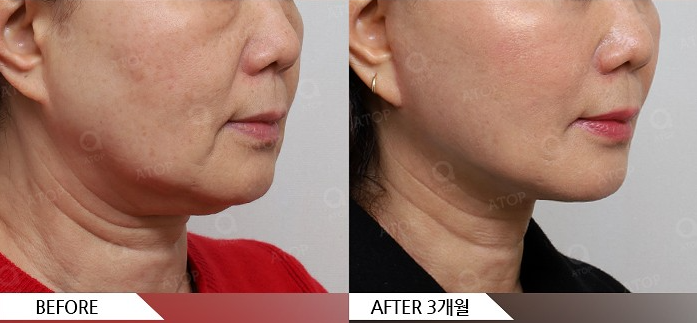
Pre-surgery condition:
-
Nasolabial folds and sagging in the front cheekbone area were the biggest concerns
-
The pre-surgery nasolabial fold depth was measured at about 4 mm
-
Surgery chosen: Fox Lifting-Deep + jowls + facial liposuction + fat grafting
Progress:
3 months later: Nasolabial fold depth decreased, and the entire midface became softer and more natural
1 year later long-term follow-up: High satisfaction, with midface improvement maintained.
Which Yeo-woo Lifting is right for me? Self-checklist
Customized surgical planning for each person, performed directly by a board-certified plastic surgeon
TYPE 1: Who is suitable for Fox Lifting-V
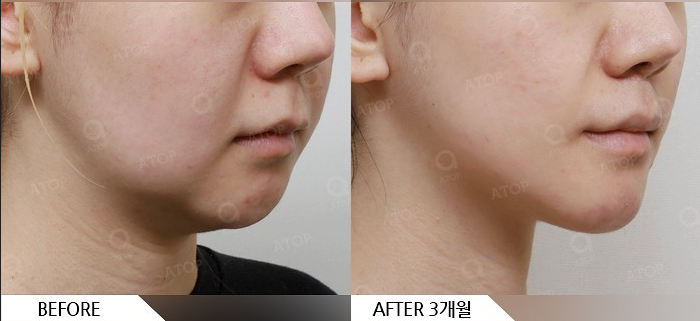
Late 30s to early/mid-40s
-
Jawline sagging, side cheek sagging
-
Nasolabial folds are mild or moderate
-
Those who want a quick recovery
-
Those getting a mini lift for the first time
TYPE 2: Who is suitable for Fox Lifting-Deep
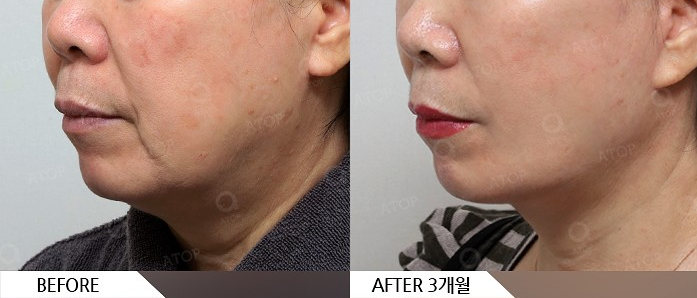
Late 40s to 50s
-
Nasolabial folds, sagging in the front cheekbone area
-
A feeling that the entire midface is sagging
-
Those who want V lifting and nasolabial fold improvement at the same time
-
Those who want long-lasting results
FAQ: Frequently asked questions
Questions often asked during consultations at A Top Plastic Surgery
Q1. How much scarring will there be?
A: Because it is hidden at the border of the sideburn hairline, it is barely noticeable.
Right after surgery to 1 month: a red line-like appearance, after 3 months: barely noticeable, and after 6 months: completely hidden within the hairline.
Q2. How does it compare with non-surgical lifting (Ulthera/Shrink)?
A: The purpose and effect are different.
Cost-effectiveness:
If you get Ulthera every year for 5 years: 5 to 6 million KRW
One Fox Lifting-V: in the 3 to 4 million KRW range (the effect is much more definite)
Q3. Why is the recovery period for TYPE 2: Fox Lifting-Deep longer?
A: Because the ligament release range is wider.
The more the ligaments are released, the more initial swelling there is. However, the actual difference is about 2-3 days, and most people can return to daily life within 10 days.
Q4. When is the time for revision surgery?
A: Although it varies by person, on average:
TYPE 1 Fox Lifting-V: after 3-5 years
TYPE 2 Fox Lifting-Deep: after 5-7 years or more
"Mini lifts also require a customized approach depending on the patient’s facial condition, age, and lifestyle."
Fox Lifting-V and Fox Lifting-Deep, completed through 10 years of trial and error, each have clear advantages and indications.
If you want a natural improvement centered on the jawline → TYPE 1 Fox Lifting-V
If you want a fundamental solution all the way to the nasolabial folds → TYPE 2 Fox Lifting-Deep
The important thing is to choose the method that is right for you.
I will provide an honest consultation so that you can make a choice you will not regret even 10 years from now.