Hello, I am Lee Han-jung, Chief Director of A-TOP Plastic Surgery.
Today, I would like to talk about lower eyelid fat repositioning.
When the area under the eyes looks particularly puffy or dark circles appear more pronounced, it is easy to assume that this is simply because there is too much fat under the eyes.
However, the appearance of the lower eyelids is influenced by a combination of anatomical factors, including not only the amount of fat but also the muscles and skin around the eyes, the position of the fat, the shape of the eyes, and the degree of sagging.
Therefore, rather than viewing lower eyelid fat repositioning as a procedure that simply removes protruding fat, it is better understood as a surgery that first accurately assesses the current structure under the eyes and then repositions unnecessarily protruding fat to soften and flatten the area.
- Why Does the Area Under the Eyes Look Both Bulging and Hollow?
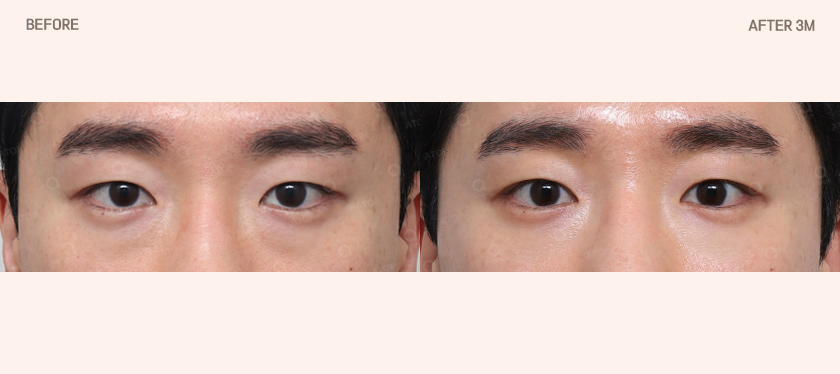
Aging or bulging under the eyes is not caused solely by an increase in fat.
Several tissues surround and support the orbital fat around the eyes. Over time, the elasticity of the skin and soft tissue may decrease, and the structures supporting these tissues may become lax. As a result, the fat may appear to protrude forward, while the tear trough area may appear relatively hollow, creating an older-looking appearance.
Therefore, when planning lower eyelid fat repositioning, it is important to consider not only “how much fat should be removed,” but also how to improve the protruding and hollow areas in a natural way.
In particular, removing more fat than necessary may instead lead to a hollow appearance under the eyes. For this reason, it is important to comprehensively assess the individual’s fat volume and the condition of the lower eyelids.
- The Key to Lower Eyelid Fat Repositioning Is “Repositioning,” Not “Removal”
Lower eyelid fat repositioning and lower eyelid fat removal may sound similar, but their surgical objectives are different.
When fat is simply excessively protruding, partial fat removal may be considered. However, when bulging and hollowing occur together under the eyes, moving the fat to another location to improve uneven contours may be more appropriate than removing it unconditionally.
In other words, the goal is not to make the area under the eyes completely flat. It is important to soften the boundaries created by protruding fat and create a natural transition from the lower eyelids to the midface.
This process requires an assessment not only of the amount and position of fat, which differ from person to person, but also of skin elasticity, muscle structure, eye shape, and the degree of sagging.
- “Septum Reinforcement” and “Preservation of Lower Eyelid Fullness” Are Important for a Natural Appearance
Surgery Considering the Orbital Septum
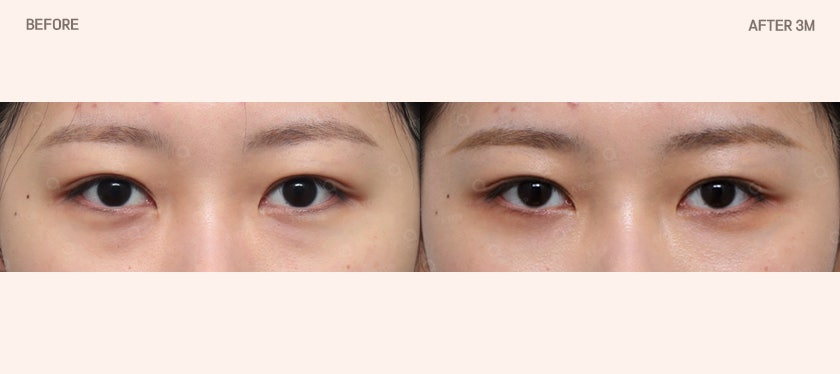
The orbital septum is an important structure that surrounds and supports the space where the fat around the eyes is located.
When the fat under the eyes is protruding, the condition of the orbital septum must also be checked. If necessary, the lax septum may be appropriately tightened during the procedure.
It is important to consider the supporting structures under the eyes rather than simply moving the fat. During lower eyelid fat repositioning, how to improve the structures surrounding the fat is just as important as “how much fat should be removed.”
Preserving Lower Eyelid Fullness as Naturally as Possible
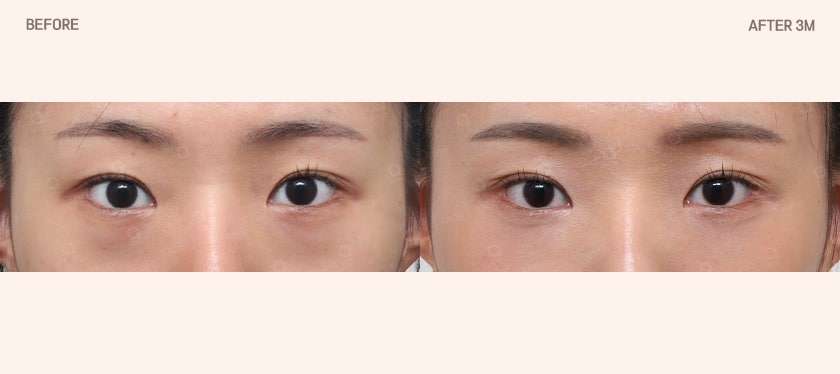
Another important aspect is preserving the fullness of the lower eyelid.
The fullness directly beneath the eyes is one of the elements that determines the impression of the eyes. Making the area under the eyes excessively flat or causing excessive damage to the surrounding tissues may create an appearance that differs from the person’s existing natural eye shape.
Therefore, during lower eyelid fat repositioning, it is important to operate while considering not only the organization of protruding fat but also the surrounding tissues, including the orbicularis oculi muscle, as well as the shape of the lower eyelid fullness.
- Why You Should Choose a Lower Eyelid Fat Repositioning Method That Suits You
The same lower eyelid fat repositioning method cannot be applied to everyone.
The appropriate surgical method may differ depending on factors such as whether a person has a large or small amount of lower eyelid fat, good skin elasticity or significant sagging, or prominent lower eyelid bone structure or tear troughs.
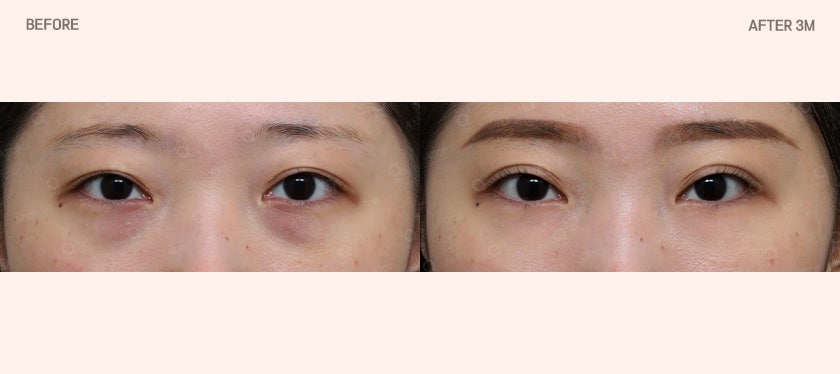
When skin sagging is significant, it may be difficult to achieve the desired result through fat repositioning alone. Therefore, the required scope of surgery should be determined by considering the condition of the skin and muscles together.
The approach to lower eyelid fat repositioning may also vary depending on the individual’s condition. At A-TOP, the procedure is performed through a micro-incision via the conjunctiva on the inside of the eye, so that external incision scars are not visible and bleeding, swelling, and bruising can be minimized.
In Closing...
The area under the eyes is one of the parts of the face where even a small change can significantly alter the overall impression. Therefore, rather than approaching lower eyelid fat repositioning as a procedure that simply removes protruding fat, it is important to develop a surgical plan that comprehensively considers the surrounding structures, including the location and amount of fat, the skin and muscles, the orbital septum, and lower eyelid fullness.
To achieve a natural result, a delicate approach is needed—avoiding excessive fat removal, reinforcing the septum when necessary, and preserving the lower eyelid fullness and surrounding tissues.
Because the shape and degree of sagging under the eyes differ from person to person, it is important to accurately assess the condition of your skin before deciding on surgery and to choose a surgical method suited to that condition.
I hope this has helped you better understand septum reinforcement and lower eyelid fullness preservation during lower eyelid fat repositioning surgery. I will see you again next time.
Thank you.