Balance is truly important in everything. Just as there is light and shadow, every element in the world has both sides, or multiple sides, to it. But when things become tilted too far in one direction, the result is naturally that the whole thing falls apart. The same applies to our bodies. A person’s body also needs to be balanced overall in order to look truly good and avoid problems in daily life. When that is not the case, various difficulties can arise. The same was true for women’s breasts and their size. Being too small can be a source of insecurity, but having breasts that are excessively large can also cause many troubles, which is why people desperately look into surgical methods for breast reduction.
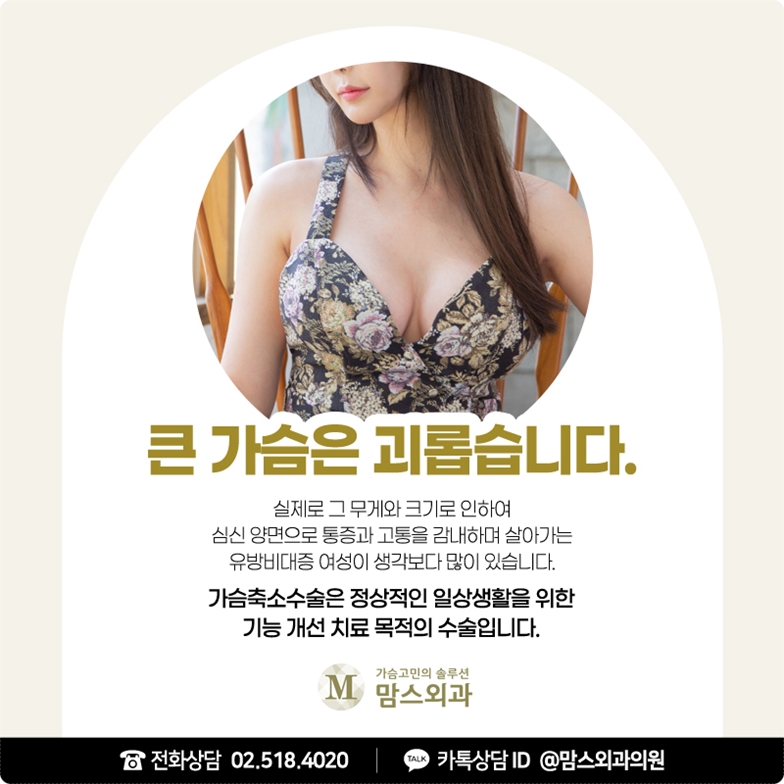
There are many cases where it is hard to really grasp what “large size” means. In reality, people who suffer because of their breast size often do not receive much empathy from those around them. This is generally because when women worry about breast size, many people tend to see it only from an aesthetic perspective, as being small and flat, the so-called “chestless” look, is considered the problem. But the real issue goes beyond simply not looking pretty or not meeting beauty standards. It becomes a practical problem in terms of bodily and mental health, and function. The larger the size, the heavier it is, and it becomes as if one is constantly carrying a heavy load. As a result, the shoulders, neck, lower back, and other parts of the body naturally begin to hurt. In addition, the breasts sag more easily, the shape looks less attractive, and the skin rubs and bumps together, causing irritation and leaving wounds.
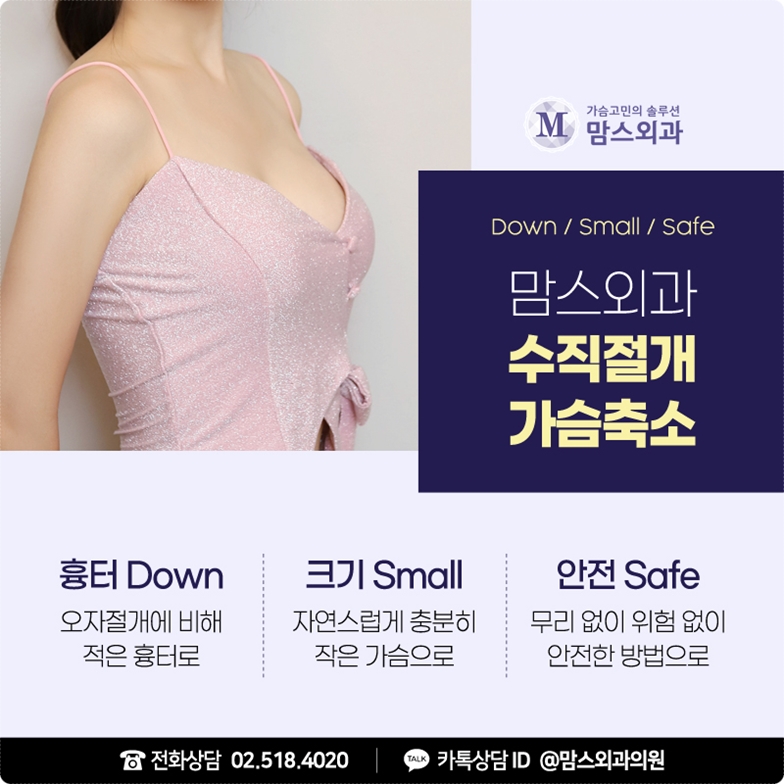
Because of this suffering, people often make active efforts to reduce the size. That is how the above method comes into focus. And while looking for related information, people inevitably encounter various opinions about how to choose a breast reduction surgery method. In particular, there is much discussion about the vertical incision method. It is often criticized for not allowing much reduction and for not doing a good job of correcting sagging. In fact, the vertical method leaves fewer wounds, can reduce scars, and can still make the breasts sufficiently smaller. That is why it has already been used globally.
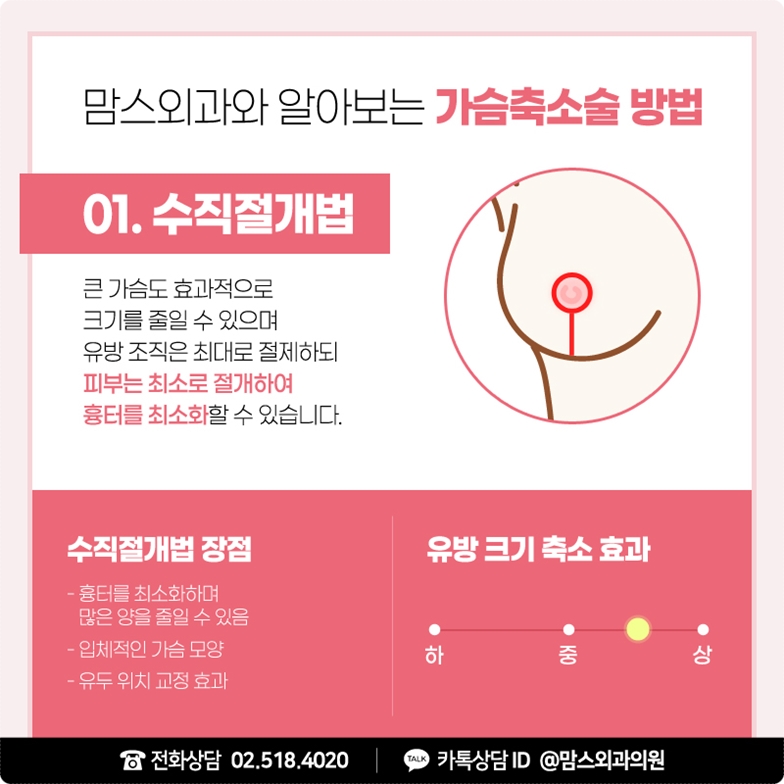
Even for large breasts, the vertical incision method can remove enough tissue and reduce the size. It adjusts the size and shape by removing a significant amount of breast tissue. Since the skin wounds are limited to the areola and one line extending vertically downward from it, the scars are relatively small. That also makes later recovery, wound care, and scar reduction easier. The breast shape also tends to become naturally smaller, rounder, and fuller. Although there is a common belief that large breasts are difficult to reduce significantly, in reality, with skilled hands, it is certainly possible to reduce them by a sufficient amount.
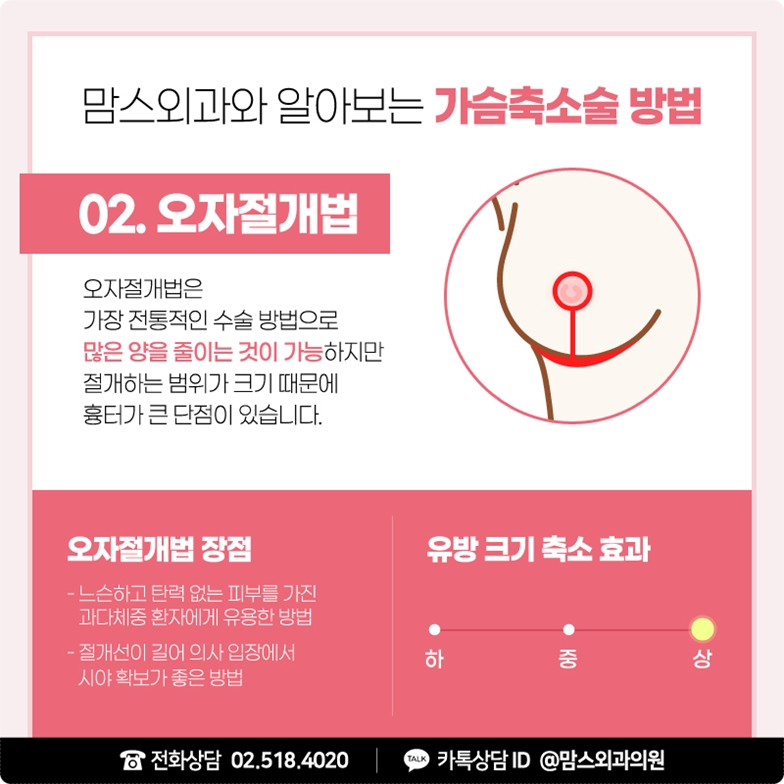
The T-shaped incision method is a traditionally used approach. It creates an additional horizontal wound line along the lower part, which means a wider and larger surgical area and therefore larger wounds and more visible scars. In the case of the T-shaped method, the skin is cut to create the shape, so it is sometimes chosen when the skin has lost a lot of elasticity or when the breasts are greatly drooped due to excessive weight. There is a common belief that it allows for greater reduction, but in actual terms, the degree of reduction does not differ greatly from the vertical method. After all, the vertical incision method was designed to reduce the wound area and scarring of the T-shaped method and make recovery easier.
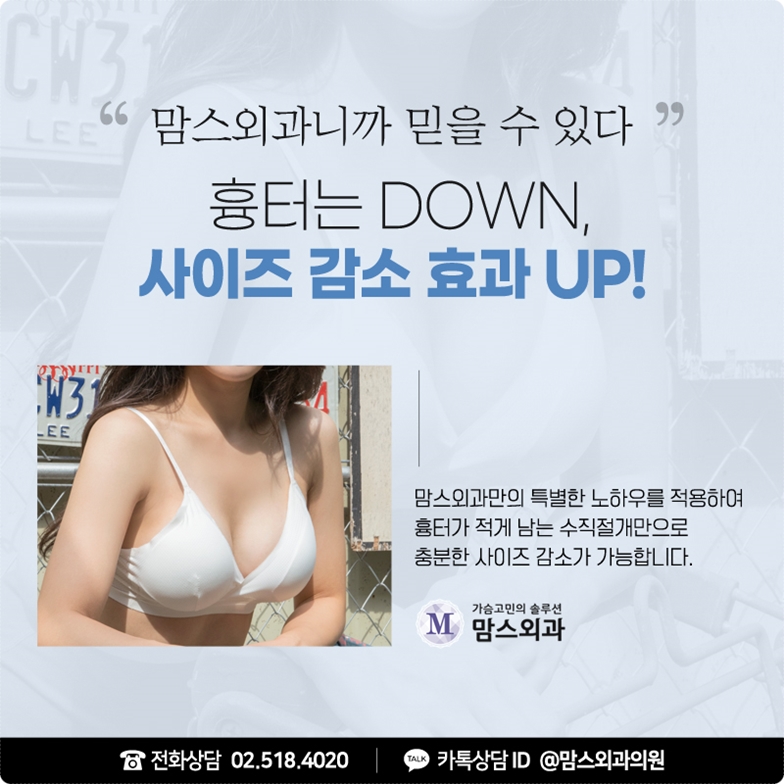
When it comes to surgical treatment, I think a better direction is one that achieves the desired result sufficiently while remaining satisfactory over time and making recovery after the procedure easier. For that reason, in breast reduction surgery, the vertical incision method, which can reduce the wound area, leave fewer scars, and still sufficiently reduce size, seems to be the more desirable and efficient option. In particular, if breast reduction is performed at a place that accurately understands and clearly knows the female breast, the result can be even more stable and satisfying.
Moreover, I think it would be even better if you could discuss this with a woman and entrust your breasts to another woman. First of all, it is a part of the body that people hesitate to show carelessly, and if you already feel insecure about it, showing it and talking about it would not be easy at all. Above all, if women talk openly with other women about what impact the breasts and their size have on life, they would likely be able to empathize more deeply and take care of the difficult and uncomfortable parts more carefully and thoughtfully. In addition, because it is a place that handles only breasts, it also has the advantage of being able to provide a more systematic approach and recovery.
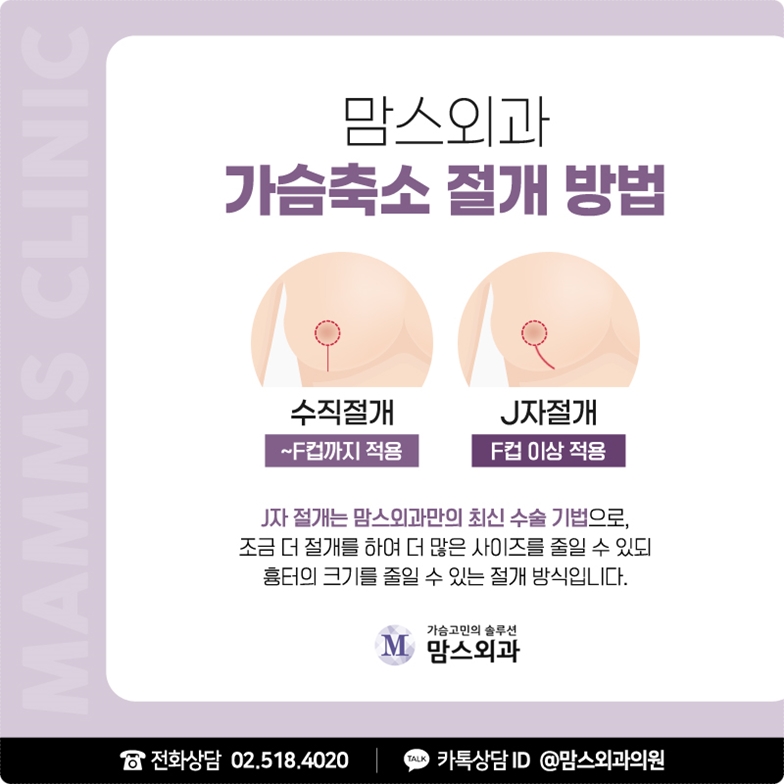
It should not be claimed unconditionally that the T-shaped incision, which leaves larger wounds, is the proper surgical method for breast reduction. Shouldn’t those who perform size-reduction procedures also keep looking for better methods and continue to develop? In any case, the person who receives a solution and has to live with the result for the rest of their life should be able to look back after some time and smile with satisfaction, saying it was truly the right choice and a good choice for their life. That is why this place uses the J-shaped incision technique, which goes a little further than the vertical method, for cases involving very large and sagging breasts, so that the desired improvement can be achieved. It is the result of constantly seeking methods that can satisfy people in many ways and continuously researching them.
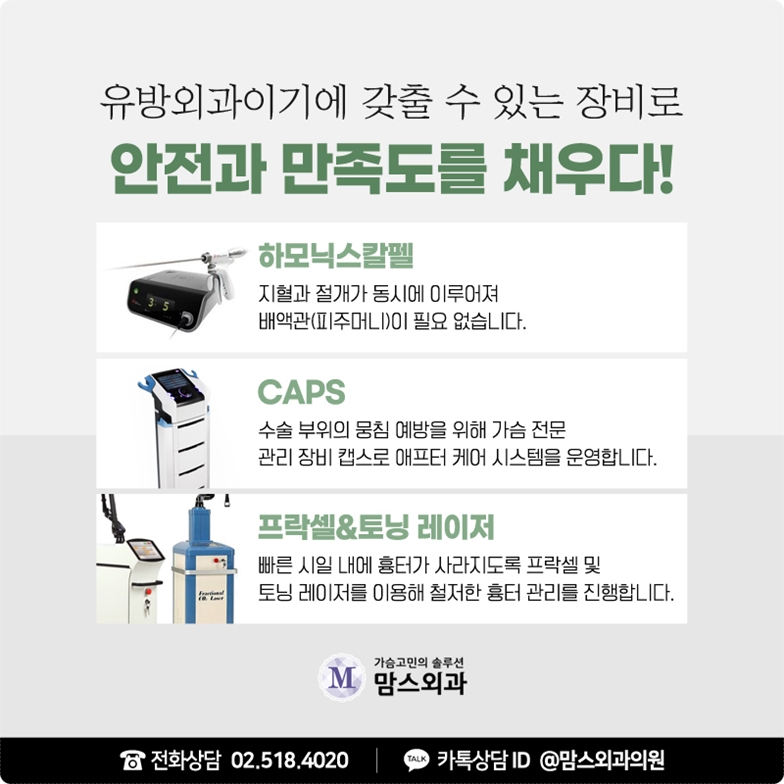
There were also various other techniques in use. First, by using a device called a Harmonic Scalpel, the wound can be made even more delicately and bleeding can be minimized. This device can cut tissue while also controlling bleeding at the same time. By reducing bleeding quite a bit during the procedure, there is the convenience of not needing to use a blood drain during recovery. The CAPS device, which exists to care for women’s breasts more thoroughly, is also a big help. It can be said to significantly improve the quality of aftercare. Various laser devices were also available so that scars could be managed properly even after reduction.
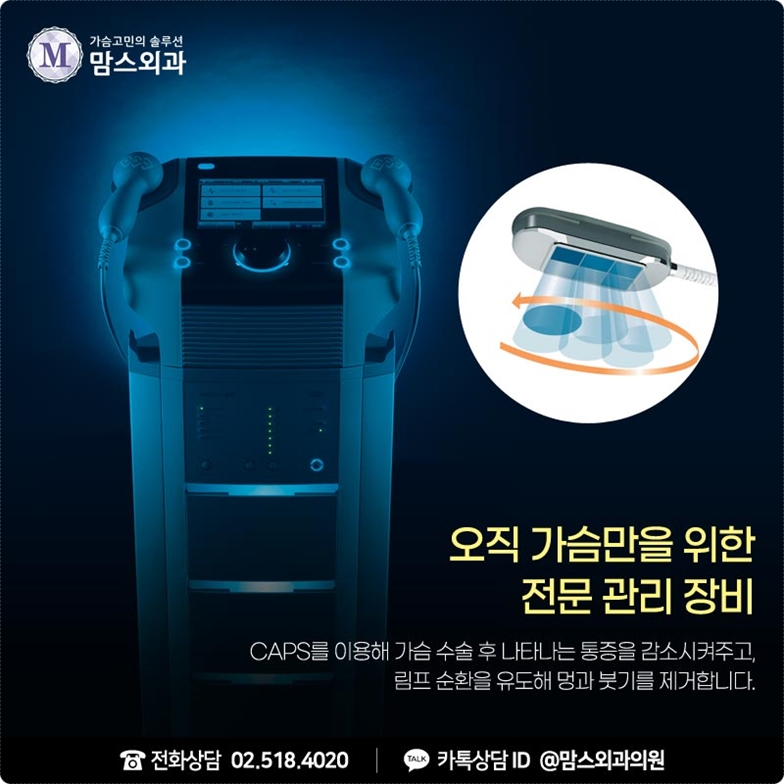
Among them, CAPS plays a major role in forming satisfying breast reduction results. Its full name is capsules, and it is a care device for women’s breasts. No matter which breast reduction surgery method is used, the wound is never small, and since a significant amount of tissue is removed, the process of returning to daily life can become quite long and difficult. That is why later care plays an important role. In principle, pain needs to be reduced, and bruising and swelling should be removed quickly. Only then does scar care also become easier. CAPS can do that role. In addition, capsules can also help resolve the hard lumping and unnatural shape that may occur during the healing process of tissue wounds. It can quickly restore a natural shape and soft feel. It is fair to say that such equipment can only be found at places that focus exclusively on breasts.
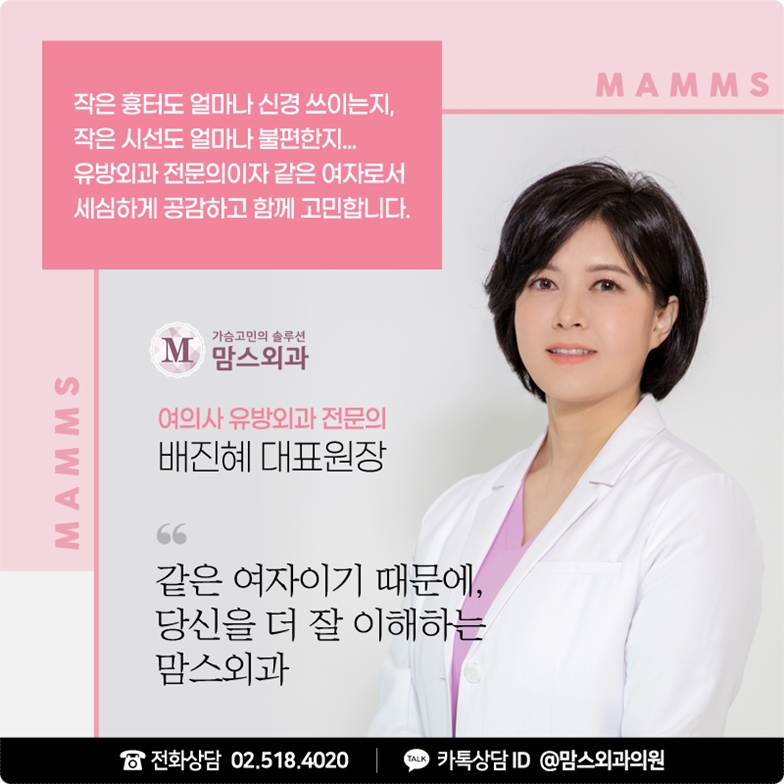
I believe there is also clearly a perspective that comes from seeing things from the standpoint of another woman. Not only can they empathize more deeply with the discomfort and pain caused by severely large breasts, but also with the desire to improve them. They can also think more deeply about and understand the situation afterward and the condition after a long time has passed. The fact that they place greater emphasis on aftercare and pay attention from the very beginning of the procedure through the recovery stage all comes from that kind of carefulness. Since this is an issue that can involve many difficulties, I think it can be helpful to talk things through 충분히 and discuss the method of breast reduction surgery together at a place that understands you more deeply and thinks carefully about you.