
When someone is born as a woman, one may wonder what it would take to feel truly confident about being female.
Everyone may have different standards, but in the end, having a body shape that feels satisfying to oneself may be the first step.
That is why so many people seek breast ptosis correction and feel the need for it.
When the breasts hang downward, they do not look flattering even under clothing, cause various kinds of discomfort, and can also make a person lose confidence in themselves.
But because there are quite a few cases in which the breasts take on this drooping shape, people keep thinking about ways to improve it.
If you ask why a woman’s breasts take on such a drooping shape, the causes can be very diverse.
Because of that, it is hard to point to one thing and call it the correct answer.
As the body ages and overall elasticity decreases, the breasts naturally tend to sag more downward.
At the same time, volume also decreases, which can make them look even less attractive.
So when dealing with this situation and trying to improve sagging, many things had to be considered.
One must have a very good understanding of the female breast as a body part,
and knowledge not only of the breast itself but also of the female life cycle and the changes that come with it.
That is the only way to correctly understand what problem is affecting the shape and respond appropriately.

The first reason that comes to mind for having breasts of this shape is aging.
As people grow older, the loss of elasticity naturally affects the breasts as well.
When the skin can no longer maintain its firmness or provide proper support, heavy breasts gradually sag downward on their own.
In addition, as aging progresses, tissues such as fat also decrease, so volume is lost and the shape can become even more wrinkled.
It is similar to a balloon that was attached to a wall: at first it is full and firm, but as time passes it slowly droops downward, loses air, and develops fine wrinkles.
Women are also affected physically by pregnancy and childbirth.
As the baby is born, the mammary glands inside the breasts naturally develop for breastfeeding, and once that period passes, the breasts shrink and return again.
However, the empty space may remain, leaving the breasts with a sagging shape.
Rapid weight loss and yo-yo dieting can also be causes.
In fact, for a long time we did not think very seriously about these changes.
That was because there was a common belief that breasts naturally sag to some extent with age or during the process of giving birth and becoming a mother.
But it is also true that leaving it alone comes with many inconveniences.
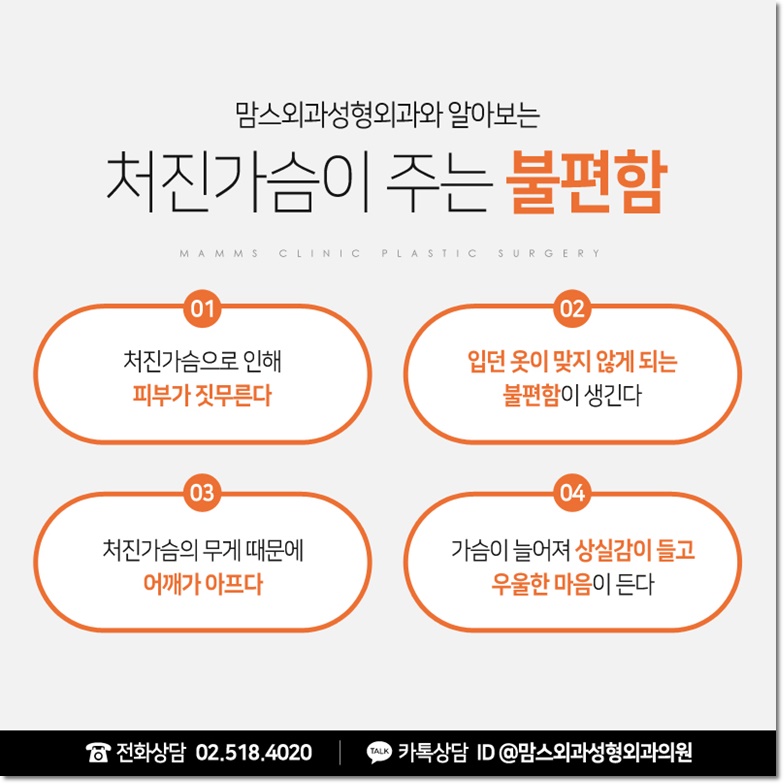
As the breasts hang downward and bear more weight, many people complain of pain in the shoulders, neck, lower back, and other parts of the upper body.
This is especially true when the size is large: something that was already heavy becomes even heavier.
Naturally, the overall body silhouette changes, which also creates the inconvenience of clothes no longer fitting as they once did.
As the skin rubs together, the skin under the breasts can become irritated and painful.
A person may feel a sense of loss, become depressed, and think they lack confidence.
This creates not only aesthetic problems but also functional ones in various ways.
That is why breast ptosis correction is by no means unnecessary.
Recently, this kind of approach has also been seen as part of body anti-aging.
Body anti-aging means that just as we care for the face to maintain a youthful appearance, we should also provide careful care for our bodies so they do not fall behind the aging process that steadily progresses.
One part of that is identifying sagging and stretched areas of the body, including the breasts, and carefully improving them to a firmer shape.
Through this, the goal is to create a younger and more attractive body shape and help make everyday life more satisfying.
Just like facial anti-aging, more and more people are seeking breast ptosis correction in order to remain confident with a youthful appearance even as they age.
Before considering breast ptosis correction, you should first determine accurately whether your breasts are truly sagging downward.
Sometimes the upper fullness has diminished and the volume has simply shifted lower, which can make people feel that their breasts are sagging, so a clear diagnosis is necessary.
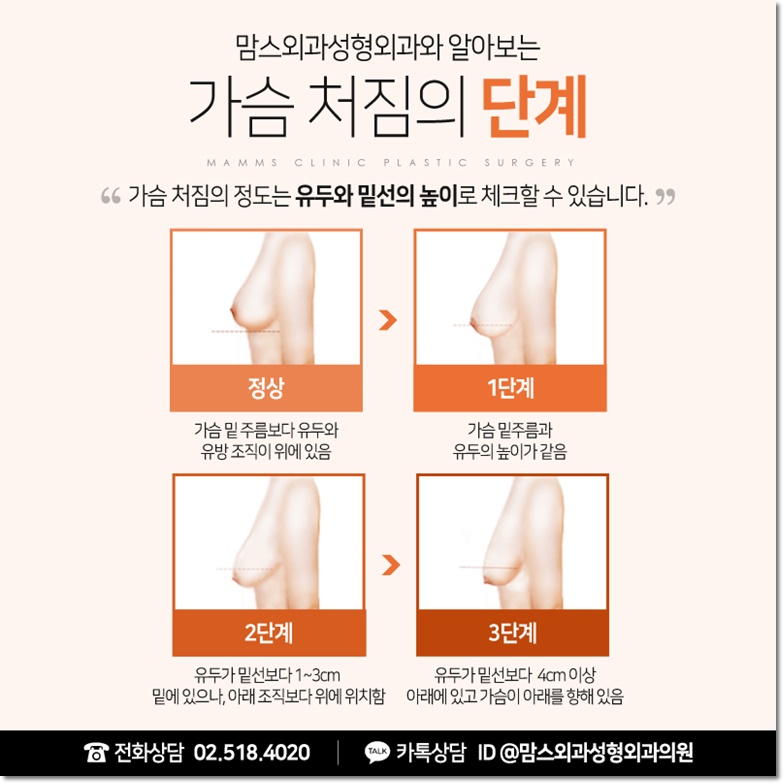
The standard is assessed by the inframammary fold line, looking at where the nipple is in relation to the fold.
If the nipple and breast tissue are above the inframammary fold, then the breasts are not sagging.
From the point where the nipple is at the same level as the fold, the breasts are considered sagging, and depending on how far below that level they are, the condition can be divided into three stages.
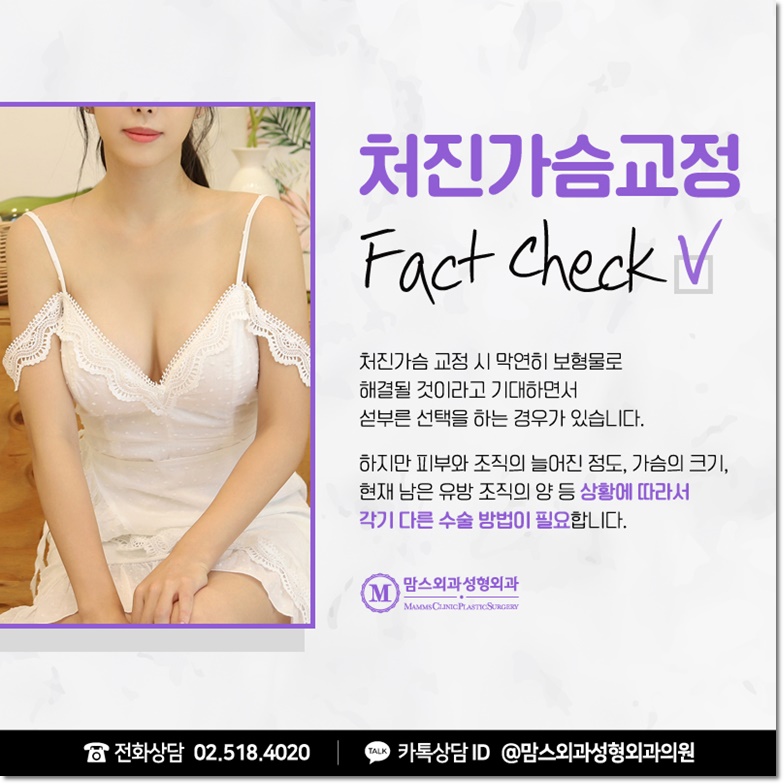
Even after carefully checking and determining that the breasts are indeed sagging, misunderstandings often arise.
When the shape changes like this, some people vaguely think that inserting an implant will solve the problem.
Of course, there are cases in which improvement is achieved using implants.
However, implants are not always the answer, and different measures must be taken depending on the situation.
To do that, it is necessary to closely examine the skin and tissue, assess the degree of sagging and the condition of the elasticity, and check the original breast size and the amount of breast tissue currently remaining.
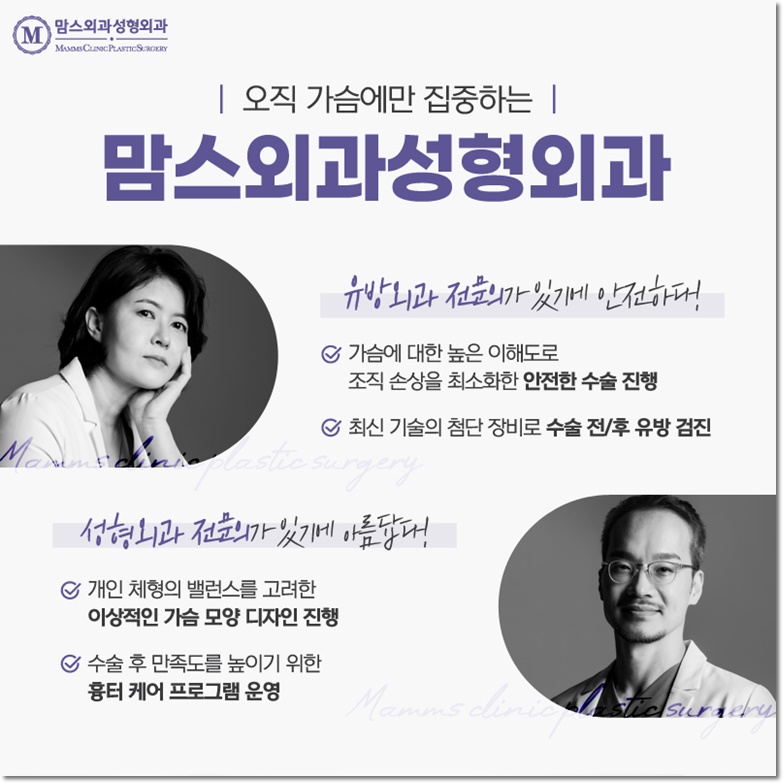
In the end, to properly perform breast ptosis correction, one must have a sufficient understanding of the female breast itself and also know what is needed to improve it into a beautiful shape.
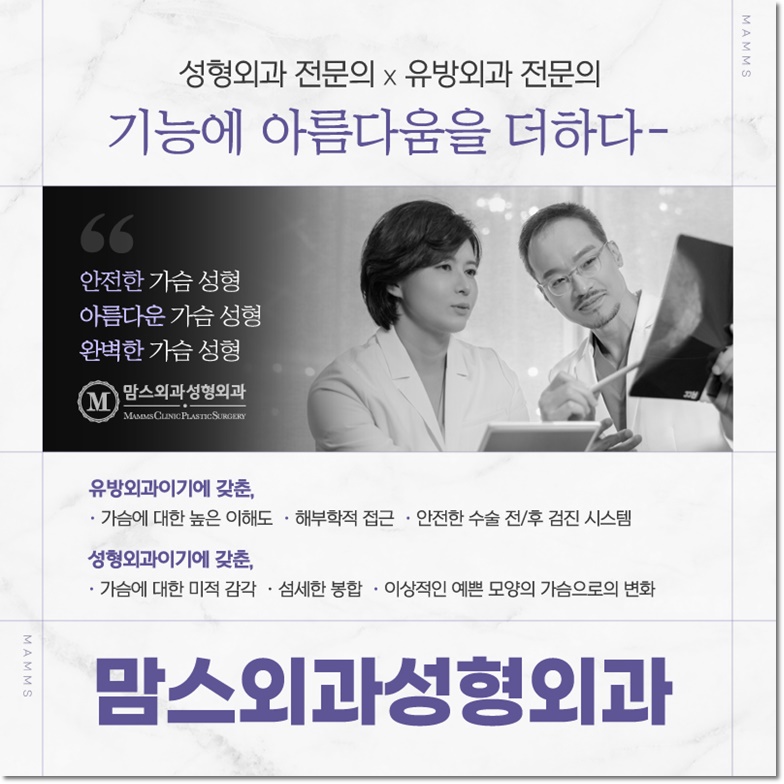
It is also worth paying attention to a method in which people who can cover these aspects work together.
In fact, this area exists at the intersection of breast surgery, which handles various breast diseases and symptoms, and plastic surgery, which improves parts of the body that lack aesthetic balance or have room for improvement.
If possible, it is better to receive help from both sides.
The goal is to make the process healthier, more stable, and to ensure that the actions truly needed right now are carried out correctly.

Then what is the proper way to proceed with breast ptosis correction?
In principle, improving sagging means removing some of the skin that has lost elasticity, gathering it again neatly, and fixing it in place.
However, the details differ depending on the type.
In cases where there is some volume but little tissue and sagging is present, where the original size is not large and the mammary glands have decreased due to breastfeeding or similar reasons, a lift combined with an implant to add a bit more volume may be appropriate.
If the volume and tissue amount are moderate but the breasts are sagging, then a lift alone, carefully designed and performed, may be enough.
For breasts that are originally large, with a very large amount of tissue and severe sagging, it may be more satisfying to combine sagging correction with breast reduction to reduce the volume as well.
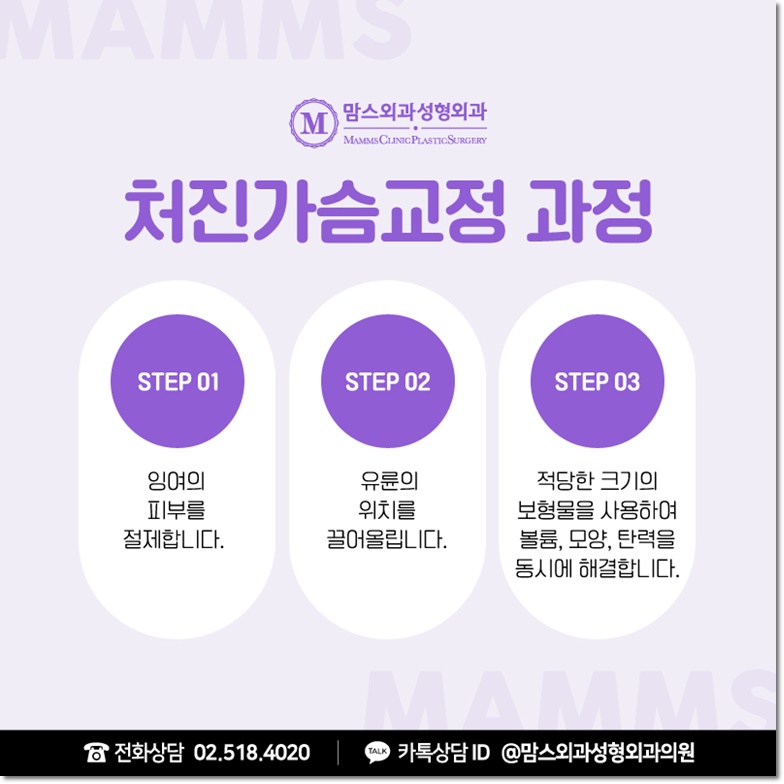
If it has been confirmed which method would be best suited to each person,
then the next step is to actually move forward with improvement accordingly.
If the basic process is followed accurately and the necessary procedures are carried out according to each situation, the result can be completed in a fitting way.
Looking at your improved appearance and finally standing tall without embarrassment, straightening your shoulders and back, and regaining confidence—what a happy ending that would be.
If you are 고민하고 있다면, it would be good to first receive an accurate diagnosis and begin by sharing your concerns.










 Previous image
Next image
Previous image
Next image