We all live with different traits. In some ways, these are characteristics that are decided from birth, so during the process of growing up, there were also cases in which certain elements that were different from others were discovered. I think many of the people looking into hospitals for inverted nipple surgery may have such a background as well.
Because it is not something that is clearly visible to everyone, if you want to ignore it and go on living, that may be possible. Still, accepting without much discomfort that you are different from other ordinary people and giving yourself the okay sign is by no means easy. And once you get married and start preparing to have a child, concerns about breastfeeding because of your different appearance can follow, and for various reasons you may eventually want to improve it and end up looking into many places to do so.
For one reason or another, there really are cases in which someone has a slightly different appearance from others. For women, the breasts are a part of the body that can carry many meanings. So you could think that the nipple is one of the things that belongs there as well. In such cases, because they have a nipple that is not the shape everyone usually imagines, they often feel inconvenience in many ways. As the word itself suggests, the nipple is shaped like a small projection attached to the breast. In general, it has a form that sticks out outward.
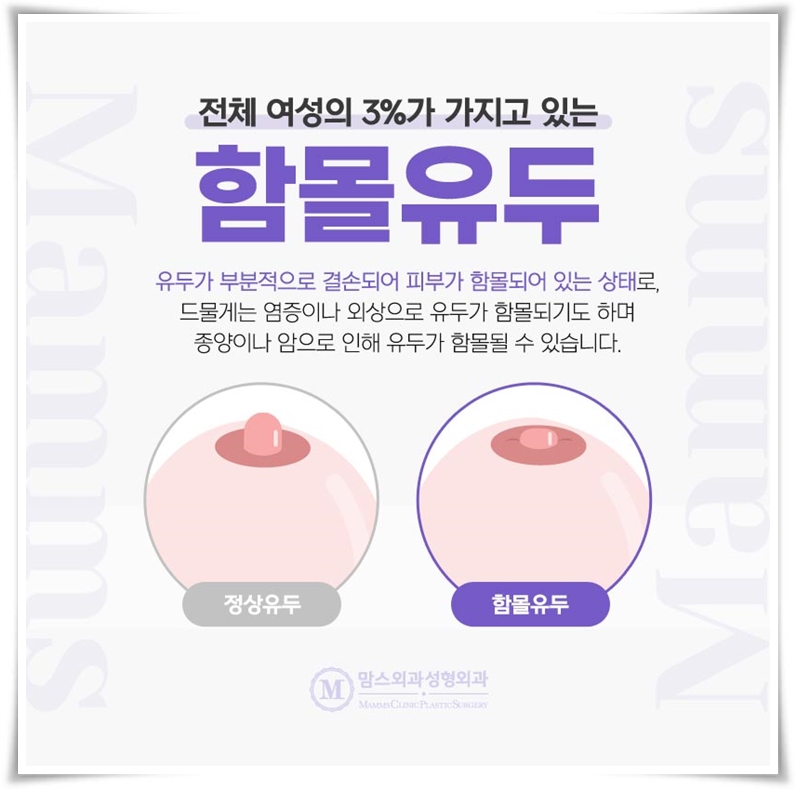
But not everyone has that shape. Some people have a concave shape instead of a protruding one. In general, this appears because they were born with that trait, so if it used to stick out nicely and then one day seemed to disappear and sink inward, other diseases or injuries should be suspected. Inflammation, trauma, and cancer can also cause this kind of change in shape.
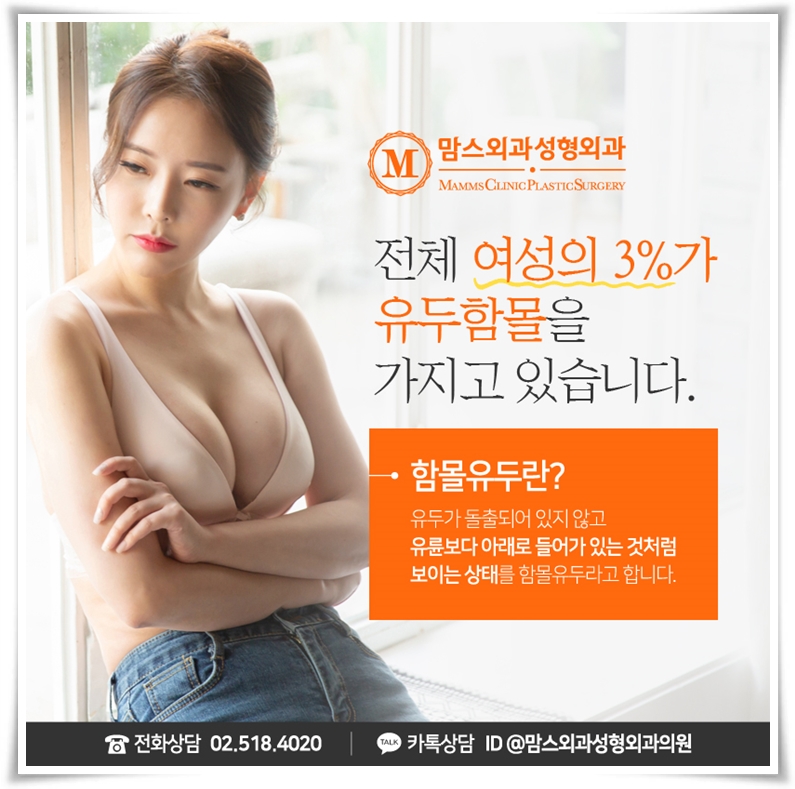
Even if you say it’s a matter of appearance, if you have never seen it yourself, you might wonder how that is possible. We tend to struggle to imagine or understand situations that we have not personally seen or experienced. Still, it can be said to be a surprisingly common occurrence. In fact, this condition is said to appear in as many as 3% of all women.
So if it is not me, there may well be people around me who have this trait as well. It is just that because it is not something usually seen, it is difficult to recognize at a glance. And people who have this issue end up feeling stressed because of their different appearance and traits, living with a complex all the time. In that pain, they look into and visit hospitals for inverted nipple surgery in order to improve the problem and achieve the appearance they want.
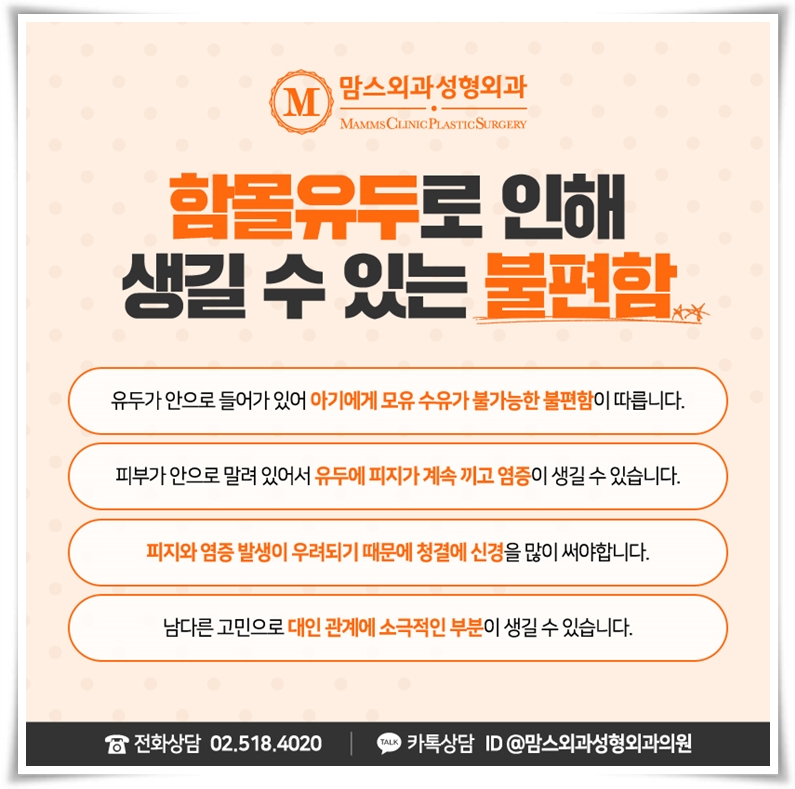
Of course, the issue is not only a complex about appearance. People with nipples that are hollowed inward also experience inconveniences in everyday life compared with ordinary people.
As you can probably imagine, people with this shape often have discomfort when they want to breastfeed after a baby is born. There are many cases in which not only the mother feels uncomfortable, but the baby also has difficulty nursing well. Even when there is no baby and no need to breastfeed, inconvenience still continues. Because a body part that should normally protrude outward is drawn inward, one source of discomfort is that waste such as sebum or secretions can easily get trapped and accumulate in the skin that is curled inward.
That is why they have to pay even more attention to cleanliness. They must do things that other people would have no reason to do, simply because of the trait they have. Waste trapped in these gaps can easily cause inflammation in that area if it is not carefully and neatly managed. These things overall create personal worries, and so in interpersonal relationships they may also become unnecessarily tense and withdrawn. That is why they would want to find a hospital for inverted nipple surgery.
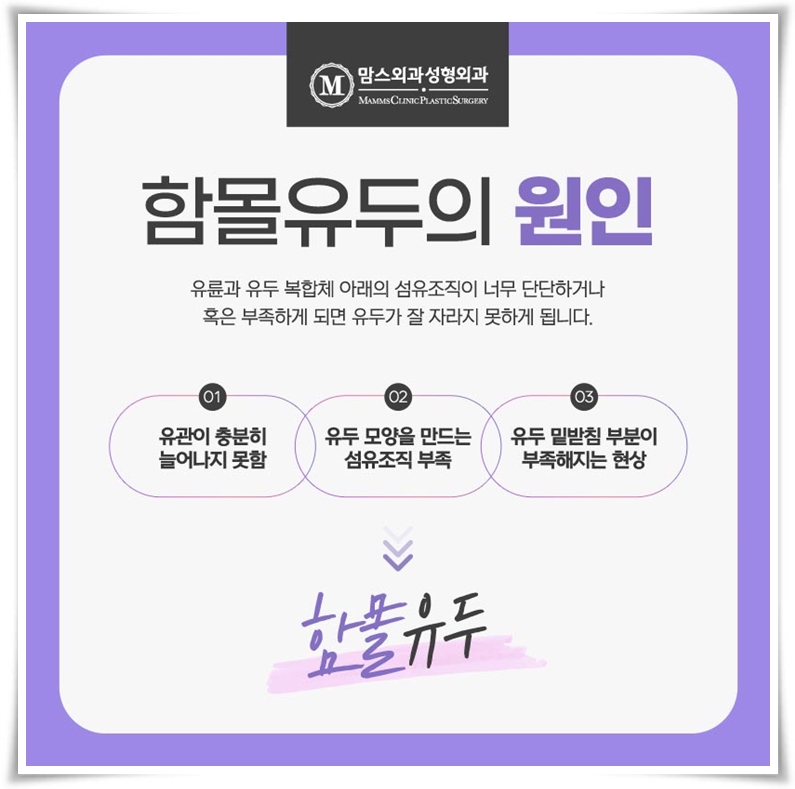
Then how is this trait improved? To understand it better, it would be good to look carefully at why this hollowed nipple shape is formed and what structural characteristics it has. In principle, this condition is thought to arise because of the fibrous tissue beneath the areola and nipple complex.
If this fibrous tissue is too rigid or insufficient in amount, the breasts and nipples may not grow enough during puberty, when secondary sex characteristics develop. When you are young, the nipples do not have a protruding shape. They are all flat and smooth at first, and then as puberty progresses they grow larger and become protruding. However, if the fibrous tissue underneath is too rigid and does not stretch properly, the shortened ducts pull the nipple downward from below, preventing it from rising outward. Or if the tissue is insufficient, it cannot grow enough to form a protruding shape.
In the end, having a deeply recessed nipple can be understood as something caused by the characteristics of the tissue beneath the nipple. So, in order to improve it, the right approach would be to first find a method that can sufficiently resolve the problem with this tissue.
Ultimately, what is needed is a way to address the condition in which the nipple is being held down by its short length and cannot protrude outward. But there is one thing to consider. The part pulling the nipple downward and preventing it from protruding is the duct, meaning the passage through which milk comes out during breastfeeding. If this part is cut during treatment, breastfeeding will no longer be possible. If you are thinking about a definitive method, it makes sense to treat the root cause, but for someone who needs to breastfeed, that could create another problem later. That is why, during a consultation at a hospital for inverted nipple surgery, it is important to make sure to bring this up.
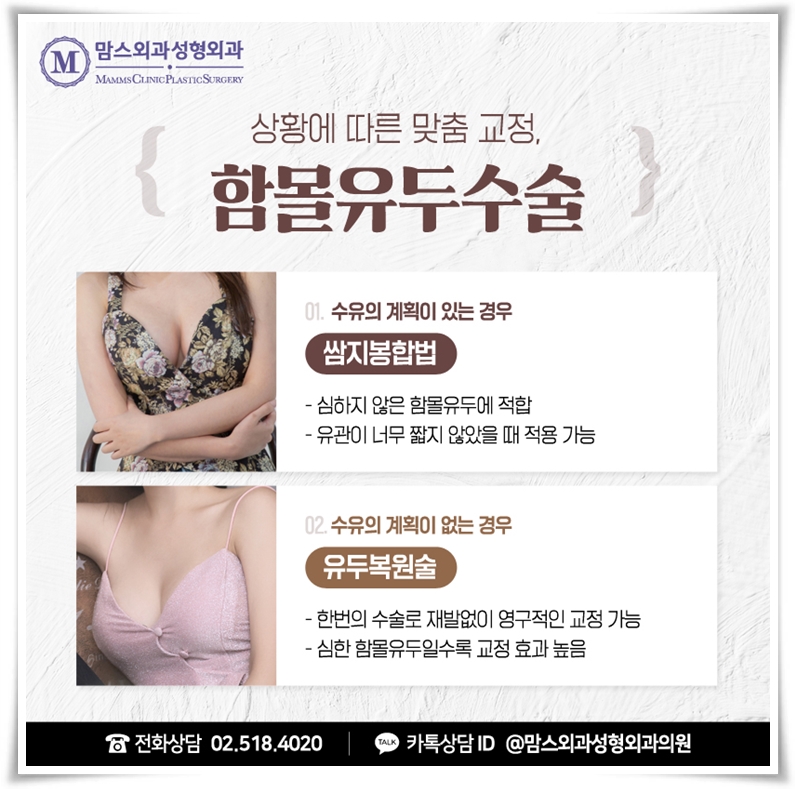
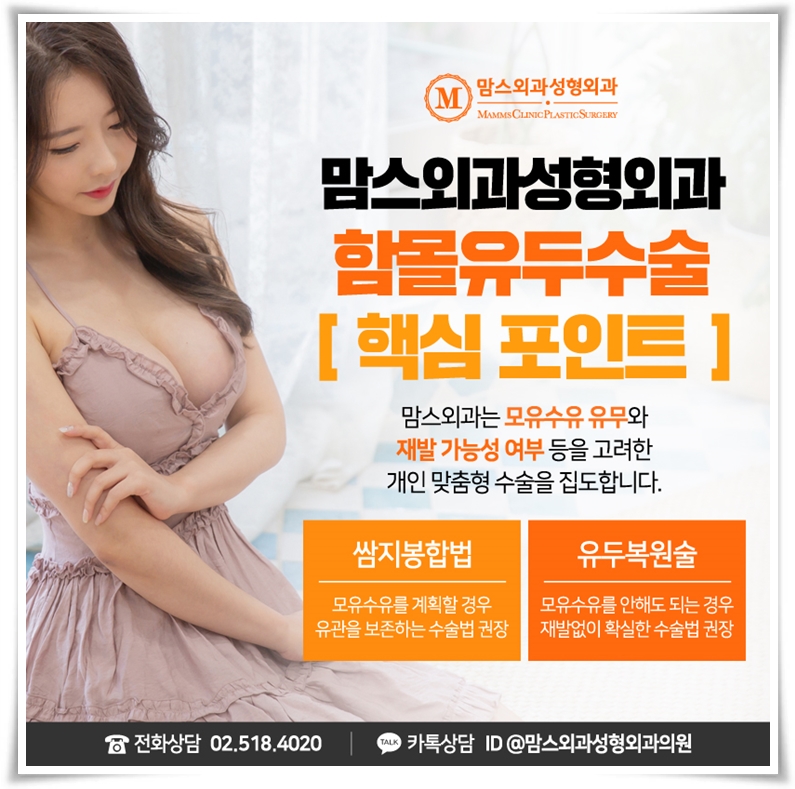
Cutting the duct is not the only method. There is also a method called purse-string suturing, which can pull the inverted nipple outward and then treat the lower part as if it were tied with suturing thread to help prevent it from sinking back in to some extent.
In this case, the duct can be preserved, so if possible, this method may also be chosen. However, purse-string suturing is a method that cannot be applied to people with overly severe cases, or even if it is applied, the same problem may recur over time. Therefore, for people with severe cases, nipple reconstruction, which cuts the duct and uses thread to fill in the area lacking tissue underneath to create the shape, may be the only option. For that reason, depending on my current degree of condition and situation, I would need to think carefully and consult about which method would be appropriate.
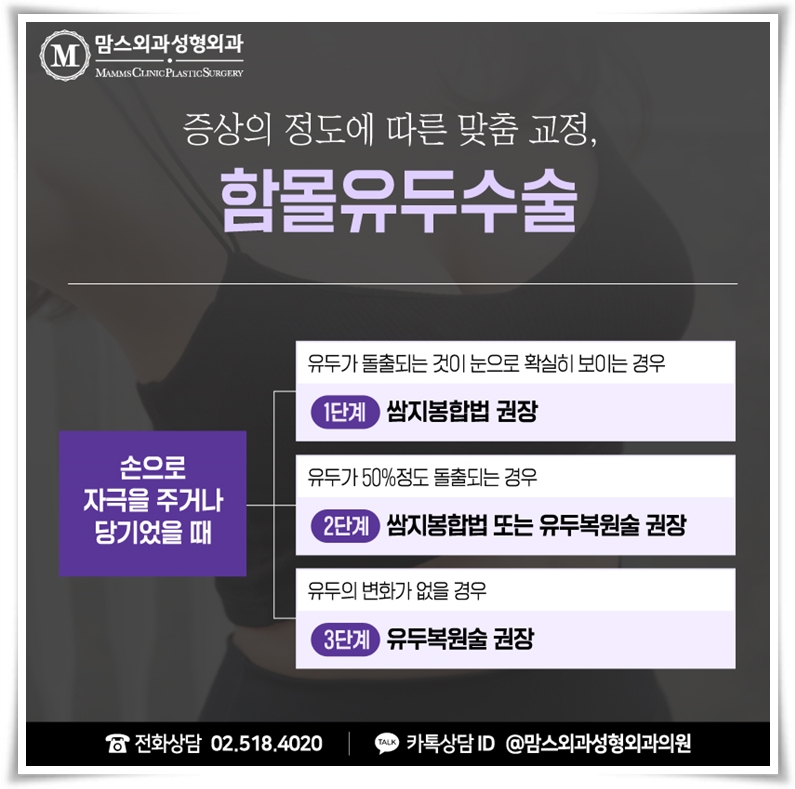
When speaking at a hospital for inverted nipple surgery, they first emphasize that the methods that can be applied differ depending on the degree of the condition in which the nipple is drawn inward. This is also a standard that one can judge to some extent on one’s own. It would be good to estimate how severe your own symptoms are and prepare for a consultation by guessing what you might need.