People generally tend to prefer a body shape without noticeable extra fat and with overall smooth lines. Men usually want muscles to stand out and unnecessary fat to be less visible, while women often hope for a slim and toned appearance. But sometimes, a fleshy area unexpectedly appears in an unusual place, and people who discover it may feel embarrassed. One such example is the accessory breast.
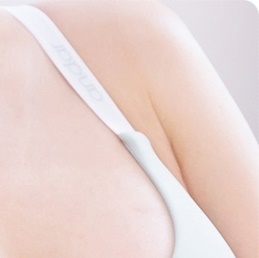
A bulge appearing on the inner arm can look like a mass of flesh or even like a lump. Because of this shape, people who experience discomfort in daily life often look into methods for axillary accessory breast removal. If you search for it, you can find a variety of options. We wanted to take some time to look into this more deeply.
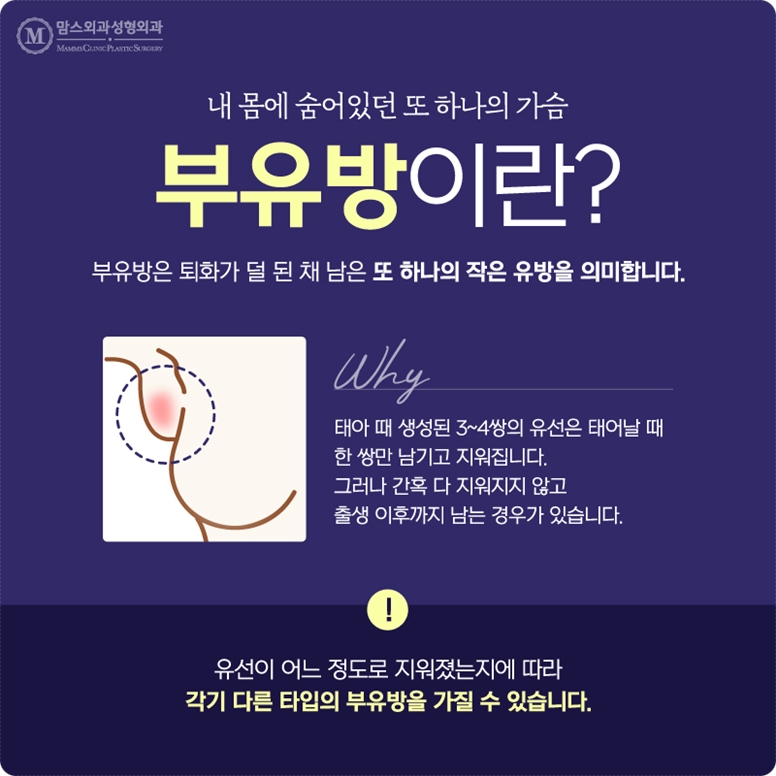
First, it is necessary to understand why this problem occurs and what it actually is. Sometimes people simply think that it happens because fat builds up in the upper body and the inner arm area becomes fleshy, but the circumstances behind it are not that simple. As our body develops step by step in the mother’s womb and takes shape, 3 to 4 pairs of mammary glands are formed along the milk line, which runs straight and parallel down the body trunk so that the area where the breasts will later form can be determined.
As the body grows and the time of birth approaches, it is normal for all but the pair in the proper position to be eliminated. However, sometimes some of them are not completely removed, and a person is born with part of them remaining. These remaining mammary glands grow and develop in a way similar to a normal breast, creating a bulging shape and making their presence known. So, when trying to improve this condition, it is checked how much trace remains.
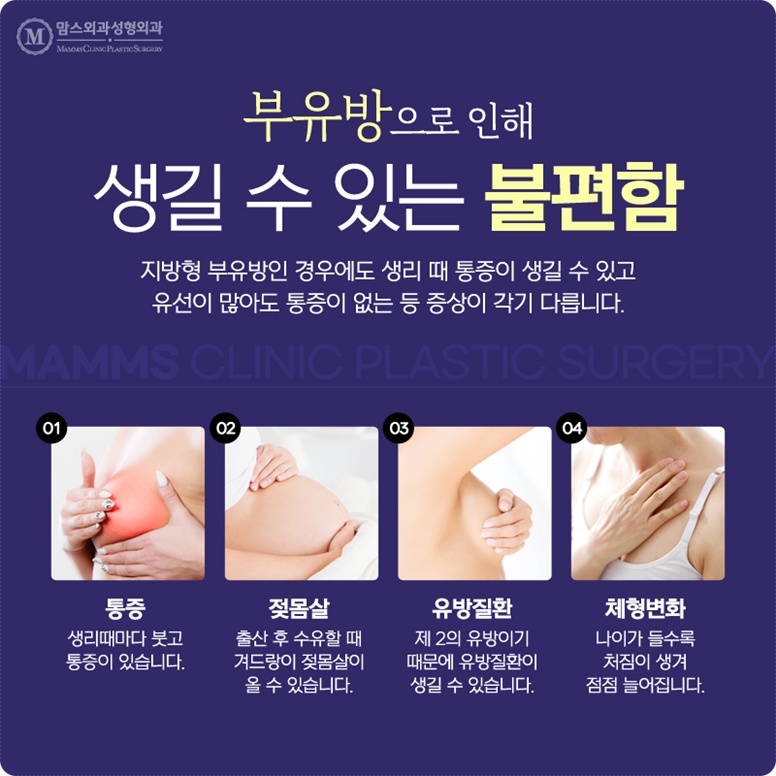
There are various reasons why someone may consider axillary accessory breast removal, but first of all, it would be the discomfort caused by having this feature. Many people are bothered because it makes them look like they have gained weight anyway, and they feel uncomfortable because the bulging shape keeps them from wearing the clothes they want freely, so they choose a way to improve it.
However, there were other serious reasons that also needed to be considered. People who have this additional small breast often feel pain there. Since it is also breast tissue, just like a normal breast, they may complain that it swells, becomes firm, and aches with a sharp pain during each hormonal cycle. In particular, after pregnancy and childbirth, they may even experience breast engorgement that causes pain extending to the arm area. If your body hurts right away, it is understandable that you would want to remove the cause. Also, even if it has not developed into a normal form, it is still a second breast, so diseases can occur there as well. Therefore, it can be said that such people live with a slightly higher risk of breast disease than others.

Of course, not everyone experiences these inconveniences and problems. This happens because of tissue that has remained without properly regressing, but the degree is not the same for everyone. That is why each person has different characteristics. It is most important to classify them according to the features that can be observed, find out which type you belong to, and then take the appropriate measures. Being able to divide the types and look at them in different ways means that there are also various methods for correcting this situation.
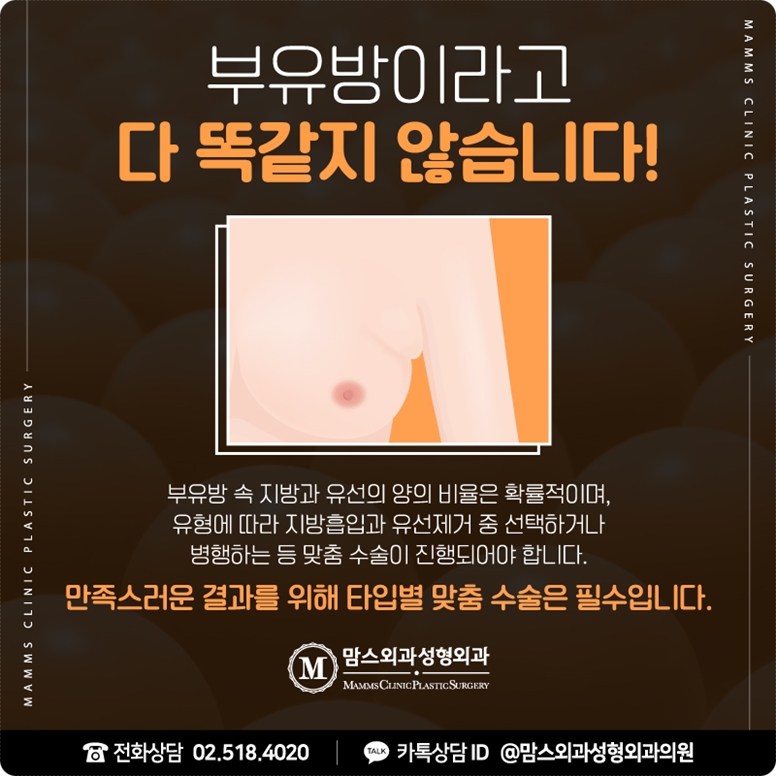
Our breasts, in simple terms, are structured with some fat gathered together and mammary glands located inside. So the second breast that has remained in an unclear state is also made up of the same components.
However, it is important to note that the proportion of fat and mammary gland tissue inside the bulging area should be regarded as a matter of probability. Depending on the person, more of the mammary gland tissue that had formed may have been eliminated, leaving a greater proportion of fat, while in others, more gland tissue may remain and the area may not be very noticeable because there is not much fat. In addition, even a type with more fat does not necessarily mean there will be no discomfort such as pain, and not everyone with a lot of gland tissue will be in pain. Therefore, before proceeding with axillary accessory breast removal, an accurate diagnosis is needed in order to understand the condition properly.
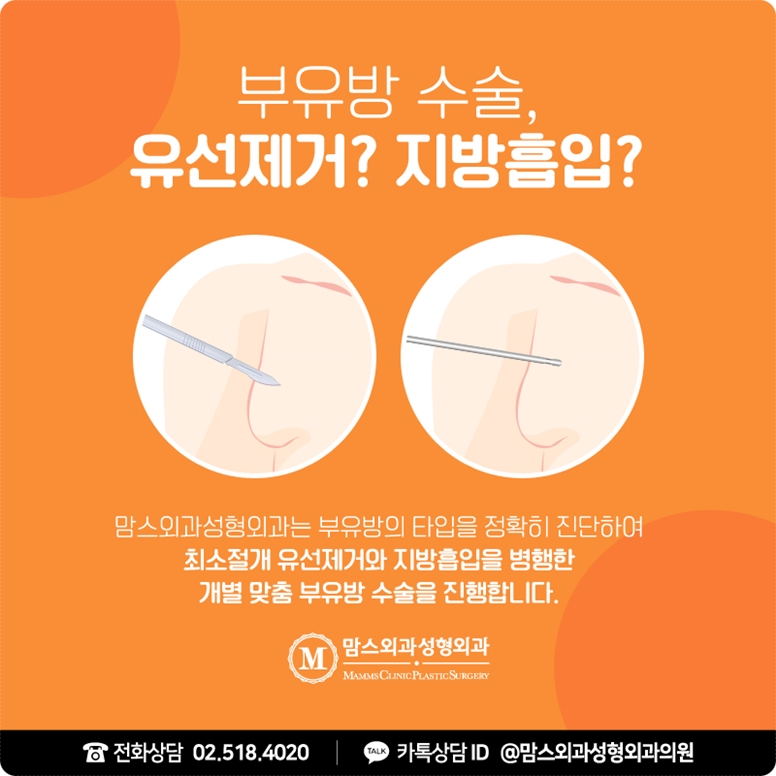
And because there are different types, when organizing this condition it is necessary to clearly decide whether to remove the mammary gland tissue or whether liposuction would be more appropriate for reducing the fat. If a lot of mammary gland tissue remains, it must be thoroughly addressed to prevent the same problem from happening again, and if the area is mostly composed of fat, then improving the accumulated fat can create a smoother appearance. If necessary, these methods may need to be used together.
That means no single method can be declared the correct answer, and you must find the one that suits you best. When carrying out this procedure, some people are wary of leaving noticeable scars and therefore insist on liposuction, but you must remember that it is important to start by checking which method is right for you.
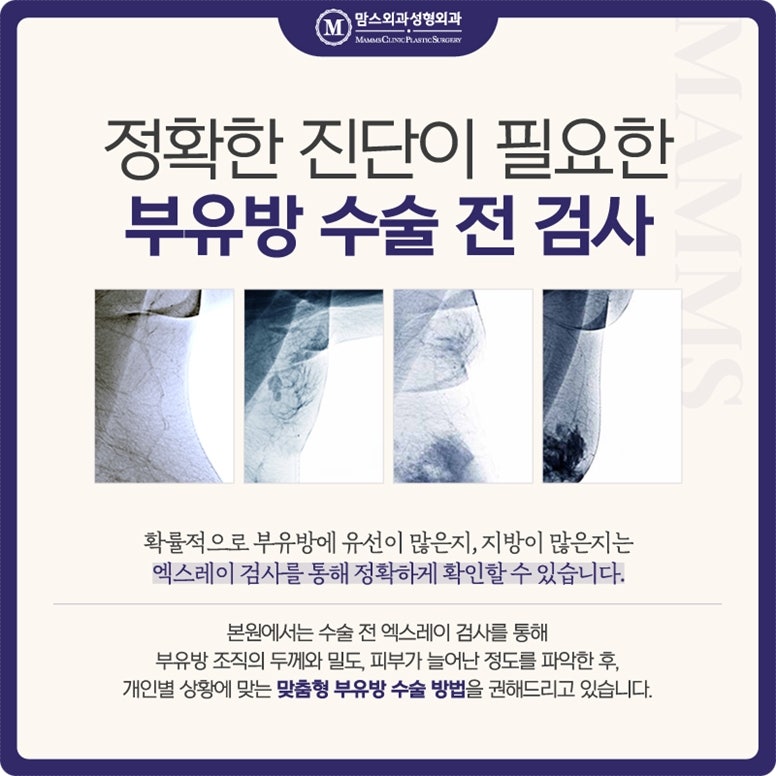
Then, in order to find the right axillary accessory breast removal method for me, how can I tell which type I belong to? That can be checked by having an X-ray examination before surgery.
If you take an X-ray of the area, you can see the condition of the mammary gland tissue and fat inside. Through this, it becomes possible to determine exactly what is present and how much of it there is. Therefore, before deciding on and proceeding with a method, it is necessary to take an X-ray to assess the situation, such as how thick the glandular tissue is, how dense it is, and how much the skin has stretched, so that the type can be identified and the appropriate method can be determined accordingly.
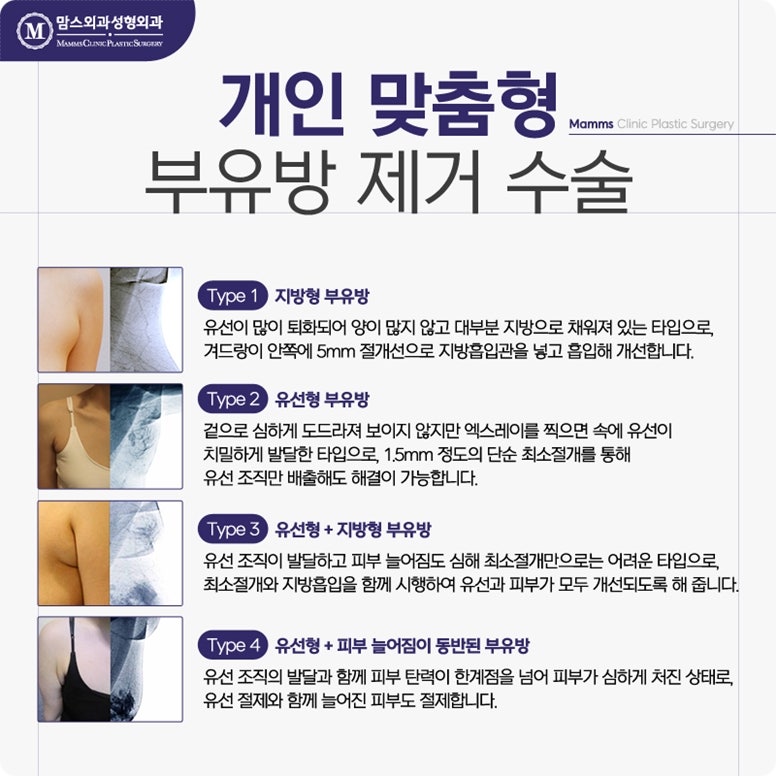
The following is how type-specific axillary accessory breast removal is performed. First, if the mammary gland tissue has regressed significantly and is not present in large amounts, and most of the bulging shape is made up of fat, liposuction alone can be enough to improve it. In that case, the scar remains very small, about 5 mm. On the other hand, some people do not look visibly bulging on the surface, so it is not noticeable, but when seen on an X-ray, the glandular tissue inside is densely developed and tightly packed.
In this case, the focus should be on removing the glandular tissue. A small incision of about 1.5 cm can be made, and the problem can be improved by removing the glandular tissue. If the glandular tissue has developed inside and fat is also present, causing the skin to look stretched, the approach is to combine glandular tissue removal with liposuction so that both the glandular tissue and the skin can be improved. In people who have had an accessory breast for a long time, the skin may become severely stretched in addition to the development of glandular tissue, and in that case the stretched skin also needs to be excised, so the scar may remain a little larger. That is why it is also important to seek a solution quickly.
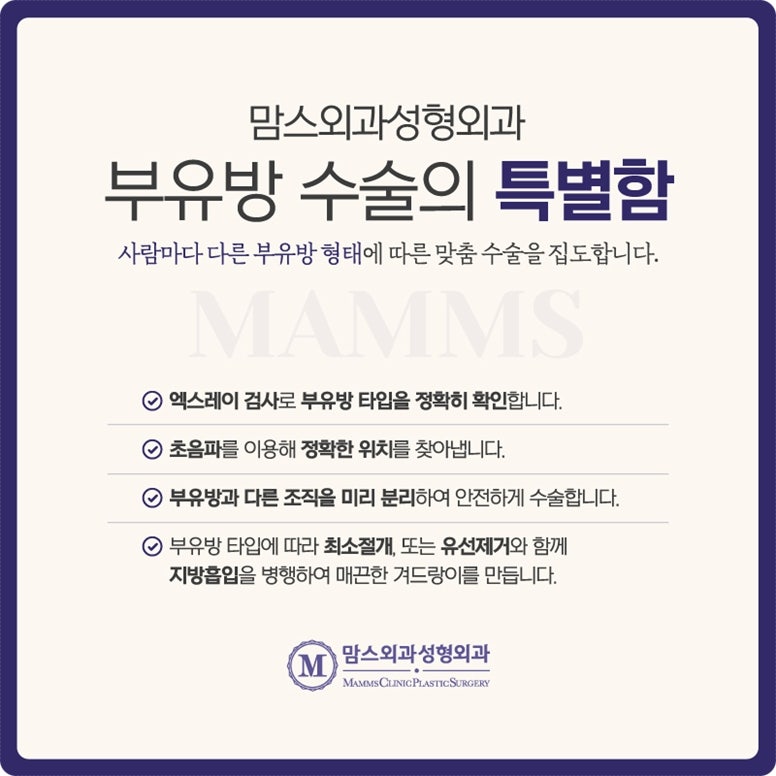
Which type you belong to can only be known through an examination and an accurate diagnosis. And it would be preferable to receive counseling at a place where your condition can be clearly identified and a suitable improvement plan can be found and carried out. If you are worried about the bulging, lump-like fleshy area right now, I hope you will find a wise place and receive a solution you won’t regret.