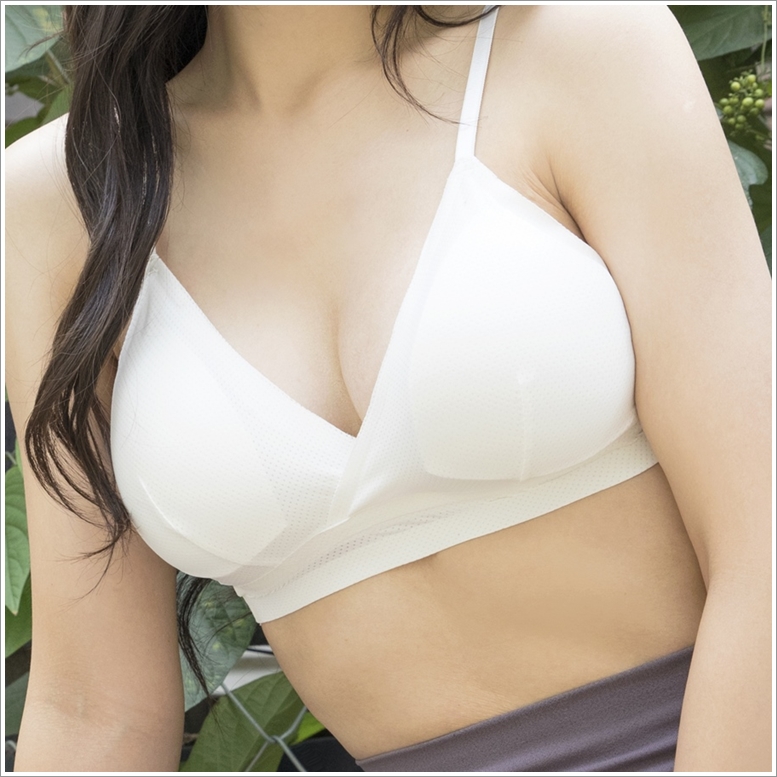
For women, the size and shape of the breasts are often factors that carry quite a lot of meaning. To some extent, having volume and a shape that looks aesthetically pleasing is important for making clothes fit nicely and for achieving a beautiful, attractive silhouette. So in general, people have often assumed that those born with smaller breasts would have dissatisfaction or complexes about their figure and would try to increase their size to improve it.
Because of that, the opposite case, having breasts that are excessively large, can sometimes be met with a rather casual reaction. It does not attract much attention, but when the size is unnecessarily large, it can cause discomfort in daily life, which is why there are certainly people who consider reducing the size through breast reduction surgery.
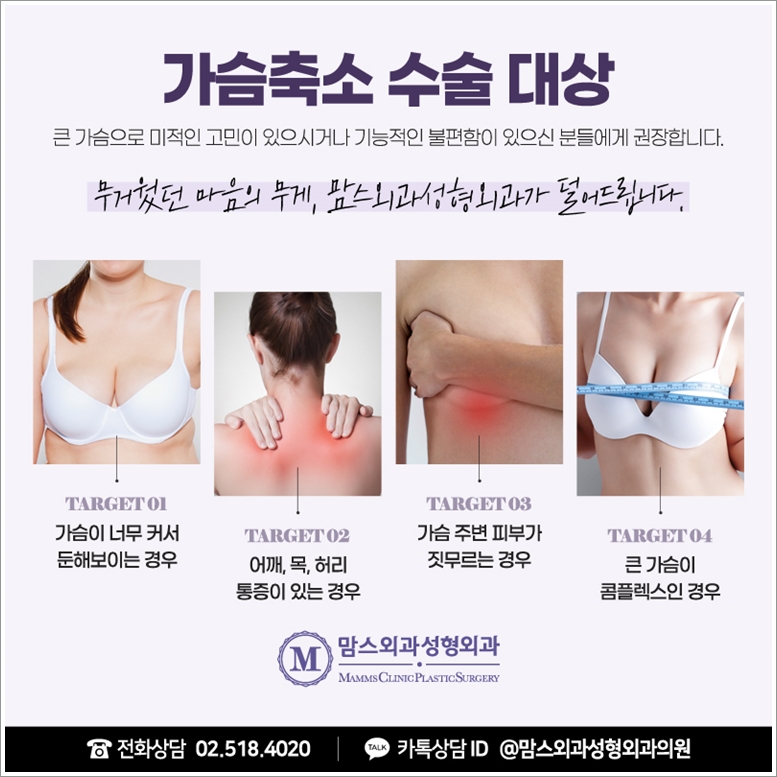
The female figure being beautiful and eye-catching has been referred to as an S-line, and even more extreme and old-fashioned expressions such as "jjuk-jjuk bbang-bbang" have been used, showing that ample breast volume was more widely admired. For that reason, people often could hardly imagine how many problems large breasts could cause. However, those with excessively large breasts often complained that it felt like carrying an annoying burden.
In fact, because larger size also means more weight, it was often described as being like living with a backpack on all the time. Just as the body aches when carrying a heavy load all day, quite a few people live with pain because of large, heavy breasts. In addition, as the breasts take up more volume and sag downward, the surrounding skin can become irritated and painful. It is also said that they do not look pretty even to the eye. For these reasons, some come to decide on breast reduction surgery.
If someone is dissatisfied with the aesthetic aspect and does not like their appearance, they will want to work to improve it. In the case of large breasts, it is even more urgent because they can affect physical health as well as create functional discomfort in daily life. In fact, when pain occurs due to large size, it was often emphasized that one should seriously consider taking steps to reduce the size.
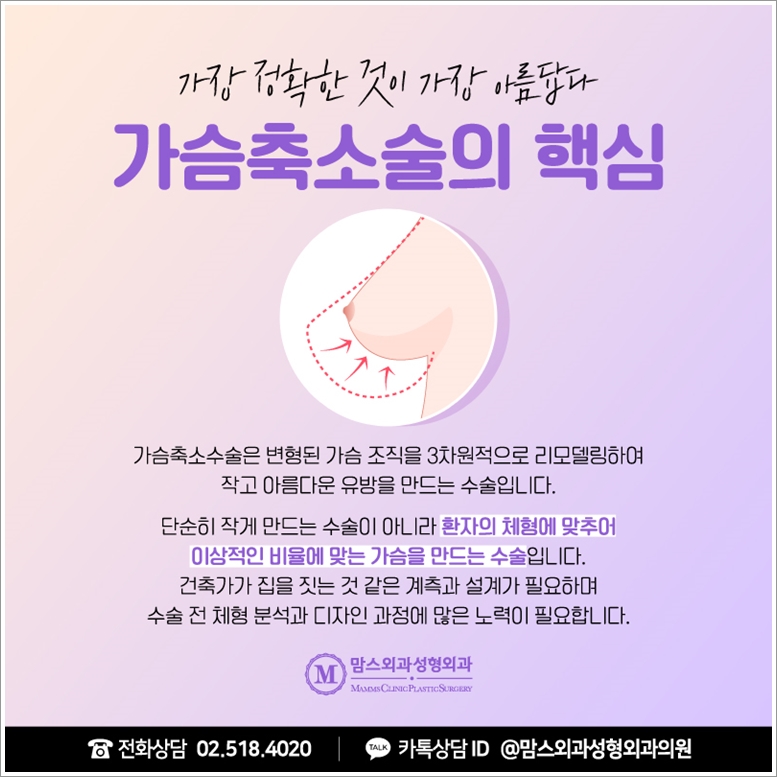
It is also important not to overlook the fact that this process is different from what people may simply imagine. In reality, reducing breast size is said to be less about a major risk to physical stability and more about the difficulty of creating breasts that are healthy and beautiful. Since the ideal size and shape must be found to suit each body type, it must be carefully analyzed and designed, and precise, detailed knowledge and delicate skill are needed to produce the right result.
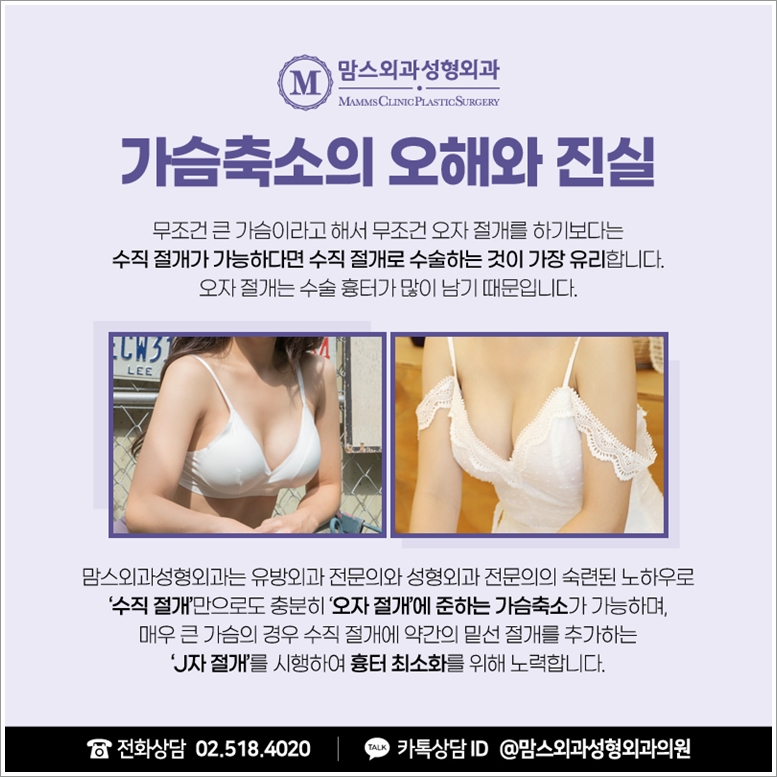
Among those who dream of breast reduction surgery, there may be people who keep thinking about how to proceed. One thing often discussed is the incision method. At first glance, it may seem that a larger wound would allow for a greater reduction, so even if a scar remains fairly noticeable, some people want as much tissue removed as possible and ask for the smallest possible size, without thinking too seriously about the long, large anchor-shaped incision.
Of course, as expected, if the wound is large and long like an anchor-shaped incision, the scar is more likely to remain noticeable, and wound care can be more inconvenient. But some say that a smaller size is more important than that. While it is not wrong to think this way, it would be unreasonable to say that making a wound large and long is necessary in order to create a smaller size. It should be understood that even when the wound is reduced to lower the risk of scarring, the breast size can still be made sufficiently smaller. In fact, from the perspective of wound care and similar concerns, choosing a vertical incision may be better.
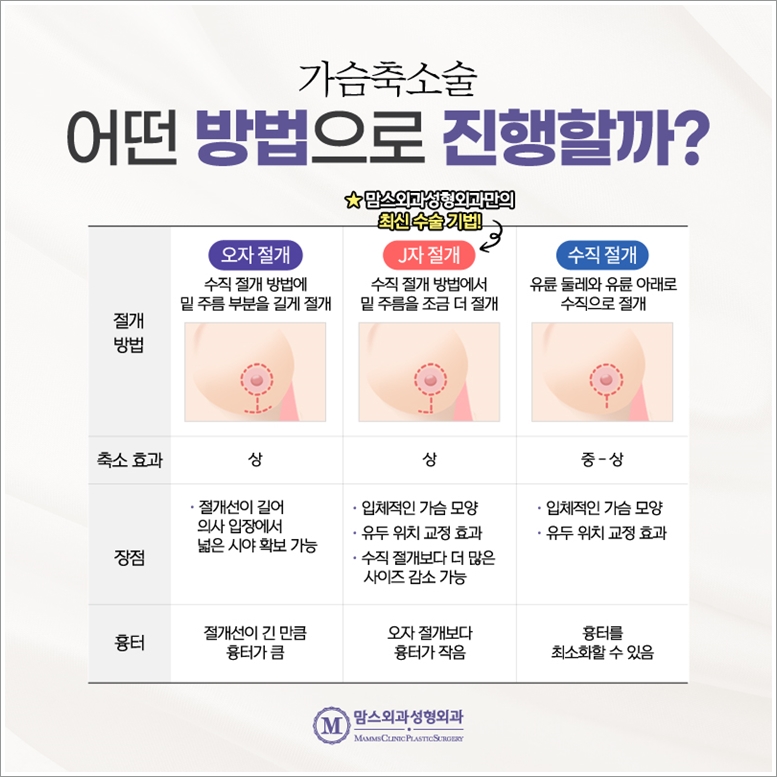
A vertical incision can be seen as a method that can reduce breast size sufficiently while minimizing the wound. Because the wound is small, it can also be more advantageous later when managing the wound and scar. It also has the benefit of making the breast shape more three-dimensional and uplifted. However, since the incision area is not that large, it may feel insufficient when applied to breasts that are very large or severely sagging.
That said, choosing an anchor-shaped incision would be considered excessive. A method that serves as a compromise in this situation is the J-shaped incision. A J-shaped incision extends a little further downward from the vertical line, and it can be seen as a technique that incorporates advanced know-how by keeping the wound area and scarring small while securing a more generous amount of reduction.
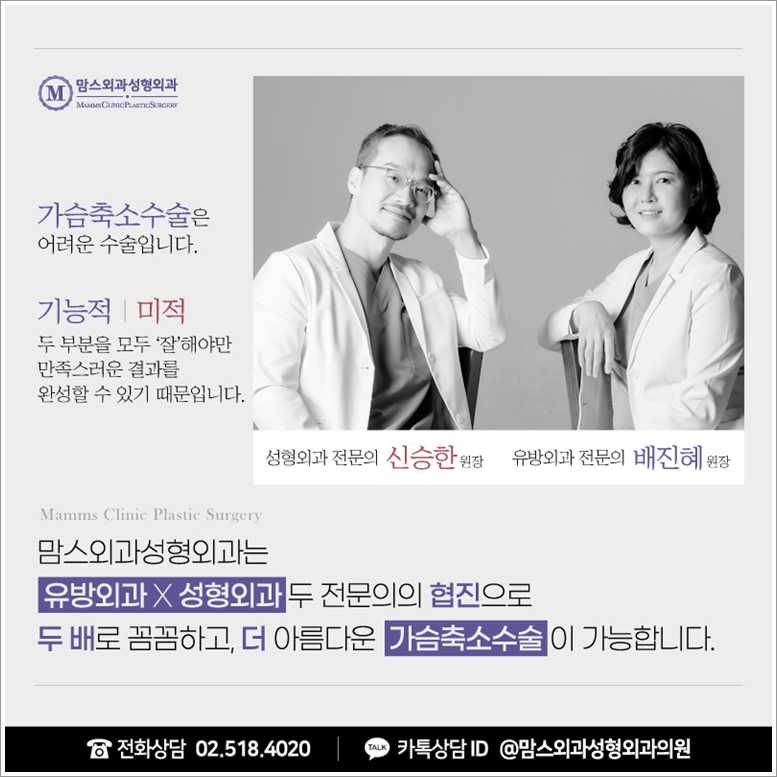
When carrying out breast reduction surgery, the difficult parts are that both functional discomfort and aesthetic dissatisfaction must be considered, and the result should be satisfying on both sides. Therefore, it is important to know that there is quite a lot more to understand, and there are also many more things to pay attention to. Only by accurately understanding the characteristics, structure, and function of the female breast can the size be reduced sufficiently while keeping the wound small, leading to a healthy and beautiful breast. In addition, to create a lifted and attractive breast and make it naturally beautiful in overall body balance, each person’s physical characteristics must be measured and designed according to standards of beauty. It would be good to once again confirm that this is a solution that requires a broader and more detailed level of knowledge.
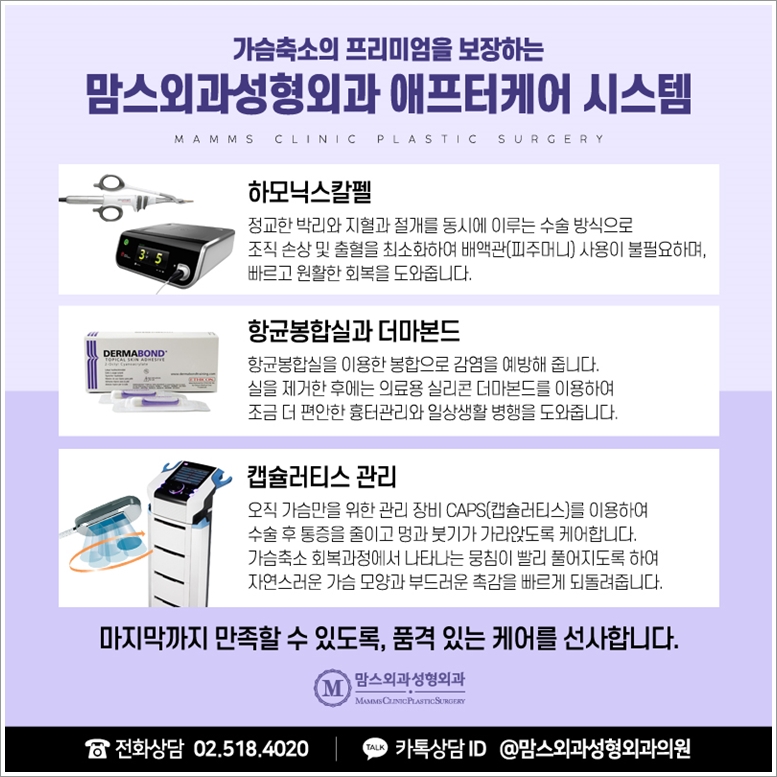
To create a satisfying result, care must be given not only during the procedure itself but also throughout aftercare afterward. In general, if the wound is made carefully from the start, it is reasonable to expect that managing and recovering from it later will be relatively less difficult. For that reason, it was possible to use equipment such as a harmonic scalpel to make only the necessary incisions precisely and delicately while also achieving hemostasis at the same time, helping recovery proceed more smoothly.
Not only does the suturing need to be done carefully, but it is also wise to make the wound easier to manage as it heals. That is why the wound was also protected with a material called Dermabond, helping it be affected less by daily life and allowing for more comfortable care. Not only the visible wound but also the internal damage must heal well. For that reason, care may also be provided using devices such as capsuLatis. It is a breast-care device that helps recovery proceed better, reducing pain and loosening firmness so that a natural shape and feel can be restored, making it possible to achieve a more satisfying result.

Breast reduction surgery requires a great deal of effort and work, and paying attention to both function and form is by no means easy. For that reason, a method called virtual simulation is sometimes used. Since it allows the expected size, shape, and outcome to be anticipated in advance, it can be very helpful in obtaining a more accurate and highly satisfying result. It would be good to carefully look for a place that makes efforts in many ways for better results like this.