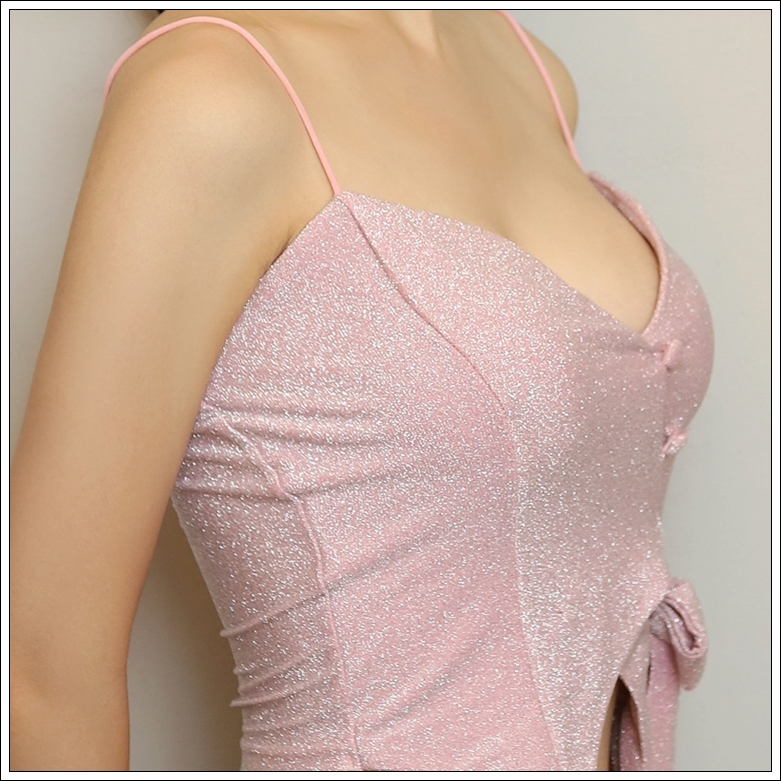
Simply put, if you imagine stacking boxes of different sizes,
how would you feel if a large box were placed on top of a small one?
What if you saw books stacked up in a jumbled way, with a small book on the bottom and a large book on top?
What if you looked at a photo of a building designed so that it becomes wider toward the top? Let’s imagine that for a moment. Then let’s stand in front of a mirror and look at ourselves. How does our body look? When we see an object whose size or width is uneven, or whose upper part looks relatively larger than the lower part, we used to feel uneasy.
Because it looks as if it is unbalanced and about to collapse.
In fact, that is also how it is according to the laws of nature. So, unconsciously, we come to think that we want everything to be arranged in the same overall size, or to be reorganized from bottom to top in order from large to small.
In the case of breast reduction surgery, it can be said to be in a similar context. That is, the purpose is to improve the difficulty and discomfort caused by an imbalance in body proportions.
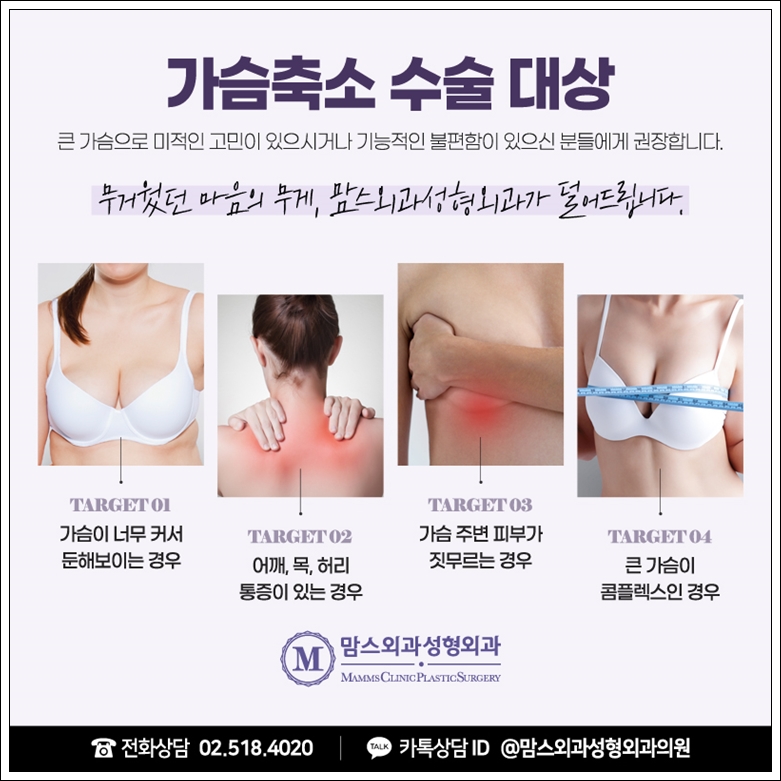
Having large breasts may seem enviable at first glance.
Especially recently, not only women but also when looking at men, if the chest is large and noticeable, some people may see it as having "solid, big muscles" and think positively. But there is always a proper limit to everything in the world.
No matter how noticeable a man with large pectoral muscles may be, if they are unusually large compared with the rest of the body to the point that they feel different from the generally expected male body type, it can become a concern. And it is the same for women. In women, the size and shape of the breasts are often seen as symbols of femininity and beauty, and are also used as a measure of that degree, but even this is only meaningful when they maintain an appropriate proportion, not simply when they are large. An excessively large size can, even visually, make things look somehow unbalanced, like a building with a narrow lower floor and a wide upper floor.
Because the upper body looks too large. In addition, many people with this characteristic also experience physical pain.
One reason we feel uneasy when something large is higher up is the load. The smaller lower part has difficulty supporting the relatively larger and heavier load above it. The human body is the same: supporting the weight of large breasts is strenuous, and it can cause muscle pain in various places and even lead to conditions such as disc problems.
And if, because of the size and shape of the breasts, you actually feel pain in the body and develop skin conditions around the area, leading to chafing and similar problems, then it is no longer simply a matter of whether it looks pretty or not, but a problem of your body’s health and function. In the end, reducing the size becomes necessary for quality of life. In that way, people come to learn about and prepare for breast reduction surgery.
However, when women think about changes to the breasts, they usually think of enlarging a small, flat shape to create volume, so it can be a little difficult to reach accurate information.
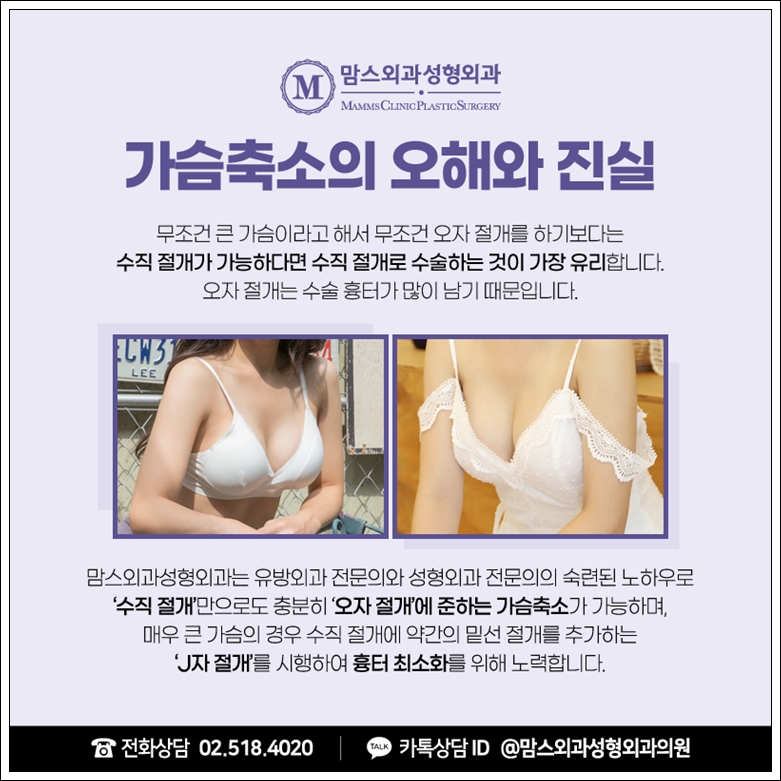
Still, once you search and search, discover it, and learn step by step, you may begin to face more practical issues. Among them, one topic that seems to draw a lot of differing opinions is how much incision is inevitably needed when performing this procedure and in what shape it should be made. Usually, people would simply say that a vertical incision leaves a small scar but does not allow much reduction, while an anchor-shaped incision leaves a large scar but allows a greater reduction.
However, the vertical method for breast reduction surgery was devised specifically to reduce scarring compared with the anchor shape, yet if it falls noticeably short in terms of size change, wouldn’t that be a little strange as well? Yes. In reality, the amount of size reduction between the two methods is said not to be all that different.
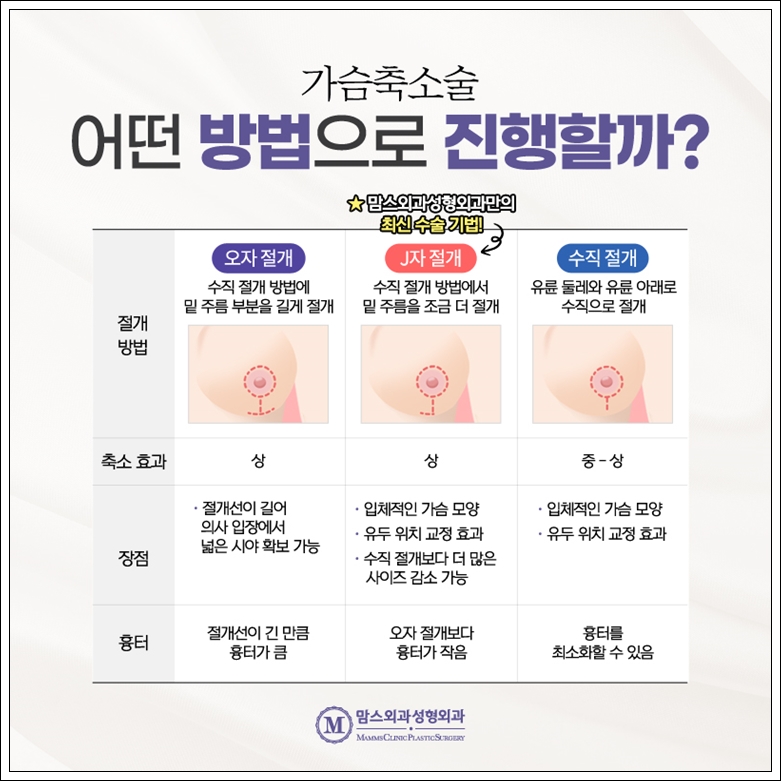
Of course, it is also true that doing it vertically in order to keep the incision area as small as possible can sometimes leave regrets.
If the amount that needs to be removed is too large, then the opening needed to remove it will also need to be wider, and even if the difference is only slight, we can still feel dissatisfied, so it is natural to think more carefully about it.
But even so, the anchor-shaped incision method creates a scar that is simply too large. When the immediate focus is on reducing size, scars and marks may not seem to matter much. One may think that anything is fine as long as it becomes smaller. But looking back later, scars and shape inevitably start to matter, and if the wound is large, it can also be harder to heal cleanly.
As those concerns continued, a compromise called the J-shaped incision eventually emerged. It adds only a little more incision to the side from the vertical line, and in this way, it can provide both the small scar and attractive shape of the vertical incision and the advantage of being able to reduce a larger amount, like the anchor-shaped incision.
When you first think about breast reduction surgery, you may simply regard it as reducing size.
It may seem like a simple concept, just the opposite of enlargement. However, it is known to be a fairly difficult and complex surgery if viewed as something that simple.
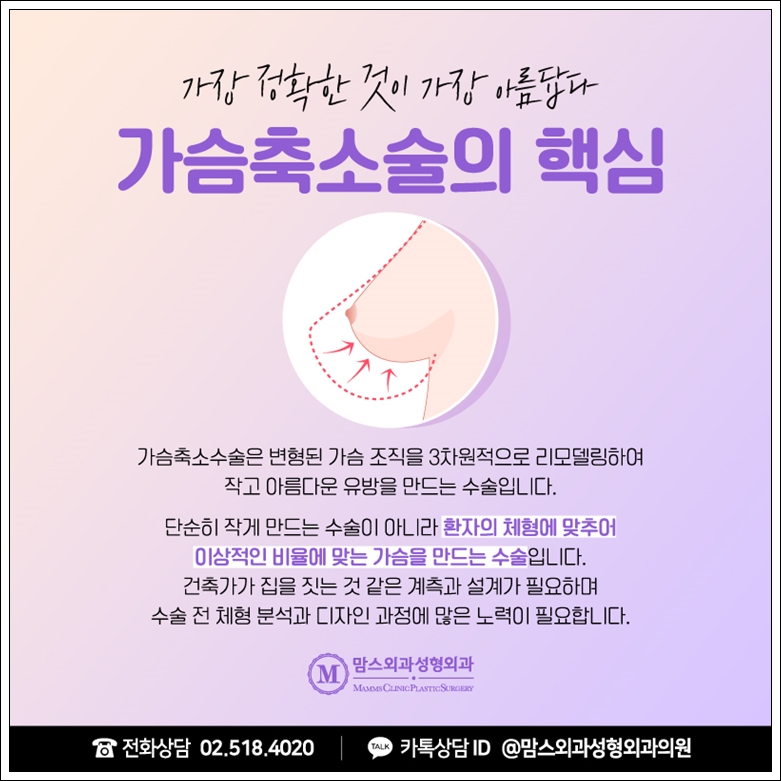
Reducing size is important, but in the end, the goal should be to ensure that you are satisfied with your breasts when the final result is achieved. That is why you cannot let your guard down. In cases of excessively large breasts, sagging is common, and there are also quite a few cases where the tissue is deformed and looks less aesthetically pleasing. The concept of remodeling this in three dimensions is what this solution is about.
If it were only about making them smaller, there would be no need to think too hard. If you want to make a lump of clay smaller, you just estimate the amount and remove some of it. But if you carefully shape clay into a form and then try to make it smaller while preserving that form, it becomes difficult, doesn’t it?
It is similar in that sense. That is why analysis of body proportions is needed, and after carefully designing with even the smallest details in mind, breast reduction surgery must be performed.

So breast reduction surgery is considered a difficult procedure.
That is because one must have sufficient knowledge about women’s breasts and also enough understanding of balanced, natural beauty. It is a process that requires broader knowledge and experience, so it can never be taken lightly. If you want to achieve a satisfying result, you must find a place that can clearly carry out these points. A plan for reducing breast size is also a rather difficult and ambiguous one to reverse later.
For that reason, it must be handled even more thoroughly and carefully. Differences can arise depending on where and with whom you consult. It was necessary to clearly understand and consider both the fact that this is a problem that occurs in women’s breasts and the fact that the aim is to provide aesthetic satisfaction, in order to achieve a good result.

In addition, I hope you will also think about how much support is provided afterward. This includes what is commonly called post-care, or aftercare. In fact, after the procedure to make the breasts smaller, care is absolutely necessary so that the wounds heal well and leave less scarring. In many cases, this care becomes the patient’s responsibility, leaving them in a rush and with little room to spare. Because care must be continued over quite a long period, the inconvenience in daily life can be significant.
Considering these characteristics, making daily life as hassle-free as possible and making care easier can also be one of the factors that determine final satisfaction. It is not simply a formal process; carefully checking whether things are healing well and deciding what care is needed at the moment also takes effort. Above all, if aftercare is considered, there must be a plan from the very beginning, before the main procedure even starts.
That means the method of making the incision, the method of suturing afterward, and everything throughout the process must be carried out with what comes next in mind. The more careful and difficult it is, the more it can also become a step toward satisfying breast reduction surgery. I hope you will remember this and find the right place.