Anyone is born differently and lives differently. That is why what it takes to become a look that truly suits me can also be different for everyone. Finding the answer to that is quite a difficult task as well.
Sometimes, there are things that seem like they are truly just right for me to embrace. When I find something like that, it can make me feel unexpectedly happy. The problem arises when a person has a feature that is different from what many others have, and that feature is not especially good or particularly unique in a positive way. People looking for inverted nipple surgery reviews before undergoing inverted nipple surgery are in a similar situation.
A Secret Complex
The nipple has a protruding shape for both women and men. In particular, for women, that protrusion needs to be at an appropriate level not only to look better, but also because it reduces discomfort when breastfeeding a baby after becoming a mother.
Some people worry that their nipple area is different from others. When it does not have the right size or shape, that part can become a source of stress and something they see as a complex.
What Is an Inverted Nipple?
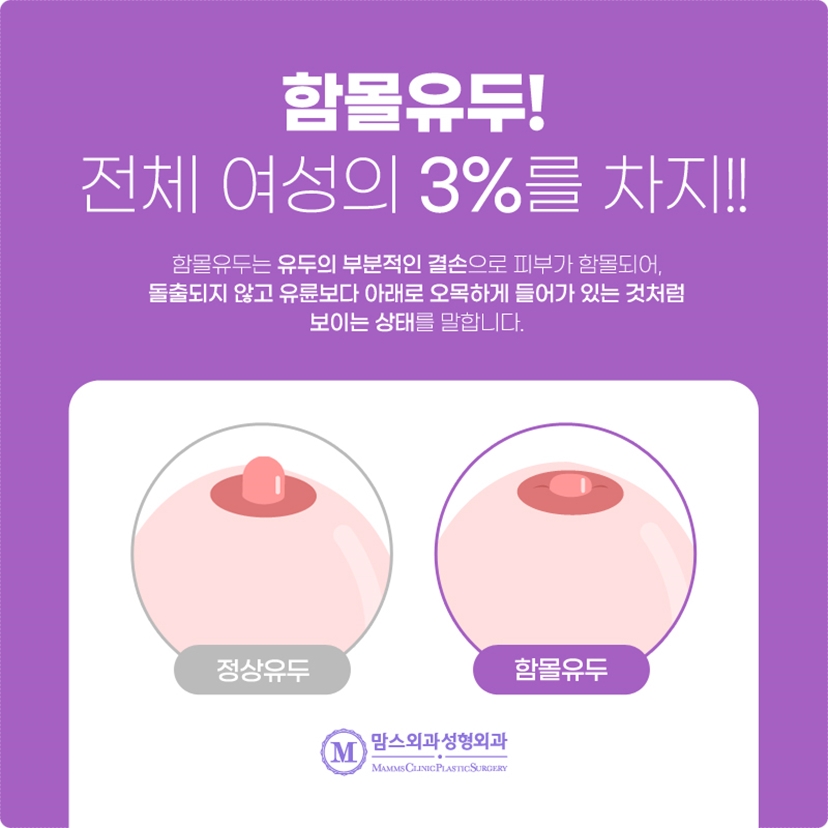
A nipple that should protrude outward but instead looks flat or appears to be sunken below the areola is called an inverted nipple. It is said that about 3 percent of all women have this feature. That may be a slightly larger percentage than you might expect.
In any case, the important thing is that this can cause real distress, leading someone to lose confidence in themselves or live with discomfort. That is why people look for corrective options like inverted nipple surgery, and ultimately browse inverted nipple surgery reviews to learn about the same solution for themselves.
What Causes Inverted Nipples?
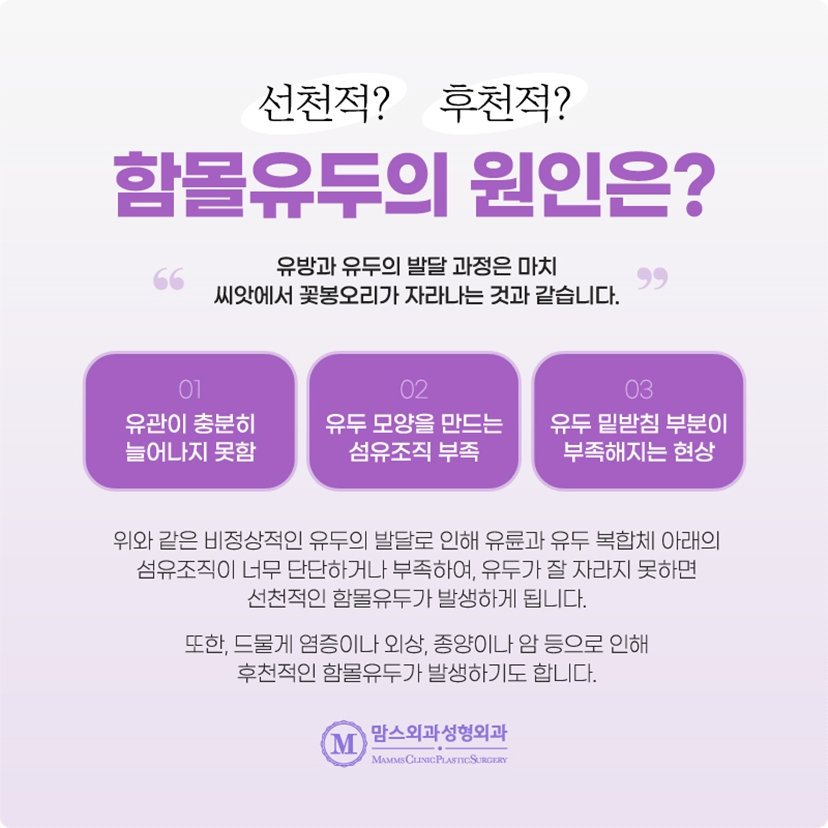
It is worth thinking about why this happens in the first place. In most cases, when there is an issue with the nipple itself, the person was born with that feature.
As a person reaches puberty and secondary sex characteristics appear, the breasts grow, and the nipples grow as well. At this stage, tissue rapidly differentiates beneath the area where the nipple should protrude, the ducts stretch out flexibly, and fibrous tissue fills in to form the protruding part, allowing it to take shape. However, for some people, the ducts are too firm to stretch enough, or there is not enough tissue to form the protruding shape, so normal development does not occur.
When that happens, the shortened ducts that failed to lengthen may pull inward from inside or prevent the shape from being maintained, resulting in a flat or sunken appearance. In rare cases, it can also appear later in life. However, in that case, it may be a symptom caused by inflammation, trauma, a tumor, or cancer, so it is best to get examined before proceeding with inverted nipple surgery.
Discomfort Caused by Inverted Nipples
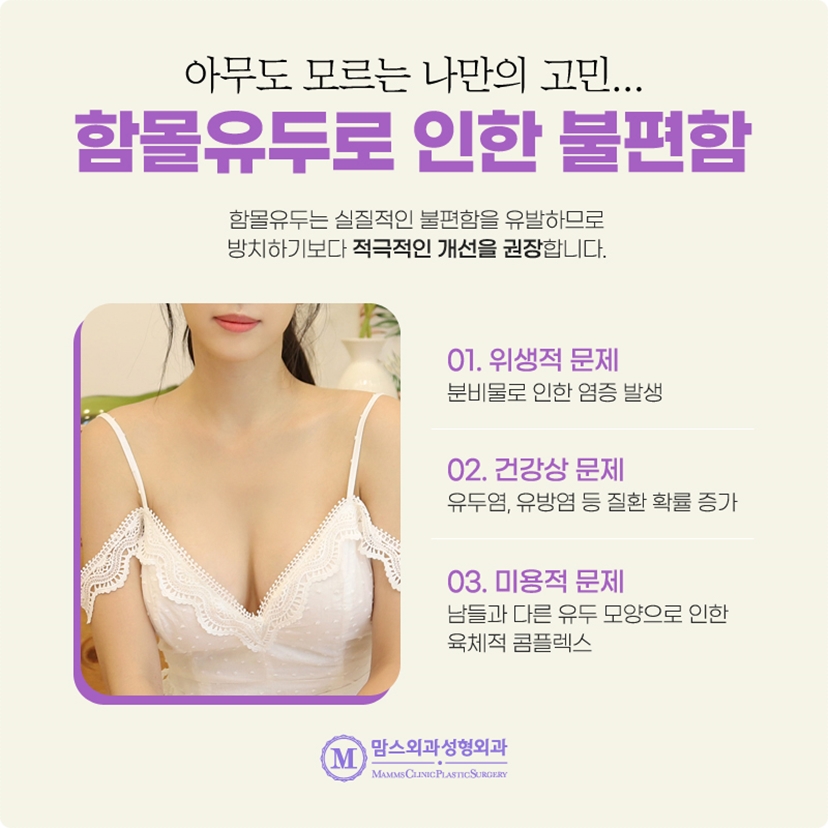
Some people may find this a little puzzling. Since it is not a part that shows on the outside, no one else will see it, and there is no reason it absolutely has to be pretty, they may think. If the concern is whether breastfeeding will be inconvenient, that might make sense, but they may not easily understand people who simply want to correct the area regardless of breastfeeding. In fact, the shape of a nipple being sunken like this can cause various inconveniences in everyday life. The biggest issue is hygiene. Because it is recessed, if it is not carefully cleaned and managed, secretions can build up and inflammation can occur, which can even affect health. In the end, even if others do not know much about it, there are practical inconveniences for the person concerned, so they may try to actively improve the condition while following inverted nipple surgery reviews.
Self-Assessment Method
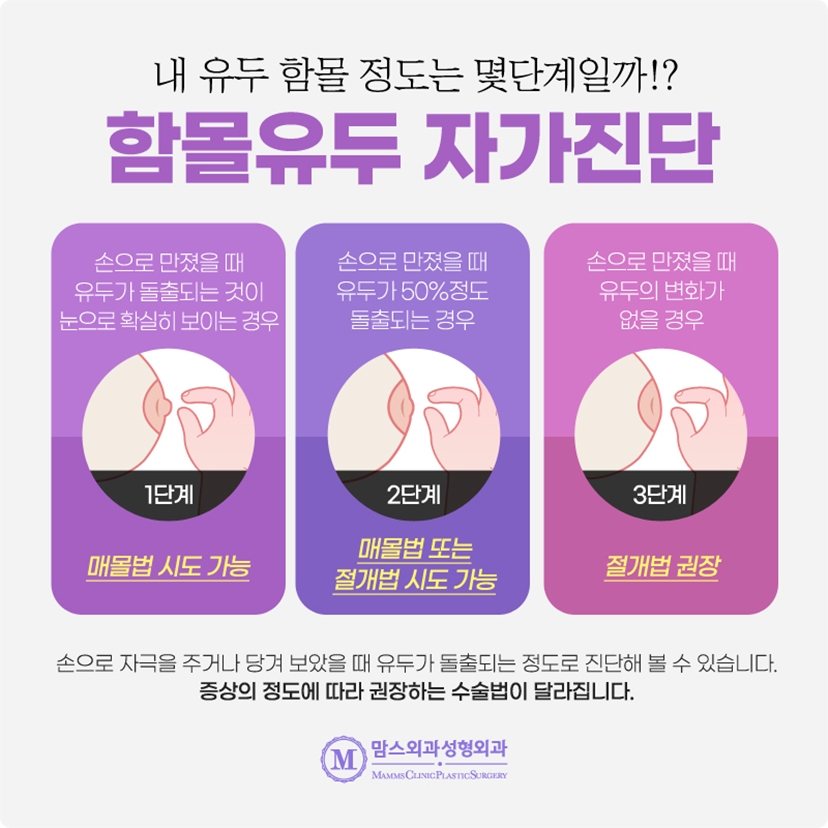
So what methods are used to correct it? In general, corrective methods can be divided into two types: the buried method and the incision method, and the measures needed differ depending on the stage of symptoms. If it looks sunken inward, but it clearly protrudes when touched by hand or stimulated, that is considered a mild stage 1 case, and the buried method can still produce acceptable results here.
If it protrudes about 50% when touched by hand or stimulated, it is classified as stage 2, and depending on the degree and each person's circumstances, one of the two methods is selected. Finally, if the nipple does not move at all and stays still even when touched, pulled, or stimulated by hand, that is a more advanced stage 3 case, and improvement through the incision method is recommended.
With Customized Inverted Nipple Surgery
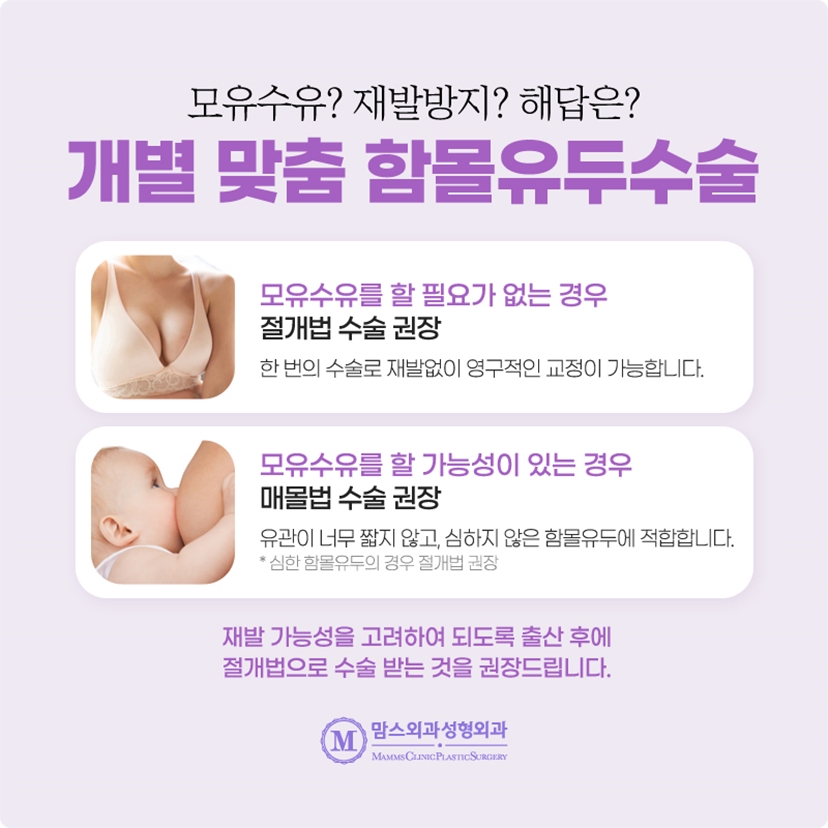
When you look through various inverted nipple surgery reviews, you may see differing opinions about which of these two methods is better. A major factor in determining these impressions about inverted nipple surgery is whether breastfeeding remains possible.
In the case of the buried method, only the nipple is made to protrude while preserving the ducts, so there is no major issue. However, the incision method restores the shape by cutting the ducts that have been continuously pulling inward, which makes breastfeeding impossible.
That said, the incision method tends to produce the most satisfying and visually pleasing results, and the buried method cannot be used in severe cases and always carries the possibility of recurrence, so caution is needed. Therefore, even for people who may want to breastfeed in the future, it is often recommended to undergo the incision method after completing both childbirth and breastfeeding if possible.
Key Points of Inverted Nipple Surgery!
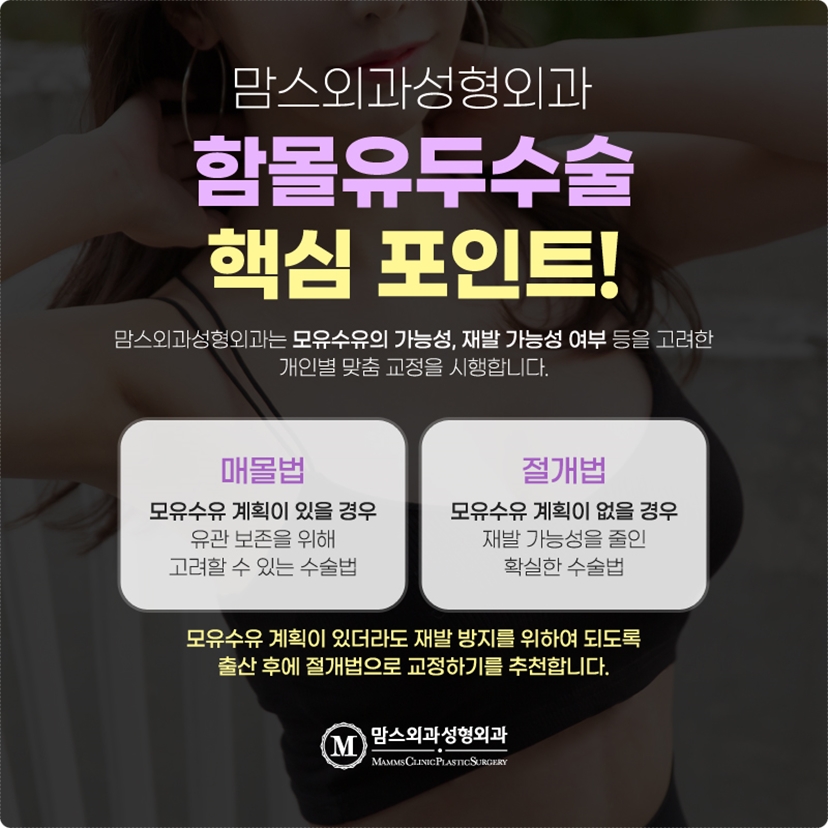
Of course, there are people who may feel they definitely want the buried method. There is nothing impossible about doing that. However, to ensure that the corrected shape remains in place over time and the same process does not have to be repeated, it is important to think more carefully. Some inverted nipple surgery reviews suggest, with a certain tone, that this type of nipple correction inevitably recurs. The reason for that perception can also be said to be that the buried method was mainly performed out of a strong emphasis on preserving the ducts. I hope you will think carefully about what you truly need and what values matter to you before deciding.






 Previous image
Next image
Previous image
Next image


Previous image
Next image




Previous image
Next image