
Inverted nipples are a cause of appearance-related concerns and hygiene issues for many people. Because of this, many people consider nipple correction surgery, and to do so, it is necessary to have a sufficient understanding of the degree of symptoms and the surgical methods.
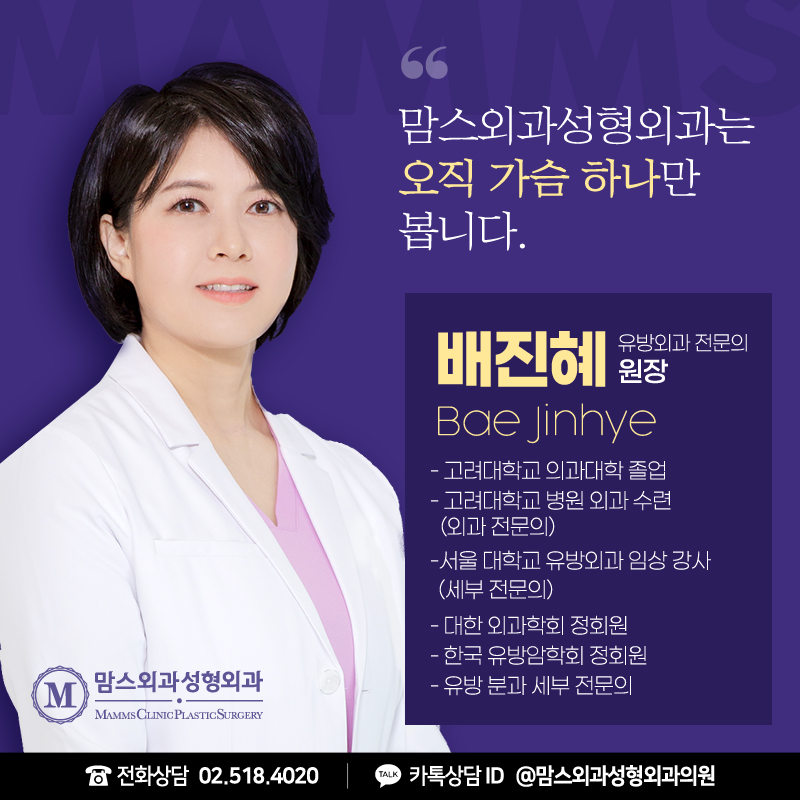
Here, based on two major surgical methods for correcting inverted nipples, we improve each patient appropriately according to their condition and plan. In particular, the chief doctor, a breast surgery specialist, personally designs all the procedures and carries them out in a systematic way.
Surgery that preserves the milk ducts with the embedding method
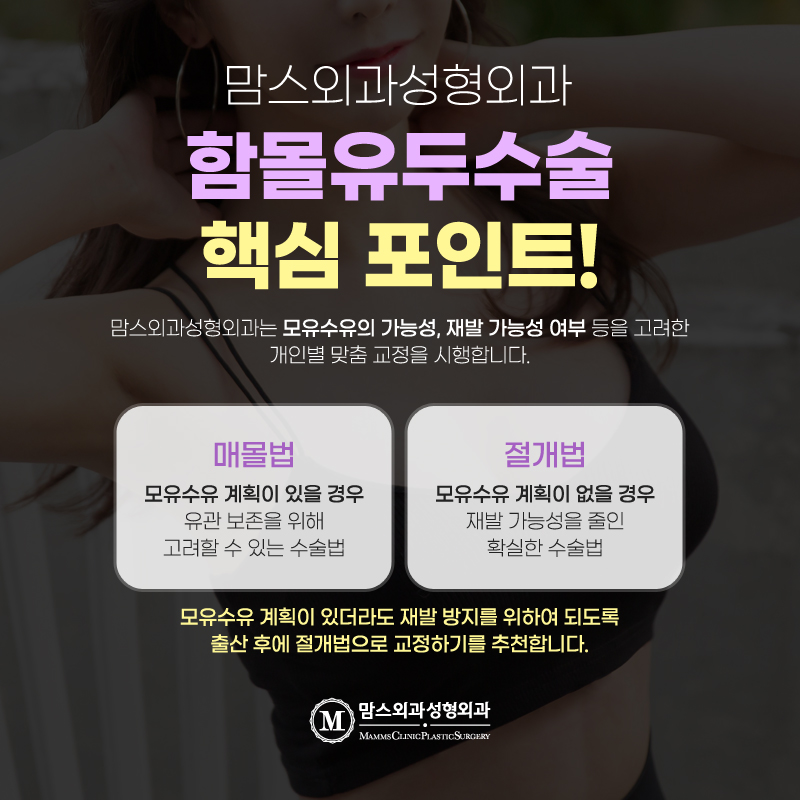
The embedding method is a surgical technique mainly performed when inverted nipple symptoms are relatively mild, at stage 1. This method leaves the milk ducts intact and is suitable for those who want to maintain the ability to breastfeed. Among nipple correction procedures, it preserves the milk ducts, so it is performed carefully to allow breastfeeding after surgery.
However, the embedding method may carry a risk of recurrence. Even in mild cases, there is a possibility that the nipple may become inverted again over time, so it is important to choose this option with that in mind. For those planning to breastfeed in the future, the embedding method may be a good choice.
Nipple correction surgery that significantly reduces the risk of recurrence, the incision method
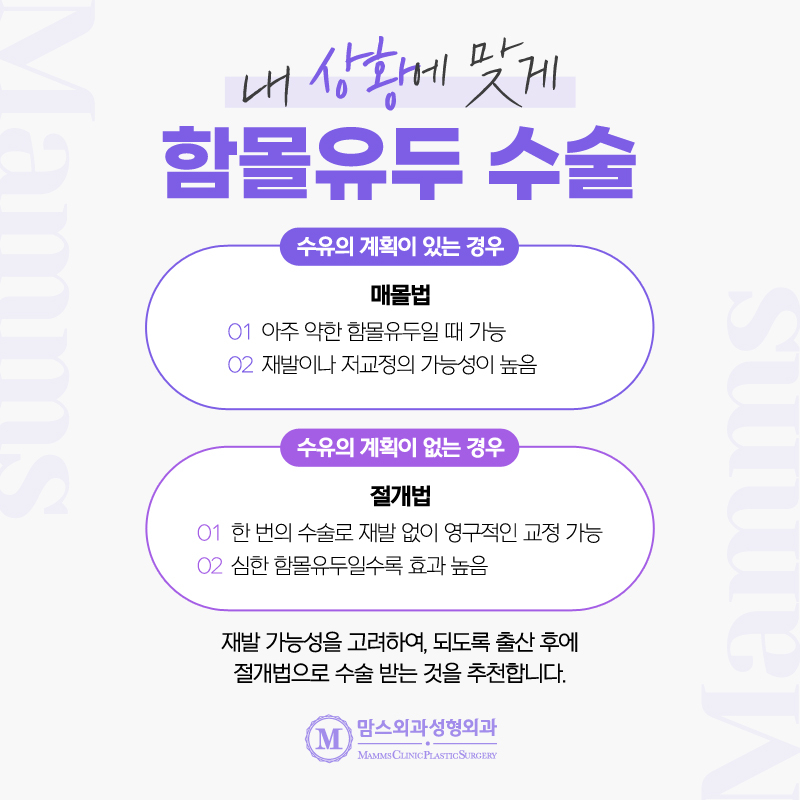
When inverted nipple symptoms have progressed to stage 2 or beyond, the incision method is generally recommended. The incision method partially removes the milk ducts and focuses on reducing the risk of recurrence. This surgical method is used when inverted nipple symptoms have become severe or to lower the chance of recurrence.
At our clinic, the incision method is often recommended especially after childbirth, once breastfeeding has been completed. This is a practical approach to prevent recurrence. For those who plan to breastfeed, choosing the incision method after childbirth and after finishing breastfeeding may lead to better results.
What makes our nipple correction surgery different
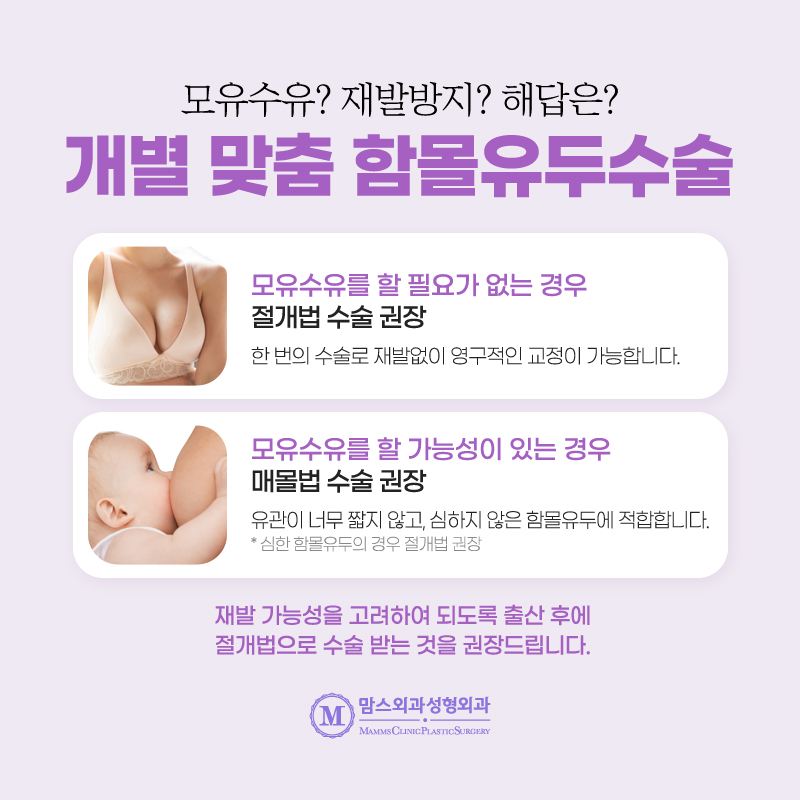
Those considering nipple correction surgery consult with our breast surgery specialist chief doctor about the severity of their inverted nipple symptoms and whether they plan to breastfeed. The embedding method performed here has the advantage of preserving the milk ducts while still making breastfeeding possible, but a risk of recurrence may remain.
On the other hand, the incision method is effective in preventing recurrence, but because the milk ducts are removed, breastfeeding may be difficult. Therefore, our clinic recommends carefully selecting the appropriate surgical method based on the symptoms and the individual’s plans.
We recommend nipple correction for the following people
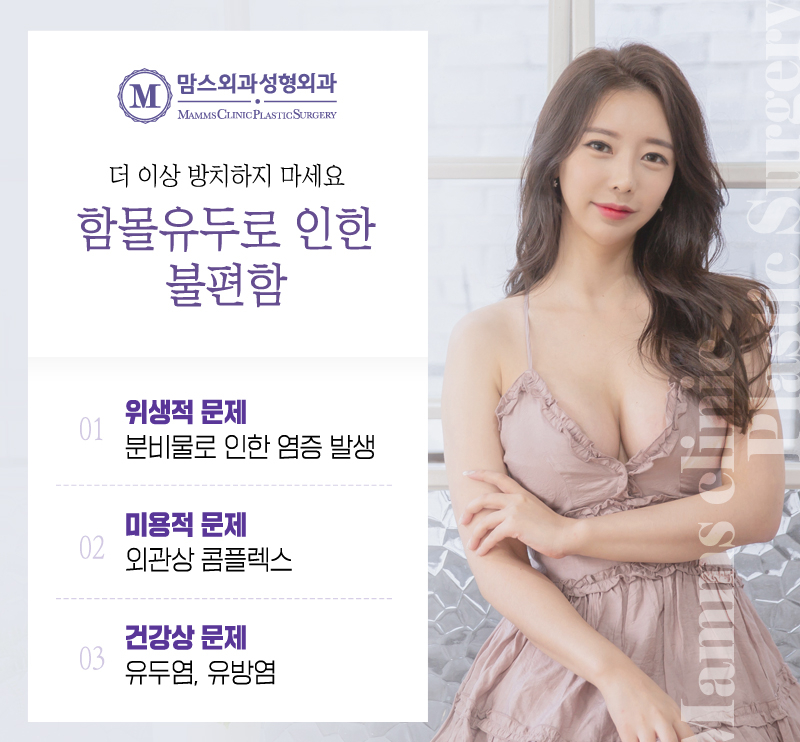
Nipple correction is recommended for those who feel aesthetic discomfort due to inverted nipples or who do not plan to breastfeed after childbirth. In particular, if inverted nipples have lowered your confidence or caused discomfort when wearing clothing, you can expect satisfying results through surgery.
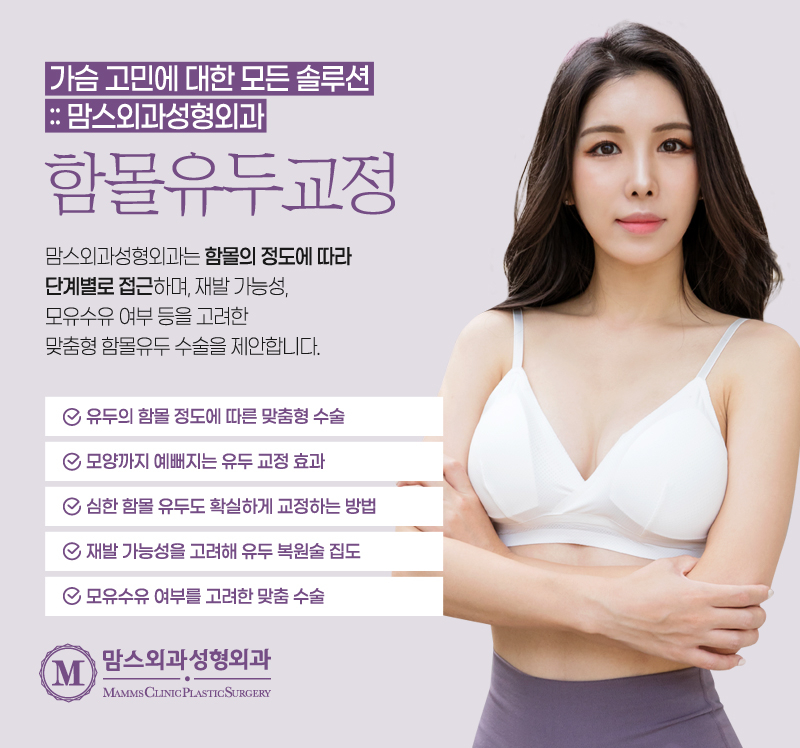
It may also be a suitable option for those who plan to breastfeed in the future or who have already given birth and want to improve the appearance of the nipples. Our nipple correction surgery is carried out as a customized improvement plan tailored to each person’s needs and situation.
For nipple correction surgery, especially corrective surgery for inverted nipples, it is important to choose the appropriate method between the embedding method and the incision method according to the individual’s symptom severity and breastfeeding plans. In general, the embedding method is chosen when the inverted nipple is mild, while the incision method is chosen when the symptoms are severe, and it is necessary to proceed with surgery after fully considering the advantages and disadvantages of each method.









Previous image
Next image








