
Many people are considering nipple surgery because of concerns about their appearance. In particular, when inverted nipples make hygiene management difficult or even interfere with daily life, it is important to choose an appropriate method and improve the condition as quickly as possible.
However, the appropriate approach can vary depending on the degree of nipple inversion, so rather than simply focusing on temporary improvement, it is necessary to carefully consider the underlying issue as well.
Accordingly, our clinic suggests the appropriate method after fully considering each individual’s condition. Based on this, we focus on increasing satisfaction with the results after surgery.
Inverted nipple correction is performed with a personalized approach
Inverted nipples, where the nipple is drawn inward, require a customized method depending on the severity of the condition. The representative methods are the suture technique and the incision technique, and each has its own differences.
The suture technique is a method that can be attempted when the symptoms are relatively mild, and it corrects the condition while preserving the milk ducts. It can be applied when the nipple tissue is not severely shortened.
A benefit is that breastfeeding remains possible after surgery. However, because the structure supporting the nipple may be weak, there is a possibility that it may become inverted again. For that reason, it is suitable for relatively mild inverted nipples, around stage 1.
On the other hand, the incision technique is suitable for more severe stage 2 to 3 inverted nipples. It is a method that partially removes the milk ducts and secures the nipple outward. Because the nipple tissue can be firmly corrected through the incision, it helps reduce the possibility of recurrence.
However, since the milk ducts may be removed, if you are planning to breastfeed after giving birth, it is best to carefully consider the timing of surgery.
Choosing the right surgical method is important to prevent recurrence
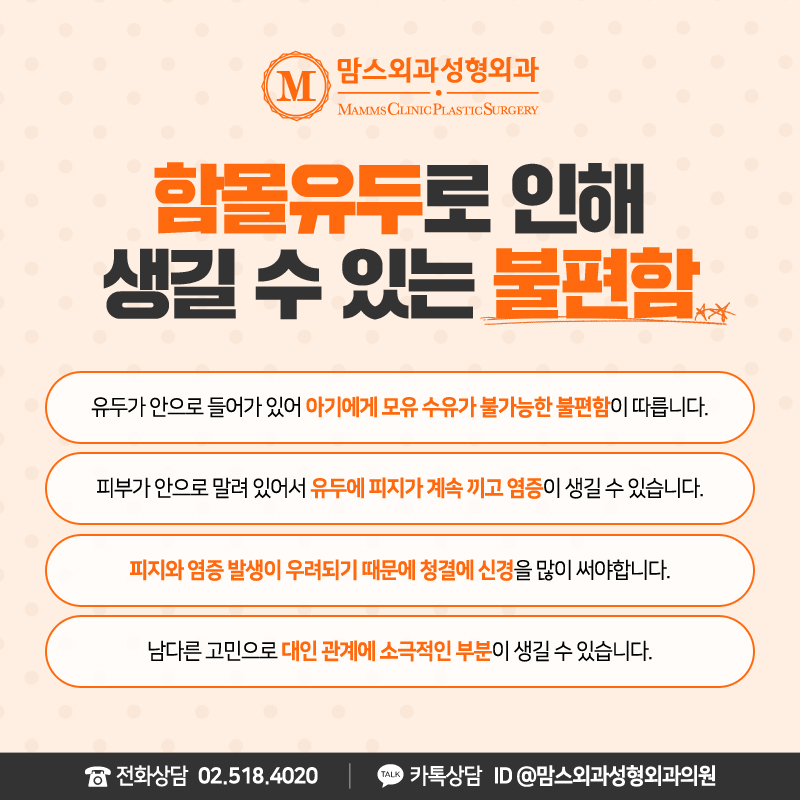
When considering nipple surgery, the important thing is to choose a method that matches the severity of the condition. Even when the symptoms are relatively mild, the suture technique may be chosen to preserve the milk ducts. In that case, however, there is a possibility that the nipple may become inverted again over time, or that the correction may remain incomplete and result in a partially corrected state where the center appears split.
Therefore, to increase long-term satisfaction regardless of whether breastfeeding is planned, it is necessary to choose a more stable surgical method.
Our clinic carefully assesses each individual’s condition before suggesting a surgical method so that recurrence can be reduced while still achieving satisfying results. In particular, if you have plans for childbirth and breastfeeding, rather than temporarily easing the inverted nipple symptoms, considering the incision technique after childbirth may be a more stable option.
Systematic post-operative care helps support stable recovery
After surgery, post-operative care is important so that the nipple tissue can settle stably. Our clinic provides a customized recovery program that takes each individual’s condition into account, helping the tissue remain properly maintained.
It is important to protect the nipple shape so that it is maintained for a certain period after surgery, and we also provide careful guidance on how to manage the recovery period.
Nipple surgery is not simply a procedure for changing appearance; it is a surgery that must also take functional aspects into consideration. That is why it is important to choose the method that is appropriate for you through 충분한 상담 before surgery.
Our clinic uses extensive know-how to help achieve more satisfying results.












Previous image
Next image








