Many people worry that a seroma will develop after accessory breast surgery.
That is why you may also hear people say that you have to go back to the hospital after surgery to have fluid drained.
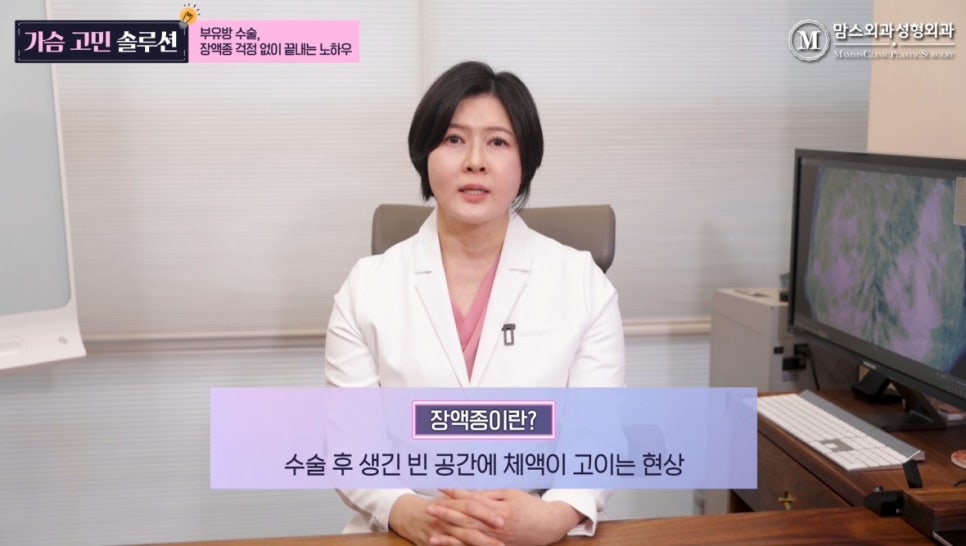
First, let’s take a look at what a seroma is.
A seroma refers to the buildup of fluid in a space left after surgery.
Today, we will explain how to complete accessory breast surgery without a seroma.
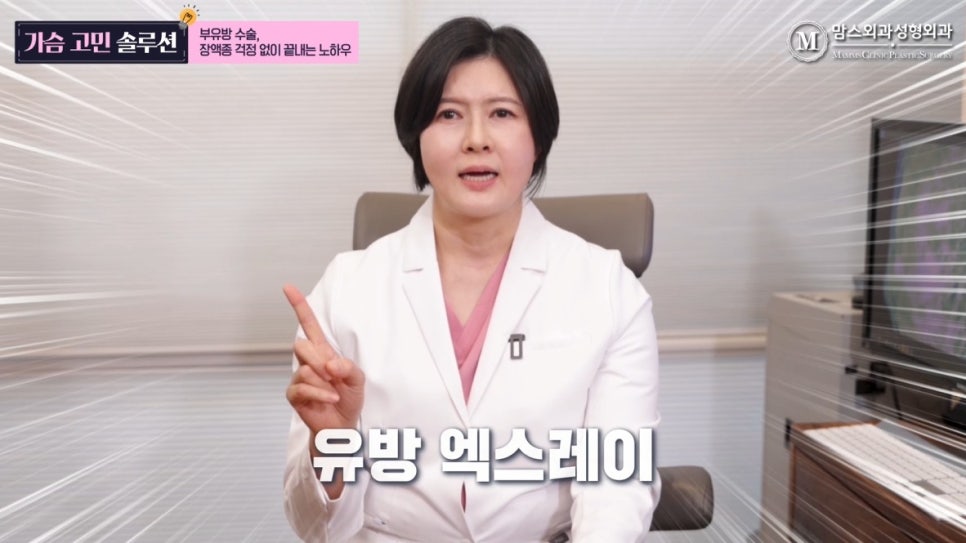
The key point can be called a 'mammogram.'
In fact, a mammogram is a device that requires a great deal of work.
A mammogram not only has high equipment purchase costs,
but also requires national quality control every year,
and with qualification maintenance every three years,
a radiologic technologist must be on-site.
So it can be said to be an X-ray that requires more effort to maintain than ultrasound.
Although it is cumbersome in this way,
it can be considered an important device that becomes a truly powerful ally.
First of all, although the price is high,
it is covered by National Health Insurance,
so the advantage is that you only need to pay 13,000 won.
In other words, the real appeal of a mammogram is that it provides precise diagnosis with expensive equipment
while remaining accessible.
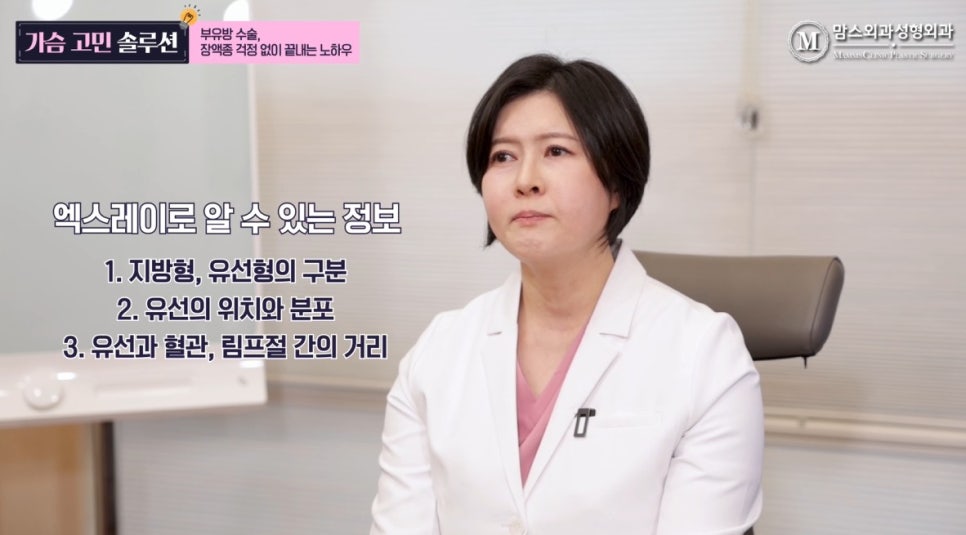
When an accessory breast is imaged with X-ray,
a variety of information can be obtained.
It is possible to distinguish whether it is fatty or glandular tissue,
and the location and distribution of the glandular tissue can be identified.
In addition, based on the distance between the glandular tissue and the blood vessels and lymph nodes,
the exact location of the glandular tissue is determined
before preparing for surgery.
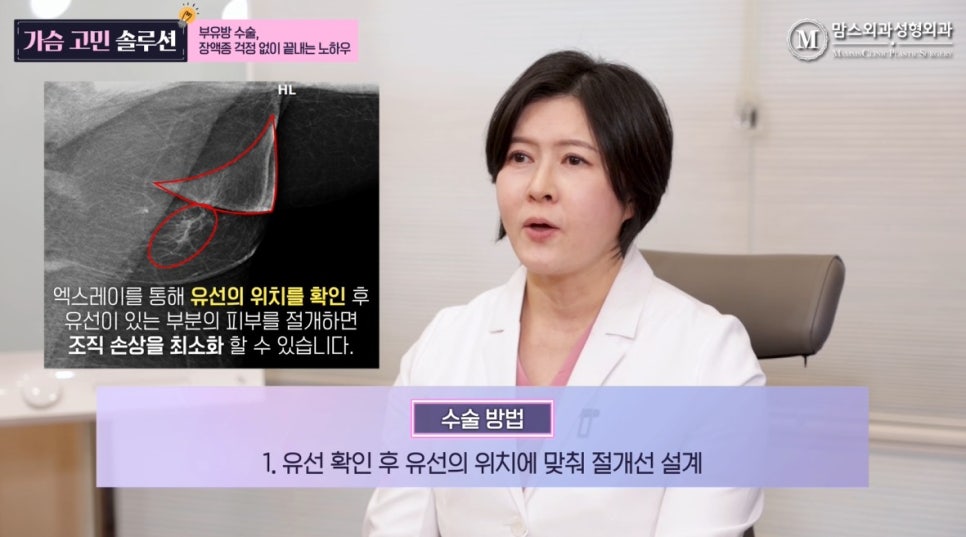
Looking at the surgical process,
after confirming the glandular tissue with X-ray,
the incision line is designed according to the location of that glandular tissue.
During surgery, ultrasound is used to gently lift the upper and lower sides of the glandular tissue with tumescent solution.
This allows the glandular tissue to be made into a single mass without touching blood vessels or lymphatic vessels,
which enables a clean removal.
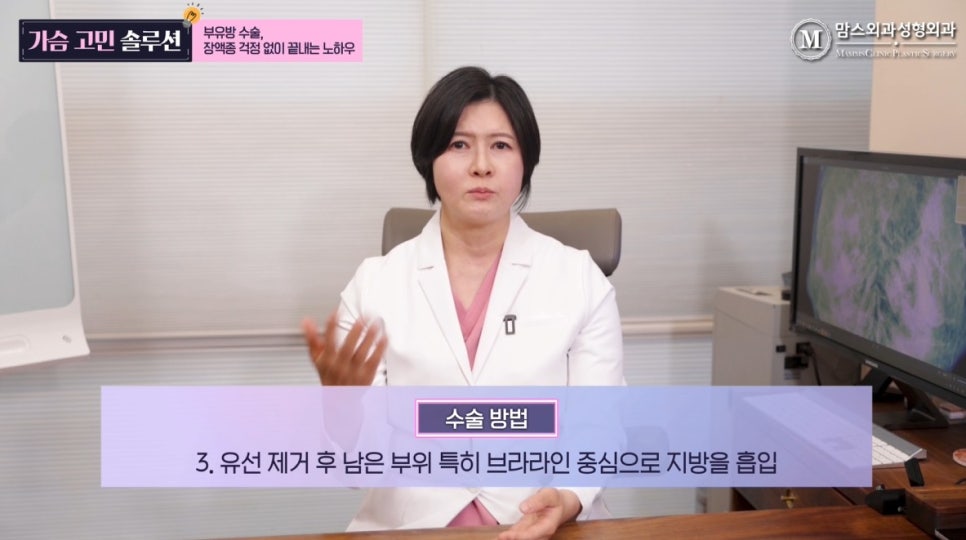
For the area where the glandular tissue was removed, the remaining area,
especially centered on the bra line,
is uniformly suctioned of fat.
That is because this reduces empty space
and, as a result,
significantly lowers the possibility of seroma formation.
Please remember that with this approach,
recovery is faster without a seroma,
and a highly satisfying surgery becomes possible.