The world is changing day by day, and it seems that this kind of change is no exception in the field of reduction surgery.
As the number of people undergoing surgery increases, the trend has moved away from focusing only on size. Recently, expectations for shape and scars have become higher, so aesthetic results are also considered important.
In the early days, breast reduction surgery was approached less from an aesthetic perspective and more as simply a surgical treatment for large breasts.
So it is true that neither doctors nor patients paid much attention to the shape or scars after surgery.

From the doctor’s perspective in particular, reduction surgery was relatively time-consuming and difficult, so rather than meeting the patient’s aesthetic desires, the focus had no choice but to be on how to achieve safer, faster, and more consistent surgical results.

In this respect, the surgery that fit this approach can be said to be the inverted-T incision method.
A large-breast reduction surgery takes about 5 hours if performed alone properly, and even through collaboration between specialists in breast surgery and plastic surgery, it takes about two and a half hours.

When I was at a university hospital, it took 7 to 8 hours, and in cases that took longer, about 10 hours, so it can be said to be a surgery that requires a great deal of time and effort from the doctor.
Speaking of history, in the 1980s, minimally invasive surgery began to spread in the medical field. Surgeries designed to leave as little scarring as possible began to attract attention across various fields, and naturally, major changes started to appear in reduction surgery as well.
Also, as reduction surgery gradually became a common procedure that anyone could undergo more easily, aesthetic demands regarding shape and scars increased.
Accordingly, medical professionals also began to focus on issues such as how to create a more three-dimensional, full breast and how to keep the incision line shorter, and as a result, the vertical incision method quickly came into the spotlight.

The vertical incision method has the advantages of creating a full breast and leaving less scarring.
However, there are also a few drawbacks.
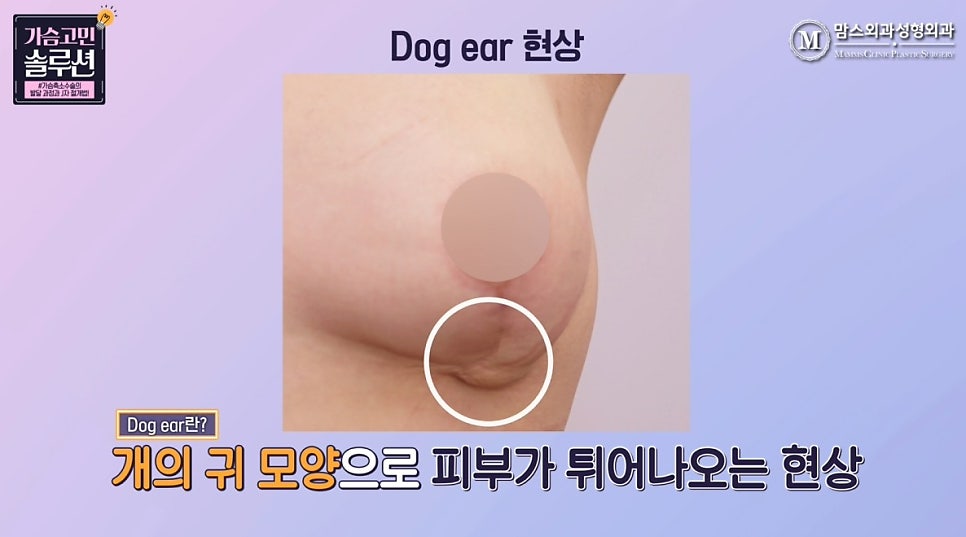
A representative drawback of the vertical incision method is the phenomenon called a dog ear, in which the skin bulges out in a shape resembling a dog’s ear.
Because the area below the vertical incision line has to be drawn together and stitched, the scar may remain as a hypertrophic scar, or the skin may become uneven and wrinkled.

If the breasts are large and sag significantly, the skin loses elasticity, so when all breasts are treated only with the vertical incision, there can be a problem later in which the gathered area appears less reduced because of sagging.
Since this phenomenon becomes more noticeable as the breasts are larger and more severely sagging, a new method was devised to compensate for it.
This is the J-shaped incision method.
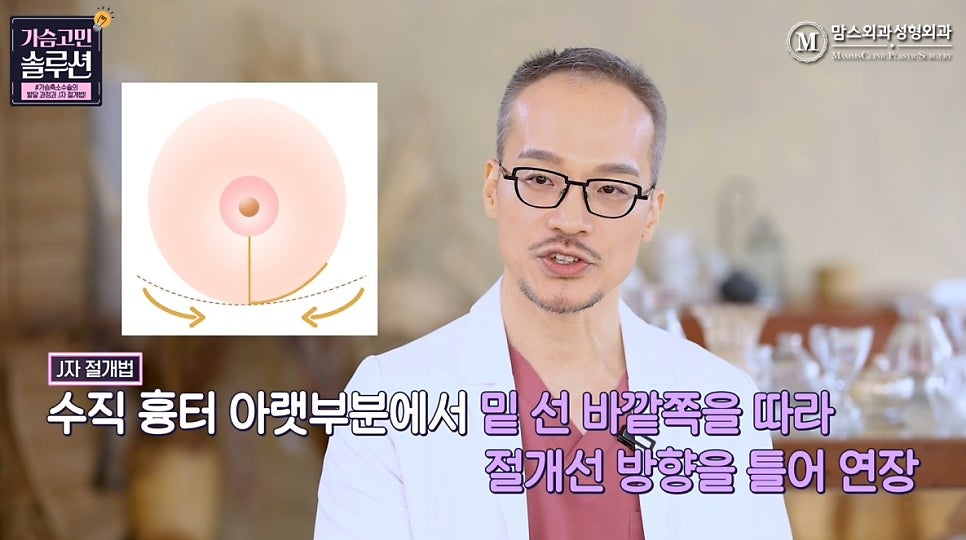
The J-shaped incision method extends the incision line by turning it at the lowest part of the vertical scar and extending it along the outer side of the inframammary fold.
It can prevent dog ears and allow a greater amount of sagging skin to be removed, so the J-shaped incision method makes it possible to apply a vertical incision approach even to very large breasts.
In a way, it can also be described as an intermediate method between the vertical incision method and the inverted-T incision method.
For this reason, some criticize it as being not much different from the inverted-T incision method.
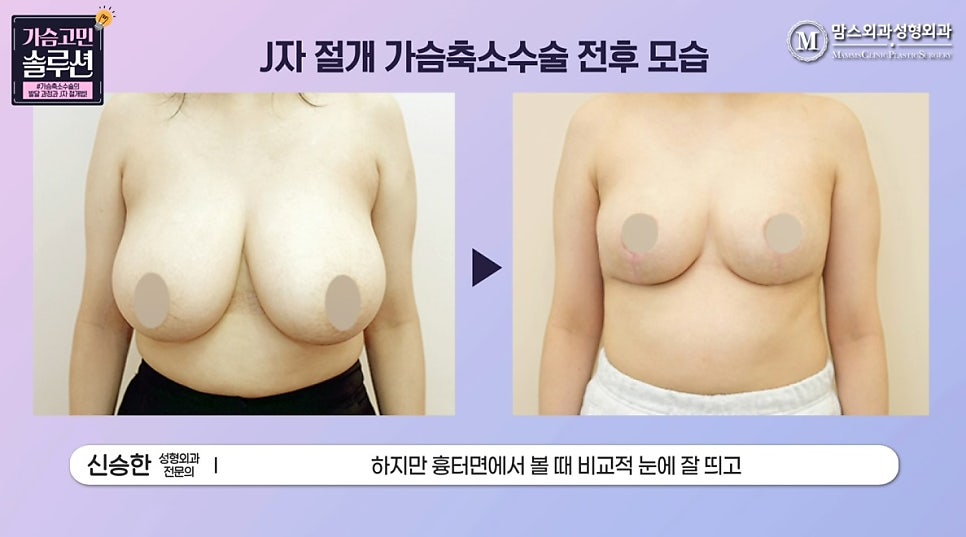
However, in terms of scars, the J-shaped incision method is a preferred breast reduction technique because it avoids leaving a scar on the inner side of the breast, which is relatively noticeable and prone to hypertrophic scarring, while still preserving all the advantages of the vertical incision method.
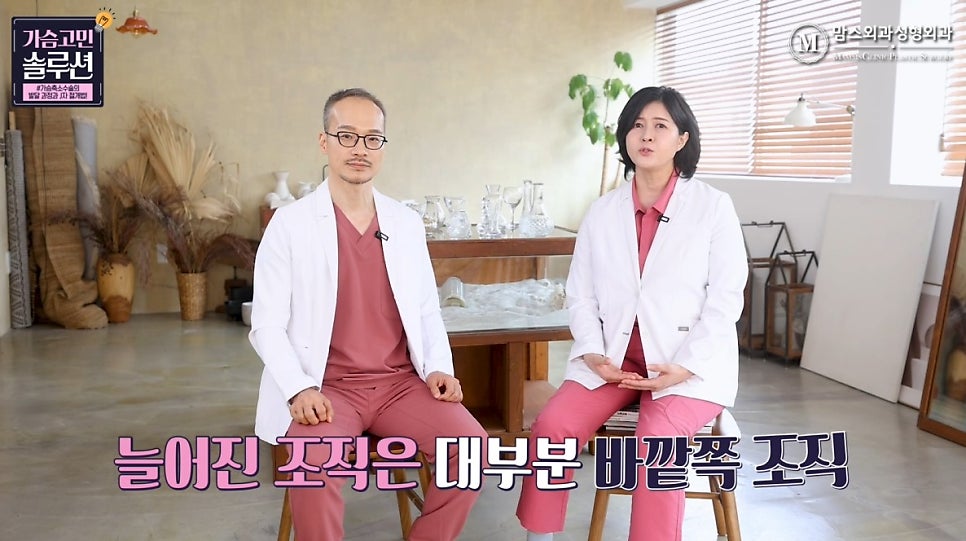
Structurally, the breast has more tissue on the outer side, so most of the sagging tissue can be said to be outer tissue.
When standing, the sagging tissue moves to the side when lying down, so removing the sagging skin and tissue on the outer side can improve sagging.
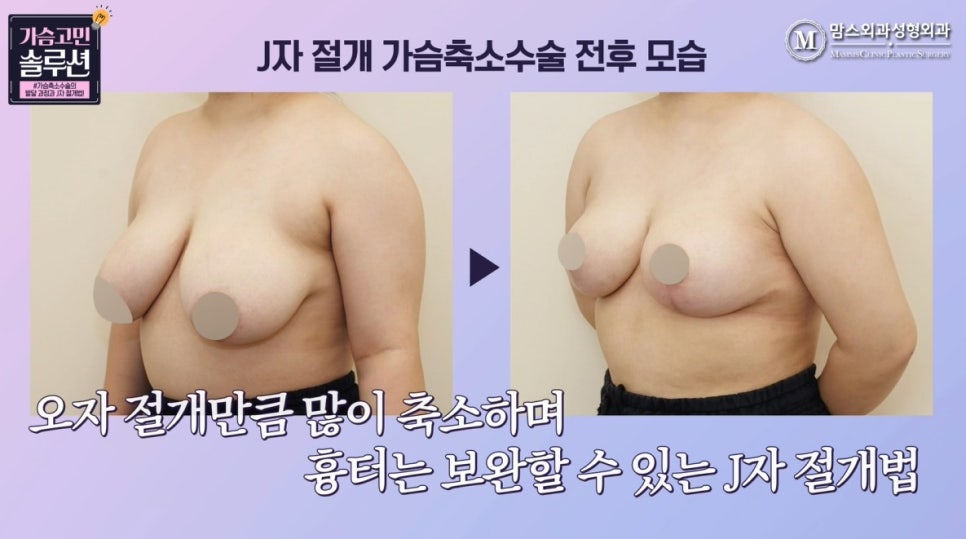
Since the J-shaped incision comes from the vertical incision, its shape remains round and full like the vertical incision method, preserving its advantages well. At the same time, it compensates for the disadvantage of leaving less skin behind, so it can be said to reduce the breast size as much as the inverted-T incision while also improving the scar.

Today, I introduced the overall development process of breast reduction surgery and, lastly, the J-shaped incision method.
Next time, I will answer your questions with better content.