When patients come in for a consultation,
the part they ask about most often
is scarring.
Because of the nature of surgery, which involves an incision,
there is inevitably some concern about scars.
Even if the scar is only visible to me,
it is something I have to live with for life,
so it is natural to want
to shorten the scar as much as possible.
Of course, scars cannot be erased,
so it is understandable to worry,
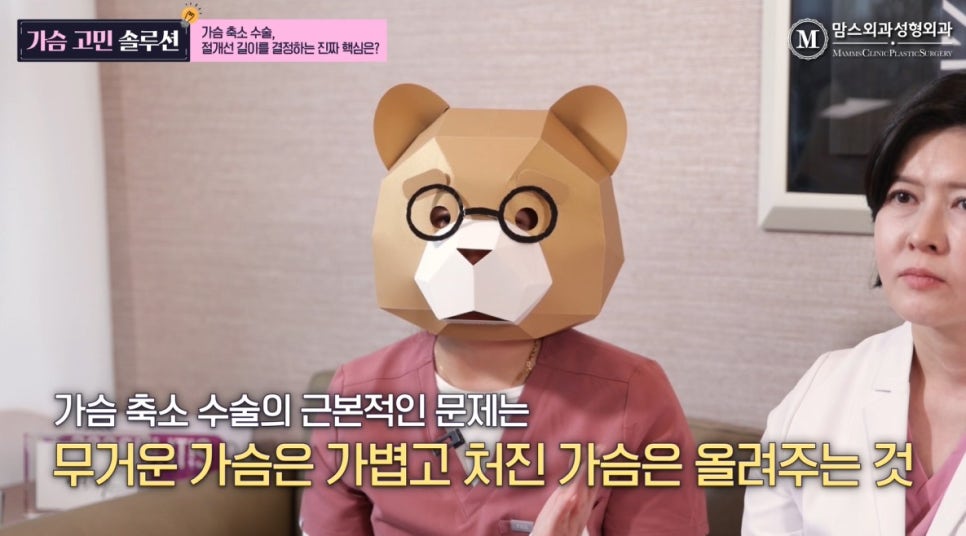
but we need to consider the fundamental
reason for breast reduction surgery.
From the perspective of making heavy breasts lighter
and lifting sagging breasts,
shape may be more important than
scarring.

So how should breast reduction surgery
be performed?
In fact, it is possible to keep the incision
as short as possible.
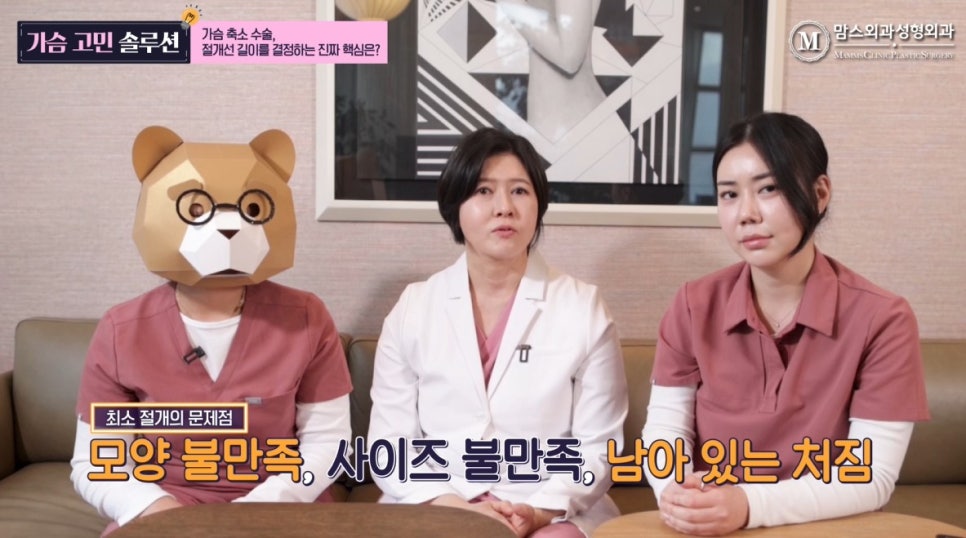
However, the problem is that
the shape may be unsatisfactory,
it may not fit the desired size,
and sagging may occur.
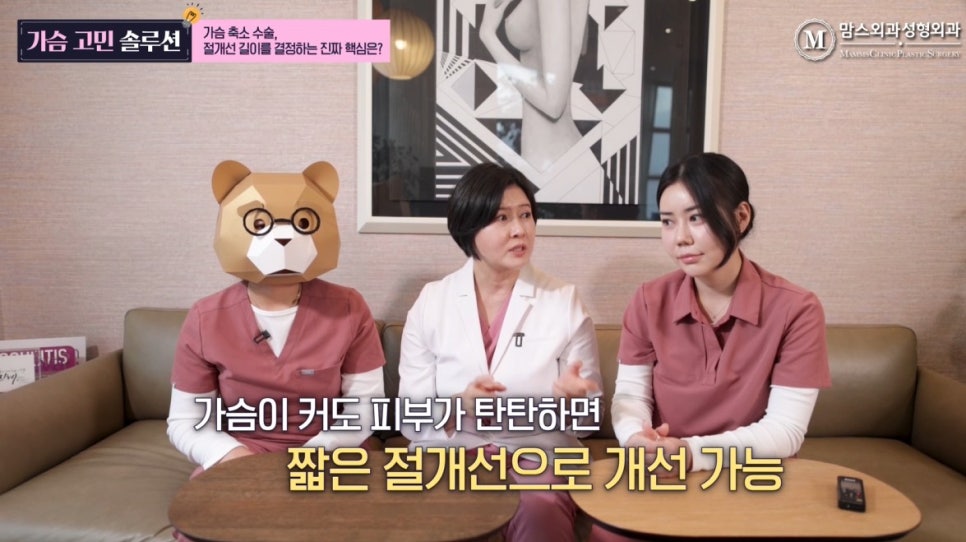
Of course, the length of the incision line
does not always correspond directly
to the incision itself.
Even if the breasts are large, if the skin is firm,
they can be reduced sufficiently
even with a short incision line,
and in such cases, a vertical incision alone may be enough.
However, because people usually consider surgery
when breasts begin to sag due to a lack of elasticity,
if there is a lot of excess skin,
the incision line has no choice but to be longer.
That is why, when surgery is performed with a periareolar incision or a vertical incision,
some patients later come back for revision surgery
because they are dissatisfied with certain results,
which shows that a shorter scar is not necessarily always better.
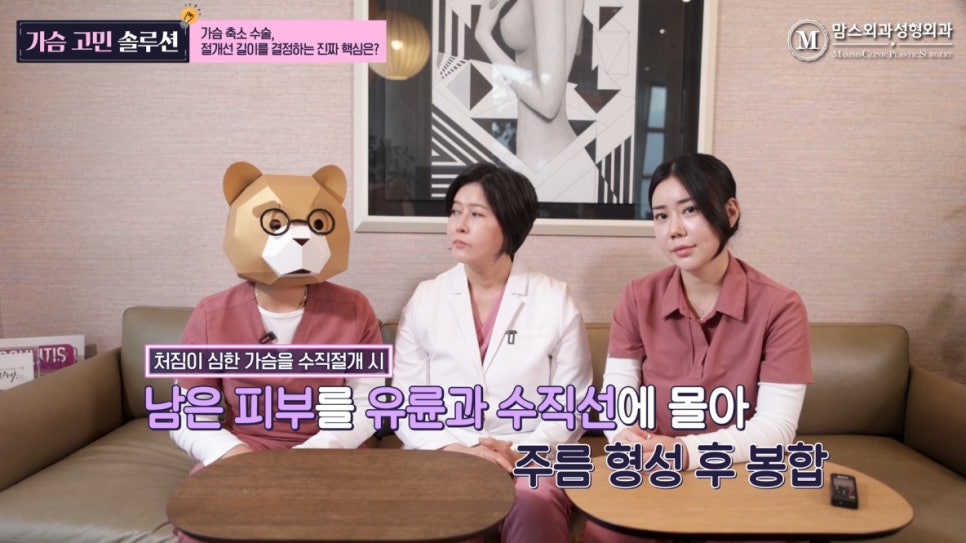
If sagging is severe and only a vertical incision is made
to reduce scarring,
the remaining skin must be gathered into the areola or along the vertical line
so that wrinkles form before suturing.
In that case, the areola may end up looking like a money pouch,
or the vertical line may look like dumpling skin,
which is not aesthetically pleasing.
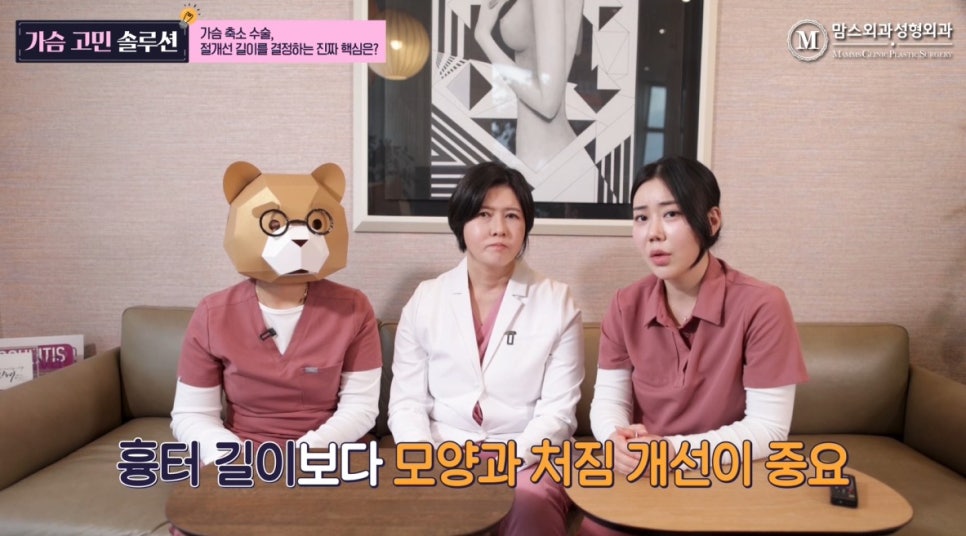
Before surgery, people worry about scars,
but after surgery, many place greater importance
on their own satisfaction.
That is why I think shape improvement
and correction of sagging
are more important than the length of the scar.
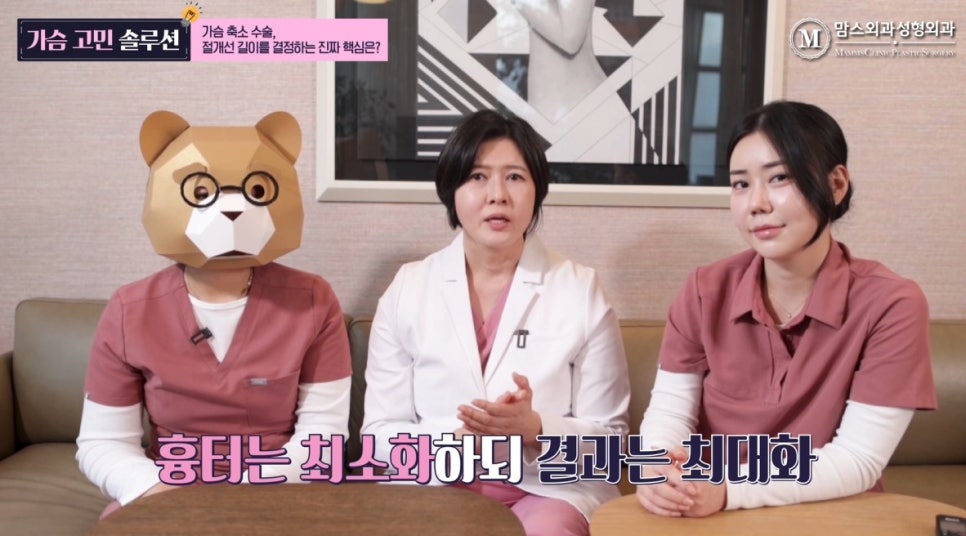
The length of the incision line is determined by elasticity,
so the incision line can be seen as
the result of a design tailored to the patient's body.
That is why I would like to say,
don't look only at the scar,
but also consider the changes in life that lie beyond it.