
When considering breast reduction surgery,
one of the most common questions is:
“Can you do it with only a vertical incision?”
“I’m worried about the scar with an inverted-T incision.”
The shape or length of the incision line
is not really the goal of the surgery,
but rather closer to the result.
The length of the incision line is
determined according to
the patient’s skin elasticity,
the degree of breast drooping,
the base area,
and the minimum breast unit that is to be preserved.
Reducing the breasts is not simply
about cutting away skin,
but about creating a three-dimensional shape
that fits the base of the breast.
In other words, the priority is not
to shorten the incision line,
but to perform surgery that creates
a three-dimensional shape suited to the structure
of the breast base.
This is what “breast reduction surgery” means.
The area of this breast base
varies from patient to patient.
The key point of breast reduction surgery
is to preserve a cone-shaped,
three-dimensional structure that matches this base.
On top of that, the skin should be left to
cover it neatly like a lid,
and the remaining stretched skin is
trimmed decisively.
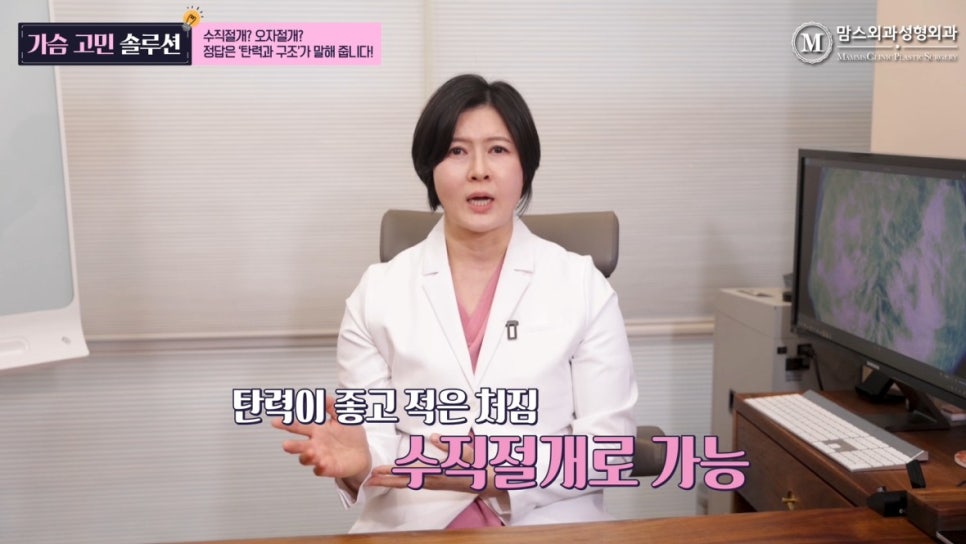
If the elasticity is good and there is little sagging,
a vertical incision is possible.
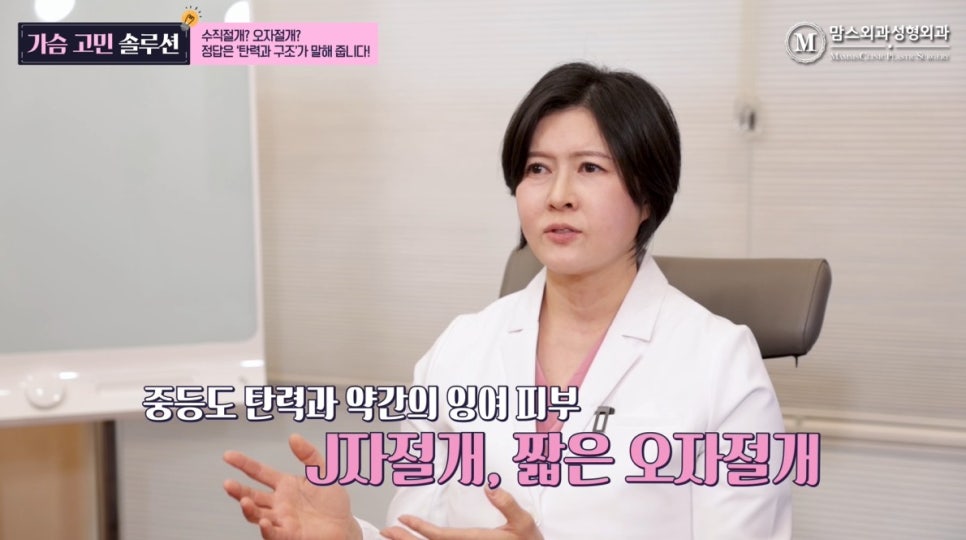
And if there is moderate elasticity
and a little excess skin,
a J-shaped incision or a short inverted-T incision
is recommended.
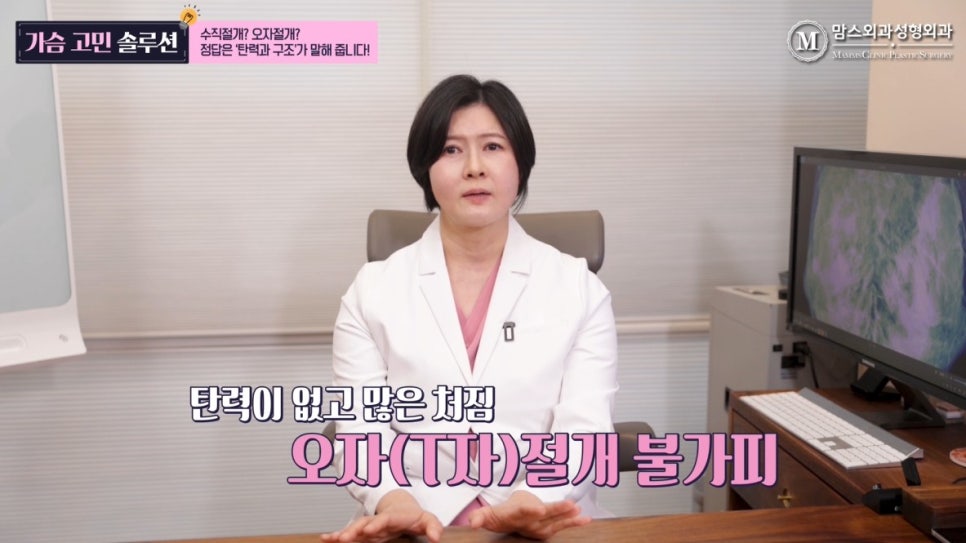
If there is little elasticity and a lot of sagging,
an inverted-T incision is unavoidable.
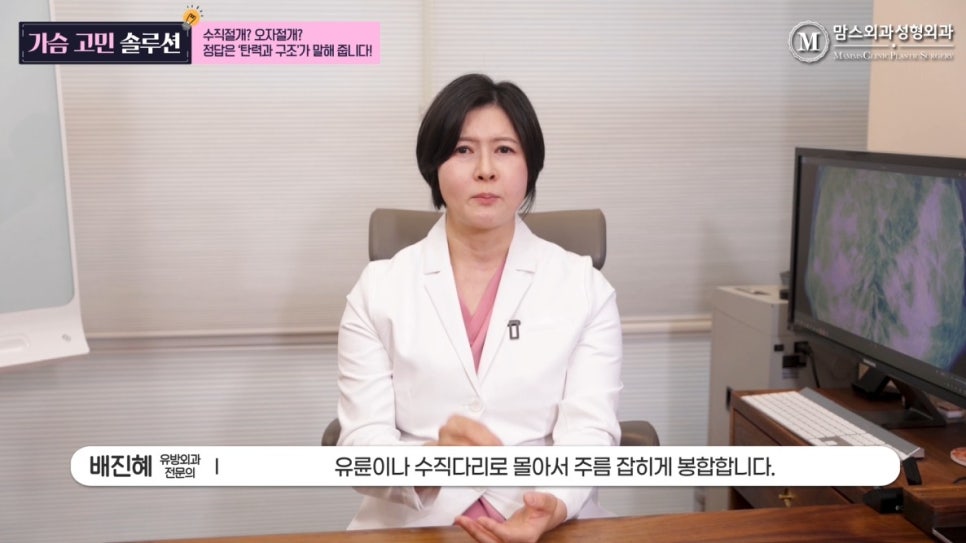
If the skin has very little elasticity,
but a vertical incision is used no matter what,
the inelastic skin has to go somewhere,
so it is gathered toward the areola or the vertical limb
and sutured in a wrinkled manner.
However, this can lead to various problems.
In particular, the area around the areola can become bumpy,
and the areola shape may become distorted into an oval.
If the vertical line is raised in a case with insufficient elasticity,
sagging may occur later,
and the lower part of the breast may stretch,
creating new sagging.
Also, if an inverted-T incision is used unconditionally,
younger patients may end up being bothered by the scar.
The length of the incision line is
naturally a consequence that follows.
If the skin elasticity is good, the skin contracts after surgery
and the scar becomes shorter,
but if elasticity is low,
the incision line becomes longer
in order to reduce it as much as desired.
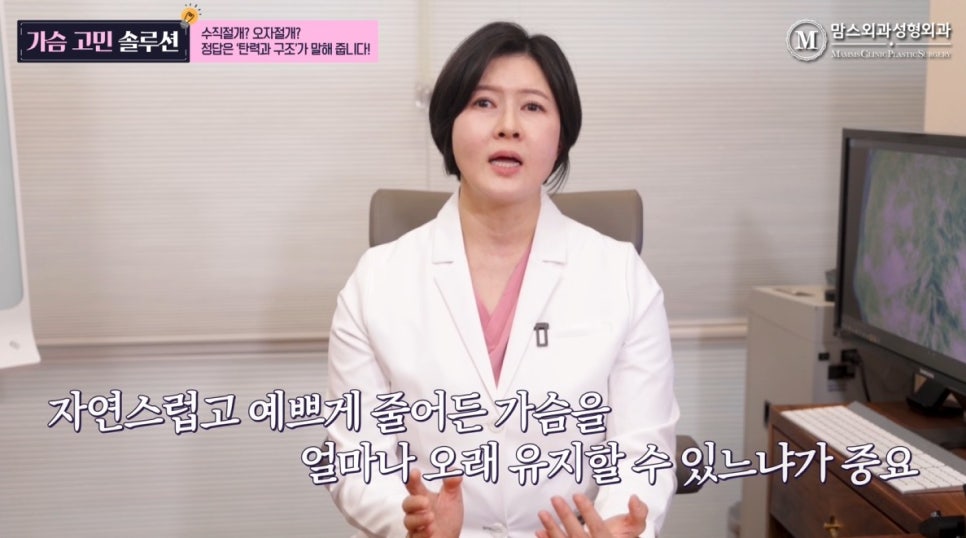
But the important point is not
the length of the scar,
but how naturally and beautifully
it has been reduced,
and how long it can be maintained.
That is why I would recommend not a surgery that only shortens the incision line,
but one that creates a beautiful breast suited to my body.
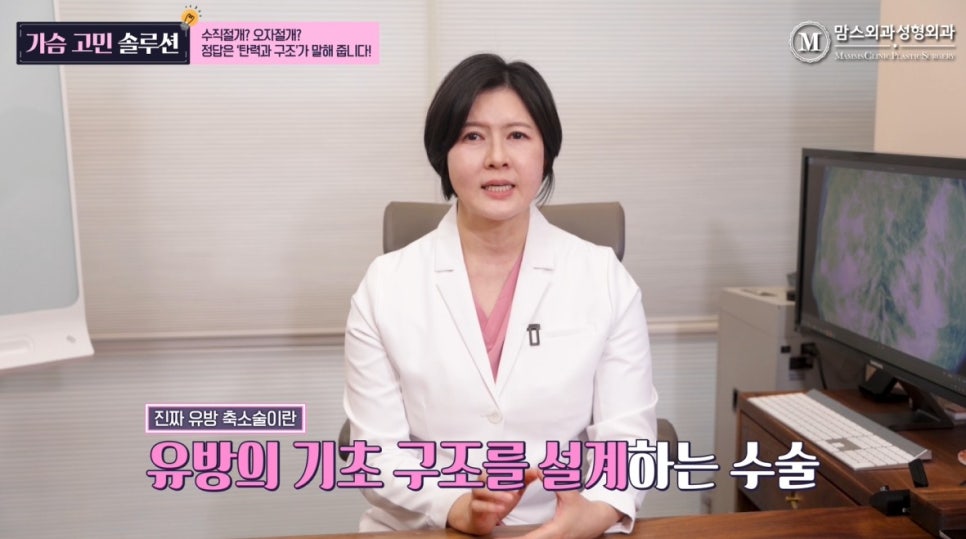
A true breast reduction surgery
can be said to be a surgery that designs
the basic structure of the breast.