After having breast reduction surgery,
there are two major cases in which
revision surgery may be considered.
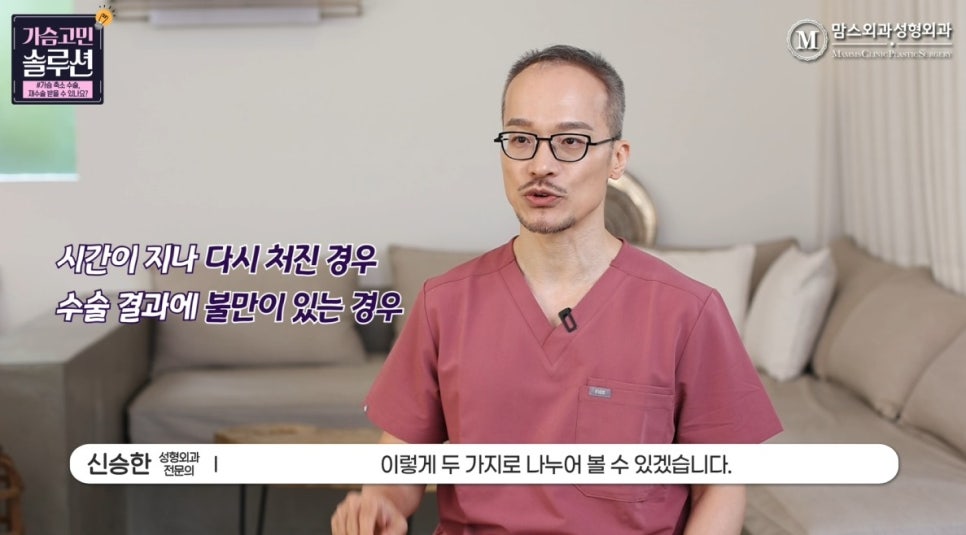
One is when the breasts sag again
a long time after surgery,
and the other is when only a short time has passed
since the surgery but you are unhappy with the original results.
These can be divided into these two cases.
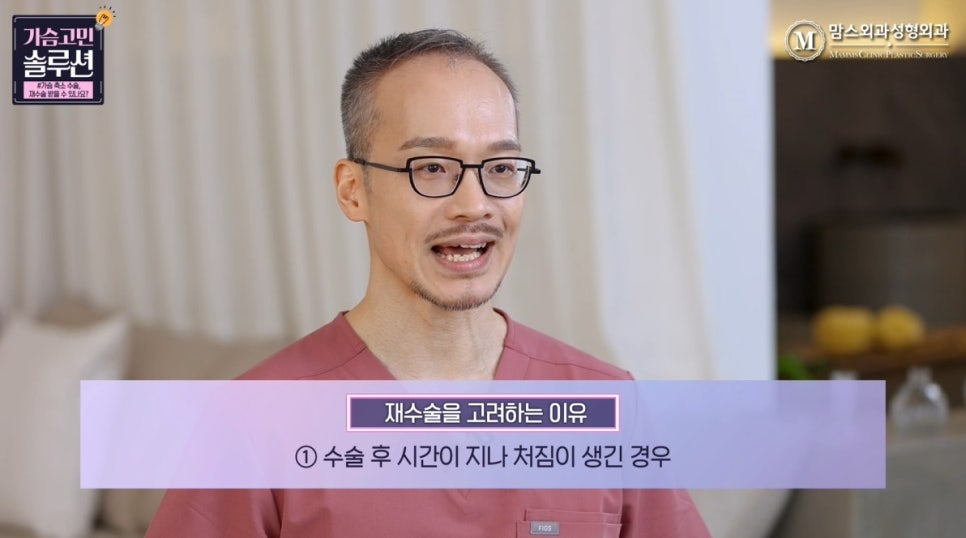
First, there are cases where sagging occurs
after a long time has passed since the surgery.
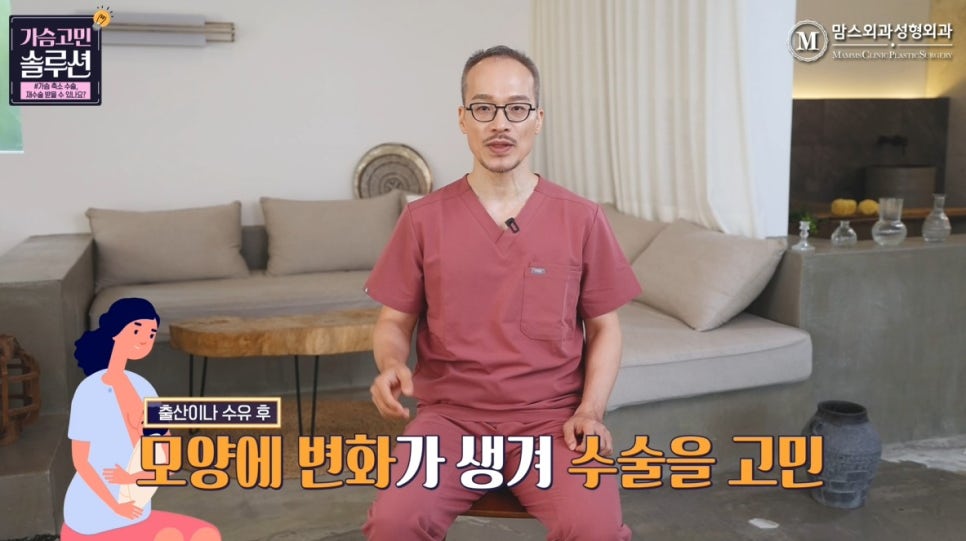
In particular, among those who had surgery
in their teens or twenties,
changes in shape after childbirth or breastfeeding
often lead them to consider surgery again.
From the perspective of the people who had surgery,
they hope the results will not change,
but gravity cannot be overcome.
Therefore, as time passes,
the breasts naturally begin to sag little by little
even after reduction surgery.
This is because breast reduction surgery is
not simply a procedure to remove the breasts,
but one that leaves a certain amount of tissue
to create a small and aesthetically pleasing shape.
In such cases, reduction surgery can be performed again.
In revision surgery, the tissue characteristics,
especially the blood vessel distribution,
are different from the first surgery,
so caution is needed in this regard.
Depending on how the previous surgery was performed,
the remaining blood vessels will differ,
and the revision surgery must match that condition,
so securing records from the first surgery is important.
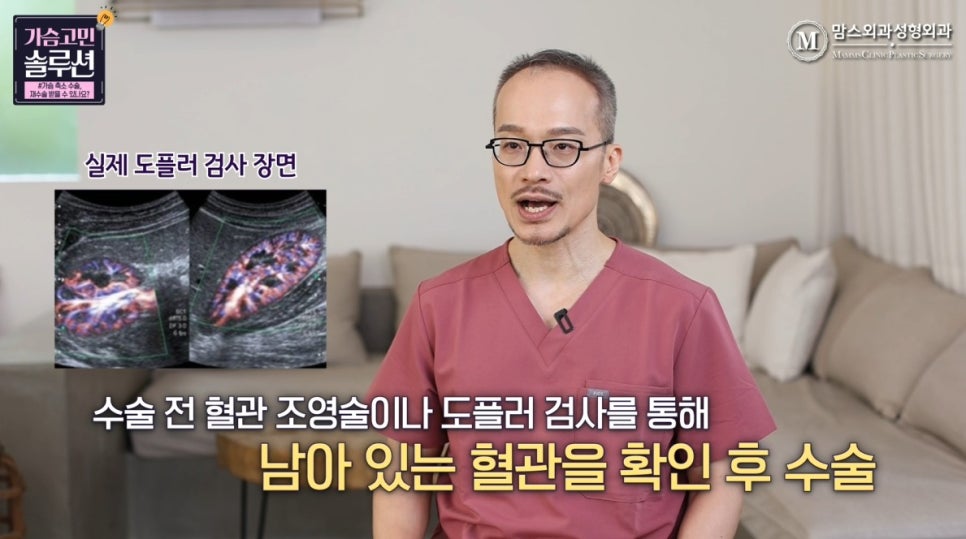
However, in some cases,
it is often impossible to review the previous medical records.
If so, before surgery, angiography or a Doppler test
must be performed to check the remaining blood vessels.
Next are cases where the surgical results are unsatisfactory,
regardless of how much time has passed.
In fact, satisfaction with surgical results is highly subjective,
so it is not right to undergo revision surgery simply because
the results are not to your liking.
“Will I feel better if I get revision surgery?”
A revision performed with this vague expectation
has a very high chance of failure.
Revision surgery is more likely to be satisfying
when the areas you want improved are specific and clear.
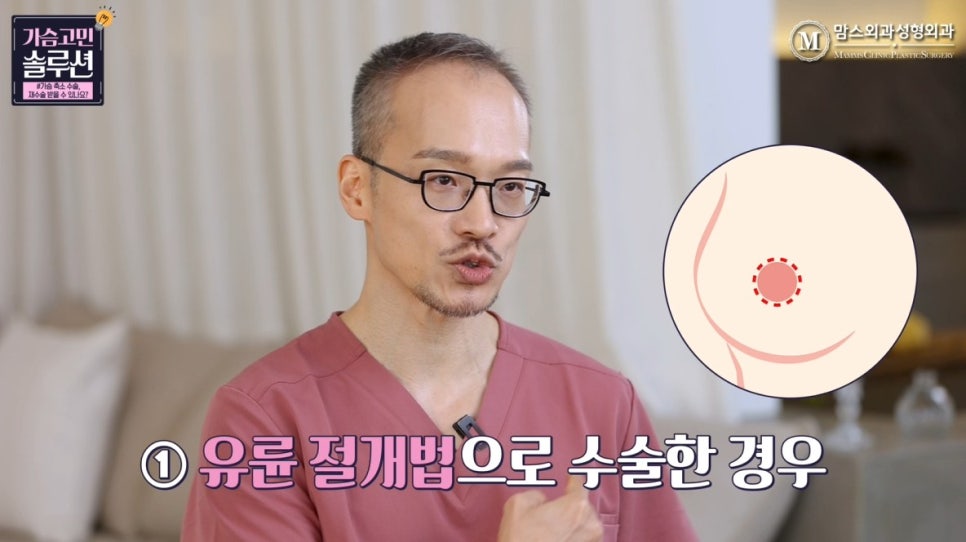
There are two typical examples.
The first is when the surgery was performed
with a periareolar incision.
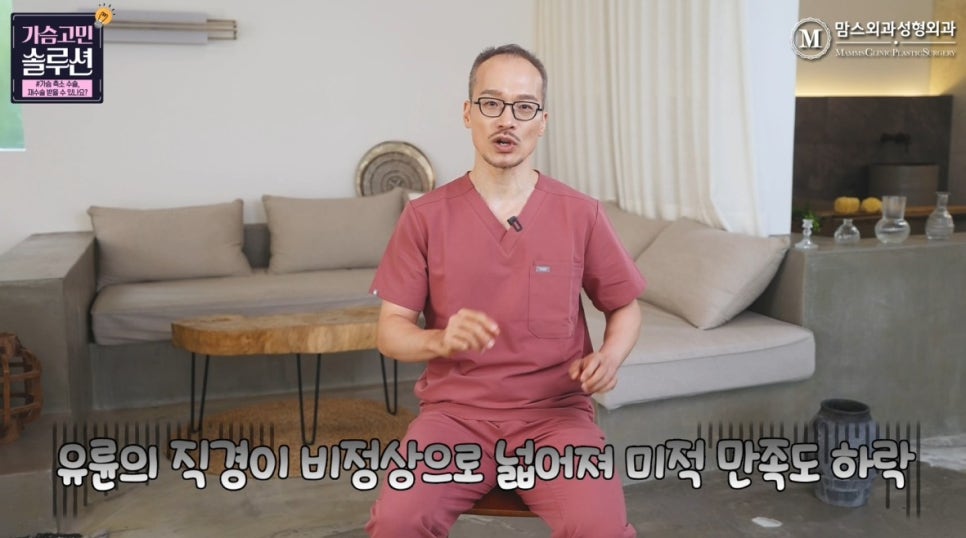
Of course, good results can be achieved
with a periareolar incision,
but if a large breast is corrected
using this method,
the size may not decrease much,
and the areola’s diameter may become abnormally wide,
which greatly reduces aesthetic satisfaction.
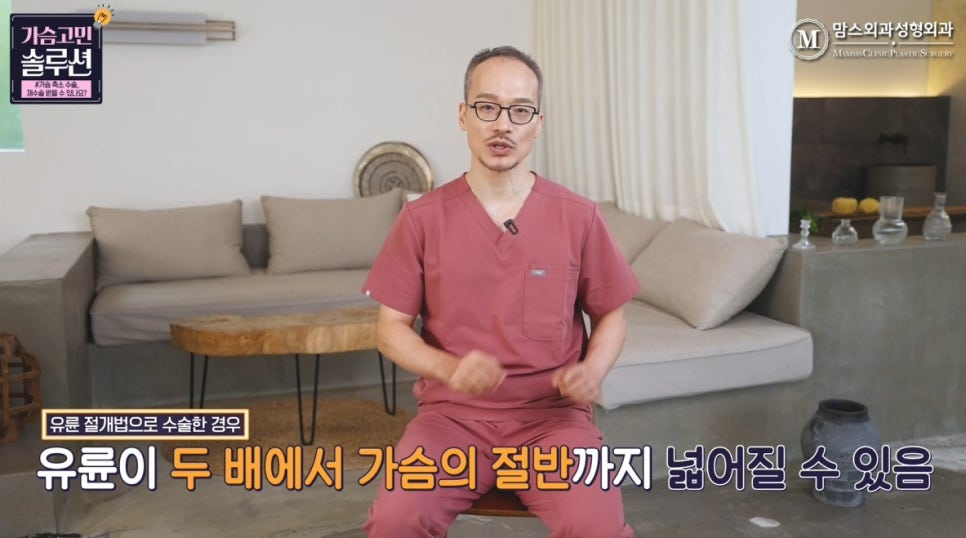
Because of this, regret after surgery is common.
A woman’s areola diameter is generally about 4 to 5 cm,
but when surgery is performed using a periareolar incision,
the areola can widen to twice its size or even half the breast.
In such cases, corrective surgery is absolutely necessary.
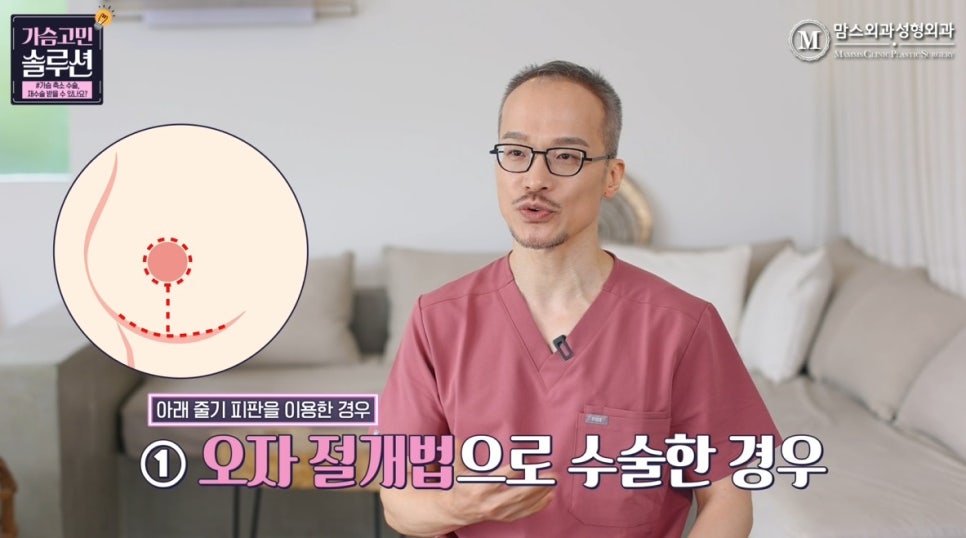
The second is a problem in cases where surgery was performed
with an inverted-T incision,
especially when the lower pedicle flap was used.
When surgery is performed this way,
there is a tendency for a lot of tissue to remain below,
which has the drawback of causing the lower breast to sag.

Because the lower tissue is sagging like this,
the nipples may appear to be in a relatively higher position.
In fact, in breast reduction surgery,
the area that should mainly be removed is
the lower tissue rather than the upper tissue.
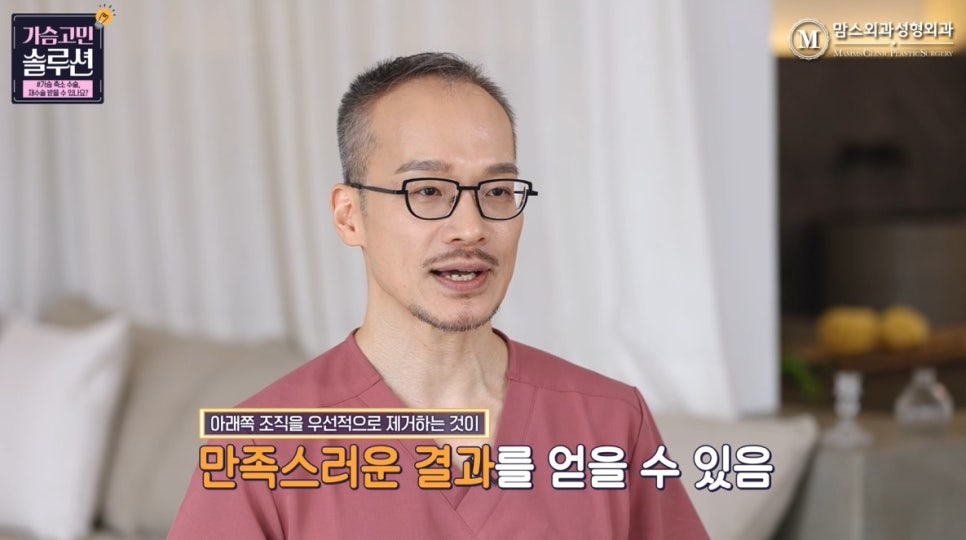
Even when the breast size is reduced,
many people want to keep the upper volume rounded and full,
so removing the lower tissue first leads to higher satisfaction.
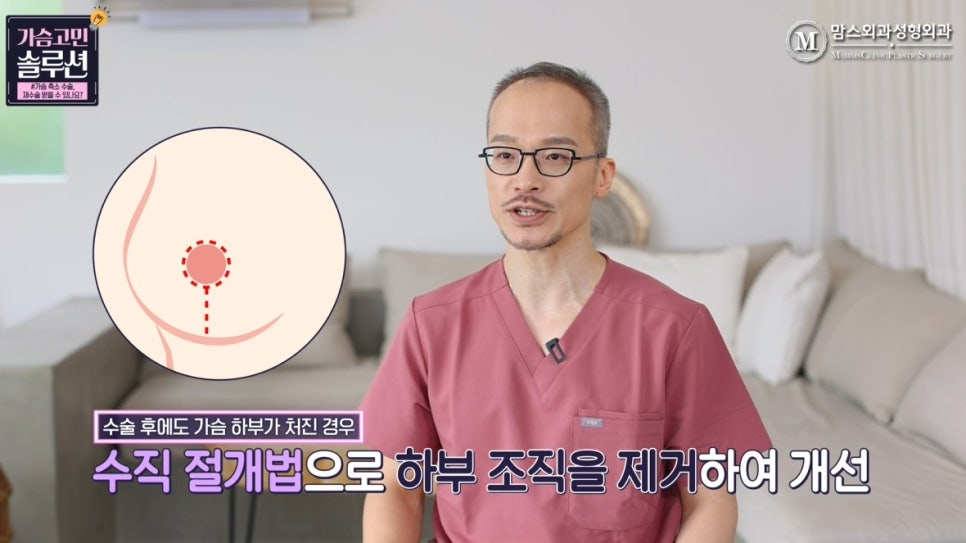
If sagging remains in the lower part of the breast after surgery,
improvement is possible by removing the lower tissue
through a vertical incision.
However, in this case as well,
the remaining blood vessels are quite limited,
so it is important to understand the vascular condition in advance
through testing in order to perform stable
revision surgery.
Please keep that in mind.