One of the misunderstandings many people have
about scars is
the mistaken belief that the stitched shape right after surgery will remain exactly the same!
In actual clinical practice,
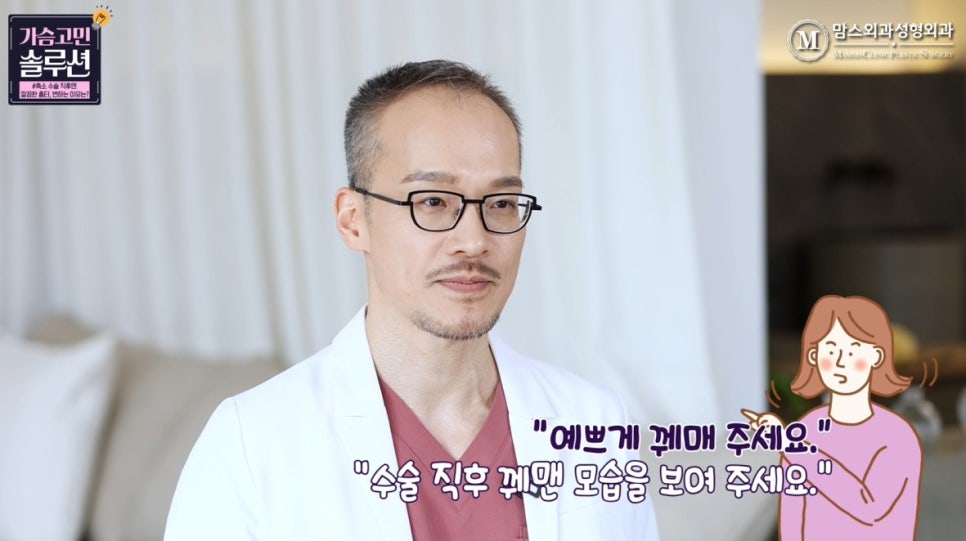
“Please suture it beautifully.”
“Please show me how it looks right after surgery.”
People often make requests like these.
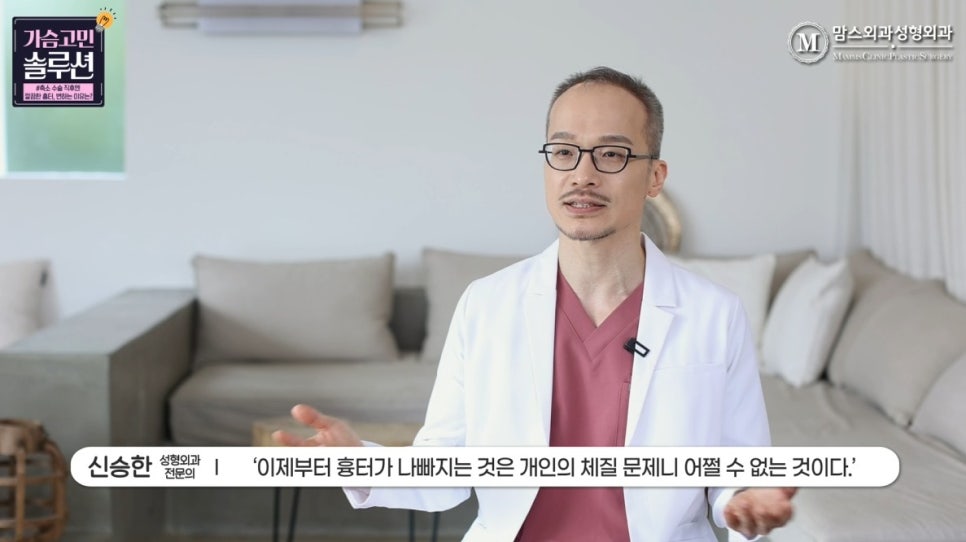
This is partly due to the excessive advertising and defensive medical practice of some hospitals.
They may show photos or results of beautifully closed incisions immediately after surgery and explain things like this:
“From here on, whether a scar develops is just a matter of your individual constitution, so there is nothing we can do about it.”

When I speak negatively about this point, many people misunderstand.
“Are you saying we should just wait and hope it gets better after it was stitched badly?”
People may guess that,
but that is absolutely not what I mean.
It is actually the exact opposite.
Of course, the suturing itself must be done well first
for there to be less scarring.
It is natural that the appearance of the suture right after surgery
also plays an important role as a marker in later scar formation.
A visibly rough, unevenly stitched scar
will not turn into a good scar
over time.
What I want to talk about today
is based on the premise that the suturing is, of course, done carefully and well.
I want to explain the process by which a scar that looked good right after surgery gradually changes.
Even if it is stitched neatly and well right after surgery,
through a series of processes
the scar can worsen.
Many people pay more attention to
the condition of the sutures right after surgery
rather than to the long-term changes in the scar.
This is probably because they have seen poor suture results
and have accumulated experiences of scars
that remained badly over time.
Departments that prioritize function over aesthetics
often consider suturing to be just a finishing step
after the main surgery.
In general, this is often handled by medical staff with less clinical experience.
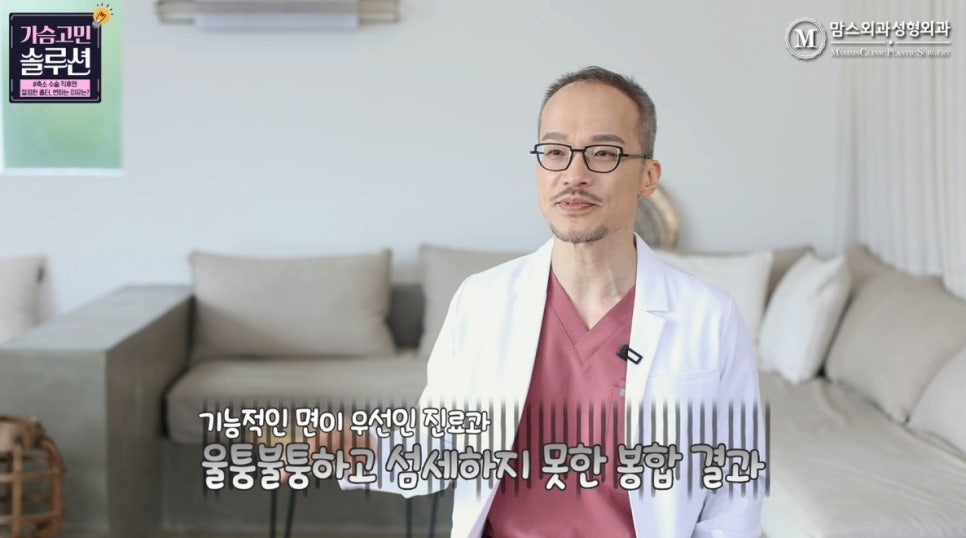
Because of that, the suturing result is often uneven and not very delicate at first glance.
When people have only seen scars like this around them,
and then see a wound sutured by a plastic surgeon,
they may feel that it was sewn very carefully.
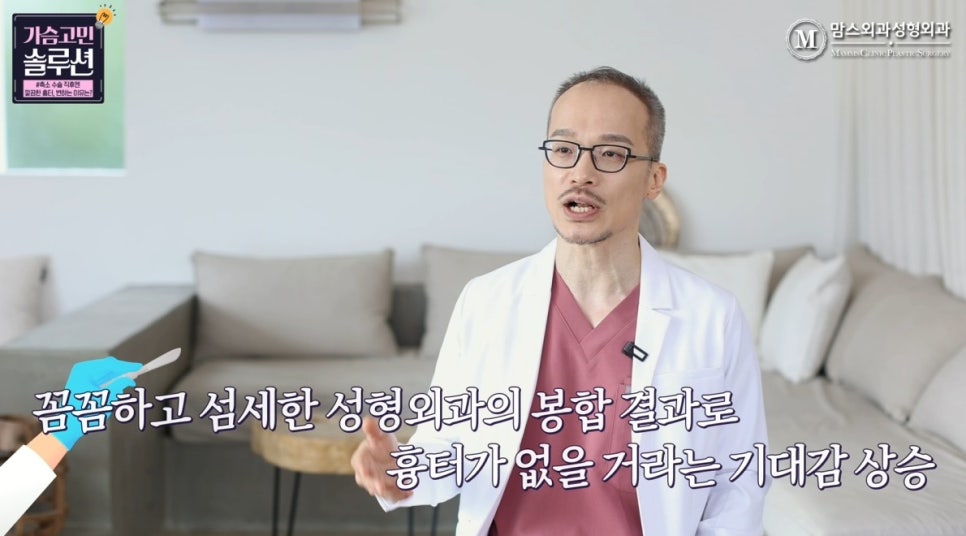
So from the patient’s point of view,
this kind of meticulous and delicate suturing result
creates the expectation that there will be less scarring.
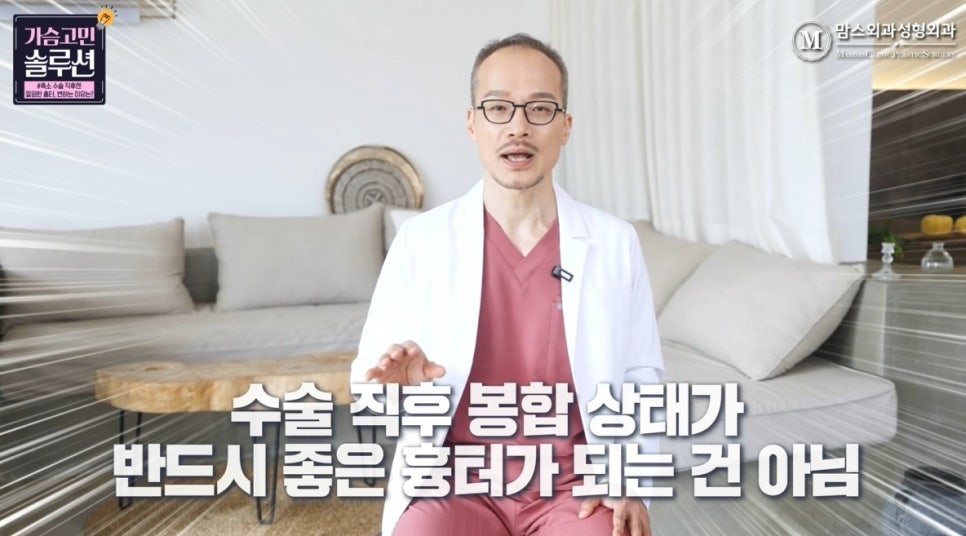
However, unfortunately,
the suturing condition immediately after surgery
does not necessarily become a good scar.
Plastic surgery medical staff are confident in suturing,
so they close the scar right after surgery
in a neat and attractive way.
The problem is that a scar that at first seemed like it would remain only as a thin line
changes little by little over time.
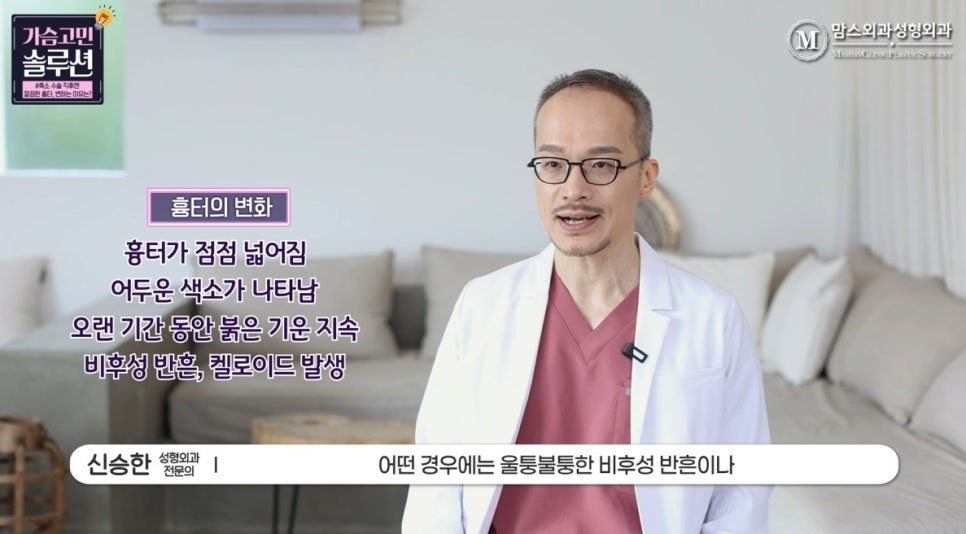
A line-like scar gradually widens,
and dark pigmentation that was not there at first may appear.
In addition, redness can persist for a long time,
and in some cases,
raised hypertrophic scars or keloid scars may form.
It would be ideal if these series of processes could be prevented in advance,
but in fact, many of these changes are part of the normal healing process,
so to some extent they are unavoidable.
However, depending on the degree of that reaction,
it can lead to the result of a bad scar.
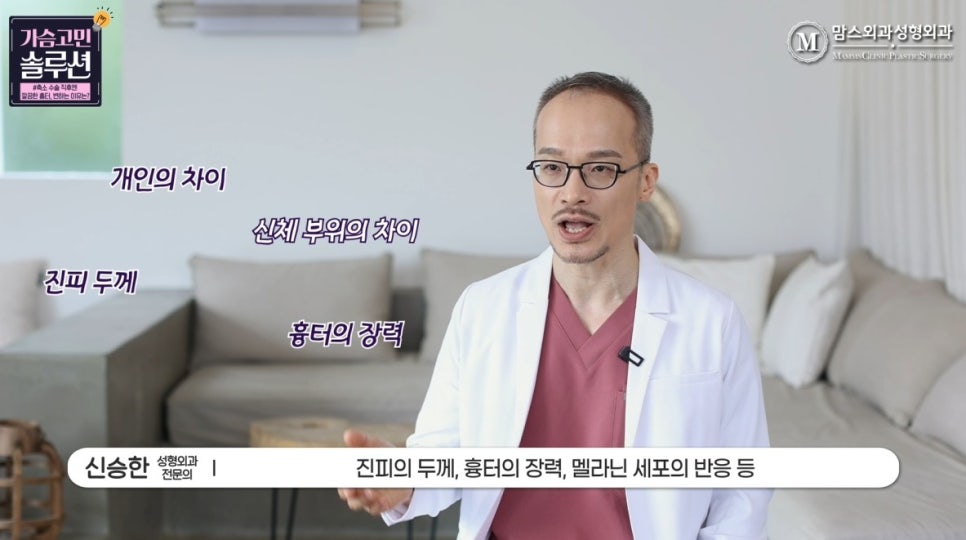
Because many factors differ—
such as individual differences,
differences in body area,
dermal thickness,
scar tension,
and the reaction of melanocytes—
a suture that was neat at first can change as it goes through different healing processes.
Through these various healing processes,
the scar may gradually worsen over several months to a year.
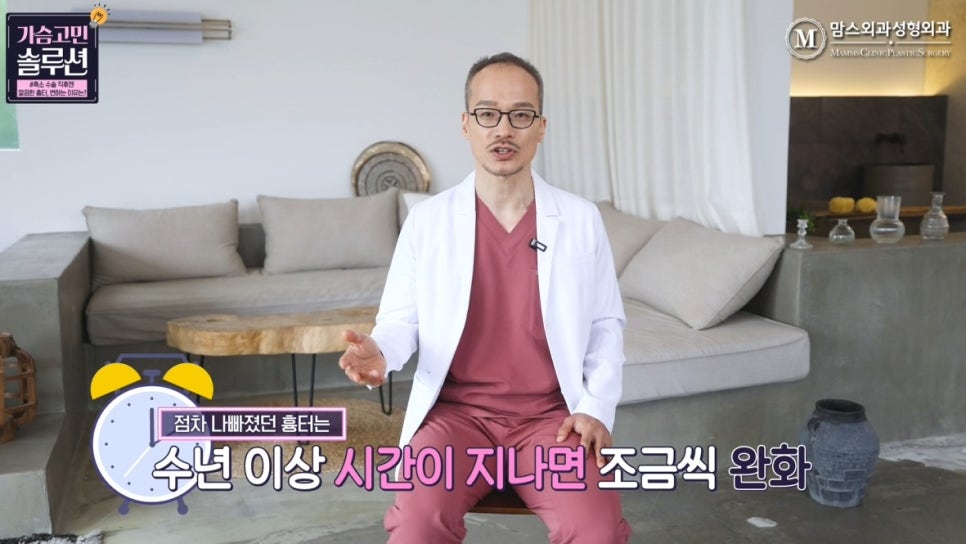
However, many of these changes may gradually lessen
over several years.
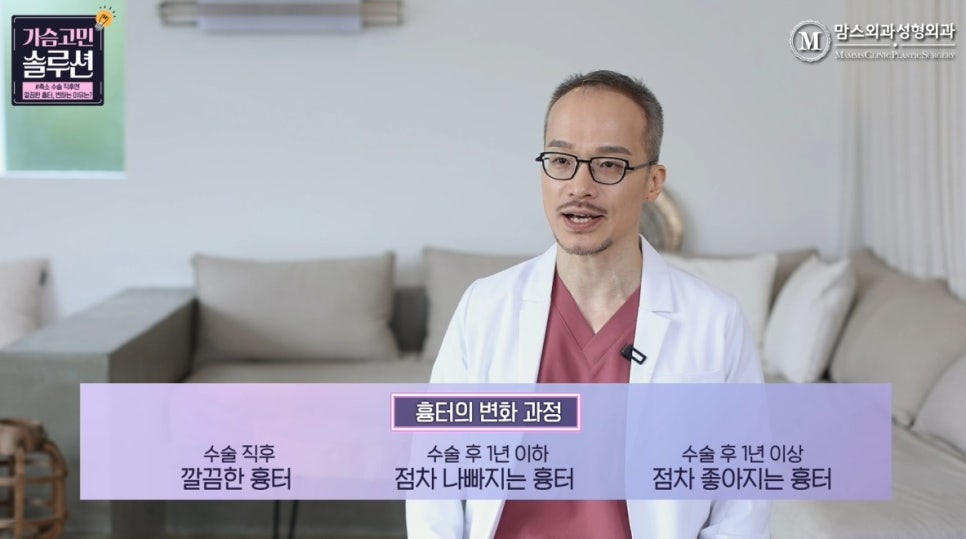
To summarize, surgical wounds go through a series of changes,
and if we list the stages of scar change,
immediately after surgery: neat scar
within 1 year after surgery: gradually worsening scar
more than 1 year after surgery: gradually improving scar
This can be organized in this way.
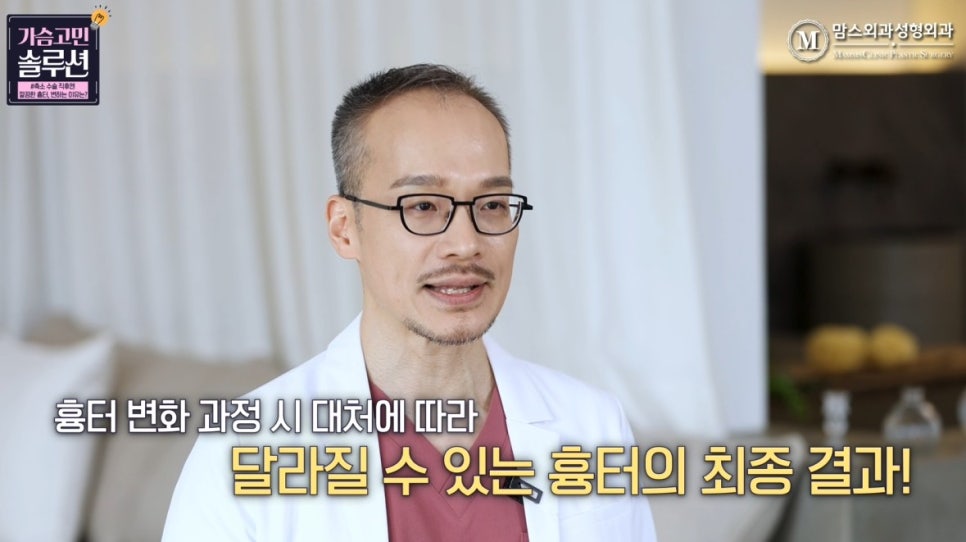
In the end, it may seem like everything gets better,
but the final outcome of the scar can differ depending on how it is managed during the process of change.
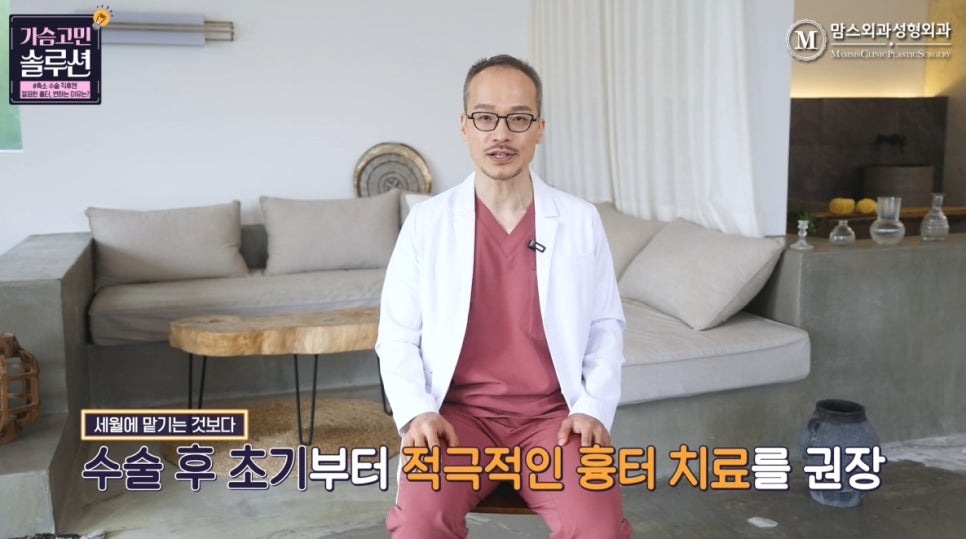
Therefore, rather than leaving it to time,
active scar treatment is recommended from the early stage after surgery.
Scar care requires dedication.
Visiting the hospital regularly may be inconvenient,
but consistent management and treatment are important.
That said, even if scar treatment is performed,
it is difficult to completely prevent this series of scar changes.
Still, at least,
bad scar reactions can be controlled and reduced.
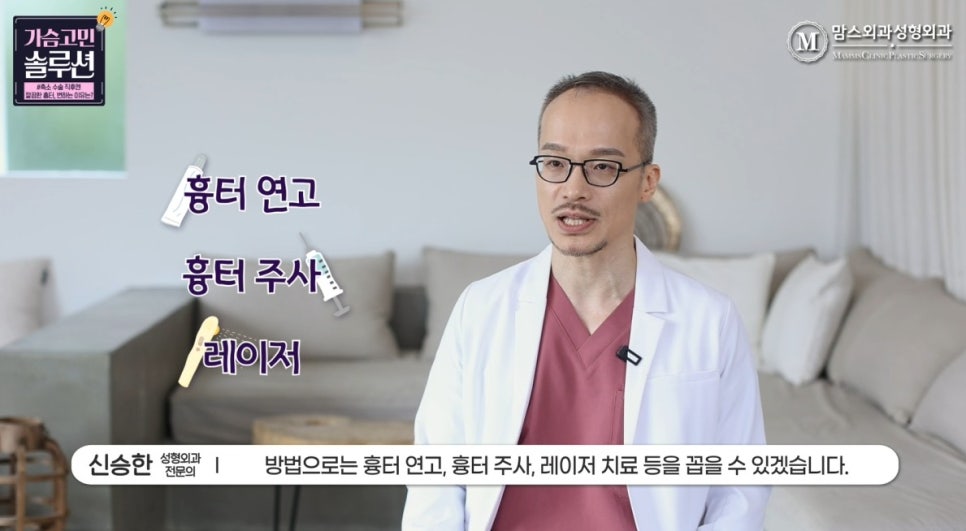
Representative scar treatment methods include:
scar ointments
scar injections
laser treatment
I will take time next time
to go into more detail about each treatment method.
Thank you.