







Previous image
Next image
Axillary Lump Clinic: Is removing only the gland enough for accessory breast tissue?
Accessory breast surgery is not a surgery to "remove the gland"—it is a surgery to create a silhouette
When consulting for accessory breast tissue, there is one question I hear most often.
“Doctor, if only the gland is removed, doesn’t it go away?”
On the surface, it can feel like a bulge protruding from the armpit area, so it is understandable to think this way. However, accessory breast surgery should not be approached as simply removing a visible lump. To correct accessory breast tissue properly, you need to plan not only for the internal tissue composition, but also for thickness, skin sagging, and the final silhouette. Therefore, if you are visiting an axillary lump clinic, it is important to check not just whether it can be removed, but also what structures need to be organized and how, in order to achieve a natural result.
What is accessory breast tissue?
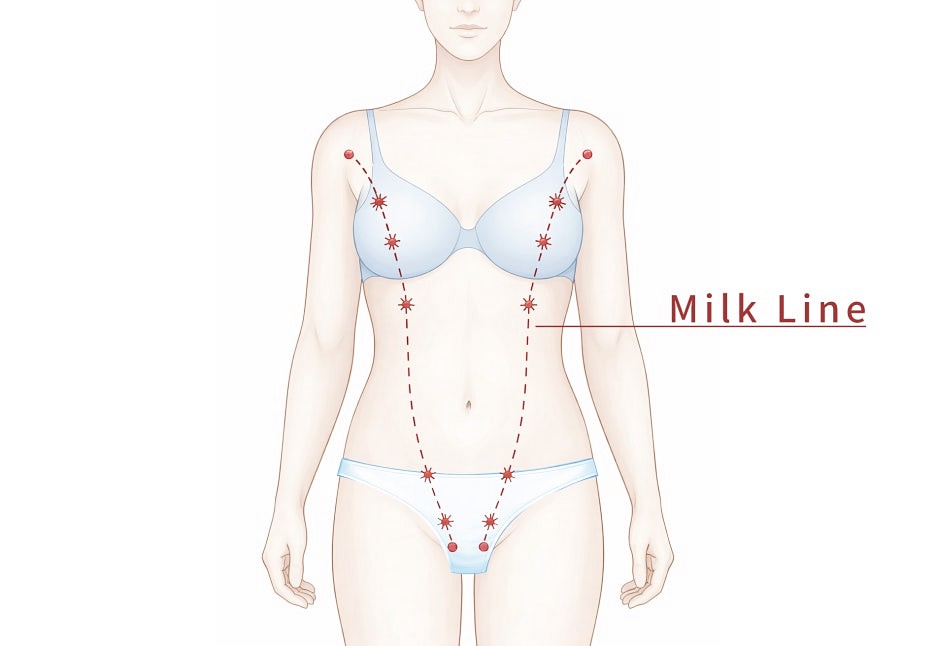
Relationship to the Milk line
Accessory breast tissue is not simply a fatty mass.
It should be understood as a structural phenomenon related to the development of mammary glands during fetal life.
The Milk line refers to the temporary formation of the mammary ridge, the path along which mammary tissue can develop, running from the armpit to the groin around weeks 4 to 6 of fetal development. Normally, most of this line regresses, and only the area corresponding to the chest remains to form the normal breast. However, if this regression is incomplete, traces of breast tissue may remain somewhere along that path.
Because of this, the following forms can appear:
· Accessory breast tissue
· Supernumerary nipples
· Hormone-responsive lumps appearing in the armpit, abdomen, or groin
Due to these structural characteristics, some patients also experience symptoms such as:
✔ Pain before menstruation
✔ Increased size during pregnancy and breastfeeding
The key concept of accessory breast tissue is not whether it exists or not, but the spectrum
Accessory breast tissue is not a concept divided simply by presence or absence. It should be understood as a spectrum, meaning differences in the degree of regression.
The accessory breast tissue spectrum includes all of the following cases:
· Cases where glandular tissue and fat remain together
· Mostly fatty forms
· Cases where only the nipple remains
· Cases where both the nipple and glandular tissue remain
So the important question in actual care is this:
❌ “Is there glandular tissue or not?”
⭕ “Is there glandular parenchyma that meaningfully needs to be removed surgically?”
Understanding this difference is very important. Especially if you are considering treatment at an axillary lump clinic, it is essential to determine not just the area that can be felt on the surface, but whether it is tissue that actually requires surgical removal.
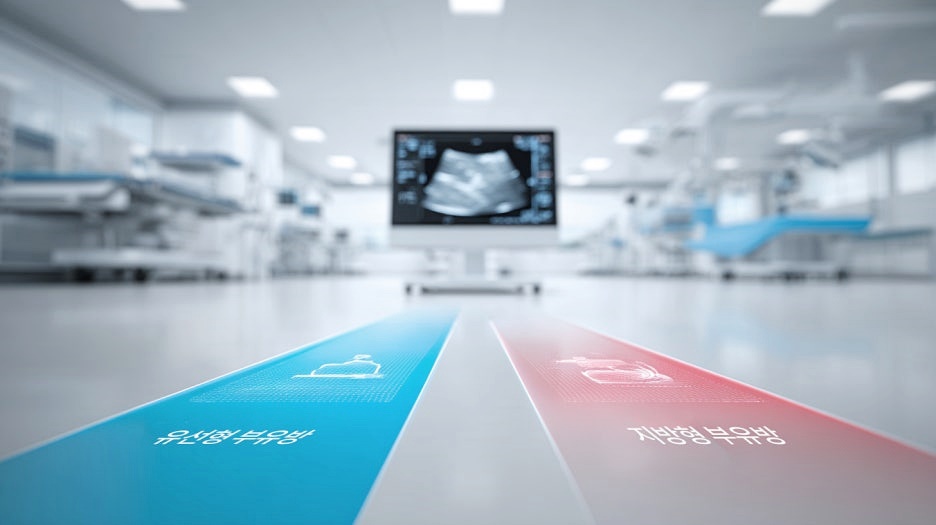
Why do we need to distinguish tissue density?
The reason is simple.
The surgical method changes completely depending on the nature of the tissue.
Glandular accessory breast tissue
· Cases where glandular parenchyma remains meaningfully
· Liposuction alone may leave tissue behind
· Hormone-responsive pain or volume changes may continue
➡ Gland excision is needed
Fatty accessory breast tissue
· Fat is the main component
· Very little glandular tissue
· In many cases, suction alone can produce sufficient results
➡ A liposuction-centered approach
The exact meaning of “fatty accessory breast tissue”
Histologically, glandular tissue and fat are almost always mixed. The same is true for the normal breast. Therefore, the expression “no glandular tissue at all” is not entirely accurate. What is clinically referred to as fatty accessory breast tissue means the following:
· Very small amounts of ducts and lobules
· Almost no hormonal response
· Not enough volume to justify surgical excision
In other words, the term fatty accessory breast tissue is better understood as a clinical classification for surgical decision-making rather than a diagnosis.
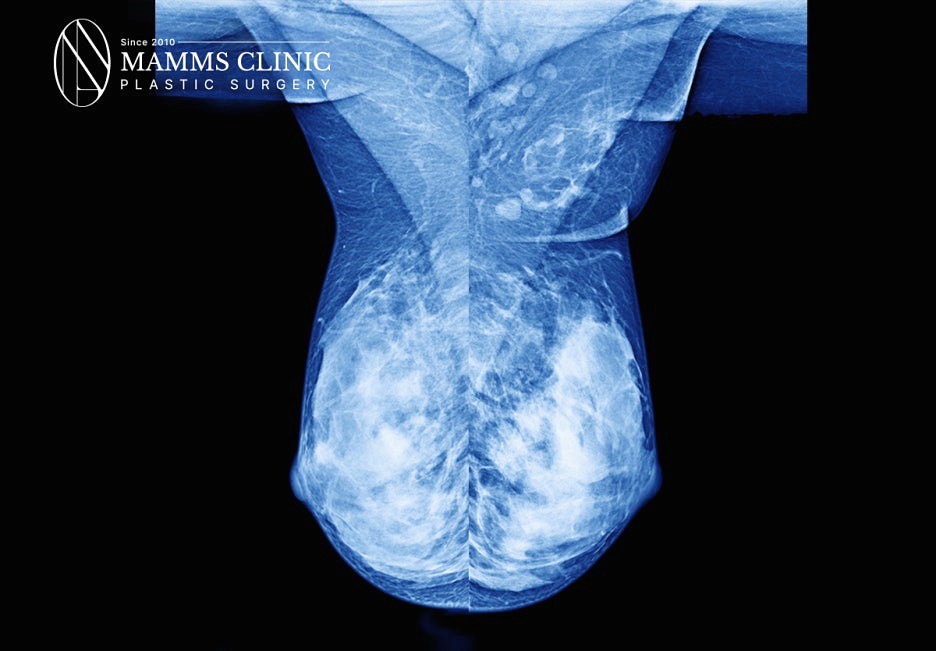
Our preoperative evaluation criteria
At our clinic, we use mammography to check:
✔ Tissue thickness
✔ Tissue density
We use these two factors as the basis for surgical planning.
Only by going through this objective evaluation process can we more accurately determine whether the tissue is gland-dominant or fat-dominant, and which surgical method is more appropriate. That is why, when choosing an axillary lump clinic, it is important to look not only at the consultation itself, but also at how the thickness and density of the tissue are evaluated.
The essence of accessory breast surgery
It is not a removal surgery, but a surgery to restore shape
Accessory breast surgery is not a procedure that simply removes a lump. The quality of the operation depends on how the following three elements are planned at the same time: how the internal tissue will be removed, how the skin sagging will change after removal, and how the final silhouette connecting the arm and chest will be formed. In other words, the key is not removal itself, but restoration of shape.
Why is accessory breast tissue a 3D problem?
Although it may look like a small bulge from the outside, accessory breast tissue is not that simple in reality. This is because it spreads three-dimensionally across the anterior axillary fold, the boundary between the arm and chest, and even the lower outer area of the breast. Therefore, the goal of surgery should be changed as follows:
❌ Simply removing the protrusion
⭕ Recreating the curve that connects the armpit and the chest
For this reason, accessory breast surgery is closer to a sculpting procedure that reshapes a 3D structure than a flat removal surgery.

Step 1 in the actual surgical decision process: removing the internal tissue
During surgery, the internal problem is examined first. The method may differ depending on whether a meaningful amount of glandular tissue remains or whether fat is the main component. However, the goal is the same.
👉 To make it naturally thinner
In the end, the key is to reduce thickness and make the structure adhere closely to the underlying base.
The 5 mm rule – a standard that must be followed
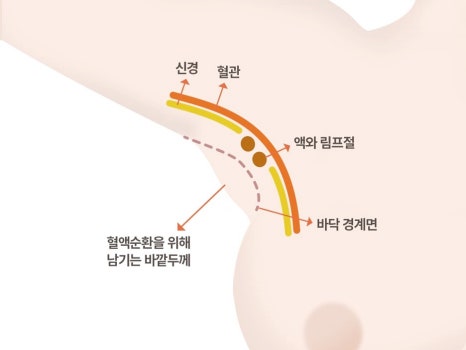
One of the most important standards in accessory breast surgery is the 5 mm rule. Because the blood supply of the skin depends on the subdermal plexus, how much thickness is left is directly related to safety.
· Less than 5 mm → reduced blood flow, risk of necrosis
· 5 mm or more → safe
This measurement is not just an aesthetic guideline. It is meaningful as a standard for preserving blood flow and ensuring safety.
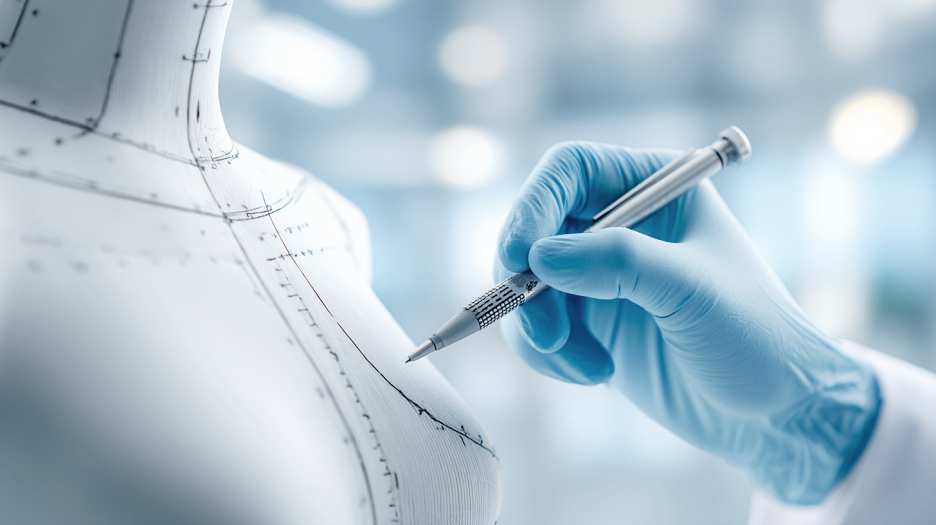
Step 2: refining the bra line contour
After the tissue is removed, the external shape must also be assessed. In fact, there are many cases where the reason something looks unappealing is not the tissue itself, but skin-related issues.
· Extra skin
· Wrinkles
· Whether the sagging is fixed in place
These factors must be considered together before the final surgical method is determined. That is why accessory breast surgery is closer to a sculpting procedure that adjusts shape than to a simple removal procedure.
Why can removing only the tissue lead to failure?
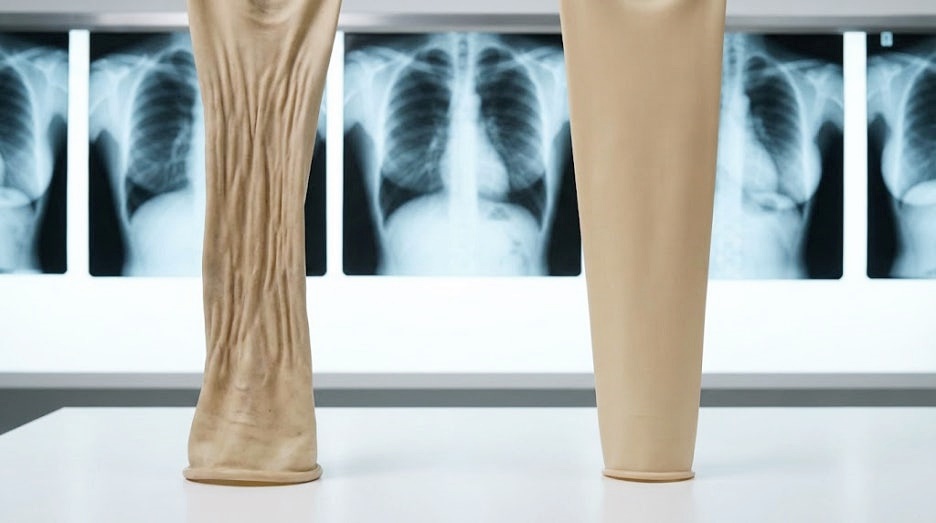
Removing only the tissue can temporarily reduce volume. But if loose skin remains as it is, bulging, wrinkles, or sagging may continue unchanged. This is where the difference in surgical results becomes significant. In reality, accessory breast surgery is not just about organizing the accessory breast area itself, but about organizing the entire transitional structure from the armpit to the chest.
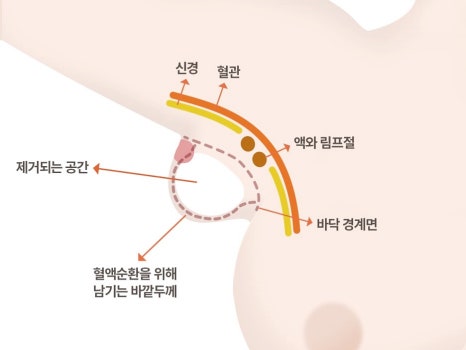
The “natural settling process” after surgery
If the tissue is made sufficiently thin, the body responds by naturally settling itself. The layers adhere, empty spaces decrease, and skin sagging gradually improves. At Moms Surgery Plastic Surgery, this process is explained as the natural settling process. In other words, the answer is not to remove as much skin as possible, but to create conditions that allow the body to settle naturally through appropriate thickness control.
When is skin excision and lifting needed?
Skin excision and lifting are not necessary for every patient. They are considered selectively only in the following cases:
· Excessive loose skin
· Significantly reduced skin elasticity
· Wrinkles fixed in the direction of gravity
On the other hand, if the wrinkles can smooth out naturally as the area becomes thinner, skin excision is not needed. Therefore, when getting a consultation for accessory breast tissue at an axillary lump clinic, it is important not to move toward excessive excision by default, but to carefully distinguish the current skin condition, elasticity, and the nature of the wrinkles.
Accessory breast tissue is not a simple lump, but a 3D structure. The key is to reduce thickness while also refining the contour of the boundary. Accessory breast surgery is not merely a procedure to remove protruding tissue. It is a surgery to redesign the structure connecting the armpit and the chest, and only when safety and naturalness are secured at the same time can it lead to a good result.
In other words, as many people looking for an axillary lump clinic think, it is more accurate to understand it not as a simple "removal" surgery, but as a more delicate surgery that "creates a connecting line."










Previous image
Next image