People want to explain everything in terms of cause and effect.
That is because they can finally feel at ease
only when the cause and the result fit together perfectly.
In fact, what we believe to be a cause
is often nothing more than
a convenient explanation pieced together
after the result has already appeared.
The choice of a profession is much the same.
Very few people probably begin a career
with a clear reason or goal from the very start.
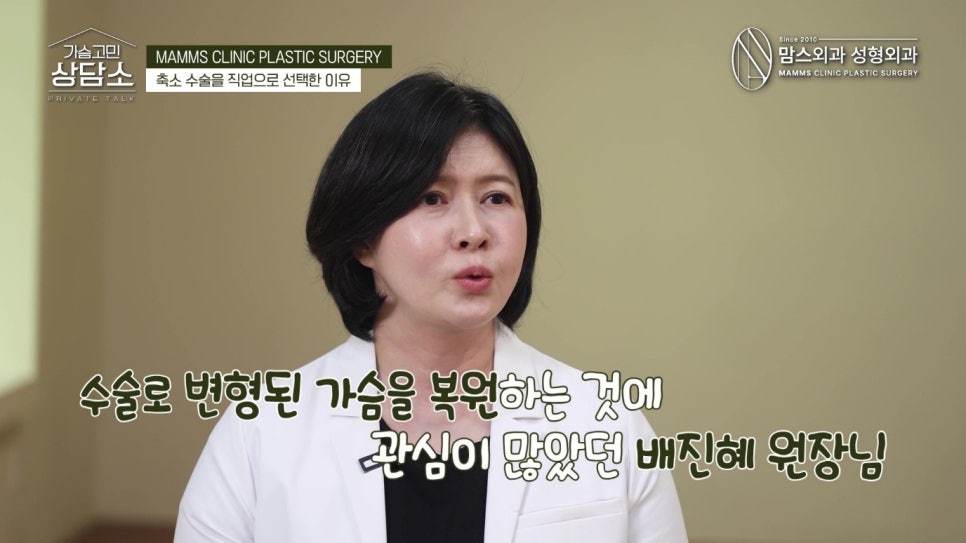
What I liked about breast reduction surgery
was that it directly addressed the issue,
and the results became visible relatively quickly.
I had long been interested in aesthetic procedures.
Even when I was a breast surgeon,
I was very interested in how to restore
breasts altered by surgery
so that they looked natural again.
However, rather than saying I began with some sense of mission,
I would have to say that circumstances led me to this profession.
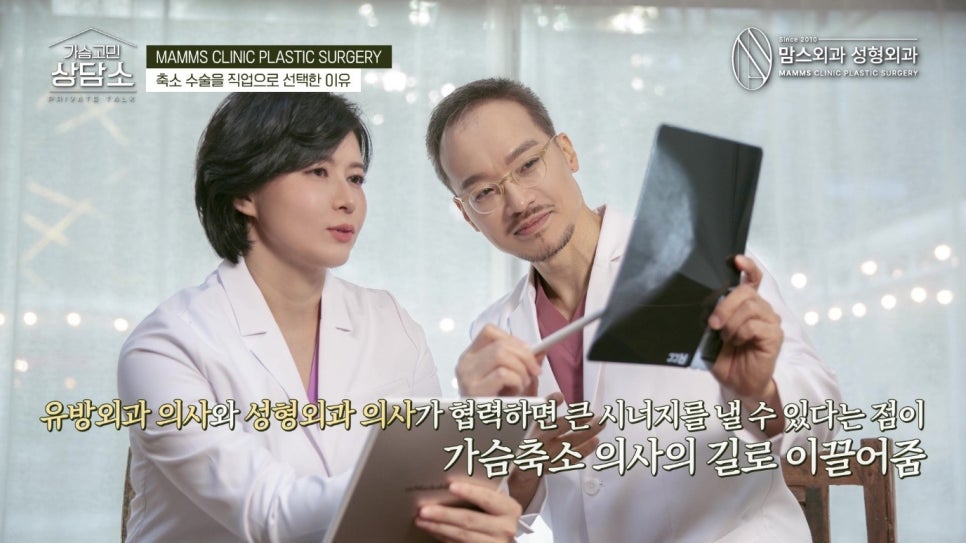
Breast reduction surgery was the natural point
where the two of us could collaborate
and create significant synergy.
I often met people who had suffered discomfort
for a long time because of their large breasts,
and at some point, I naturally began to focus
on breast reduction surgery.
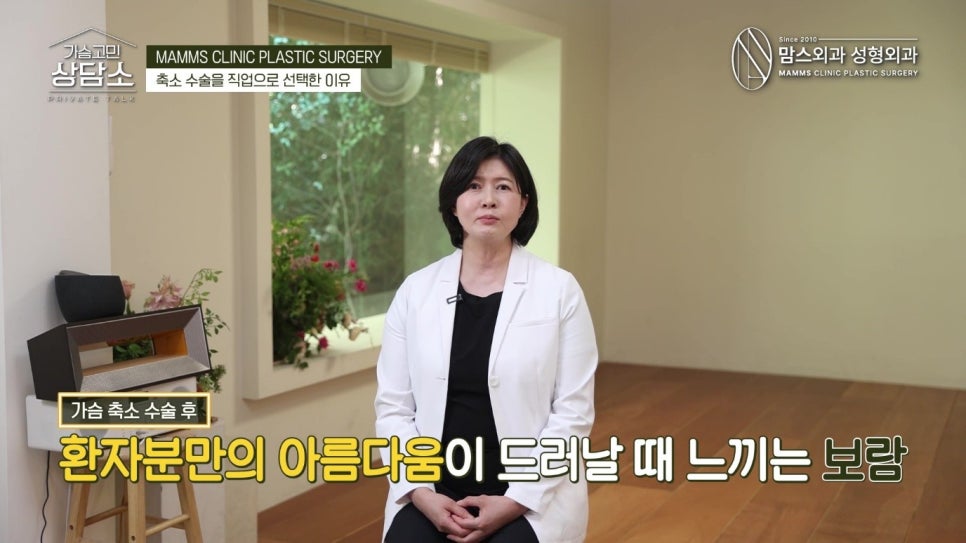
I feel a sense of fulfillment when the surgery is completed successfully,
the patient's body becomes more balanced,
and the beauty unique to that person,
which had been hidden, is revealed.
But looking back now,
coming to make breast reduction surgery my profession
was a kind of blessing.
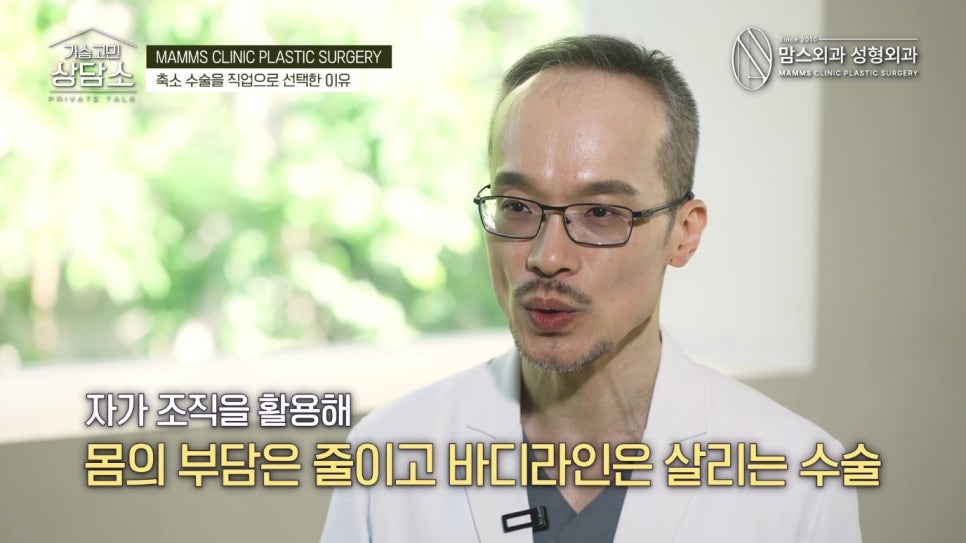
I used to perform many breast augmentation procedures,
but over time, rather than using foreign materials,
I became more inclined toward procedures
that rearrange the tissue a person already has,
reduce the burden on the body,
and preserve the body's natural contours.
No matter how much technology advances,
when any artificial material—whether a filler or an implant—is placed in the human body,
it can sometimes cause problems of varying degrees
when considered over a period of ten years or more.
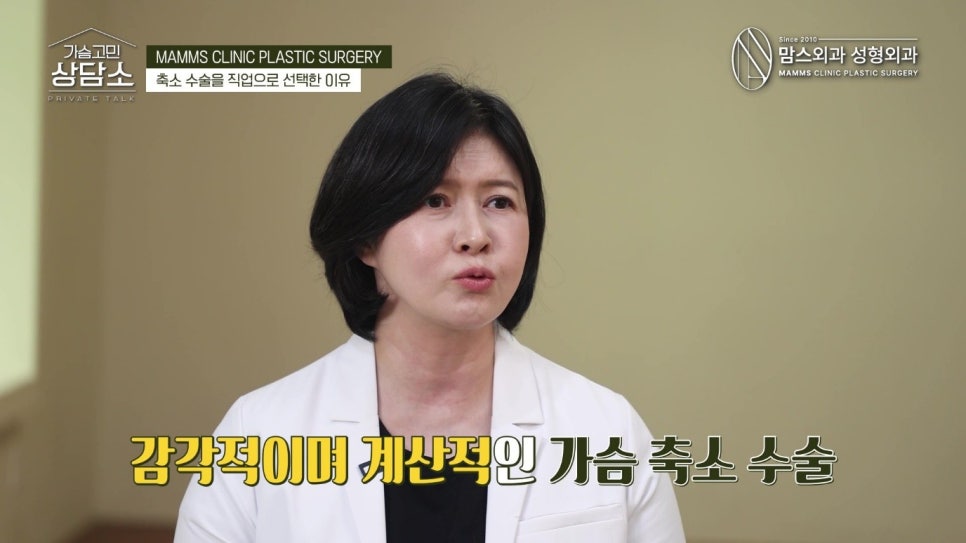
This surgery is both an artistic procedure
and a highly calculated one.
It may seem like a simple operation to make the breasts smaller,
but it requires precision because each person's body shape is different,
and the reduction must take both form and stability into account.
That aspect gives me a sense of pride.
The procedure takes a fairly long time and involves many details,
so it requires continuous concentration.
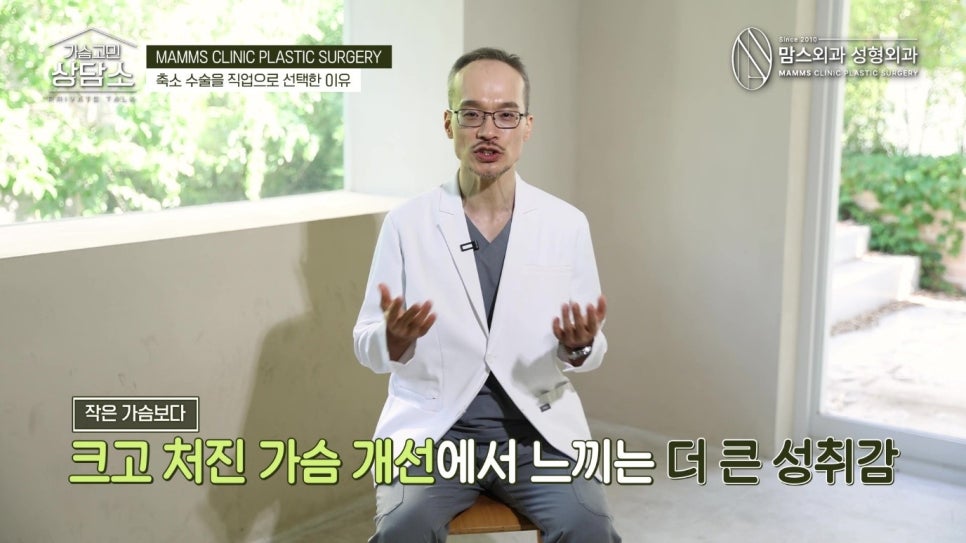
Making large, sagging breasts look beautiful
has sometimes brought me a greater sense of accomplishment
than making small breasts look beautiful.
I also have to say that the personalities of the people who undergo surgery
seem to suit the reduction side better.
People considering breast reduction
have often endured physical discomfort
quietly and on their own for a long time.
When I see them gain confidence
and become brighter after surgery,
I feel that my fulfillment as a medical professional
is much greater now than when I primarily performed augmentation procedures.
This surgery does not end in the operating room.
It is also necessary to responsibly observe
how the results settle over time.
That is why it is a procedure that requires a great deal of energy.
In the end, I think that strength comes from the patients' satisfaction.
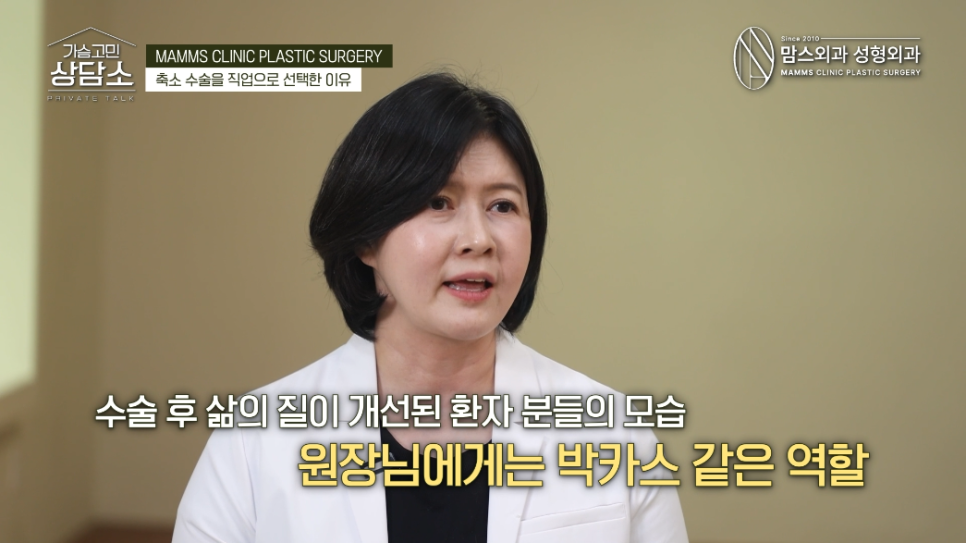
Seeing how my patients' quality of life improved after surgery
seems to have been my Bacchus—the source of my energy.
Breast reduction surgery is not easy,
but that is why it is more valuable
and is meaningful, rewarding work
that helps improve someone's life.
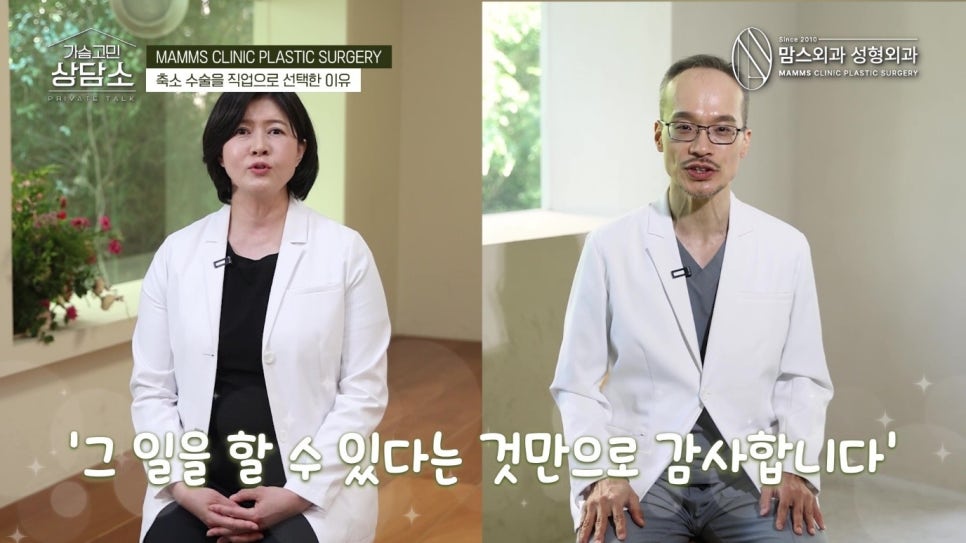
We are grateful simply to be able to do this work.