One of the biggest concerns for people considering
breast reduction or sagging breast correction surgery
is the “scars left after surgery.”
Everyone hopes to achieve a clean result
without any visible signs after surgery,
but because procedures involving skin incisions
inherently require cutting the skin,
it is impossible to avoid scars completely.
Today, I will clearly explain from a plastic surgeon’s perspective
why scars after breast reduction surgery cannot simply be erased,
as well as the essential surgical factors
you must understand to minimize them.
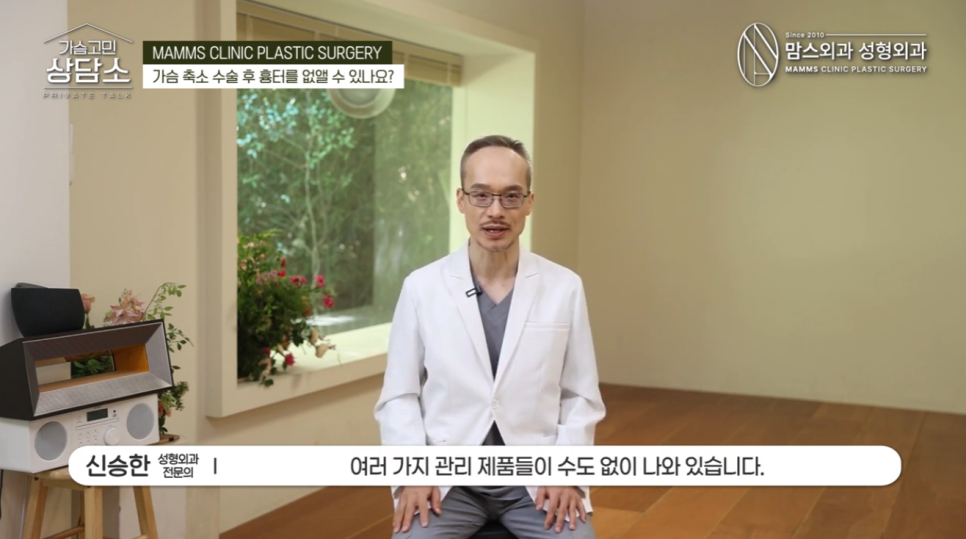
There are various scar creams, silicone tapes,
and laser-care products available on the market.
However, the fact that there are so many different types of treatment products
is, paradoxically, also evidence that
there is no absolute solution that can perfectly erase scars
in a single treatment.
To reduce sagging skin and breast volume,
skin incision and suturing are essential.
When the human body is injured, it naturally leaves a scar
as part of the process of repairing itself.
Therefore, rather than viewing a scar simply as
an aesthetic obstacle,
we should regard it as a meaningful result
of our body protecting and healing the wound.
What we should focus on, then,
is not “scar removal” but “scar minimization.”
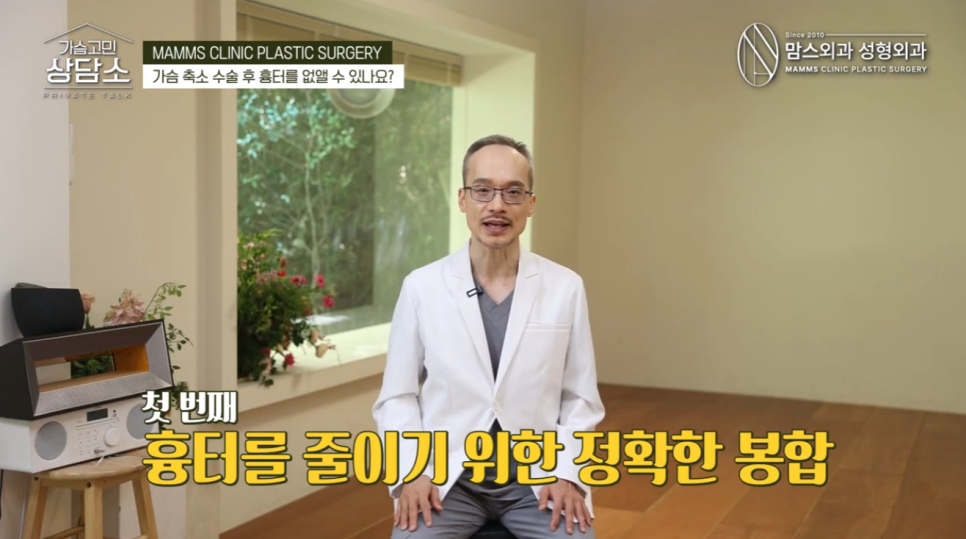
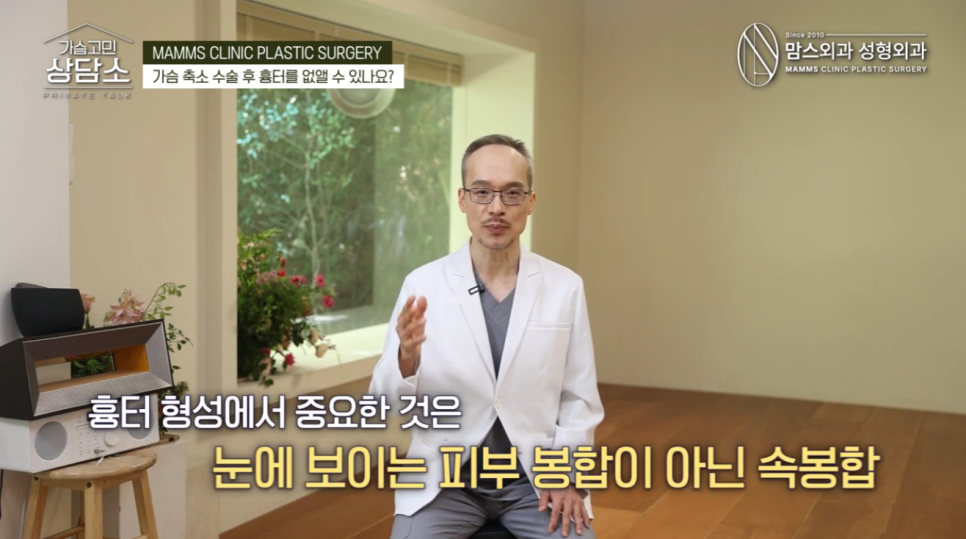
Many people believe that the visible skin-suturing technique
determines the resulting scar.
However, during the actual scar-formation process,
the factor that has a much greater impact
is the “internal suturing” beneath the skin.
The biggest reason scars become thick and unsightly
is excessive tension—the pulling force—placed on the skin’s surface.
✅ Horizontal scars
Scars located in areas exposed to less tension
or running along the direction of skin folds
tend to heal thinly and cleanly.
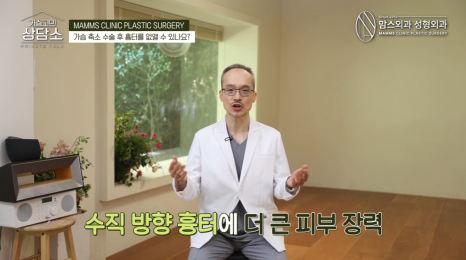
✅ Vertical scars
Scars that form in the vertical direction of the body
receive much more pulling force, or tension,
than those running horizontally,
so they are more likely to worsen.
Because breast reduction surgery often includes vertical incisions,
surgical techniques that minimize the tension transferred directly to the skin
are essential.
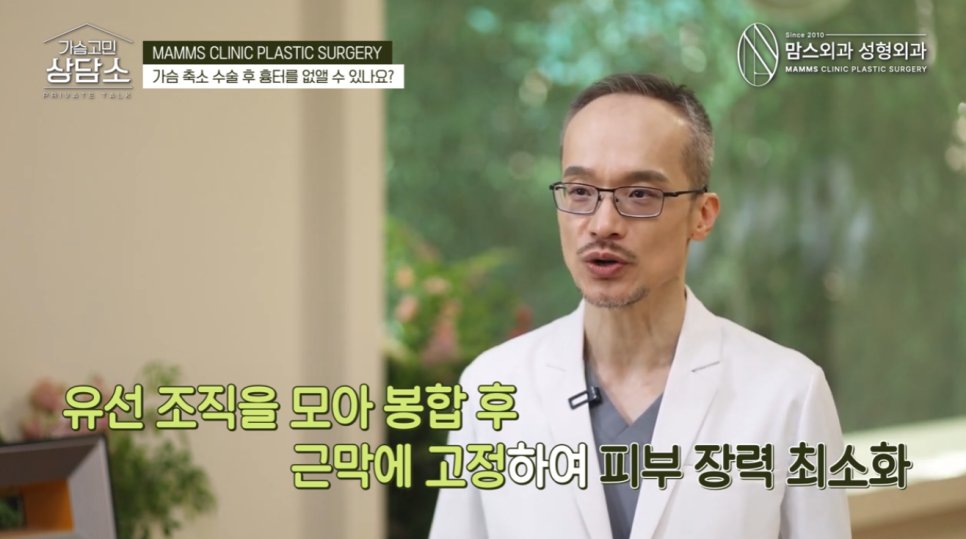
To reduce skin tension,
the mammary gland tissue beneath the skin
must be firmly gathered,
sutured, repositioned, and securely fixed.
If the tissue is simply drawn together by relying on
a drainage pouch (negative pressure)
while neglecting internal suturing,
the skin must bear all the tension at the surgical site by itself.
In this situation, the body produces excessive collagen
in an effort to withstand the stress,
which can ultimately lead to hypertrophic scars
(red, raised scars), keloids,
or scars that become wider.
Ultimately, the foundation for creating a favorable scar
is not neat suturing on the skin’s surface,
but the process of firmly suturing the mammary gland tissue underneath
to reduce skin tension.
Wound treatment and scar management are distinctly different.
Scar formation, which begins after the wound has healed,
does not end in a short period of time.
It gradually develops through a lengthy maturation process.
✅ Flexible, stage-based treatment
Depending on the condition of the scar during each stage of change,
appropriate laser equipment and treatment methods
should be applied differently.
✅ Consistent care from the medical team
Only when the medical team and the patient
continue to invest care and effort throughout the postoperative management process
can the best possible results be achieved.
The two key factors for minimizing scars
after breast reduction surgery are as follows:
✔ An “internal suturing technique” that firmly stitches
the internal tissue—the mammary gland tissue—
to reduce skin tension
✔ “Systematic, customized postoperative care”
tailored to the postoperative healing process
If you are considering breast reduction surgery,
rather than simply checking the extent of the surgery
or the external suturing method,
we recommend consulting thoroughly with a specialist
to determine whether they have the surgical expertise
to reduce internal tension
and a systematic postoperative scar-care program.