
Advice for Those Who Need Revision Upper Blepharoplasty <Must Read>
Hello.
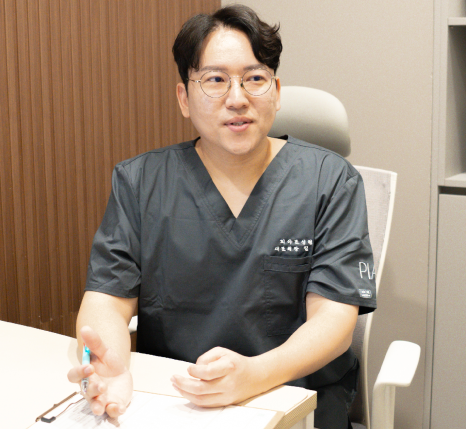
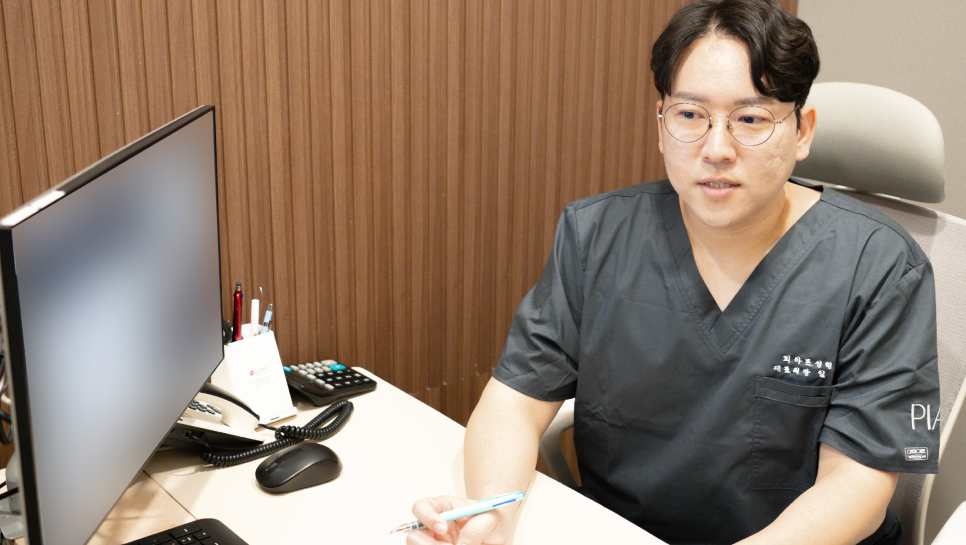
I’m Lim Jin-young, the chief director of Piap Clinic.
If you clicked on this article after reading it,
it seems you may be considering
'revision upper blepharoplasty.'
Before deciding on a revision surgery,
there must have been a lot of 고민 and difficulties.
'The disappointment I feel every time I look in the mirror
because the results are not satisfying'
'The various inconveniences faced in daily life'
'Even the fear of whether I can
get the results I want...'
All of these may have felt like a heavy burden.

In fact, revision surgery is often more complicated
than the first surgery.
That means you need to carefully consider
many different factors.
So today, I’d like to tell you about
'cases where revision surgery is needed
and what to keep in mind during consultation.'
This is based on my long experience.
If you read to the end, I’m sure it will be
practically helpful.
Advice for Those Who Need Revision Upper Blepharoplasty <Must Read>
When is revision upper blepharoplasty needed?
Before deciding on revision surgery,
you may have wondered about this.
'Do I really need it?'
To answer that question,
let’s take a closer look at the cases
where revision surgery may be necessary.
The most common case is
'when the results of the first surgery
do not meet expectations.'
For example, when you look in the mirror
your eyes may appear uneven in size,
or the double eyelid crease height may differ.

There are also cases where the eyelids still
appear droopy.
The second case is 'when complications occur.'
In fact, about 2–3% of patients after upper blepharoplasty
experience complications such as infection,
bleeding, or scarring.
These issues can affect not only appearance
but also eyelid function.
For that reason, revision surgery may be necessary.
Lastly, there is the case where
the eyelids droop again.

This happens because skin elasticity,
fat volume, and the pace of aging differ
from person to person.
Usually, about 7–10 years after the first surgery,
you may begin to notice the eyelids sagging again.
In such cases, revision surgery can help
brighten the eye area again.
However, whether revision surgery is truly necessary
should be decided carefully through consultation
with the medical team.
This is because each patient’s situation
and eye condition are different.

Advice for Those Who Need Revision Upper Blepharoplasty <Must Read>
In the following section, I’ll also organize
what to check during consultation in detail,
so please stay focused just a little longer :)
Revision upper blepharoplasty:
what determines satisfaction is
sufficient consultation with the medical team.
After the first surgery, there may be various
changes in the tissues around the eyes.
Therefore, revision surgery is inevitably
more difficult.
To make it easier to understand,
let me compare it to car repair.
When repairing a new car for the first time,
all the parts are still intact.

But when repairing a car that has already
been repaired once,
the situation is very different.
Some parts may have moved out of place,
and there may be weld marks or scratches left behind.
As a result, additional damage may occur,
or replacing parts may be difficult.
The same applies to revision upper blepharoplasty.
The first surgery may lead to the following problems:
- Cases where deep scars form due to the first surgery
These scars can reduce the skin’s elasticity.
Because of this, it may be difficult to delicately separate
the skin, muscles, and fat around the eyes.
Advice for Those Who Need Revision Upper Blepharoplasty <Must Read>
- Cases where the amount and distribution
of eyelid fat tissue change
For example, fat may have been removed
more than necessary or may have shifted position.
- Cases where the function of the muscle
that moves the eyelid is weakened
This can affect the motion of opening and closing the eyes.
Because of these changes, the surgery becomes
more complex and it may be difficult to predict
the exact outcome.
That is why I want to emphasize the importance of
'sufficient consultation with the medical team.'
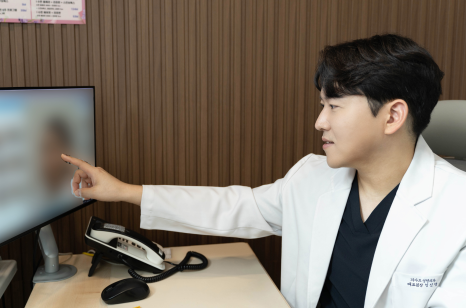
First, it is most important to accurately understand
the details of the previous surgery.
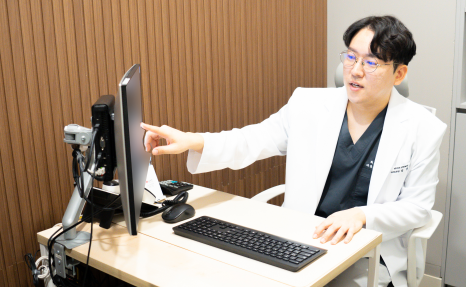
'What type of incision method was used'
'How the eyelid tissue was handled'
depending on this,
the approach may differ.
For this reason, it is best to bring the records
from the previous surgery.
If you do not have records, simply providing
detailed information such as the timing and method
of the surgery, and the hospital that performed it,
will still be very helpful.
Also, it is important to clearly explain
the inconveniences you are currently experiencing
and the areas you want improved.
Just saying something like
"My eyes are asymmetrical"
may make an accurate diagnosis difficult.

"The double eyelid line on my right eye
is higher than the left"
or
"My left eyelid does not open well
and feels uncomfortable"
If you explain in this way, more specifically,
the medical team will be able to identify
the cause of the problem more accurately
and establish an appropriate surgical plan.
This information can be an important factor
in increasing the success rate of the surgery.
That is why it is necessary to take enough time
and share every question you have without leaving anything out.
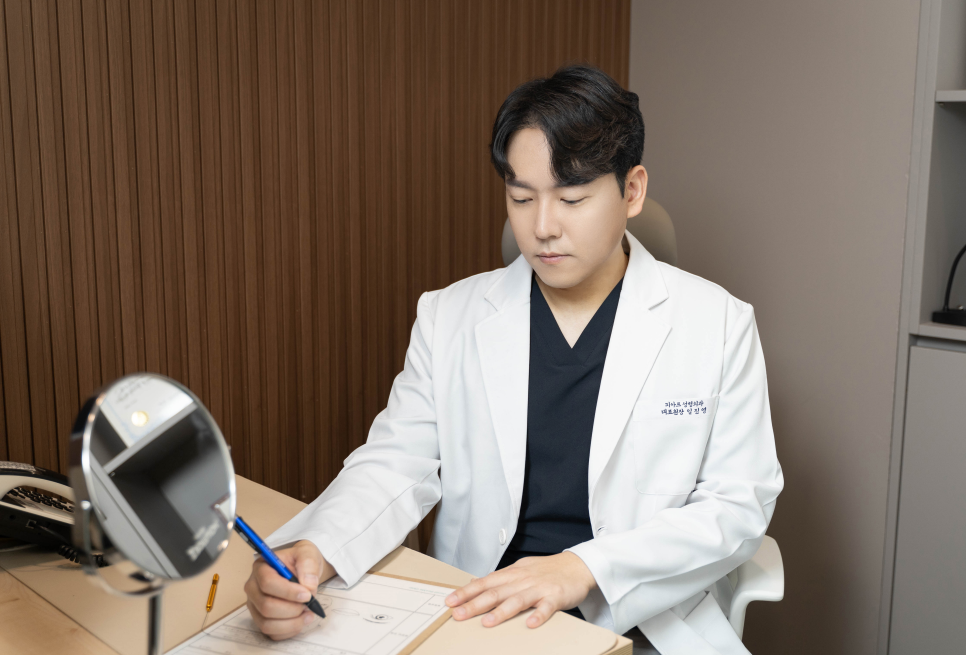
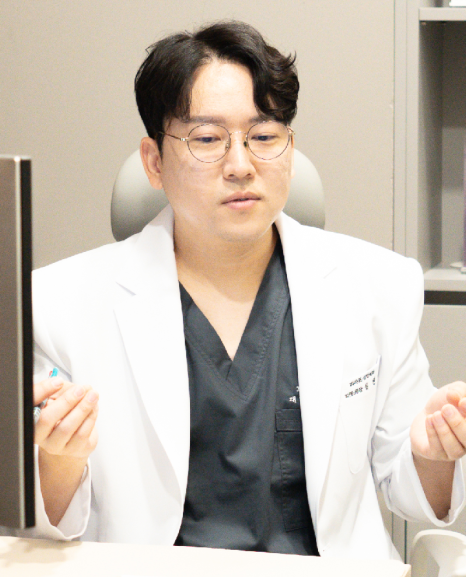
As such, it is important to carefully observe
the patient’s condition and create a customized plan
through sufficient communication.
Through this, you may be able to achieve
a more satisfying result ^^
Feeling anxious and worried before revision upper blepharoplasty
is completely natural.
Because of past experiences with failure,
your worries may be even greater than before
the first surgery.
What matters most is finding a clinic
that is a good fit for you.

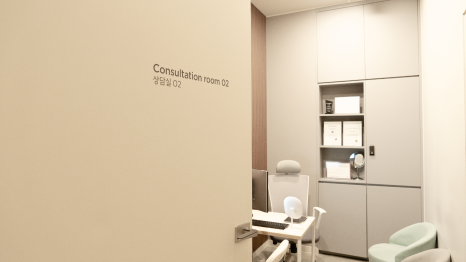
Lastly, one more piece of advice:
please be sure to get in-person consultations
at two or three clinics or more.
If you choose a place where you feel confident,
"I can really trust this doctor with my surgery,"
then?
You are likely to feel more at ease,
and the treatment results may also be better.
This has been Lim Jin-young,
Chief Director of Piap Clinic.
Thank you.

| Piap Clinic |
|---|
| Main number: 02-420-8883 |
| This post complies with Article 56 of the Medical Service Act and was written directly by Piap Clinic to provide accurate medical information. All treatments may cause side effects depending on the individual, so please proceed only after sufficient consultation. |