Hello.
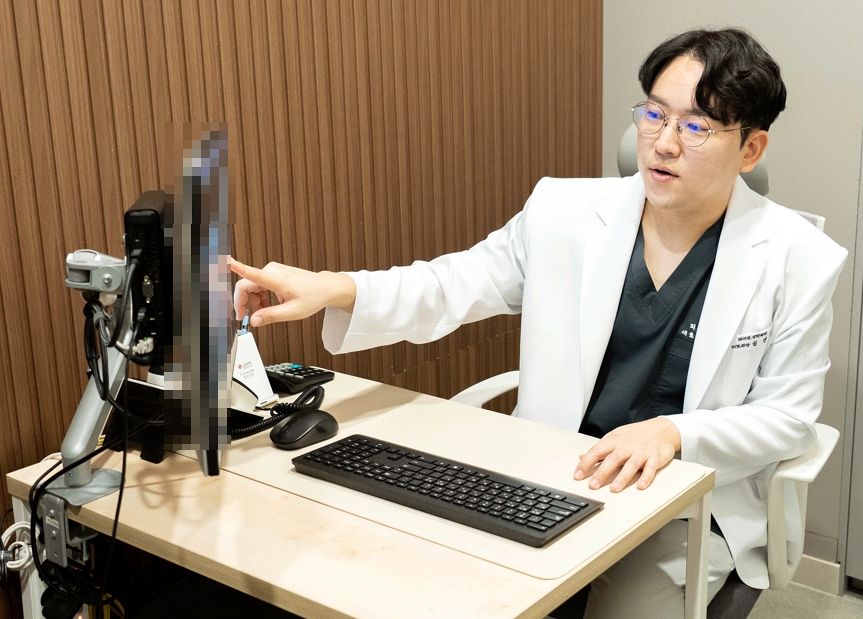
I’m Lim Jin-young, the chief director of Piap Clinic.
As we go through life,
there are times when we all
have thoughts like this.
‘My eyes
aren’t the way they used to be...’
Especially as we get older,
heaviness in the eyelids
is a natural change.
However, when the eyelids
start to droop,
it does not only affect
appearance.
It can also
block your field of vision.
Because of this, your eyes
may feel easily fatigued.
For these reasons,
many people consider
upper eyelid surgery.
But once you decide
to have surgery,
the biggest concern begins.
‘If upper eyelid surgery
is expensive, is it safer?’
‘If it’s cheap, is something
missing?’
Worrying about this
is probably not just
because of the price.
It is likely because
of concerns about
side effects.
So today, I’d like to
spend some time resolving
these concerns together.
I want to explain
the ‘common side effects
and how to address them.’
I hope this helps
ease some of your worries.
What side effects
are there?
Before learning about the
price and side effects of
upper eyelid surgery,
it seems necessary to first
look more closely at
what the procedure is.
Simply put,
it is a surgery that
lifts drooping eyelids.
As we age,
our skin gradually
loses elasticity.
At the same time,
the muscles that support
the eyelids also weaken.
The position and amount
of fat can also change.
Because of this, the eyes
gradually begin to droop.
In severe cases,
the field of vision
can even be blocked.
At times like this,
removing the excess skin
and tightening the muscles
is what upper eyelid surgery is.
Some people ask,
“What is different from
double eyelid surgery?”
Double eyelid surgery
generally aims to create
a clear crease.
On the other hand,
this procedure also provides
functional improvement,
such as correcting
drooping eyelids.
But no matter how good
a surgery is,
it can never be entirely
free of side effects.

One of the common
side effects is
‘eyelid retraction.’
Simply put,
the eyelid is pulled upward
and cannot close properly.
If too much skin or muscle
is removed,
it can become difficult
to close the eyes.
This is because the eyelid
becomes too short,
leaving it without enough
elasticity to close well.
What happens if the eyes
are not fully closed,
especially during sleep?
Dry eye symptoms may
become more severe.
Another possible side effect
is ‘left-right asymmetry.’
In fact, the human face
is not perfectly symmetrical
to begin with.
But if this is not carefully
considered during surgery,
one eye may appear larger,
or the height may differ.
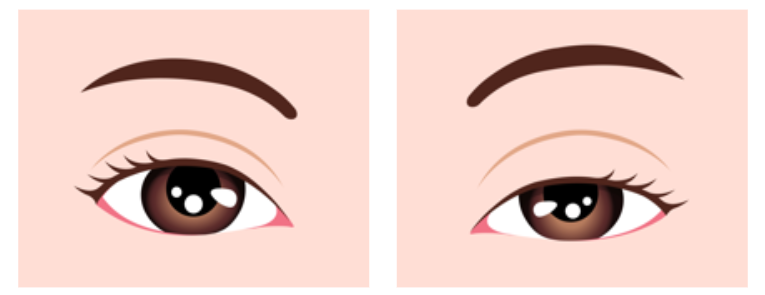
As a result, the face as a whole
may give an impression
of imbalance.
Lastly, there is the issue
of ‘scarring.’
In most cases,
the incision line blends
with the eyelid crease and
settles in naturally.
But what if the skin is thin,
or you are prone to scars?
The incision area may
remain red.
Sometimes unnatural
creases can also form.
Looking at these side effects,
you may think,
‘Oh? Then maybe it’s better
not to do it.’
But there is no need
to worry too much.
Fortunately, there are ways
to reduce side effects.
I’ll explain the details
in the next part.
How can you
avoid side effects?
To get straight to the point,
‘proper adjustment’
is the most important thing.
One common mistake people make
when looking only at the
price of upper eyelid surgery
is overcorrection.
This means removing more
skin or muscle than necessary.
It usually happens because
of a desire for a definite change.
However, this approach
can actually lead to
side effects.
Let me give an example.
Think about shortening pants.
If you cut them too short,
you can’t lengthen them again,
right?
But if you shorten them too little,
they are still inconvenient.
The same goes for
the eyelids.
Eyelid skin generally has
good regenerative ability,
but
once tissue has been cut away,
it does not return to its
original state.
That is why only the amount
that is truly needed
should be removed.
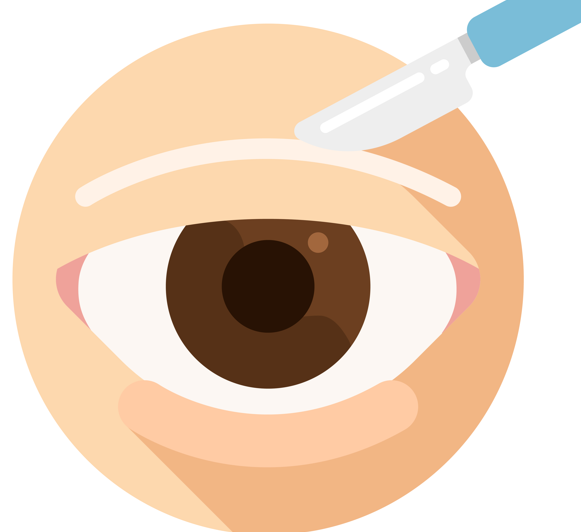
The most important thing
in this process is
‘accurate diagnosis.’
In particular, it is essential
to understand your own
eyelid characteristics precisely.
For example, the eyelids have
a muscle called the
‘levator palpebrae superioris.’
This muscle is responsible
for lifting the eyelids.
It can weaken as you age.
If this muscle is in a
significantly weakened state,
simply removing the skin
is not enough.
In that case, the eyes may
look even heavier.
So there may be a need
to adjust the muscle as well.
On the other hand, if people
with thin eyelids have too much
skin removed,
they may develop symptoms
of being unable to close
their eyes properly.
In severe cases,
eyelid retraction can make
the eyes look unnaturally large.
As such, the necessary
adjustment can differ
depending on the condition
of the eyes.
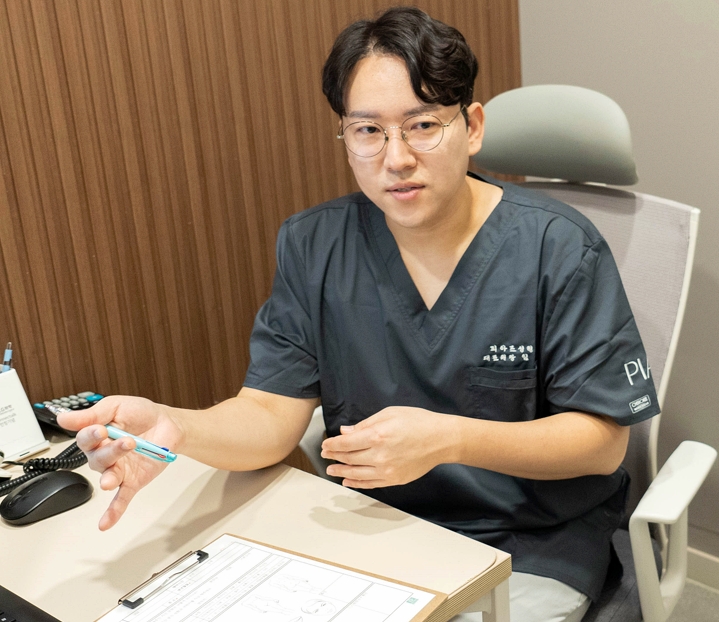
That is why an accurate diagnosis
before surgery is important.
To do this, the eyelid skin
thickness, muscle strength,
and fat distribution all need
to be considered together.
In the end, please remember
that only a careful diagnosis
and proper adjustment can
reduce side effects.
It is natural to worry about
the price or side effects
of upper eyelid surgery.
In particular, when you hear
related stories online,
it is hard not to feel anxious.
But what matters is not
whether it is ‘expensive or cheap.’
What matters is how to achieve
the most natural result for
your face.
No matter how low the price is,
if the result is unsatisfactory...
You may eventually need
revision surgery.
So if you are worried about
the price or side effects
of upper eyelid surgery,
please first have a thorough
consultation with the medical
staff.
Then you will be able to find
the most comfortable and
natural approach.

This was Lim Jin-young,
Chief Director of Piap Clinic.
Thank you.
Other columns you may find useful

| Piap Clinic |
|---|
| Main number: 02-420-8883 |