Hello.
I am Lim Jin-young,
Chief Director of Piof Clinic.
Do you keep
straining your forehead
to try to open your eyes wider?
Or have you ever thought,
"Why is it so hard to open my eyes these days?"
at least once?
If so, it may be worth
suspecting ptosis.
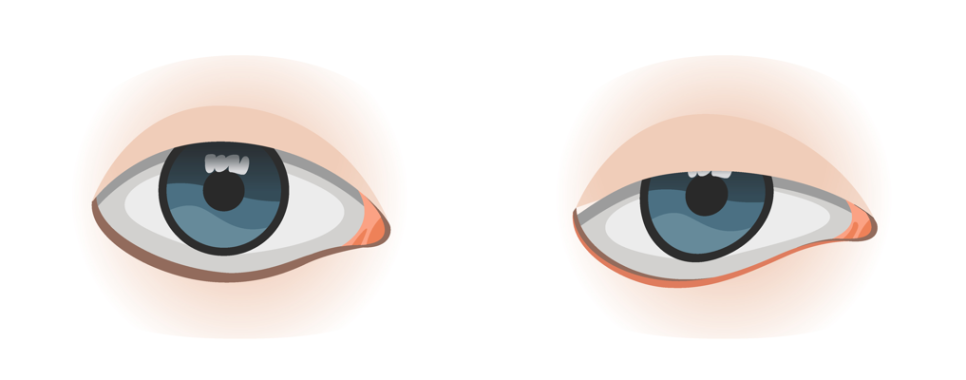
This refers to a condition in which the upper eyelid droops abnormally
and blocks the field of vision.
At first, people often think they are just tired,
but in many cases it can eventually
lead to functional problems.
Today, I would like to talk in more detail
about the cases that require ptosis correction
and the methods used.
If you were also looking for the same information
with the keyword “Gangnam ptosis,”
this post will surely be helpful.
Ptosis,
what exactly
is it?
Ptosis is not simply a matter of the eyelid
sitting a little lower.
There is a much more delicate and complex structure
behind it than you might think.
The main muscle responsible for lifting the eyelid
is the levator palpebrae superioris.
This muscle primarily works to lift the eyelid upward.
And there is one more auxiliary muscle
that supports this process.
That is the Müller muscle.
The Müller muscle cannot be consciously controlled,
and is automatically regulated by the sympathetic nervous system.
It usually helps lift the eyelid by about 1 to 2 mm more.
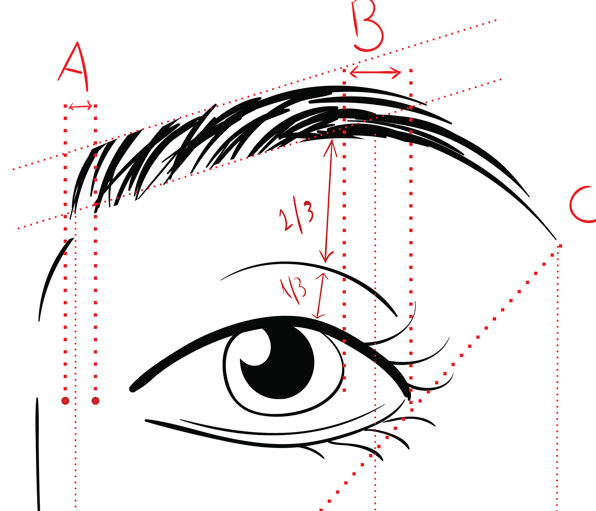
But what if one of these two muscles
becomes weakened,
or the nerve signal does not transmit properly?
The eyelid cannot lift properly
and begins to droop.
In the end, ptosis is a functional abnormality
that starts from a problem with muscle strength or nerves.
Such problems can be congenital,
present from birth.
They can also be acquired later in life due to aging,
muscle weakness, trauma, or neuromuscular disease.
They may also occur because of long-term contact lens wear
or tissue damage after eye surgery.
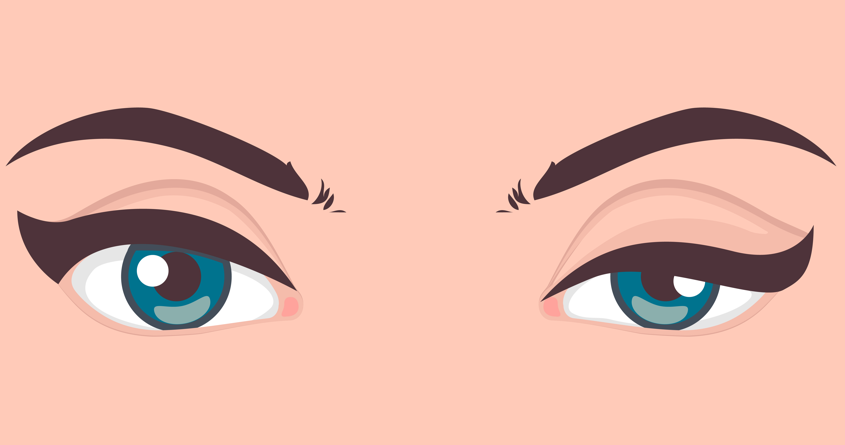
In particular, when it occurs in young children,
it can lead to impaired visual development.
In other words, it can lead to amblyopia.
Vision usually develops until around ages 6 to 8.
If the eyelid blocks the visual field during this period,
the brain may block visual information coming from that eye.
That is why early diagnosis and treatment are truly important.
So how is it diagnosed?
The two most basic points are:
how much the eyelid has drooped,
and how strong the eye-opening force is.
The measurement used to express this numerically is called MRD1.
It is the vertical distance from the center of the pupil
to the upper eyelid.
If this distance is 2 mm or less,
ptosis may be suspected.
But diagnosis is not made based on numbers alone.
-
whether the person is using forehead muscles
to open the eyes instead
-
how asymmetric the left and right eyes are
-
how much the visual field is blocked
These factors also need to be examined together.
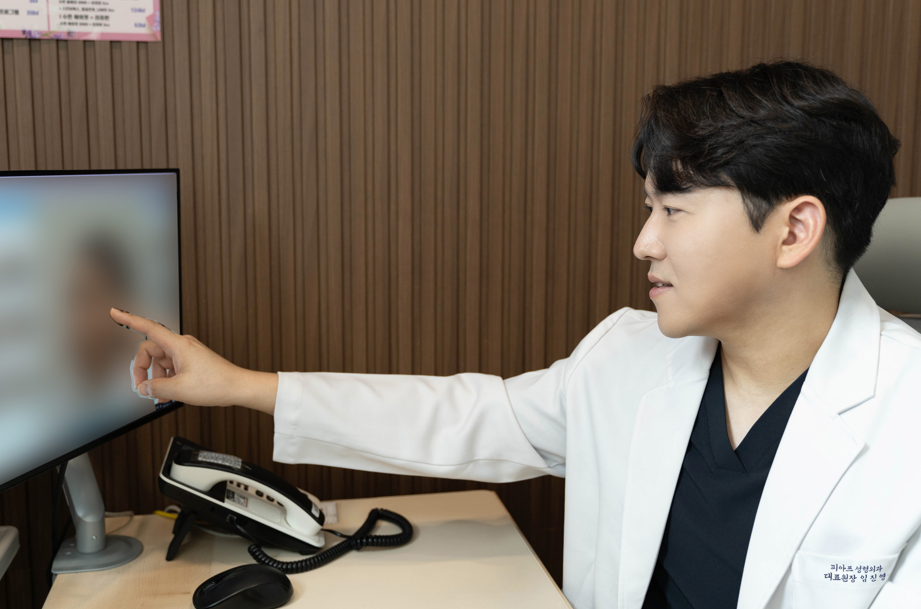
In other words, the assessment should comprehensively consider
muscle coordination, visual field 확보 여부,
and overall facial balance.
Then is Gangnam ptosis correction
really necessary?
Let’s take a closer look
through the following section.
My eyes seem a little droopy,
do I need surgery?
Many people wonder about this.
But Gangnam ptosis correction is not always necessary.
For example, if the eye-opening strength is still fairly good
and the eyelid drooping is mild enough
that it does not interfere with vision?
In many cases, surgery is not necessary.
Managing the condition while observing its course
may be enough.
But on the other hand, if the eyelid droops severely
so that you cannot see clearly,
or if you have to keep straining your forehead
every time you open your eyes?
Then surgery can help resolve the functional problem.
When the eyes do not open well, people unconsciously
raise their eyebrows.
If this is repeated, it can deepen forehead wrinkles
and lead to chronic tension or fatigue.
Then what surgical methods are used for Gangnam ptosis?
The surgical methods can be broadly divided
into two types.
The first is levator advancement.
This method shortens or advances the levator muscle
to strengthen the eye-opening force.
It is suitable for people who still have some muscle function remaining.
It can also offer natural-looking results
and relatively quick recovery.
The second is frontalis sling surgery.
This is used when levator function is almost absent.
In simple terms, it connects the forehead muscle,
that is, the frontalis muscle, to the eyelid using materials such as silicone or fascia.
The idea is to make the eyelid lift by the force of the forehead muscle when opening the eyes.
Of course, because this relies more on the forehead,
facial expressions or the feeling of closing the eyes may change slightly.
But it is a reliable way to secure the visual field.
“So after surgery, will the eyes open easily right away?”
That’s right.
Correcting the eyelid position through surgery does improve the visual field significantly
and also improves the feeling of opening the eyes.
However, during the process,
there may be temporary dryness in the eyes,
or discomfort such as a foreign-body sensation.
But there is no need to worry too much.
In most cases, these symptoms improve over time
or can be adjusted.
What matters most is receiving 충분한 상담 before surgery
and making a plan tailored to your eyes.
In conclusion, Gangnam ptosis correction is not something
that should be decided simply because the eyes look droopy.
You need to consider things comprehensively,
such as how much the visual field is blocked
and how much function remains in the eye-opening muscles.
If there is functional discomfort,
surgery can be a method that clearly improves quality of life.
Cosmetic improvement can also naturally follow.
So if you have any questions,
I hope you will first receive a medical evaluation.
Your eyes are that important.
This was Lim Jin-young,
Chief Director of Piof Clinic.
Thank you.

A column you may also find useful

| Piof Clinic |
|---|
| Main number: 02-420-8883 |