Hello.
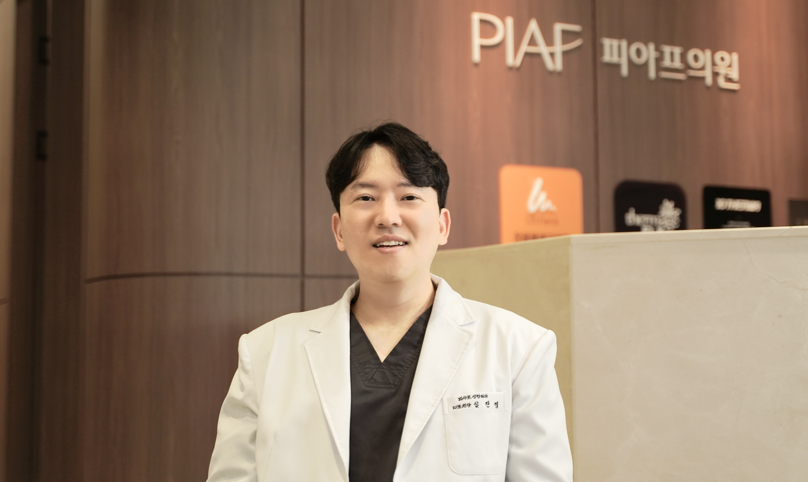
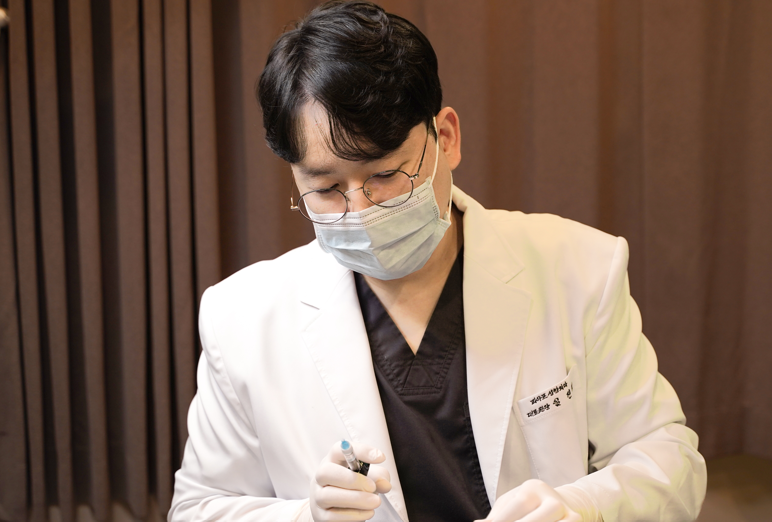
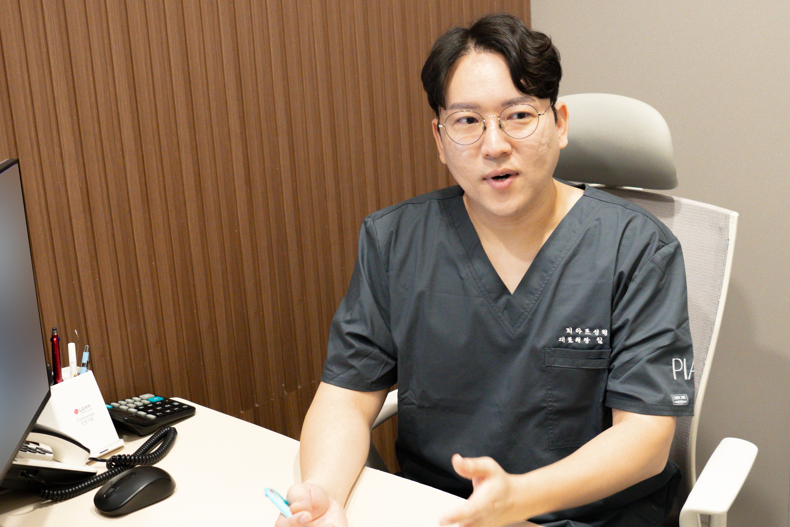
I’m Lim Jin-young,
Chief Director of Piyaf Clinic.
You may probably be concerned about fine lines,
loss of elasticity, or nasolabial folds.
That’s why you may have been interested in getting a Radiesse treatment.
However, rather than visiting a clinic
in a hurry,
I’d recommend learning a bit more
before making your choice.
That’s because, while Radiesse is effective,
there are also concerns about side effects.
For example, a side effect called a “nodule”
can occur.

A nodule is a condition in which a bumpy
mass forms at the injection site.
The problem is that there is no ingredient
that can dissolve this mass.
In other words, it is more important than anything
to inject the right amount into the exact location
at once.
For this reason, in today’s post,
I’m going to explain Radiesse in detail,
from 1 to 10.
Especially if you want to avoid side effects,
please focus and read for just 3 minutes.
Understand the principle first.
If You Want to Avoid Radiesse Side Effects in Cheonho, Read This First <Written by a Doctor>
The principle of Radiesse
is not difficult.
“Small beads.”
That’s all you need to remember.
Then let me explain
the treatment in earnest.
The key ingredient in Radiesse is
called CaHA.
It is an ingredient called
“calcium hydroxyapatite.”
The name is long and complicated, right?
There’s no need to think of it as difficult.
Think of the “small beads”
I just mentioned.
You can understand CaHA as small bead-like particles.
Why is that?
Because CaHA actually comes in the form
of tiny microbeads.
These beads have two effects.
First, “immediate volume”
Second, “collagen production”
Let’s go through them one by one.
Radiesse is called a collagen
“filler.”
That’s because, like a filler, it can immediately
add volume to hollow areas such as the cheeks
or chin.
To be more specific,
the “small beads” that enter the skin through a syringe
fill in facial volume.
After that, the beads gradually
begin to break down,
and during this process, the cells in the face receive
signals such as “Produce collagen!”
As a result, collagen is produced internally,
and the collagen eventually replaces the volume
that the small beads initially provided.
As some of you may know,
collagen is the ingredient responsible for skin elasticity.
The more collagen there is,
the firmer the skin becomes.
So far, I’ve explained the principle and effects
of Radiesse.
The key point is this.
The main ingredient in Radiesse is CaHA,
which comes in the form of small bead-like particles,
and this ingredient enters the skin
and fills in volume.
As time passes, the CaHA breaks down
and induces cells to produce collagen.
Thanks to this, volume can return to hollow areas,
and the skin may become healthier.
How can you prevent side effects?
In fact, this is the most important part.
If You Want to Avoid Radiesse Side Effects in Cheonho, Read This First <Written by a Doctor>
Before talking about side effects,
let’s first cover pain.
Like other treatments,
Radiesse is also considered to be somewhat painful.
However, the product itself contains an ingredient
called lidocaine.
This ingredient is a local anesthetic.
When Radiesse is compared with skin boosters
such as Rejuran or exosomes,
there are many reviews saying the pain is less,
and this is why.
The ingredient itself contains a local anesthetic.
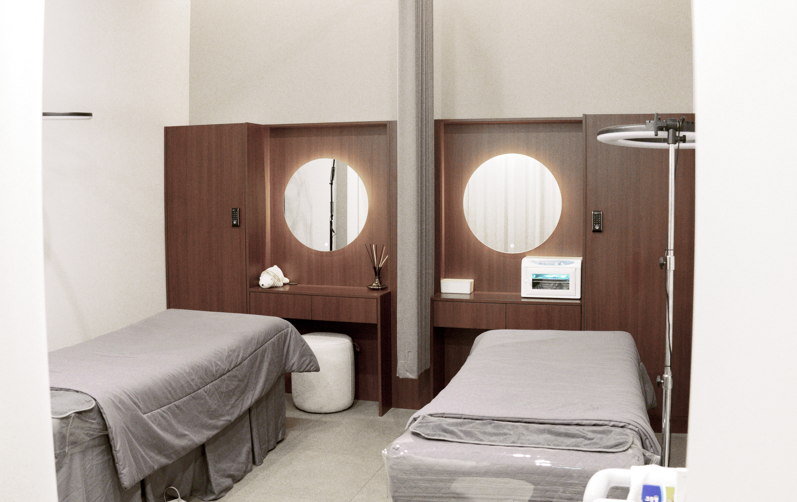
Also, since numbing cream is applied for 30 minutes
before the procedure,
I want to say that even if you are sensitive to pain,
you do not need to worry too much.
Now let’s move on to side effects.
As I explained earlier,
Radiesse is a treatment in which it is important
to inject the right amount into the exact location
at once.
To do that, what really matters most is
the medical staff’s skill.
That’s because, before the procedure,
Radiesse must be diluted properly by mixing it
with saline and anesthetic solution.
If the dilution concentration is too thick,
the ingredient can clump together,
which makes nodules more likely to form later.
In addition, injecting into the exact location
is also important.
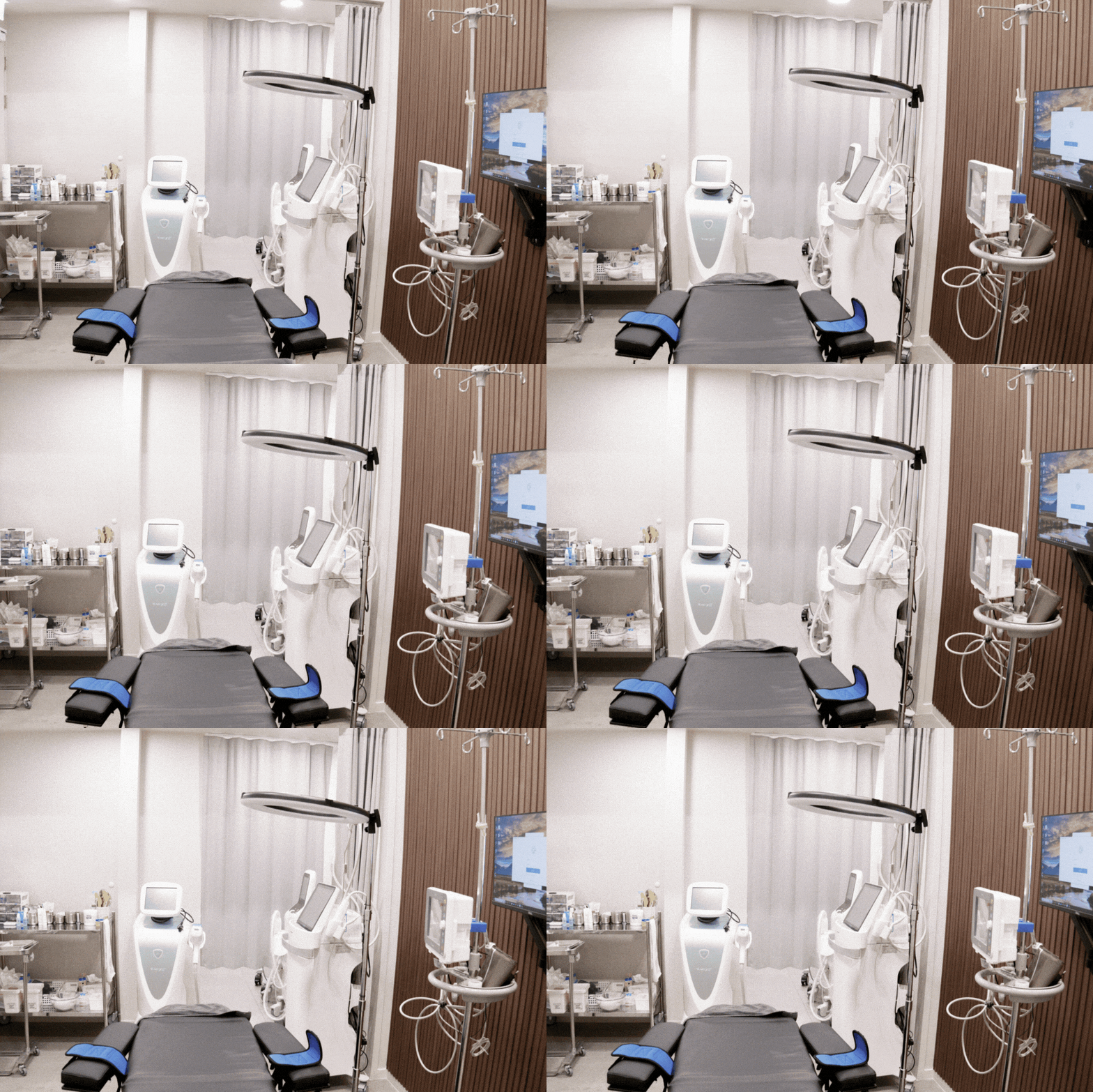
Radiesse must be injected evenly in a very small amount
into the subdermal layer.
That is what helps prevent nodules
from forming.
In addition, the facial vascular structure (anatomy)
must be well understood so that accidents
in which the product blocks a blood vessel can be avoided.
The key point is this.
To avoid side effects, you should receive the treatment
from medical staff who have a great deal of experience
and extensive know-how.

If You Want to Avoid Radiesse Side Effects in Cheonho, Read This First
<Written by a Doctor>
That concludes what I prepared.
What may concern you is,
“Did I talk about Radiesse too negatively?”
But I think it is extremely important to clearly
understand the side effects of any treatment you receive.
So although I may have sounded a bit alarming,
I spoke honestly.
Of course, if Radiesse is performed
by experienced medical staff,
it can help address various skin concerns
such as loss of elasticity, fine lines,
and nasolabial folds,
so I would also say that Cheonho Radiesse
can be a very good option.

In any case, up to now,
I’m Lim Jin-young,
Chief Director of Piyaf Clinic.
Thank you for reading this long post.
A Column Worth Reading Together

| Piyaf Clinic |
|---|
| Main number: 02-420-8883 |