"My under eyes kept looking puffy,
so I had surgery to remove the fat...
but the dark circles seem even darker."
Hello.
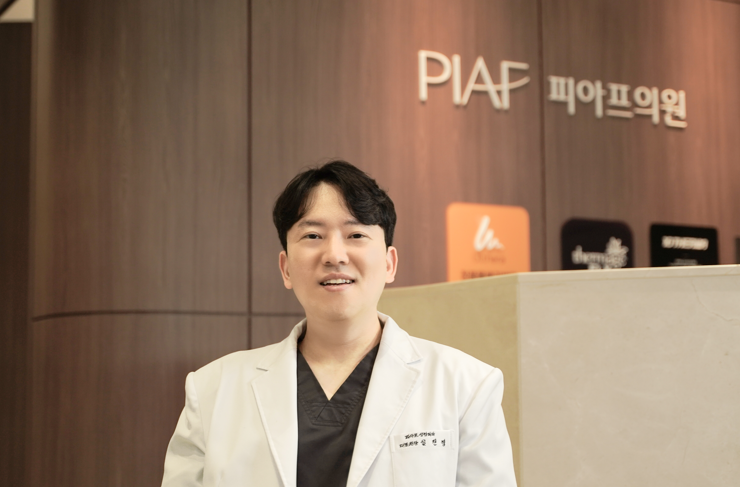
I’m Lim Jin-young,
Chief Director of Piap Clinic in Jamsil.
There are often people who feel upset after making up their mind and undergoing under-eye fat removal in Jamsil,
only to hear that their under eyes have become hollow and given them a tired-looking impression.
It was something they decided on believing it would definitely improve things,
so if the result turns out different from what they expected, it can be confusing.
So today, I prepared this post with the hope that no one will regret having under-eye fat removal.
If you focus on reading this post for just 3 minutes,
you’ll be able to understand
what decision is wise.
Jamsil under-eye fat
may actually have a weakened support structure.
Simply removing the protruding under-eye area
can, over time,
lead instead to side effects or additional procedures.

This is because the bulging under-eye area is not caused only
by excess fat.
The actual reason is that as we age,
the tissues supporting the area around the eyes become loose,
and the fat layer that was in its original position
gets pushed forward.
So the essence of the problem lies in
"a weakened support structure."
If this structural change is left as it is,
and only the protruding part is removed?
It may look neat at first.
But as time passes,
hollowing or indentation can appear.
In fact, as under-eye hollowness becomes more severe,
the dark circles stand out even more,
and many people end up worrying about it again.
In addition, the under-eye area is also related to the overall balance of the face,
linking the eyes, cheekbones, and jawline.
But if only the protruding part of the under-eye fat in Jamsil is flattened away,
the overall contour can end up looking awkward.
In the end, if you don’t want this to become a bigger concern later,
you need to look for another option.
Jamsil under-eye fat
repositioning may be more advantageous.
Then what alternative is there?
Instead of simply removing the protruding part,
there is a method of moving and repositioning it.
And a customized method of readjusting the fat position
can be much more helpful in maintaining the effect for a long time
and restoring a natural impression.
Instead of eliminating the protruding area,
if some of it is moved to a hollowed area,
the protrusion becomes less noticeable,
and the overall contour becomes softer
and more natural.
In fact, the technique of moving and repositioning protruding fat
can fill volume in hollowed areas and
help bring back the face’s overall three-dimensionality.
This can be an effective way to address dark circles,
under-eye hollowness,
and the shadowing caused by a lack of facial volume.
However, because facial characteristics differ from person to person,
and because the procedure can also be technically demanding,
there are things you should carefully consider before treatment.
In the next section, let’s look at this together.
Before the procedure,
make sure to check 'this part.'
"Then is repositioning possible for everyone?"
Faces are all different from person to person.
Even if someone simply has a lot of under-eye fat,
the skin thickness, distribution, and the proportions of the eyes, cheekbones, and jaw can all differ.
So before undergoing the procedure, you need to consider your own
facial structure, skin elasticity, and the amount and distribution of fat,
as well as all possible risks that may arise after the procedure,
to determine whether it is suitable.
If you choose repositioning or removal without careful thought,
it can instead become the cause of side effects or asymmetry,
and you may regret it.
In particular, the success rate and stability of fat repositioning depend on the medical team’s experience,
the patient’s anatomical conditions,
and the precision of the treatment plan,
so greater caution is needed.
Especially if the procedure is performed by a medical professional with insufficient experience,
problems such as swelling, irregular contours, blood vessel damage,
tissue imbalance, and similar issues can occur.
That is why some experts warn that you should be careful about explanations that say,
"We’ll remove too much and then fill in the deficient area."
So the clinic you choose should present a treatment plan that considers
not only the patient’s overall facial balance,
future changes over time,
but also possible side effects and the recovery process.
Ultimately, the most important thing is a diagnosis that prioritizes
facial harmony and naturalness rather than a simple cosmetic goal.
Conclusion
So far, we’ve looked at why under-eye fat in Jamsil should be repositioned
rather than simply removed,
as well as the things you must check before the procedure.
If you don’t want to regret it later,
you should prioritize a "customized repositioning" approach that considers
both the overall three-dimensionality and balance of the face.
Only then can you get natural contours,
harmony, and satisfying results from the beginning.
And I hope you remember that these satisfying results are possible only when
three things are in harmony:
the medical team’s experience, the patient’s anatomical conditions,
a precise treatment plan.
If today’s post was even a little helpful to you,
I’ll be glad it was worthwhile.
Thank you.
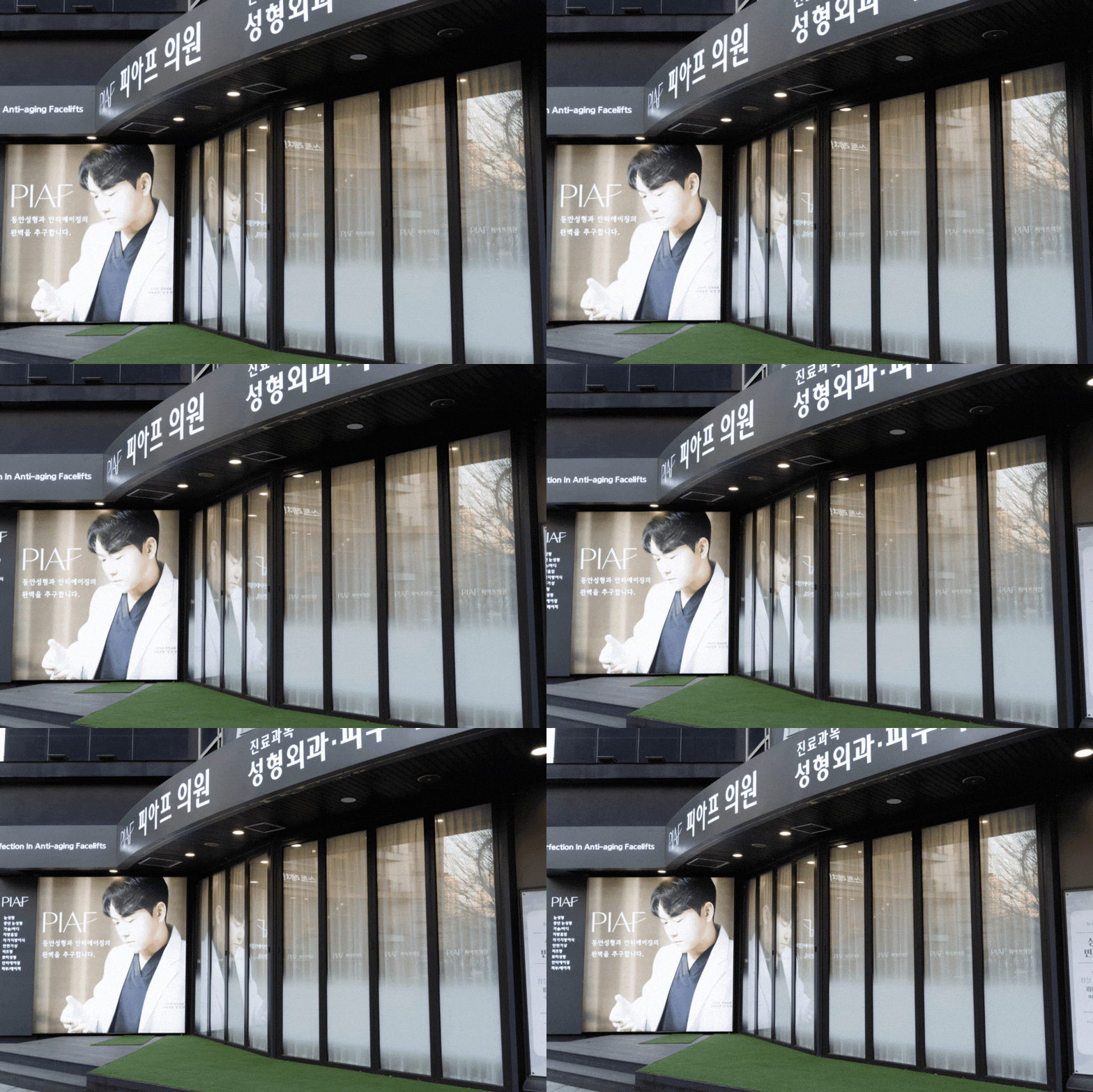
This was Lim Jin-young,
Chief Director of Piap Clinic.
Other columns you may want to read

| Piap Clinic |
|---|
| Main phone number: 02-420-8883 |