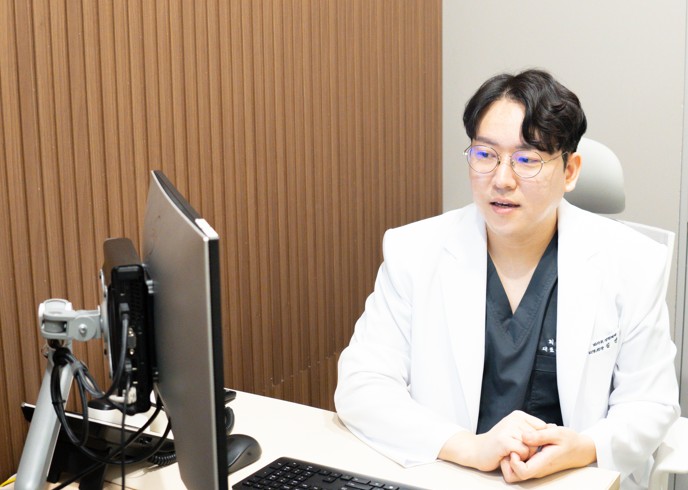
Hello.
This is Jin Young Lim,
Chief Director of Piap Clinic.
Even after spending money,
why do we still feel unsatisfied?
Even if you’ve had it done several times,
the effects are temporary,
and after some time,
you end up back where you started.
"Did I make the wrong choice?"
"Should I get something more expensive?"
If you find yourself thinking this way,
you should pause for a moment.
The problem is not how much money you spend,
but
how you approach it.
Today, I’ll explain the three things you must know
to avoid regretting getting Garak-dong aesthetics.
If you read this post to the end,
you’ll clearly understand
why things have felt disappointing so far,
and what needs to change going forward.
Garak-dong aesthetics:
The reason they don’t work is the "layer"
Right after treatment,
it may feel like things have improved,
but after just a few days,
you may find that everything has returned to normal.
The reason is the structure
of the skin tissue.
Our skin is divided
into the epidermis and dermis.
The epidermis is the outermost layer
and plays a role in maintaining moisture
and protecting against external irritants.
Care such as exfoliation,
hydration,
and soothing
all takes place in this layer.
It’s natural for the skin texture
to become smoother
and for the condition to improve
temporarily.
But concerns such as wrinkles,
loss of elasticity,
pigmentation,
and enlarged pores are different.
These symptoms occur in the dermis
or deeper tissues.
Changes caused by reduced collagen
or impaired sebaceous gland function
cannot be resolved
by simply refining the surface.
Because the layers are different,
no matter how often you receive treatment,
there is no fundamental improvement.
In the end, to see proper results,
you need to first identify
which layer your concern belongs to.
That way, you can avoid repeating
unnecessary expenses
and move in the right direction.
Short-term effects and long-term improvement
require different approaches
There are times when you have an appointment tomorrow
or need to quickly boost your condition.
In these cases, Garak-dong aesthetics
can be effective.
They help circulation,
reduce swelling,
and improve skin texture,
so noticeable changes
can appear in a short time.
But this is, quite literally,
a temporary improvement in condition.
It’s not that the cells have regenerated
or the tissue has changed;
it’s simply been cleaned up from the outside.
On the other hand,
if you want to change your skin
for the long term,
the story is different.
True change begins only when you increase collagen,
stimulate cellular activity,
and restore regenerative function.
These processes are only possible
through medical procedures.
Lasers, radiofrequency,
and injections act directly on the inside of the skin
and change the tissue structure itself.
Of course, recovery time is needed,
and the effects accumulate
after repeated sessions.
That said, you do not have to choose only one.
In fact, combining the two leads
to much more stable results.
If Garak-dong aesthetics are performed during recovery
after a procedure,
it can help reduce side effects such as redness and dryness,
and can speed up the regenerative process.
In the end, you need to distinguish between
short-term goals and long-term goals
in order to judge
which approach is right for you now.
The necessary approach
is determined by age and skin type
If you are in your early 20s,
even epidermal care alone
can be enough to maintain a good condition.
Because regeneration is active
and collagen is abundant,
this is a stage where external care
is often enough for recovery.
But once you pass your mid-30s,
the story changes.
Collagen production drops sharply,
and the speed of cell regeneration
also begins to slow.
From this point on,
care focused only on the epidermis
has clear limitations.
Loss of elasticity,
deeper wrinkles,
and faster pigment buildup
make this especially apparent.
Therefore, from this stage onward,
medical intervention should be combined
in order to slow the aging process,
and maintain a healthy condition
for longer.
The approach should also vary
depending on your skin type.
If your skin is sensitive
and easily reacts to irritation,
rather than starting with strong procedures,
it is better to stabilize the skin barrier
through Garak-dong aesthetics first,
and then proceed step by step.
On the other hand, if your skin is thicker
and has strong regenerative ability,
focusing on procedures to bring about change quickly,
and then maintaining it with follow-up care,
may be more efficient.
In the end, only by accurately understanding
age and skin condition
can you clearly determine
what method you need right now.
So far, I’ve explained the key points
you need to know
if you want to avoid regretting getting
Garak-dong aesthetics.
If you felt there was no effect,
it may not be that the method was bad,
but rather that it was addressing a layer
that did not match your concern.
Whether you need short-term improvement
or are aiming for long-term change,
the method you should choose
is completely different.
And if you do not consider
age and skin type,
then even the best method
will not bring the results you expect.
Skin is a complex tissue.
Rather than insisting on just one method,
you need to combine and adjust
based on the situation
to achieve truly satisfying results.
I hope today’s post
has been helpful in your decision-making.
Wishing you healthy skin.
This has been Jin Young Lim,
Chief Director of Piap Clinic.
Thank you.
A recommended column to read together

| Contact Information |
|---|
| Main number: 02-420-8883 |
