
Hello.
I’m Lim Jin-young, chief director of Piap.
Have you ever heard of the phenomenon where, after thread lifting because facial elasticity has decreased,
your face actually looks bigger?
The symptom of a face looking larger is often mentioned as a side effect of Jamsil lifting,
just like asymmetry or the lifting effect disappearing after three months.
In fact, because it is something that can be prevented with just a small design difference,
the skill of the medical staff is very important here.
Jamsil Lifting
Three Side Effects of Thread Lifting
Jamsil Lifting
- Returning to the original state in just 3 months
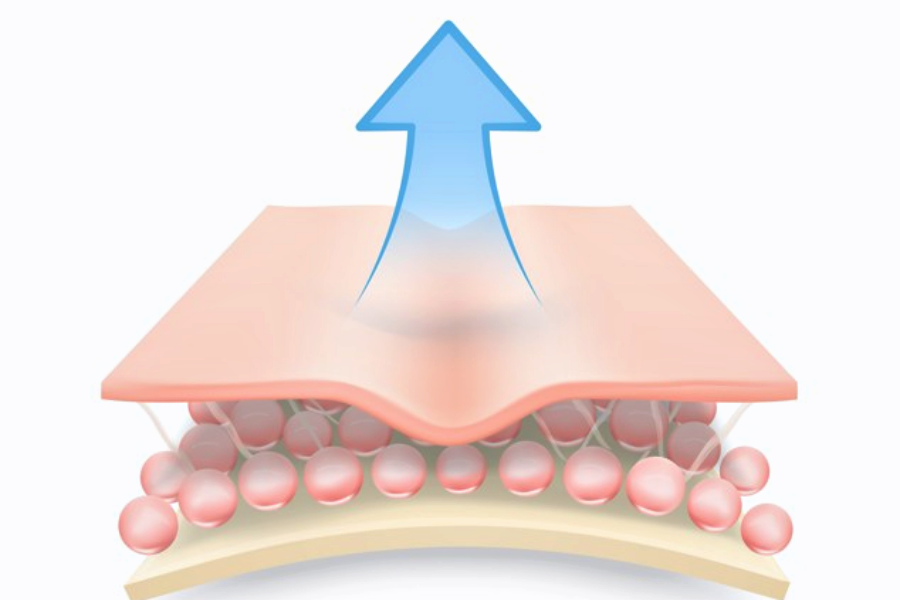
This is the most common side effect, and it usually occurs when the threads are inserted only into the skin layer.
- Asymmetry where one side is pulled more
Right after the procedure, swelling can hide it,
but asymmetry may appear two weeks later.
This mostly happens when the threads are placed with the same tension without considering the difference in development of the left and right facial muscles.
- The face ends up looking even bigger
If the pulling direction is vertical,
tissue gathers in the center of the cheeks.
Because the cheekbones become more prominent,
patients may feel that they had a lifting procedure but instead ended up with a side effect that makes their face look larger.
What determines these side effects is ultimately
how the facial type is assessed and
what angle is used for the procedure.
If you don’t want your face to look bigger
If you don’t want your face to look bigger,
I think these two things are ultimately
important.
- The insertion angle and
thread placement spacing
2) Pre-procedure diagnosis
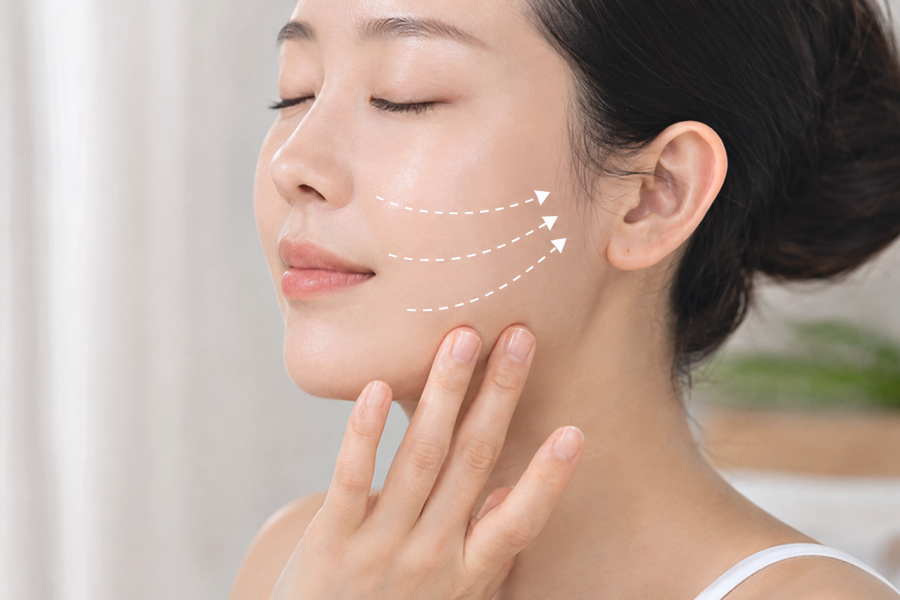
The threads should not be inserted vertically;
they should be inserted diagonally from the temporal side.
If you pull in a straight line, the tissue can gather instead,
making the cheekbones look larger or more pronounced.
The reason the side effect of the face looking bigger happens so often
is because people do not know about this difference in angle.

When the threads are pulled vertically,
it is true that the sagging tissue moves upward.
However, if you pull vertically,
the remaining fat tends to gather in the center of the cheeks and the area below the cheekbones.
Even if the tissue is lifted higher than its original position before sagging,
there is still volume visible from the front,
so the cheekbones may look more protruded or the midface may look thicker,
creating the impression that it looks "bigger."
So at this point,
you should proceed in the direction of the frontal temporal muscle,
that is, diagonally,
so that the volume is distributed
and the contour becomes sharper.

More specifically,
it means pulling it diagonally toward the inner hairline of the ear.
Even if you proceed at an angle of 60 to 70 degrees instead of 90 degrees,
the overall effect is lifting upward while distributing outward,
so the procedure can make it look as if both the line and the excess tissue are being refined at the same time.
In addition, when performing thread lifting,
many people focus only on the number of threads,
but what determines the overall impression is the spacing of the threads.
If you try to make it tighter by placing the threads all in one area,
the tissue will be pulled too much to one side,
which can cause one area to look larger than the other.
The most important thing is the pre-procedure diagnosis.
But
the most important point, after all, is...
the patient’s expression and facial type diagnosis before the procedure.
Because the cheeks have a thicker fat layer,
the jawline is thinner, and the thickness differs from person to person,
it is necessary to first determine the thickness of each area by physically palpating the patient’s face
and then adjust the depth of insertion.

So this is how I do it.
I check the difference in cheek thickness on the left and right from the front.
You need to check both what is visible to the eye and what is felt by hand,
and also examine the facial muscles.
I look at which side moves more when the mouth is opened wide,
and approach it differently.
By moving the lower jaw left and right,
I determine which side feels especially stiff or has a more developed masseter muscle.
Ultimately, for tightening to happen naturally,
it does not happen all at once;
it is most important to adjust the tension or
change the placement angle according to muscle or tissue thickness
so that the overall balance is maintained.
If you only remember this much about Jamsil lifting,
I think you will be able to find a place that does it well.
Thank you.

| Contact Information |
|---|
| Main number: 02-420-8883 |
