
Hair loss, which was once thought to be a problem only for middle-aged and older adults,
has now emerged as a concern for modern people regardless of age or gender.
Even people in their 20s and 30s reportedly suffer from this condition,
and the reasons it appears are often a mix of multiple factors, including hereditary genetic
influences from family history, stress caused by excessive work, and poor eating and lifestyle habits.
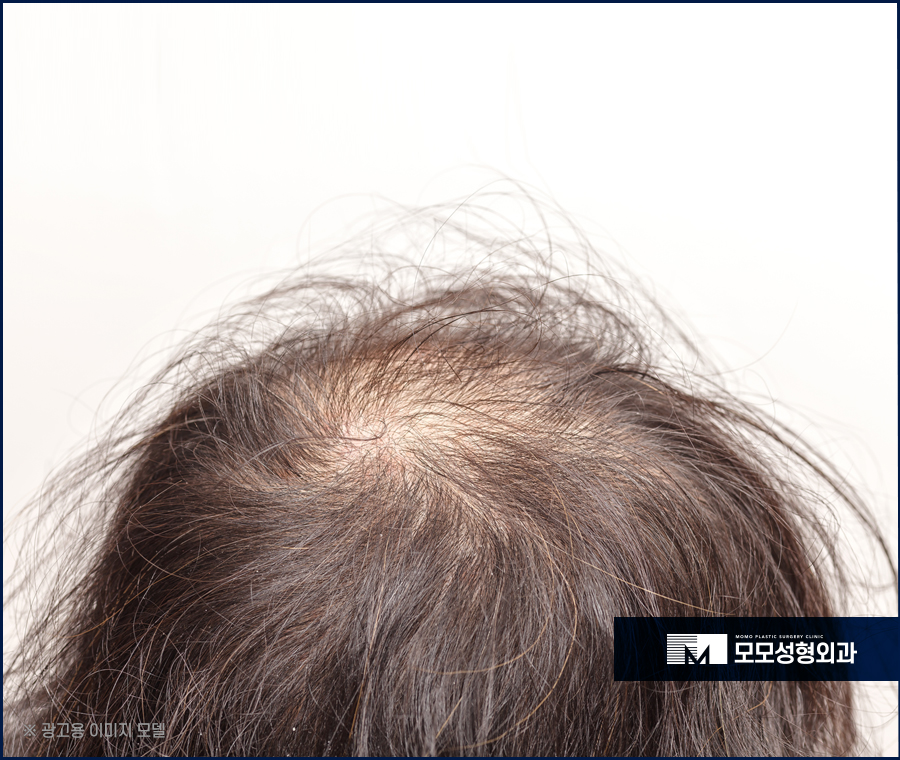
The number of people experiencing this problem is gradually increasing,
and the related market is also growing in scale accordingly.
It can now be seen as a problem for everyone.
There are various types of natural hair loss, occurring at the crown,
part line, hairline, and so on. Once hair loss begins, it should not be viewed as a short-term issue
but as a long-term one that requires ongoing care. Once shedding starts,
it does not recover naturally and tends to worsen over time,
so people look for ways to ease it. If the resulting mental stress is severe,
a method of moving and transplanting healthy hair from another area may be used to help improve the complex.

However, when most people consider this surgery,
they often do not know how much they should have transplanted.
It can only be measured after examining the current condition, so it may feel confusing,
but I think you will try to figure out roughly what amount would be appropriate.
Among those, interest is likely especially high in hair transplantation of 3,000 grafts,
which is mentioned most often. People may look closely at how much that is,
whether it is appropriate and sufficient for them, and because it is one of the most common amounts performed,
they are likely to have many questions.

First, before the number of hairs, the point you should understand is the treatment method.
It refers to a method of harvesting strong and healthy hair follicles from the back of the head
and transplanting them to areas where hair has disappeared and become sparse.
Depending on how the follicles are obtained, the procedure is generally carried out in two ways,
which are divided into strip harvesting and non-strip harvesting.

The cost may vary depending on which technique is used.
For example, even if the same number of grafts is transplanted, the method may differ,
and in general, the strip method tends to be less expensive than the non-strip method.
Also, when people usually say 3,000 grafts of hair transplantation,
it is often performed on areas of natural hair loss in an M-shape or near the hairline,
and this amount can be considered suitable when the hair loss is not severe.
In such cases, the number of grafts can vary depending on the extent of hair loss
and the area where it has occurred. If the affected area is wider,
a larger number of grafts is needed; conversely, if it is smaller,
the number of grafts required is also smaller, so the procedure is carried out accordingly.
Therefore, instead of roughly estimating and moving forward,
the total amount to be transplanted is decided by considering the overall situation from various angles.

The way to measure various graft counts other than 3,000 grafts differs depending on
the harvesting method mentioned above. In the case of non-strip harvesting,
a count is made when the follicles are collected from the back of the head.
A doctor may count them directly, nursing staff may count them,
or a counter may be used, or the number may increase each time it is touched.
In the case of the strip method, the number of grafts is measured in several places per centimeter,
converted into scalp area, and then an average is calculated.
After that, the scalp area containing the required amount is excised.
For example, if 3,000 grafts are needed and the average number of natural hairs per centimeter is about 100,
a scalp area of 30 centimeters would be needed.
This kind of calculation can be used to proceed with the procedure,
but there are significant individual differences from person to person,
and it can vary depending on the area involved and the degree of hair loss.
So rather than simply calculating and deciding on your own how much to transplant,
it is better to visit a medical institution and make the decision after receiving careful, detailed consultation and examination.

Also, because the cost of transplanting natural hair varies depending on the number of grafts,
it is advisable to avoid choosing a related facility based only on price.
If you focus only on the price, it can lead to a poor choice,
which may later require a repeat procedure or even cause minor or major side effects.
Therefore, if you are considering treatment while looking into things like hair transplantation of 3,000 grafts,
please be sure to check that the graft count is measured carefully and that it is based on systematic,
detailed diagnosis.

This is the most important point, and it is also the shortcut to achieving a successful outcome
when restoration is carried out through 3,000 grafts of hair transplantation.
As the number of people worried about hair loss continues to increase,
related institutions that help with this issue have also increased simultaneously.
That is why choosing where to go can also be a concern.
So if you are looking into which place to visit, it is necessary to check whether they have many years of skilled clinical experience and expertise,
and it is also important to look for a place that can provide customized treatment suited to each person's type,
rather than applying the same method to everyone.
In addition, checking whether the clinic provides careful aftercare following the procedure may be the solution to achieving the satisfaction you want.