
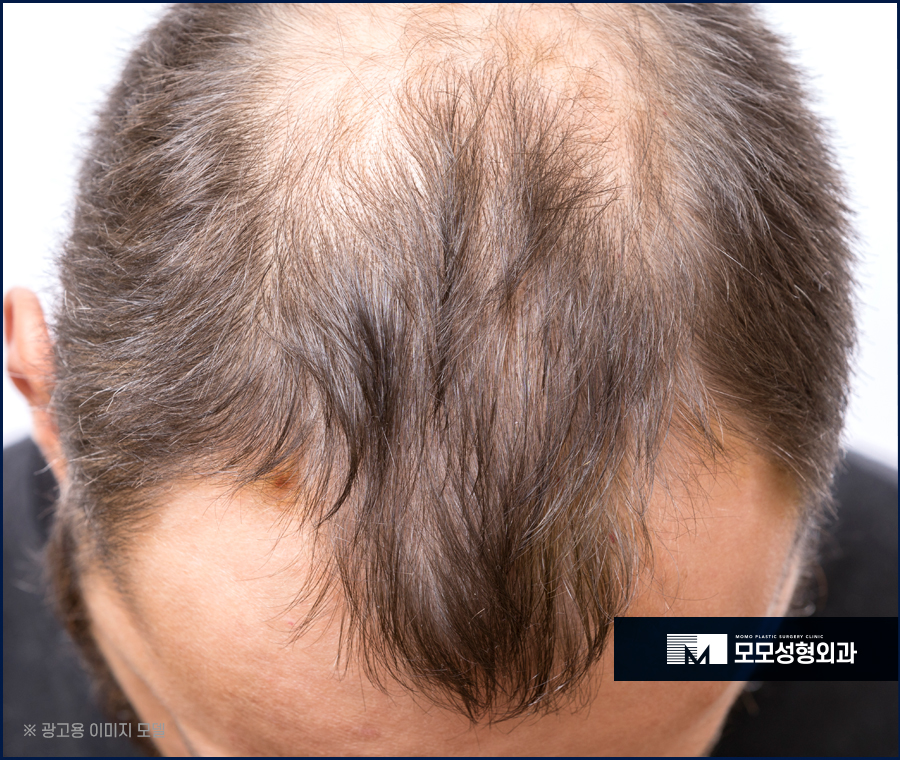
In general, when people think of hair loss,
the image that comes to mind is usually a
middle-aged or older man with uneven hair
and a forehead or crown with many gaps.
This is likely a fairly common perception.
However, that is now only a thing of the past,
and in recent years, even young adults in their
20s and 30s have been affected by a variety of
acquired factors working together, so it has
changed into a phenomenon that can occur to
anyone, regardless of gender or age.
Looking at how hair loss is now appearing
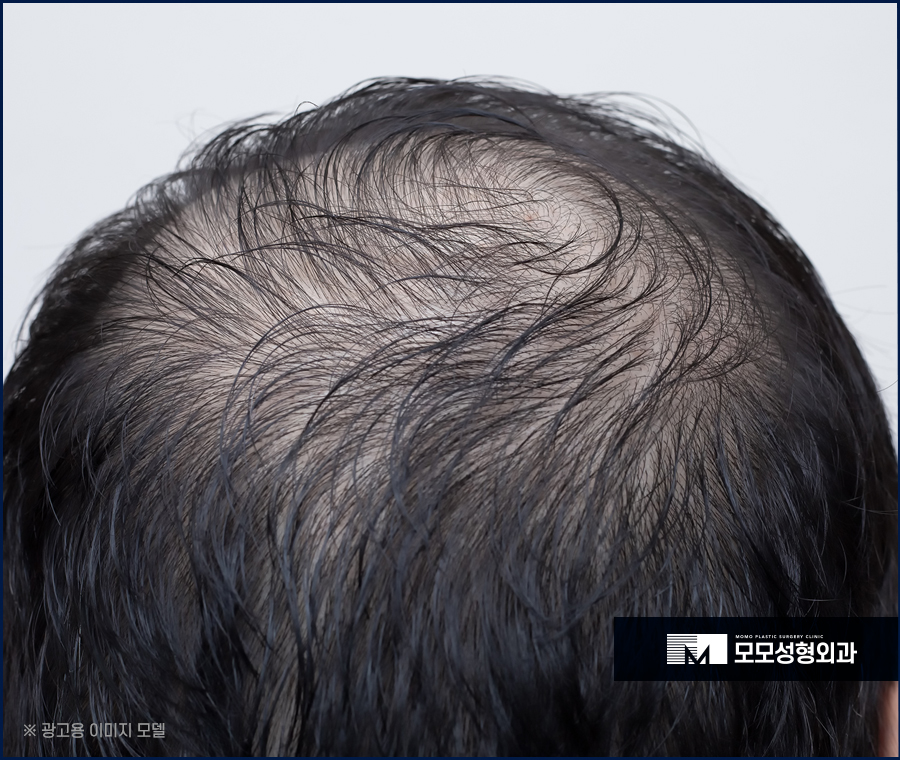
frequently among younger people, it can cause
trouble at a time when they should be actively
pursuing social and interpersonal life. If the
symptoms have progressed beyond the early
stage, the resulting changes in appearance can
make them feel stuck and lower their self-
esteem, eventually restricting everyday activities
and continuously causing negative effects. This
can even lead them to avoid face-to-face contact
with others, and may bring about various
psychological symptoms as well.
People who are repeatedly troubled by this issue
will likely look for and try various ways to
compensate for hair that has already fallen out.
They may use wigs or hats when going out to
cover it up, or apply specialized makeup
products to fill in sparse areas. Although they
try out helpful measures, the effects are only
temporary compared with the effort invested,
and they do not address the underlying cause of
hair loss. Accepting this reality and seeking a
method that can be maintained over time,
more and more people are visiting clinics to take
action, and among them are some who are
interested in hair transplant graft survival rates.
Because hair loss symptoms are divided into a
variety of types, it is important to carefully
check your scalp health and the condition of
your natural hair, then find a customized
improvement method. Depending on the area
where it commonly occurs, it can be classified
as crown, circular, or M-shaped hair loss, and
these types may also appear due to health-related
issues such as hormone secretion and severe
stress, as well as genetic reasons.

So, in the case of this surgery-like procedure
chosen as a solution, it is broadly performed
using either the strip method or the non-
shaven method. The existing strip method and
the recently popular non-shaven method do not
show a major difference in hair transplant graft
survival rate. However, because the former
requires excision, there may be difficulty
returning to daily life immediately during the
process of suturing and treatment. On the other
hand, it involves collecting follicles all at once,
so the cost is relatively lower and the time
required is not very long.

These days, the option preferred by many
patients is the non-shaven method. Depending on
the type, harvesting can be attempted without
shaving the head, allowing a smooth social life
again starting the day after the procedure. In
addition, because the healthiest follicles are
selected and implanted one by one, a more
natural style can be achieved.
Also, to achieve satisfying results, the procedure
should be decided after careful consultation and
an accurate diagnosis with the physician in
charge, who has extensive experience, know-how,
and technique related to it, while setting various
criteria and considering them comprehensively
and carefully. And for this approach to lead to a
satisfactory outcome, whether the transplanted
natural hair has settled well will determine the
prognosis.
The mentioned hair transplant graft survival rate
can be described as a figure indicating how many
of the transplanted natural hairs ultimately settle
properly and survive, and even if the same amount
of hair is transplanted, the degree of fullness and
density will differ.

As briefly mentioned above, this hair transplant
graft survival rate is determined by several
factors, including the medical team’s many years
of experience with various cases, their skill,
their own know-how in harvesting follicles, and
careful aftercare. Therefore, when you are
considering the procedure and deciding whether
to proceed, it is important to choose the clinic
carefully. Since the process itself is not simply a
matter of transplanting natural hair, but rather a
highly advanced and precise technique, you
should select an institution with extensive
experience so that the most suitable treatment
for you can be carried out.

Of course, it is important to thoroughly review
these points, but even after the procedure is
finished, it is not all over. Putting considerable
effort into aftercare is also an important point to
keep in mind. There is always some possibility of
an unexpected adverse effect occurring even in
the transplanted area and the surrounding areas,
so during the recommended graft-survival period,
you must pay close attention to maintaining
healthy hair and steadily improving the hair
transplant graft survival rate. And to achieve the
satisfying result you want, if the amount of hair
falling out has increased compared with before,
or if changes have occurred in the hairline or the
crown, it is important not to ignore signs and
problems that may seem minor.
If you do not overlook these points along with
the hair transplant graft survival rate and observe
them carefully while responding immediately,
you will be able to avoid unexpected accidents.