Until the relatively recent past,
the problem of hair loss was easy to think of
as a symptom that appeared in middle-aged and
older adults,
but nowadays, the age of people struggling with
this condition has become younger, and many
people in their 20s and 30s are also said to
be worrying about hair loss and distress caused
by the loss of terminal hair. In particular, in
the case of men, about 50% of patients are in
their 20s and 30s, and in the case of women,
about 40% are in their 40s and 50s, and people
of all ages and genders are increasingly suffering
from the problem of losing natural hair.
It is also said that there are various types of
hair loss. Among them, let’s look at the causes
of the most common type, androgenetic alopecia,
and ways to improve it.
What is androgenetic alopecia?
It can be described as a condition that occurs
due to genetic factors and the influence of male
hormones and components involved in hair growth.
Among the metabolic products is testosterone,
which is then converted into dihydrotestosterone,
accumulates in the hair follicle, and plays a role
in putting it into a resting state. Once the hair
follicle enters this state, nutrients necessary for
natural hair growth are not supplied, so new hair
does not grow in the place where it fell out,
and the hair may gradually become thinner.

In women, estrogen can suppress androgens,
but the hormonal balance in the body may be
disrupted, which reduces female hormones and,
conversely, increases androgens, leading to hair
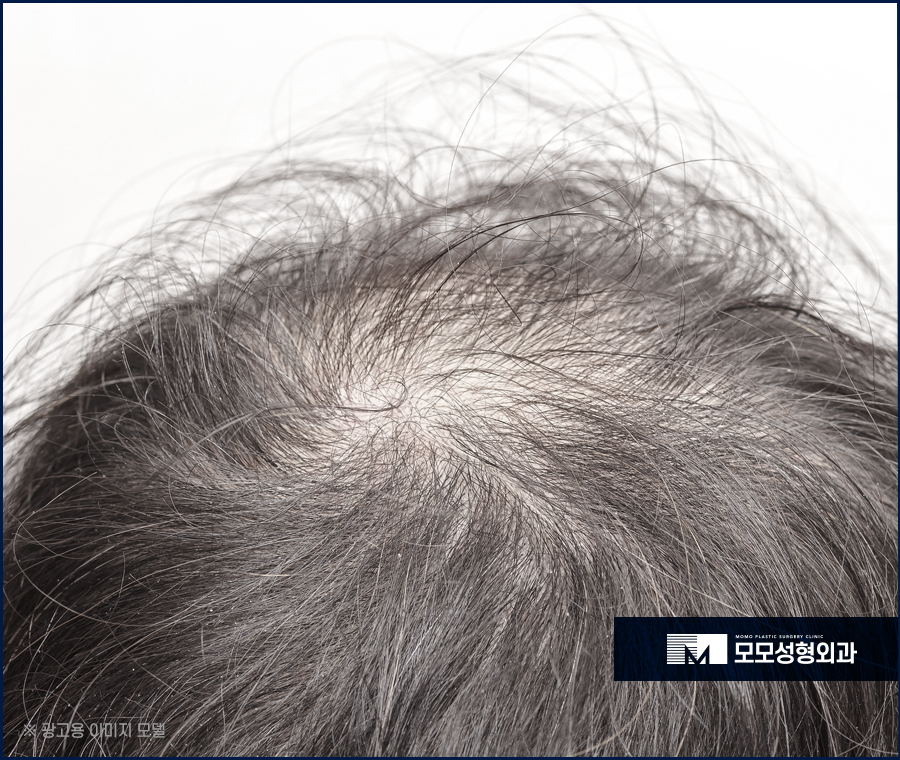
loss. Androgenetic alopecia can be divided into
male pattern and female pattern. In cases with a
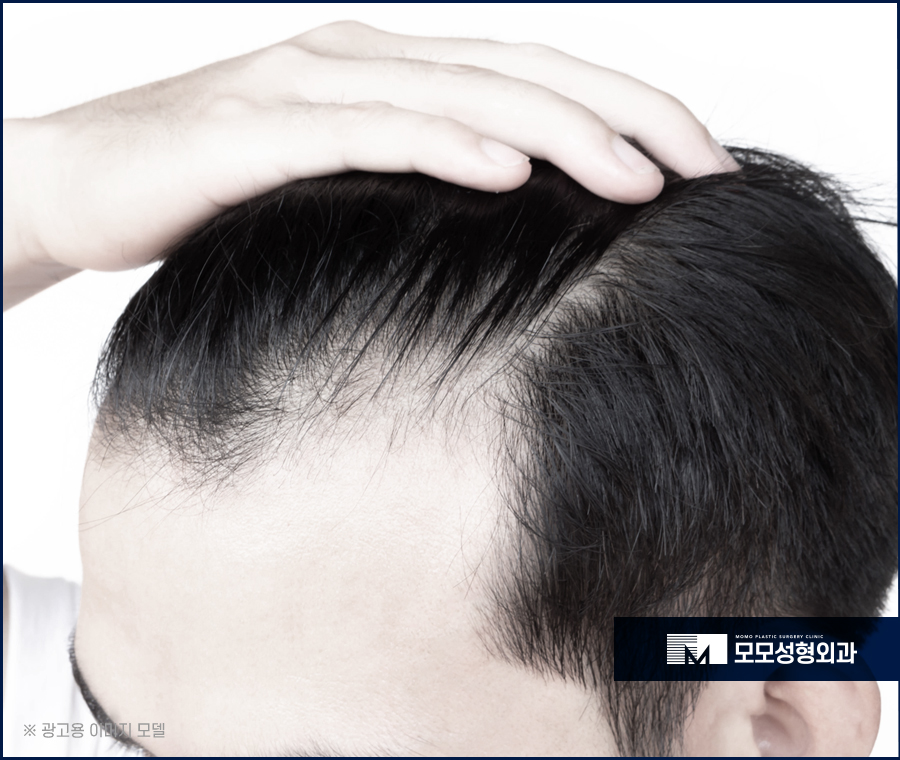
family history, terminal hair gradually becomes
thinner starting around the 20s or 30s, the
hairline between the forehead and scalp gradually
moves backward, the temples form an M shape,
the forehead becomes wider, and hair loss also
gradually progresses in the crown area.
The rate of progression may vary from person to
person, but if these symptoms begin at a relatively
young age, they often progress to severe hair loss.
This pattern is usually observed in men, but it
can occasionally appear in women as well. In
addition, unlike the male pattern, the female
pattern is characterized by thinning hair in the
central area while the hairline above the forehead
is maintained, resulting in a generally reduced
density of hair. It is also a characteristic that
this condition continues chronically and, as the
hair falls out overall, often takes on a pattern
resembling a Christmas tree.
The extent of hair loss is usually mild, and it is
rare for the forehead to become completely bare
or for complete baldness to occur. Sometimes, in
younger women suspected of having the female
pattern without a family history, it is a good idea
to check for ovarian cysts. In women, androgens
are secreted by the ovaries and adrenal glands,
and hair loss due to cysts is said to be accompanied
by hair on the head falling out while hair in other
areas becomes thicker and more abundant, along
with acne and irregular menstruation. The causes
of androgenetic alopecia are strongly influenced
by stress and environmental factors as well as
family history. Stress, which almost no one living
in modern society has not experienced at least
once, disrupts the balance of the autonomic nervous
system and induces changes in immune function,
which can trigger immune reactions around the
hair follicle or affect the hair growth cycle.

In addition, environmental pollution such as air
and water pollution can also irritate the scalp,
and excessive drinking and smoking can have a
detrimental effect on scalp health. Poor eating
habits and extreme dieting can also be cited as
causes of androgenetic alopecia. When food intake
is restricted due to dieting, the supply of minerals
such as magnesium, zinc, and iron, as well as
vitamins A, B, and D, protein, and essential fatty
acids needed for hair growth, becomes insufficient.
In this case, because nutrients absorbed in the
body are prioritized for major organs necessary
for survival, the nutrients that relatively reach
the scalp and hair are reduced. In women, when
going through pregnancy, the female hormone
estrogen increases and hair growth occurs, but
after childbirth, the increased hormone levels
decrease from about 2 to 6 months and, once
they return to the normal range, hair loss naturally
appears.

It is also said that this condition may occur when
taking anticancer drugs or certain medications
such as birth control pills. However, about 6 to
12 months after stopping such medications, it is
said to return to normal. To improve androgenetic
alopecia, it is best to avoid excessive stress and
overwork as much as possible, find a way to
relieve stress that helps you, and maintain a
positive mindset and good condition. Refrain from
smoking and excessive drinking. Tar and nicotine,
the main components of cigarettes, interfere with
blood supply by causing problems in the hair roots,
and cigarette smoke itself can trigger hair loss,
so it is best to avoid smoking and secondhand
smoke.
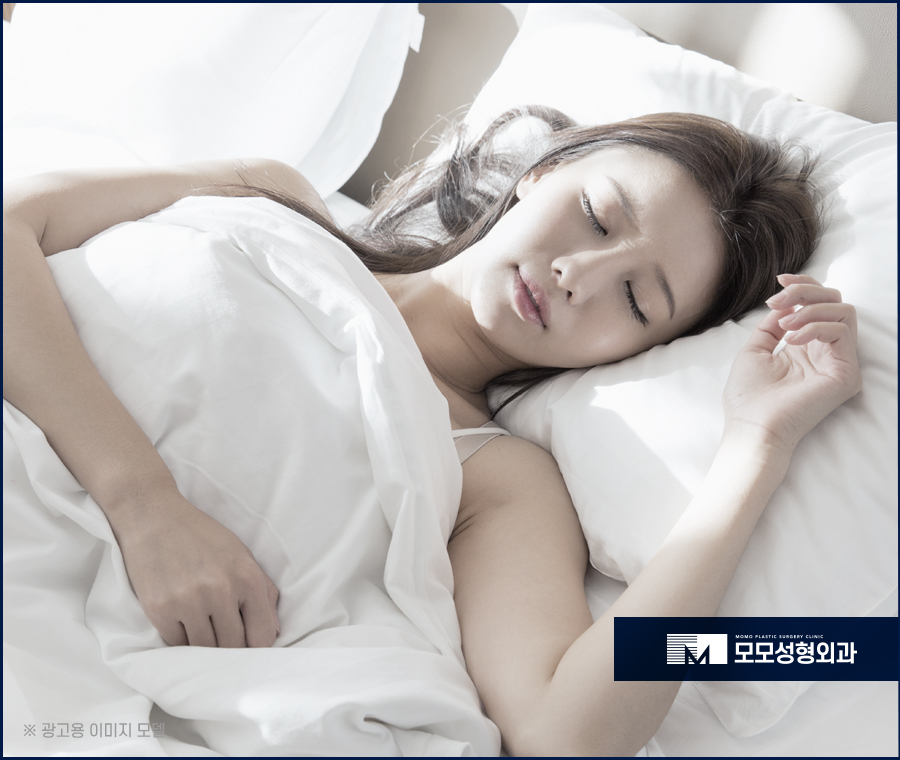
It can also help to get enough sleep. Ultraviolet
rays can accelerate aging and damage to pores
and the scalp, and if styling products applied to
the hair melt under UV exposure and remain on
the scalp, they can harm hair health, so it is best
to avoid UV exposure. Learn and follow the proper
way to wash your hair, and maintaining a healthy
diet that helps with prevention can also be a way
to improve the condition.
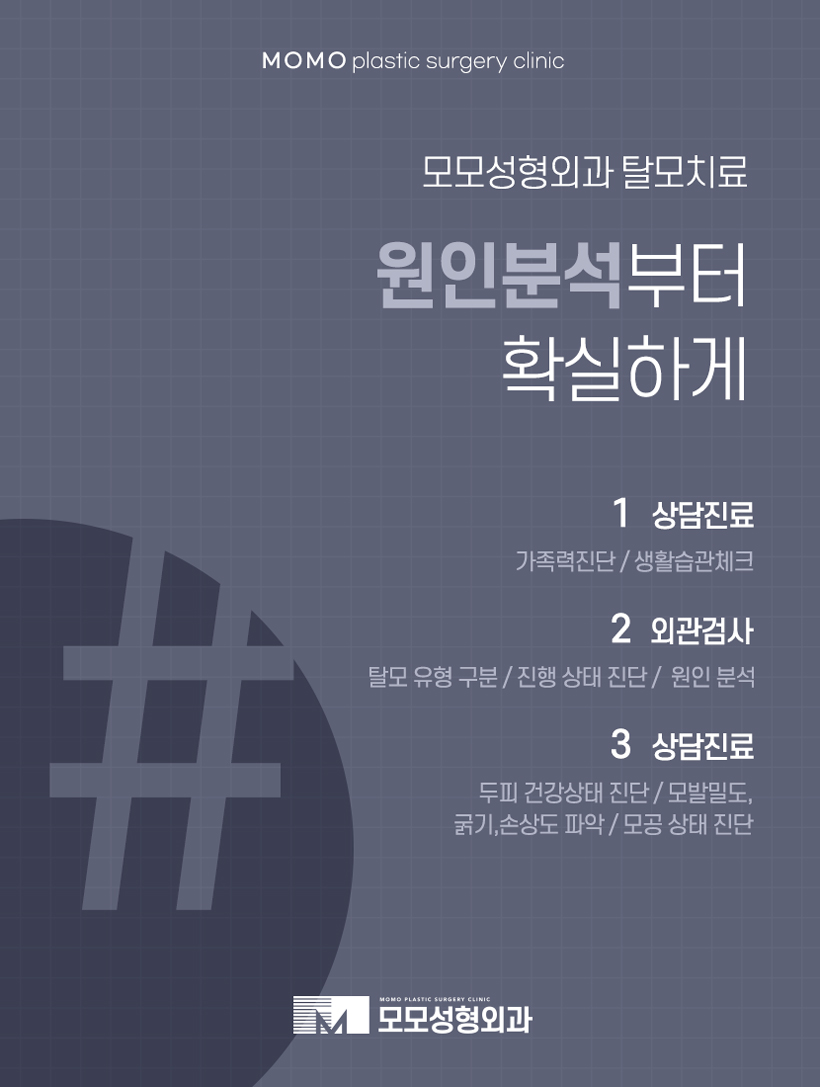
In addition, seeking medical care by finding the
right treatment method according to individual
characteristics can also be helpful. Depending on
the situation, treatment can be provided by
prescribing oral medications and topical medications,
and if the condition is severe, choosing surgery
can also be considered an improvement option.