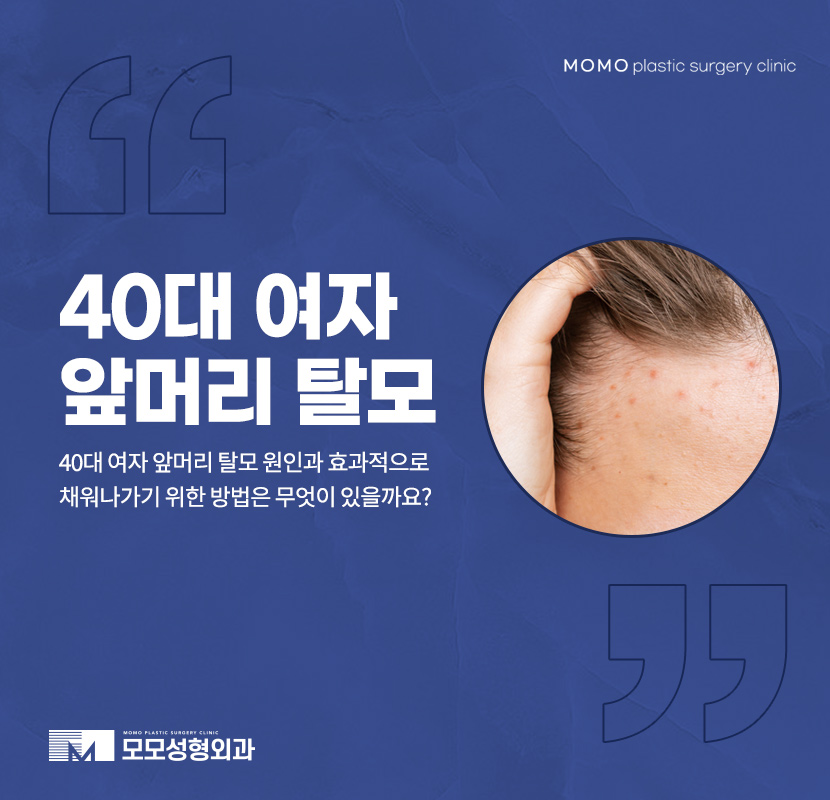
Compared to men, women can try a much wider variety
of hairstyles and designs. Depending on the styling
concept they pursue, they can create all kinds of
looks. For those who place great importance on hair
style, the boundary between the forehead and natural
hair is often something they pay close attention to.
However, if this line is sparse and uneven, or if the
hair is so thin that it cannot be worn down, or if the
forehead appears too wide because of an M-shaped
pattern in which the sides recede upward due to hair
loss, then it can be difficult to create styles that
sweep the hair back, and this can become a major
concern.

In some cases, the number of people suffering from
severe stress continues to rise. In particular, the age
groups experiencing this condition that causes loss of
natural hair include not only middle-aged adults but
also people in their 20s and 30s, and it is said that the
number of people visiting related clinics due to hair
loss symptoms occurring in various areas such as
frontal hair loss in women in their 40s or the crown
continues to increase year after year.
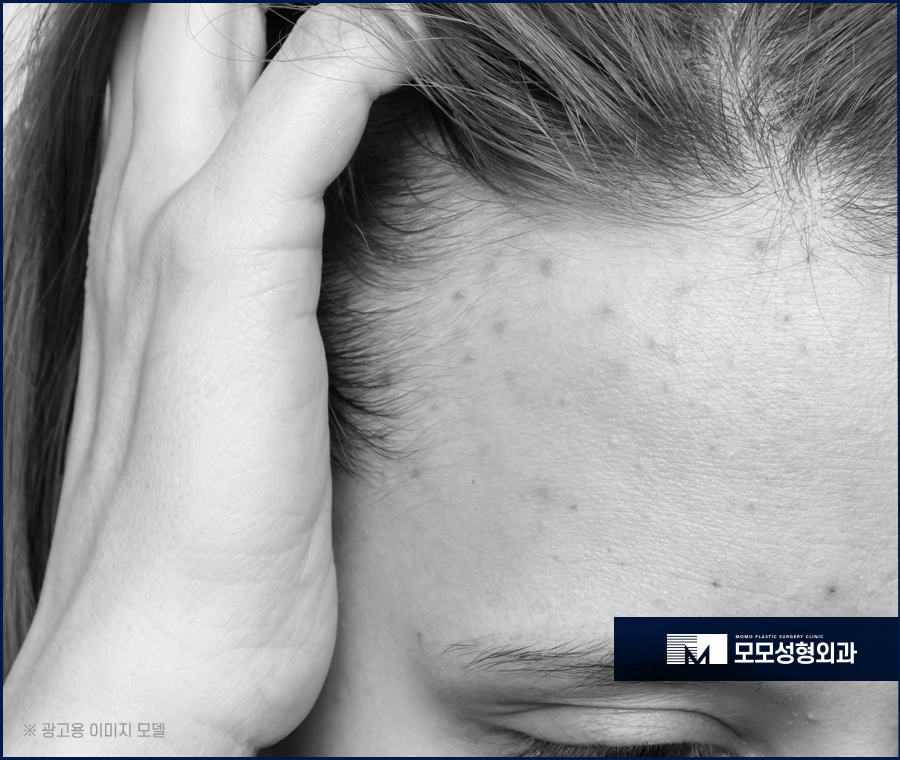
According to data released by the National Health
Insurance Service, as of 2020, the number of hair loss
patients had increased by about 10% compared to four
years earlier, and currently about 10 million people are
said to be struggling with a condition that causes hair
loss. Therefore, rather than simply attributing this to
genetic factors, it can also be seen as something that
may occur due to continuous exposure to environmental
factors arising from outside.
Living through busy work schedules and studies, with
an irregular lifestyle and eating habits that fail to stay
balanced, stress from various situations, excessive
smoking and drinking, and, for women, hormonal
changes triggered by pregnancy, childbirth, menopause,
and the climacteric, can also lead to hair loss.
If you think this applies to you, or if you are worried
about frontal hair loss in your 40s, the affected area is
right in front and immediately visible to yourself and to
others. So many people try to cover the sparse, thin
areas as much as possible by using wigs or specialized
makeup products, or by wearing fashion items such as
hats to keep it hidden as much as possible. However, it
is true that using these methods consistently is
inconvenient, and it is also difficult to bring about a
clear improvement.
Perhaps for this reason, these days many people who are
worried about frontal hair loss in their 40s visit clinics
to ask whether there is a way to improve it. Among the
options they prefer and take interest in most is hair
transplantation tailored to their face shape, head shape,
and image, which can produce a natural-looking hairline
from any angle.

However, because the faces of women with frontal hair
loss in their 40s have more curves than men’s faces, the
design process tends to be more complicated. Since the
hair is also relatively delicate and must be handled with
care, the level of difficulty is high. Therefore, rather
than aiming for an overly dense result, it is better to
create a natural density by controlling the balance.
Human hair may grow from follicles as single hairs or
multiple hairs, and there are also follicles with very fine
thickness. By actively using these characteristics, along
with the direction, thickness, and fine-hair follicles of
the existing natural hair, it is better to proceed as if
painting a gradient: planting finer hairs in the front to
create a wispy-hair effect, and placing stronger terminal
hairs further inward so that they connect naturally with
the original hair.
In addition, to properly reinforce frontal hair loss in
women in their 40s, it is important that the design be
based on three-dimensional modeling. First of all, the
proportions of the face should be considered first, and
the eyes, nose, and other facial features, as well as the
forehead—especially the temples and sideburn areas,
which are part of the sides—must be carefully included
in terms of proportions and angles. After systematically
structuring the design plan like this, the surgical method
can be selected according to each person’s symptoms and
current condition. Depending on whether an incision is
made or not, it can broadly be divided into incision and
non-incision methods, and this may also vary depending
on the amount of hair that needs to be transplanted.
Briefly explained, in the case of the incision method, a
section of scalp is removed from the occipital area,
which contains healthy follicles relatively unaffected by
hair loss, and then separated to obtain follicles. The
non-incision method is similar in the area from which the
follicles are collected, but unlike the incision method,
it does not involve removing a section of the scalp. It is
a process in which the doctor directly harvests the
necessary follicles one by one using tools such as a hair
implantation device.
Because each method has clear differences, it is best to
proceed with the one that is suitable for you together
with the doctor. To move away from frontal hair loss in
women in their 40s, it is most important to carefully
consider the above criteria, receive a detailed
consultation and diagnosis about your symptoms and
condition from a doctor who has extensive experience in
a wide range of cases over many years, and who has
rich skill, expertise, technique, and know-how, and then
decide on the procedure.