Hair loss, which has recently been occurring in many people,
refers to a symptom in which a larger-than-normal amount of
hair falls out, leaving the hair thinner,
the scalp exposed, and various areas looking
empty.

At this point, rather than dismissing it as a natural
phenomenon simply related to aging, it seems more appropriate to
recognize it as a condition, and for treatment,
it is important to understand that an approach or solution
suitable for one’s symptoms and condition
should be applied.
In the past, it was widely believed to be a problem that mainly
occurred only in middle-aged and older men, but now the causes
that trigger it are becoming more diverse, and as a result,
the age groups who experience it directly are gradually
getting younger.
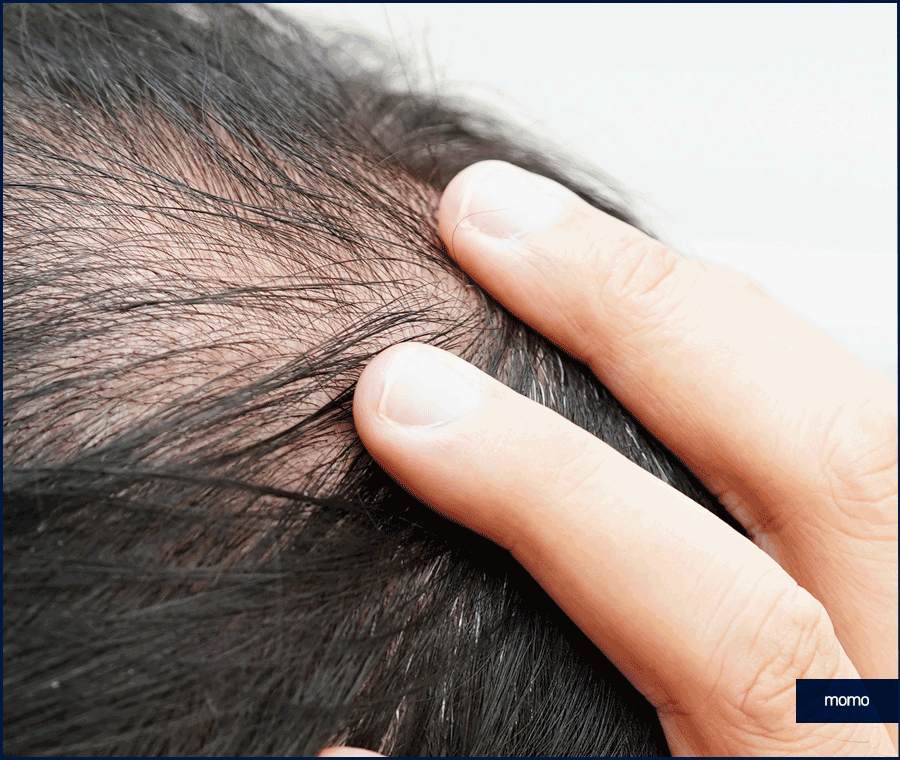
In addition, anyone can experience this problem,
regardless of gender. This is because it is known to occur as
multiple acquired or environmental factors work together,
including not only innate genetic predisposition but also
hormonal changes, stress,
irregular lifestyle patterns, and eating habits.
For this reason, it is advisable to take an interest in the health
of the scalp and hair in daily life and continue careful management.
The power of hairstyles that can be created through various color
dyes, different perm and cut techniques, and other styling methods
is also closely related to appearance. If you design a style that suits you
best, it can create a favorable impression and image,
and it can also become a way to express your own individuality
and charm to the fullest. Because of this, if a flaw develops in this area,
it can reduce confidence and intensify complexes and stress,
so there is 충분히 the possibility that it may even develop into a psychological issue.
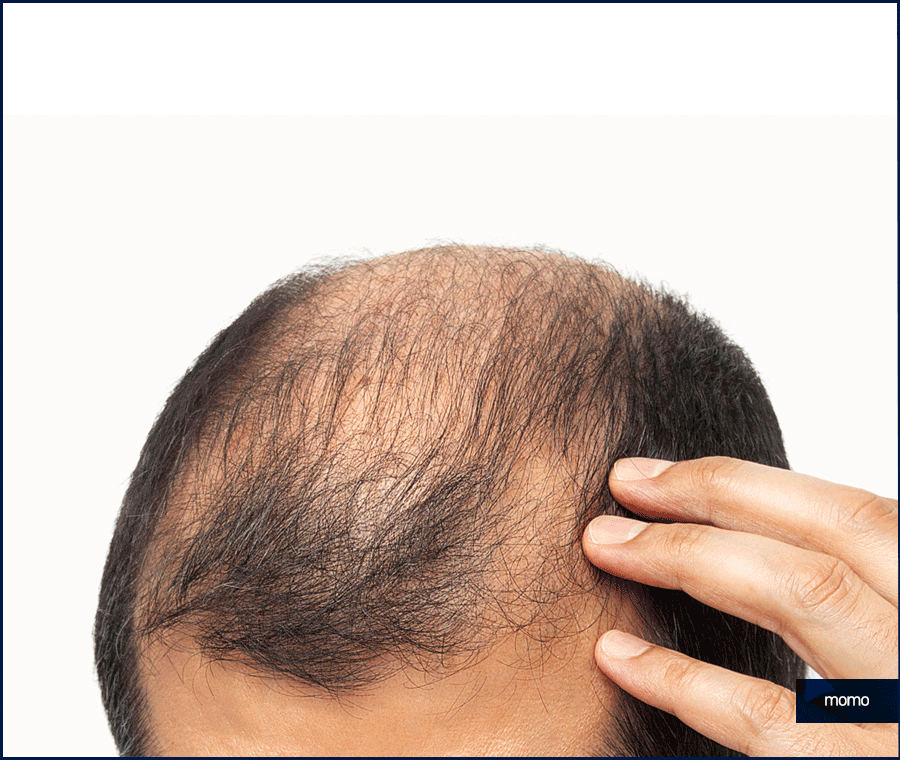
As such, these days there is growing interest in
hair loss symptoms and efforts to find solutions
that can improve them, which is why related therapies and transplant
solutions that can be approached from a medical direction are
receiving attention.
Among them, treatment through medication can be used regardless of
age, and especially if started right away at the initial stage,
it is known to be effective in managing the condition,
so it is a method that more and more people are turning to.

However, whatever the treatment, it is important to clearly understand
and consistently follow the related hair loss medication timing
and precautions.
In a way, it may seem simple, but among those pursuing this method to recover
from hair shedding, there are cases where people wonder when they should take
the hair loss medication.
So in this post, along with related information,
we will share the precautions you should know.
For the medications that can be used for full-scale treatment, there are various types,
but this does not mean you should choose just anything and take it however you want.
You must visit a related medical institution and, through a detailed consultation with a doctor,
choose the product that is appropriate for you.
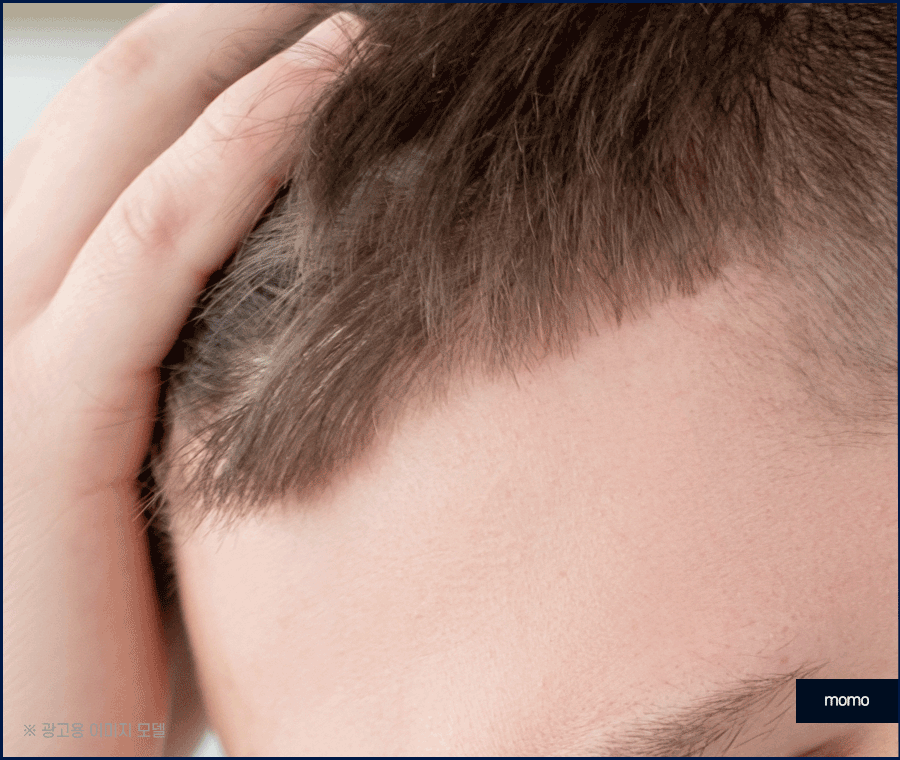
Therefore, the first priority should be to look into the various products used for hair loss.
Finasteride is a medication that suppresses the male hormone androgen, and it is commonly used for those
experiencing the crown type or male-pattern condition,
and it is said that it cannot be used by women.
And dutasteride, used to improve the M-shaped hairline and crown type,
is known to suppress the male hormone DHT more strongly than the product mentioned above.
At this point, you may worry that the stronger the effect, the higher the chance of side effects.
Although the occurrence rate of dutasteride is numerically a little higher,
overall its side effects are considered to be relatively few, so it is advisable to accept that choosing dutasteride for treatment does not make it dangerous.
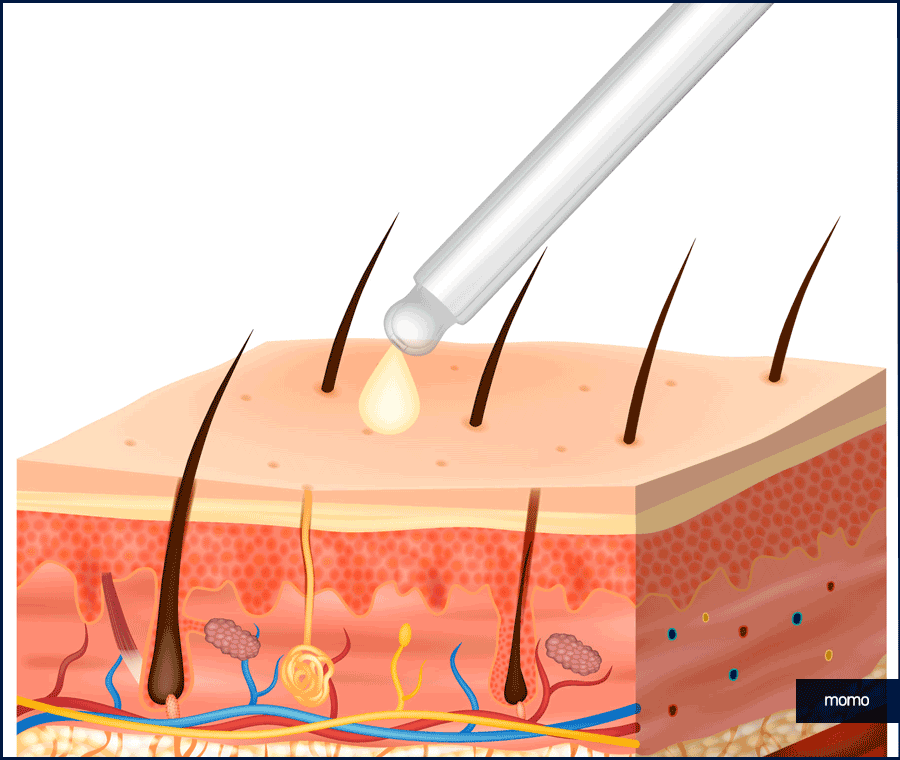
There is also topical minoxidil, which acts on hair follicles,
reduces the resting phase, extends the growth phase of the hair,
and increases thickness.
In addition, depending on the individual, there are cases where the sulfotransferase enzyme present in the hair follicles is insufficient.
In that case, it may be difficult to fully expect the effect of topical minoxidil,
so low-dose oral minoxidil can be tried.
Because each product has its own unique characteristics,
it is even more important to be aware of the exact hair loss medication timing and precautions that must be followed and to stick to them.

What is the timing and importance of taking it?
For finasteride, the recommended hair loss medication timing is once a day, generally in the morning or after meals, and when using dutasteride, the appropriate schedule is also once a day, preferably at a fixed time.
By keeping to an exact time, the concentration of the drug in the body can remain stable, allowing you to expect positive effects.
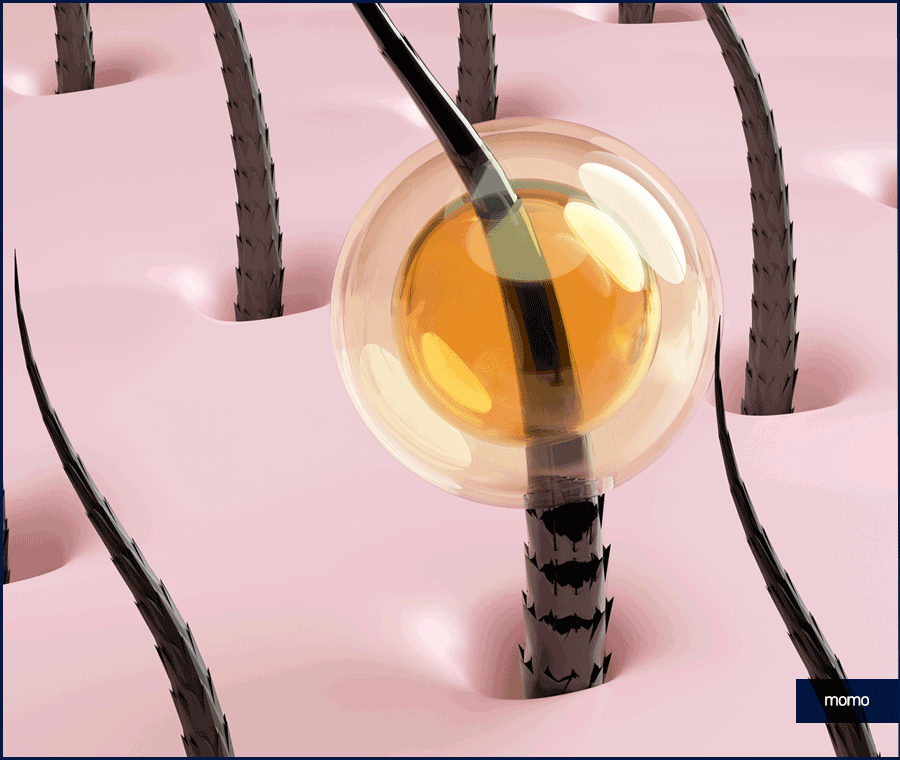
Minoxidil is usually best applied directly to the scalp twice a day, in the morning and evening. Of course, hair loss medication can be taken in the morning, afternoon, or evening without any problem,
Based on finasteride, it is said to remain in the body for about a month, and in the case of dutasteride, about six months.
So for those who have been taking it steadily for a long time, there is no need to worry even if the hair loss medication timing schedule is a little late, but since it should be taken every day if possible, it is important to build the habit of taking it at a relatively consistent time.

What are the precautions?
However, the difference between before and after meals can vary a little.
Finasteride is a small tablet that can be taken regardless of whether it is before or after meals, without causing heartburn symptoms.
But among those managing their condition with dutasteride, there are occasional cases of stomach pain or indigestion.
This is because it is a soft capsule and slightly larger in size, so it is advisable to take this product 30 minutes after a meal.
Although the rate of experiencing this symptom is about 3%, if the discomfort continues and you want to get rid of this feeling,
switching to a tablet-form product can be one tip.
In addition, in general, this method must be taken consistently for more than three months to see its effects.
This is because it takes a certain amount of time for the drug to lower DHT levels in the body. Therefore, patience and continuous effort to keep using it are needed, and while the effect may continue during use, it is advisable to think that it will mostly disappear one to six months after stopping.
Therefore, to obtain long-term benefits, it is better to keep taking it for as long as possible.
Also, taking medication does not suddenly make a lot of hair grow; rather, it should be understood as helping prevent the condition from progressing further and improving the thickness of existing hair.
If the effect seems minimal, the person should avoid arbitrarily stopping the solution or discontinuing it.
In that case, it is advisable to consult the doctor in charge, discuss the medication or dosage in detail, and then make a decision.