A key point and factor that can determine the image and impression shown to others, as well as to yourself, exists in many parts of the body, but one of the first things that comes to mind is hairstyle.
If you create a style that encompasses the face and facial features as a whole, you can maximize your appearance-related qualities, and in everyday life, as well as in social settings and interpersonal relationships, it can help leave a positive, appealing, and neat impression.
To maintain and care for such styling, it will likely need to be based on hair that is glossy and elastic, along with abundant volume.
If your hair lacks strength overall, or if a large amount falls out without you doing anything in particular, to the point where the scalp becomes visible, you may worry that you have been exposed to a condition, and it can become a major source of distress.
In particular, if these symptoms occur around the forehead and crown, it would be even harder to hide your anxiety.
That is because when you are carrying out work or facing situations where you have to meet people, your confidence in your appearance drops significantly, which can make you avoid meeting others and experience excessive stress. In severe cases, this may be accompanied by psychological issues such as depression or social avoidance.
Therefore, many people try various methods such as functional shampoos, supplements, and wigs in an effort to overcome female parting hair loss in their own way, but because the effects are less than expected, they fall into deeper worry and go through difficult times. As a result, more and more people are visiting relevant medical institutions for consultation and diagnosis, then taking active measures in search of a clearer solution.
What kind of symptom is it?
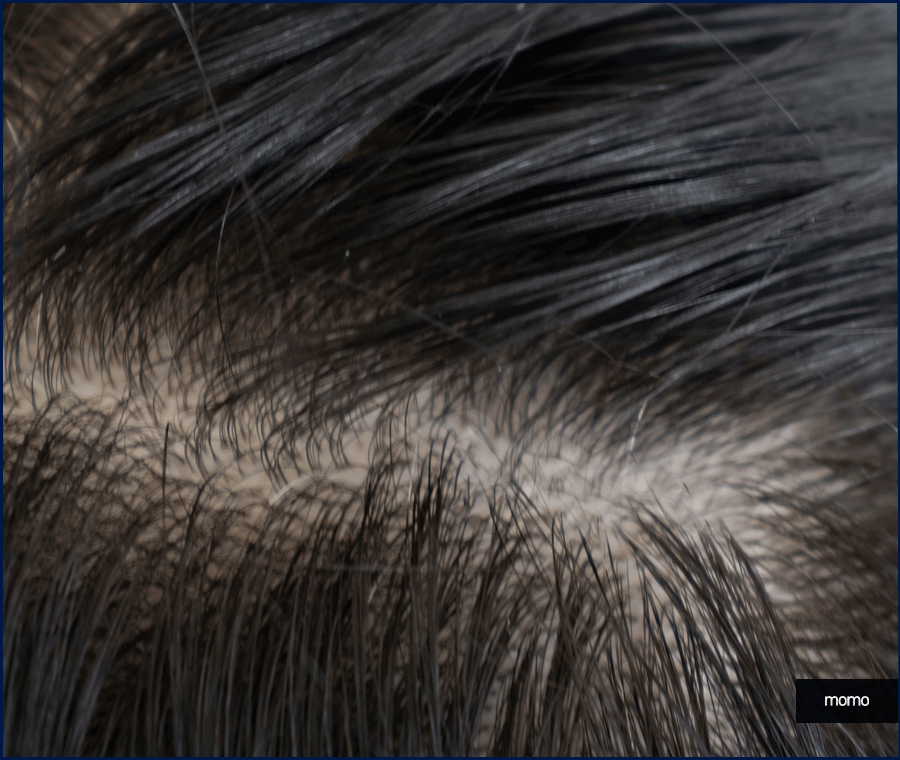
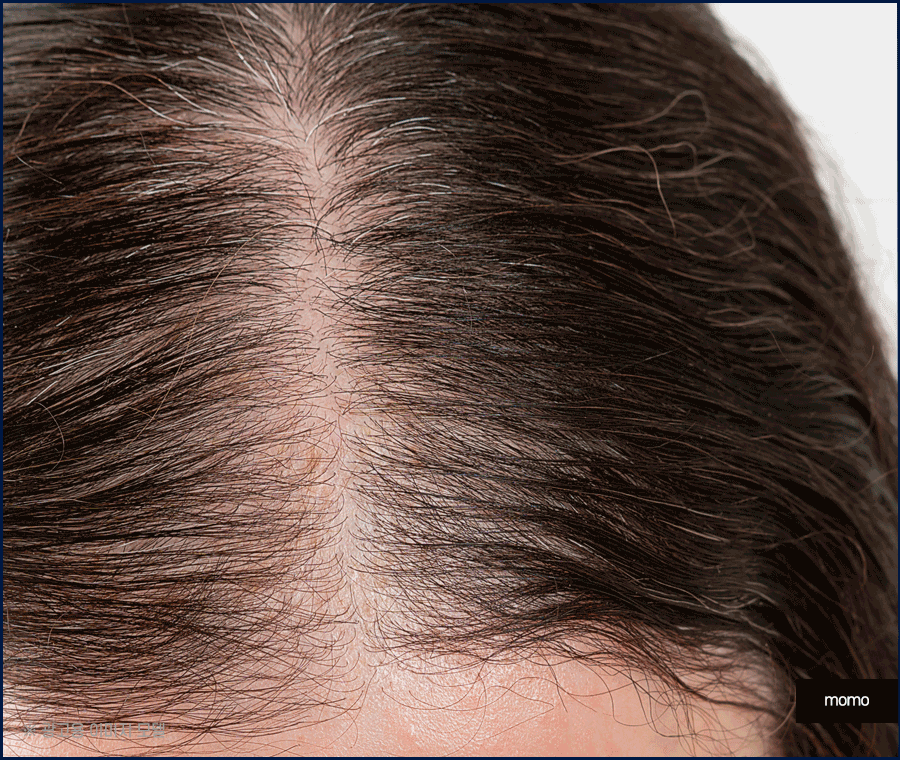
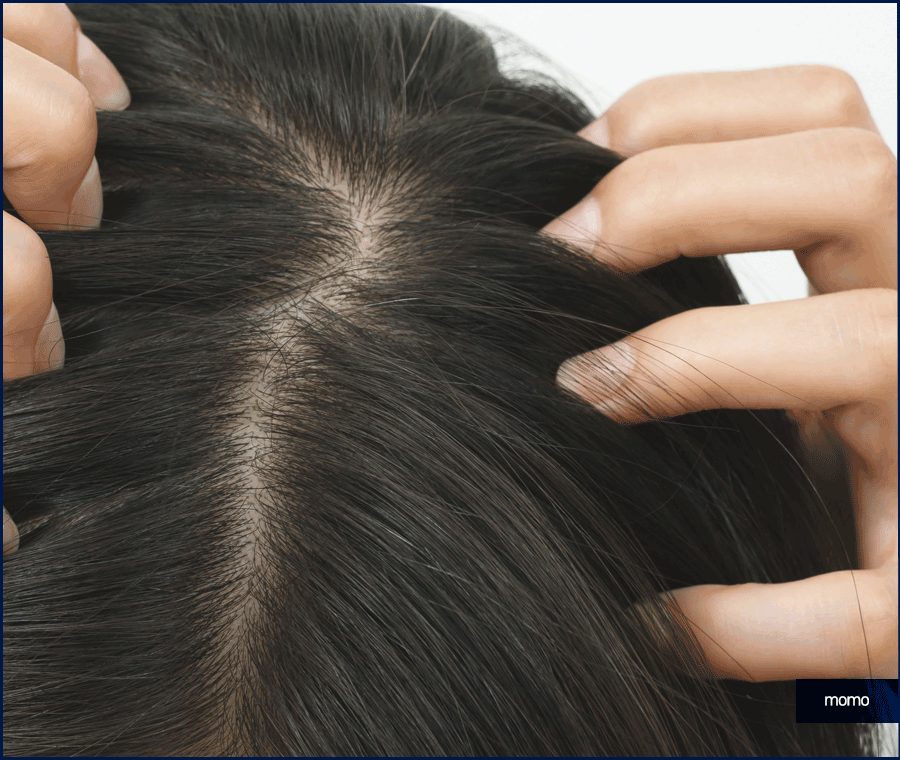
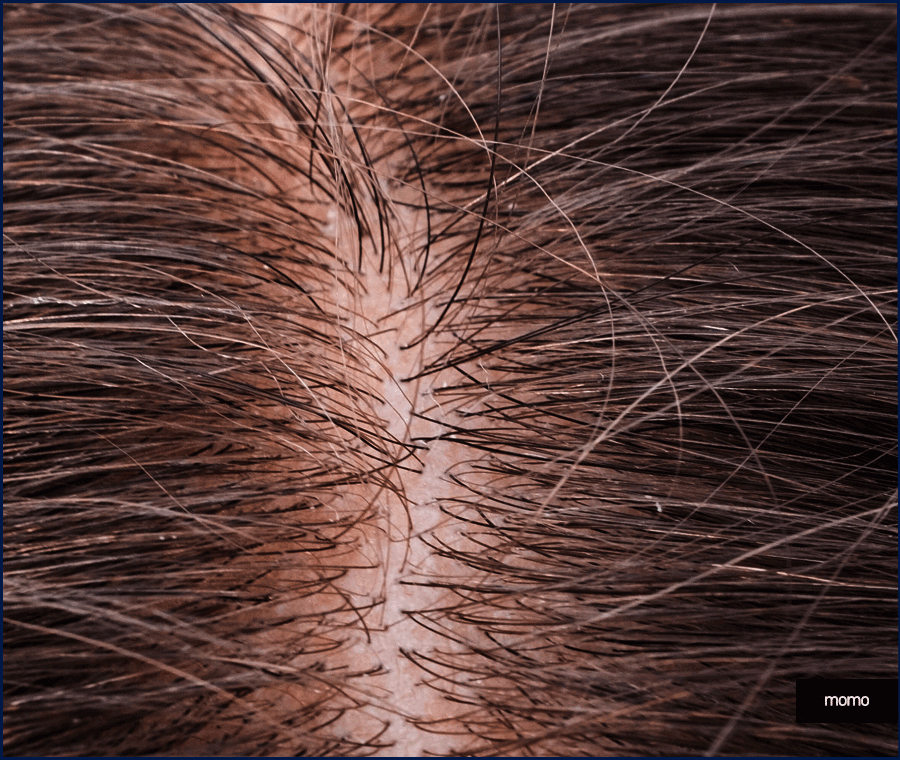
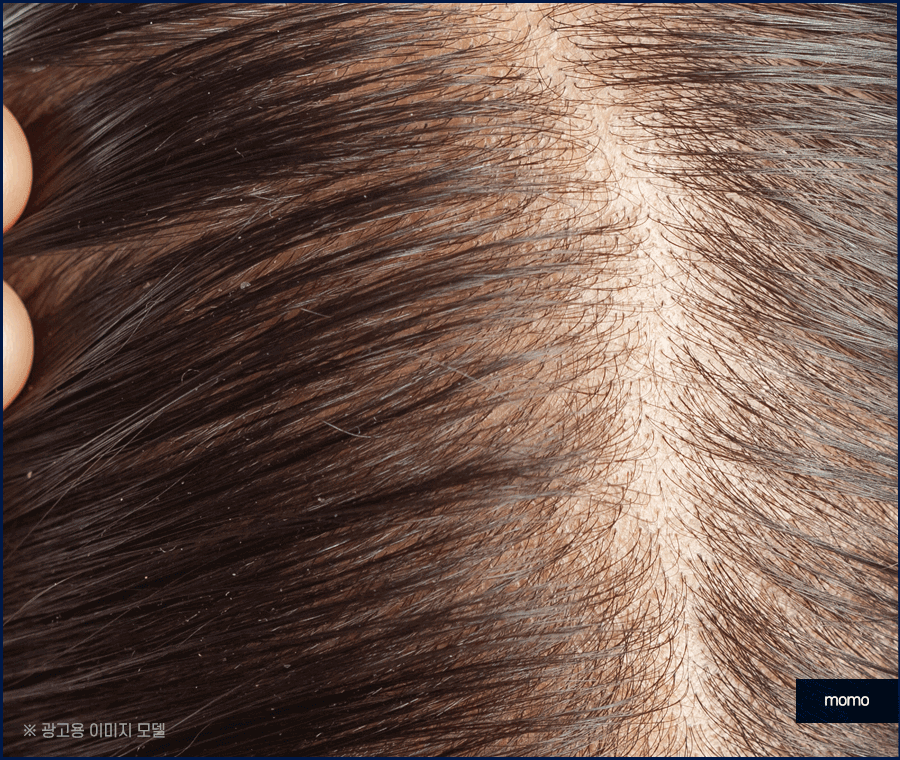
Female parting hair loss refers to a condition in which, when the hair is divided to both sides from the forehead to the crown, the hair on both sides gradually becomes thinner and the distribution and density decrease along the line created by the part.
If this type of shedding progresses further, the area with reduced hair volume can expand and develop into a state where the scalp shows through white.
Female parting hair loss is also one of the commonly mentioned types of female-pattern conditions.
The hairline tends to be relatively preserved, but hair loss occurs including the crown, and the hair falls out in a pattern that resembles a Christmas tree, which makes it stand out early on.
What causes the condition?
Then what causes this type of symptom to appear?
Although it has not yet been clearly identified, it is known to result from various factors, and the representative causes can be said to be family history inherited from birth and genetic predisposition.
In fact, when looking at the families of people experiencing the related condition, it was confirmed that about 50% of family members were experiencing the same symptoms. In addition, acquired factors such as stress, which is often called the root of all diseases, unbalanced eating habits and lifestyle patterns, hormonal changes, and extreme dieting can also trigger female parting hair loss, and these may become major culprits that worsen hair shedding.
Therefore, if you suspect this symptom, it is advisable to visit a relevant clinic immediately and undergo a detailed consultation and examination after carefully reviewing your symptoms, condition, and type. Through that process, you should seek a solution that can help overcome female parting hair loss.

What method can help?
The appropriate method that can clearly fill in the reduced hair volume is considered to be hair transplantation, which can be divided into incision and non-incision methods depending on how the follicles are obtained and whether an incision is made.
To briefly explain how each method is performed: in the incision method, a certain section of scalp is removed from the occipital area, which has been less affected by hair loss, the follicles within that area are harvested, and then transplanted to the area of concern. The non-incision method, as the name suggests, does not involve removing a section of scalp; instead, follicles are selectively extracted and implanted using tools.
It is difficult to say that one method is definitively better or worse than the other. What matters is carefully examining each person’s condition and hair characteristics in detail and choosing the method that can lead to a more positive result.
Criteria to check during the procedure
In addition, if you are considering hair transplantation to address female parting hair loss, it is advisable to look into the criteria that must be checked carefully.
First, since the area of concern is clearly visible from the front, it is very important to proceed with a balanced and delicate density rather than focusing only on a thick, dense appearance, so that it can later be completed with a natural harmony as if it were the original hairstyle.
Also, only by planning a personalized design that incorporates aesthetic elements in a well-balanced way can a harmonious result be achieved.
By thoroughly analyzing your face shape and the proportions of your facial features, ideal angles from the front and side, the hair’s unique growth direction and flow, thickness, density, and more, and by communicating smoothly so that the design matches the case’s needs, then proceeding with the appropriate method, you can expect a more satisfying outcome that aligns with your expectations.

It is also a good idea to check whether the physician who performs and oversees the overall hair transplantation solution has sufficient experiential data and capability for this type of case, and whether they possess the detailed sense and aesthetic judgment needed to satisfy the aesthetic elements that feel lacking.
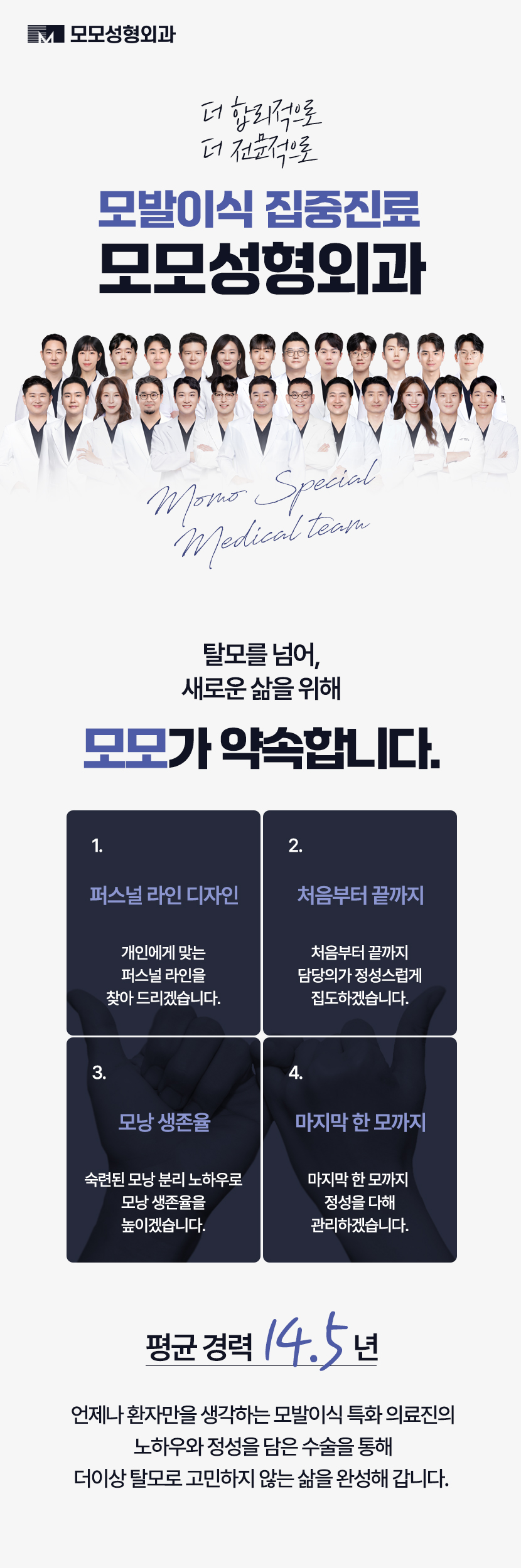
You should carefully consider and decide after thoroughly checking specific system conditions, such as whether they have excellent skill, technique, and know-how derived from that experience, and whether they provide close care through follow-up checks and post-procedure management to ensure the transplanted follicles are stably taking root.