
Hello, this is Obje Plastic Surgery.
At times like the changing seasons, when you can feel the temperature difference between day and night, many people suffer from nasal congestion, right?
If you have usually had symptoms such as a runny nose, nasal congestion, or headaches, you may think of them as common rhinitis symptoms. However, if these symptoms become more severe or do not improve, you should check whether there is a problem inside the nose.
This is because if you have experienced a blow to the nose due to trauma, or if you have had a nasal condition before, the inside of the nose may become deformed, or a problem with the internal nasal structure may cause nasal congestion.
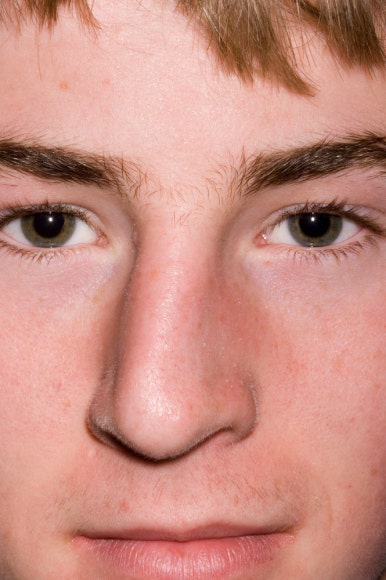
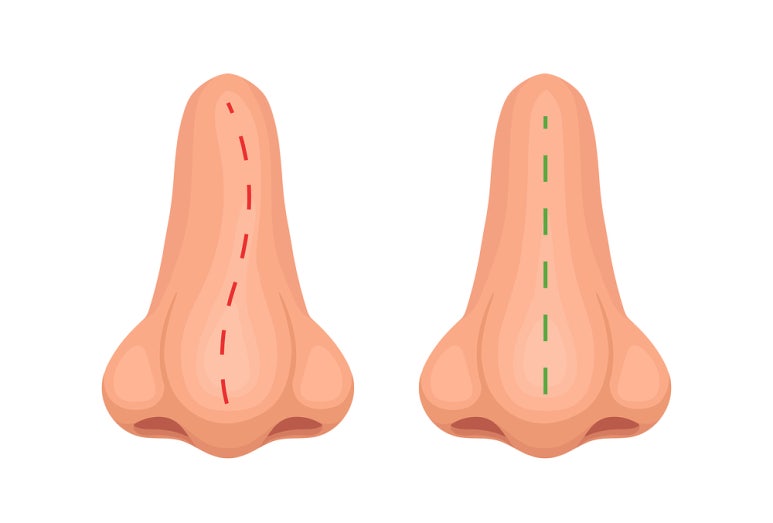
The topic prepared for this post is "How to Resolve Nasal Congestion with Rhinoplasty."
There are roughly three representative causes of nasal congestion symptoms such as rhinitis.
Crooked nose
This refers to a condition in which the nose appears crooked due to a congenital cause or trauma. A crooked nose can cause nasal congestion. In this case, correction is possible through surgery to straighten the nose and septum, and it can also be applied when the implant becomes crooked after rhinoplasty.
▶ If the degree of deviation is not severe, correction is possible through a procedure that shaves only the protruding part without performing osteotomy, along with augmentation to address the sunken area. Cartilage grafts, dermal-fat grafts, or implants are commonly used.
However, if the degree of deviation is severe, the protruding cartilage and bone must be removed, and a procedure may be performed in which the nasal bones are osteotomized laterally and moved into the correct direction before being brought together.
Inferior turbinate hypertrophy
This refers to a symptom in which the inferior turbinate swells and becomes enlarged. The role of the inferior turbinate is to regulate the temperature and humidity of the air supplied to the lungs, but when it becomes enlarged due to rhinitis, hypertrophic rhinitis, a deviated septum, and so on, nasal congestion symptoms can occur. In such cases, improvement is possible through submucous inferior turbinate resection.
▶ In the case of submucous inferior turbinate resection, both structural nasal issues and the external appearance must be checked. Depending on the patient, the cause is identified and the procedure is carried out accordingly. If symptoms such as nasal congestion, runny nose, and sneezing occur frequently, part of the mucosa is preserved, the turbinate bone is resected, and then the area is covered with mucosa to improve the related symptoms.


Deviated septum
The septum is like a wall that divides the nostrils into two, and when it is twisted or bent, it is called a deviated septum. In this case, various symptoms can appear, such as nasal congestion, difficulty breathing, reduced sense of smell, and sleep disturbances. Not only is airflow inside the nose not smooth, but it can also irritate the inferior turbinates, causing inferior turbinate hypertrophy, and it can be a cause of rhinitis and worsening rhinitis symptoms.
▶ Surgery to correct a deviated septum is considered a fundamental treatment because it addresses problems caused by the structural issues of the nose.
Before surgery, it is of course necessary to check for other nasal diseases, and after accurately understanding the condition of the septum, a surgical plan should be established accordingly. Because the causes are often complex, the condition inside the nose must be accurately checked through an endoscope, and the degree of septal deviation must also be precisely identified.
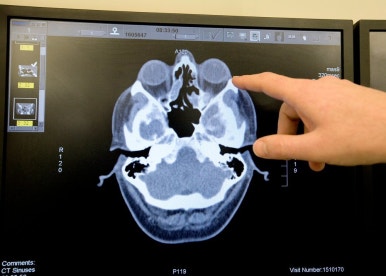
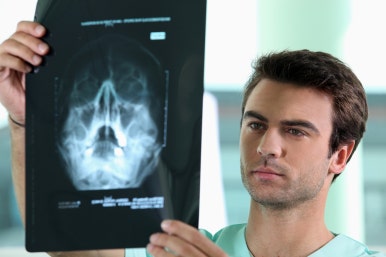
Rhinoplasty for nasal congestion must be tailored to each individual patient by applying the optimal treatment method based on extensive clinical cases as well as skilled experience. In the case of a plastic surgery specialist, customized treatment is carried out with consideration not only for functional aspects but also for aesthetic aspects, leading to results that can provide the patient with the highest level of satisfaction, and post-treatment care is also thoroughly checked afterward.
Now, meet Obje.
■ Profile of the director of Obje Plastic Surgery
■ Information on available consultation times and directions