
Hello. This is Objet Plastic Surgery.
The eyes are a very important factor in determining a person's first impression.
If the under-eye area looks dark, you may unintentionally hear things like, 'You look tired,' 'You look sick,' or 'Is something wrong?'
The person who says this may be trying to show concern, but from the listener's perspective, hearing it repeatedly can become stressful. In this post, we will look at the difference between lower eye fat repositioning and lower blepharoplasty.
The area with the thinnest skin: around the eyes
One of the areas of our body with the thinnest skin is the area around the eyes.
Because the skin around the eyes is thin and delicate, signs of aging such as sagging and wrinkles appear faster than in other areas, and once wrinkles form, they stand out the most.
Since many people tend to look at their eyes first when looking in the mirror, it is hard not to be bothered if the under-eye area is sagging and bulging.
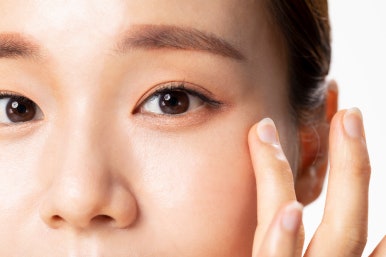

A sagging and bulging under-eye shape can make you look older than your actual age, and it can also give a tired and dark impression, so many people feel uncomfortable in social situations and want to improve it.
The procedures most often asked about during consultations are lower eye fat repositioning and lower blepharoplasty. However, many patients do not know the exact difference between these two procedures and often feel unsure about which one to choose.
Let's take a look at that now.
Lower Eye Fat Repositioning vs. Lower Blepharoplasty
To understand the difference between these two, it is helpful to first understand the structure beneath the eyes.
In the under-eye area, the skin is located on the outermost layer, with muscle beneath it.
Below the muscle is the orbital septum, and the innermost layer is the fat.
The main reason the under-eye area sags is that the orbital septum tissue supporting the fat becomes loosened. As this tissue loosens, the fat that was being supported is pushed downward, inevitably causing the under-eye area to bulge. Therefore, to fundamentally improve this symptom, the orbital septum tissue must be restored so it can function properly again.
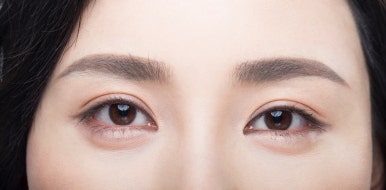
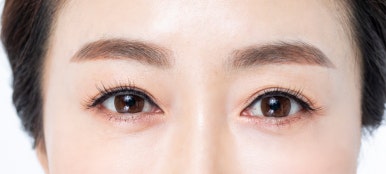
Lower Eye Fat Repositioning
The innermost fat layer and the orbital septum are manipulated through a conjunctival incision.
Lower Blepharoplasty
This is a surgery that manipulates the skin, muscle, orbital septum, and fat all together.
Looking at the scope of the surgery, lower blepharoplasty can be seen as a procedure that fundamentally includes lower eye fat repositioning.
Lower Eye Fat Repositioning vs. Lower Blepharoplasty
Who is each procedure suitable for?
Lower Eye Fat Repositioning
For cases where there are no under-eye wrinkles, but excess fat is protruding and causing concern.
This mostly applies to younger people. In younger patients, muscle and skin elasticity are often still maintained, so the under-eye area can be neatly improved through lower eye fat repositioning via the conjunctiva without a skin incision.
There is no scar, and the recovery period is short.
Lower Blepharoplasty
For cases where skin elasticity has decreased, and both under-eye wrinkles and protruding under-eye fat are concerns.
This can be seen as a method that improves the sagging skin and the muscle together.
There is a recovery period, and by proceeding with a minimal incision, it can minimize scarring while correcting sagging under-eye skin and providing a more youthful effect.
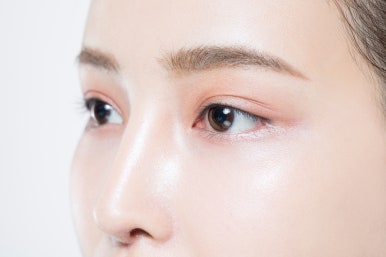

※ However, the need for lower eye fat repositioning or lower blepharoplasty may vary from person to person, so you should make a surgical plan through an accurate consultation with medical staff.
What about me?
Lower Eye Fat Repositioning or Lower Blepharoplasty
Self-Test
There are tests that can help you figure out which procedure is more suitable for you.
They are the snapback test and the distraction test.
Snapback Test
This is a method of testing how much time passes before the area returns to its original state after pulling down the skin below the eyes and letting go.
Usually, it returns immediately, but if skin elasticity is significantly reduced, when you pull and release the area under the eyes,
it takes about 1 to 2 seconds. In this case, there may be limits to achieving results with lower eye fat repositioning alone.
Distraction Test
This is a test method that checks the length of stretched skin when the under-eye skin is pulled forward.
If the stretched length is 6 to 8 mm or more, it can be judged that elasticity has decreased. In this case, lower blepharoplasty may be more necessary than lower eye fat repositioning.
The difference between lower eye fat repositioning and lower blepharoplasty lies in which area is manipulated, so
if muscle sagging and skin sagging are not severe, people in their 20s and 30s may need
lower eye fat repositioning,
while those in their 50s and older may need
lower blepharoplasty.
However, this is not necessarily determined by age, but by the degree of skin elasticity. Therefore,
even if you are young, lower blepharoplasty may be necessary if the elasticity of the under-eye skin or muscle has decreased.


The best approach is to make the decision after 충분히 consulting before surgery.
■ Time to meet the director of Objet Plastic Surgery in Gangnam~ Make a reservation