Hello,
Smart plastic surgery, smart doctor.
I’m Director Kim Hyun-jo of Objet Plastic Surgery.
Today, I’d like to talk about fat grafting.
Q1
What is “fat grafting”?
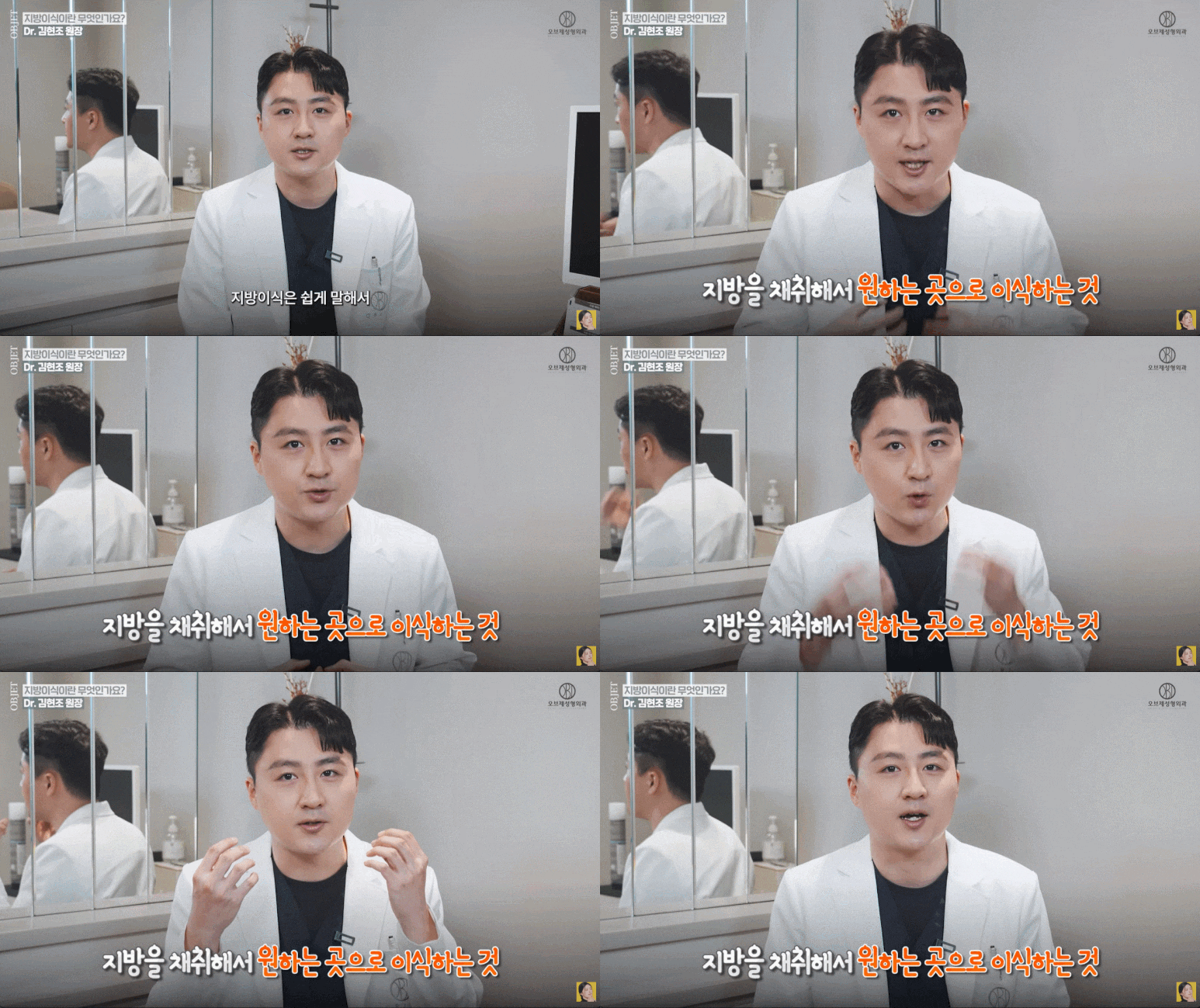
Fat grafting simply means
harvesting fat from your own body
and transplanting it to the area you want.
It is also called autologous fat grafting,
and it is a very common procedure
in plastic surgery.
When doing fat grafting in Gangnam,
if 100 units of your own fat are harvested
and 100 units are transplanted to the desired area,
it does not mean that all 100 units
will survive and become part of your body.
Because your own fat is transplanted rather than an external substance,
there is no foreign-body reaction,
but some of it is naturally absorbed and disappears.
The remaining fat that survives is described as having “taken root,”
and this rooted fat is gradually supplied with blood
as blood vessels naturally grow in from the surrounding tissue,
so you can think of it as becoming part of your own body.
The degree to which the transplanted fat has taken root
is called the survival rate,
and this can vary from person to person
and also depending on the area being transplanted.

Q2
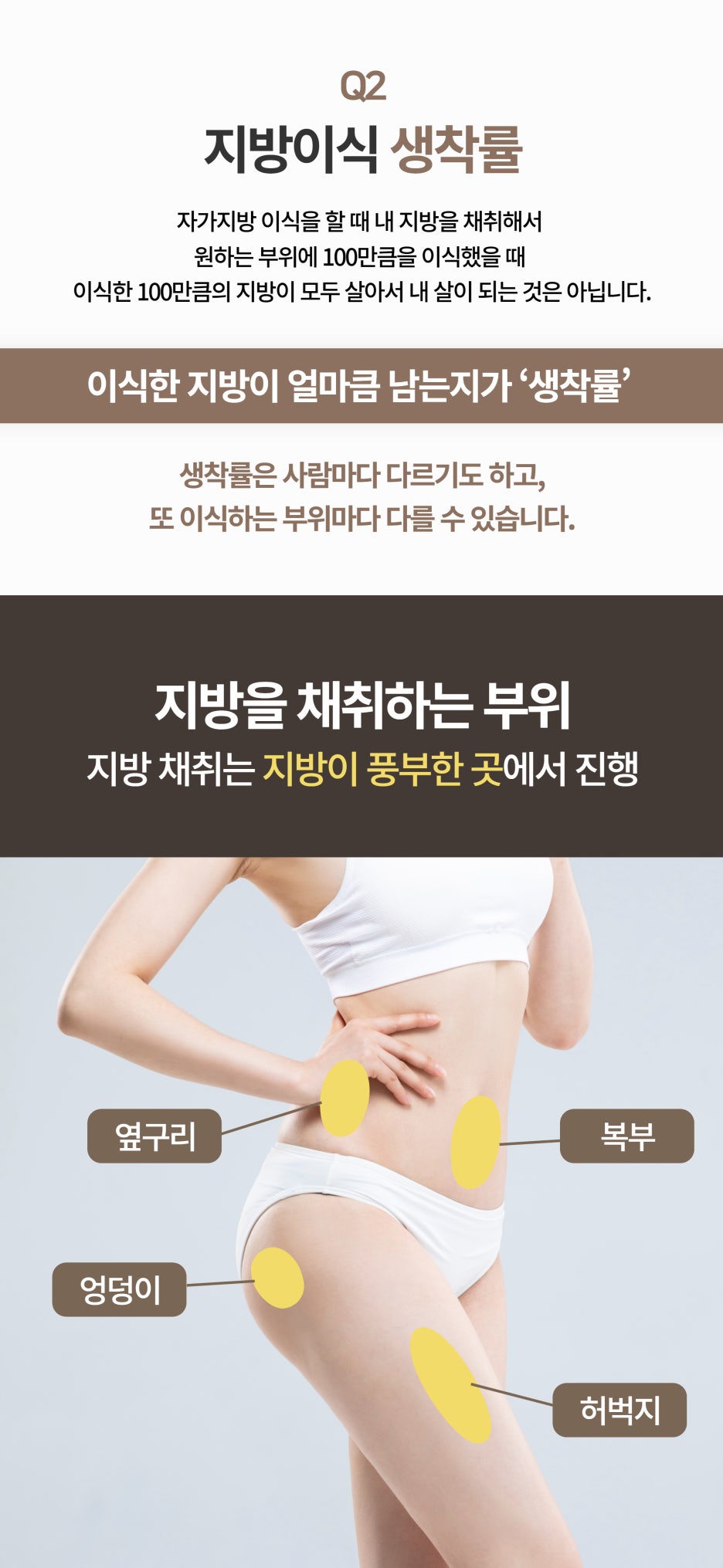
Where is the fat harvested from?
Fat harvesting is performed
in areas where there is abundant fat.
It is usually harvested from the abdomen, flanks,
or thighs and buttocks.
For men,
as the abdomen usually has a lot of fat,
it is often harvested from the abdomen.
For women, it can also be done from the abdomen,
but if there is not much fat in the abdomen,
fat may also be harvested from the inner thighs.
Q3
Is it better to inject a lot of fat at first
when doing fat grafting?
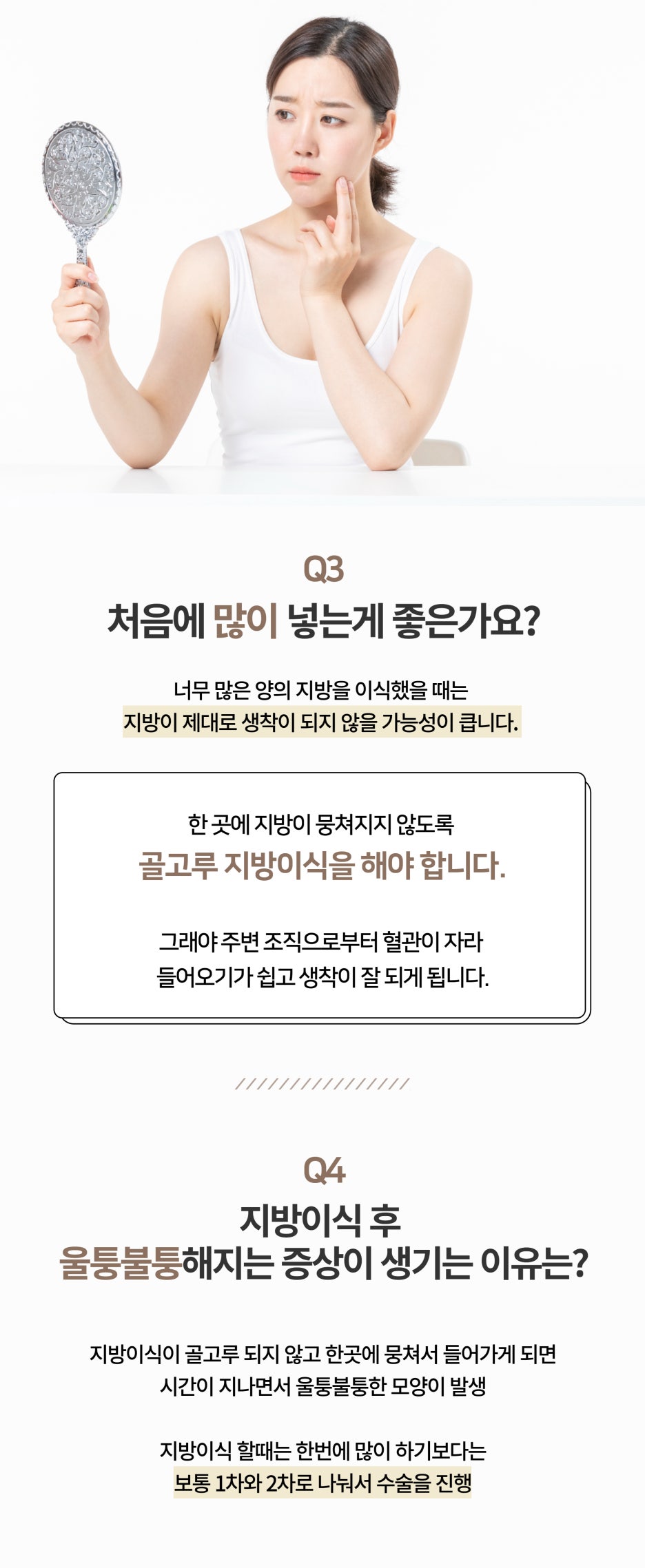
If too much fat is transplanted,
there is a high chance that the fat will not take root properly.
When doing fat grafting in Gangnam,
the fat should be distributed evenly
so that it does not clump together in one place.
This makes it easier for blood vessels
to grow in from the surrounding tissue
and helps the fat take root well.
If you try to put in too much out of greed,
fat will inevitably accumulate in one area,
and in that case, blood vessels may grow into
the outer part of the clumped fat,
but not into the center,
which often leads to fat necrosis.
Q4
Why does a bumpy appearance occur after fat grafting?
If the fat is not evenly distributed
and is injected in large amounts in one place,
the survival rate will vary by area.
As time passes,
a bumpy shape may appear.
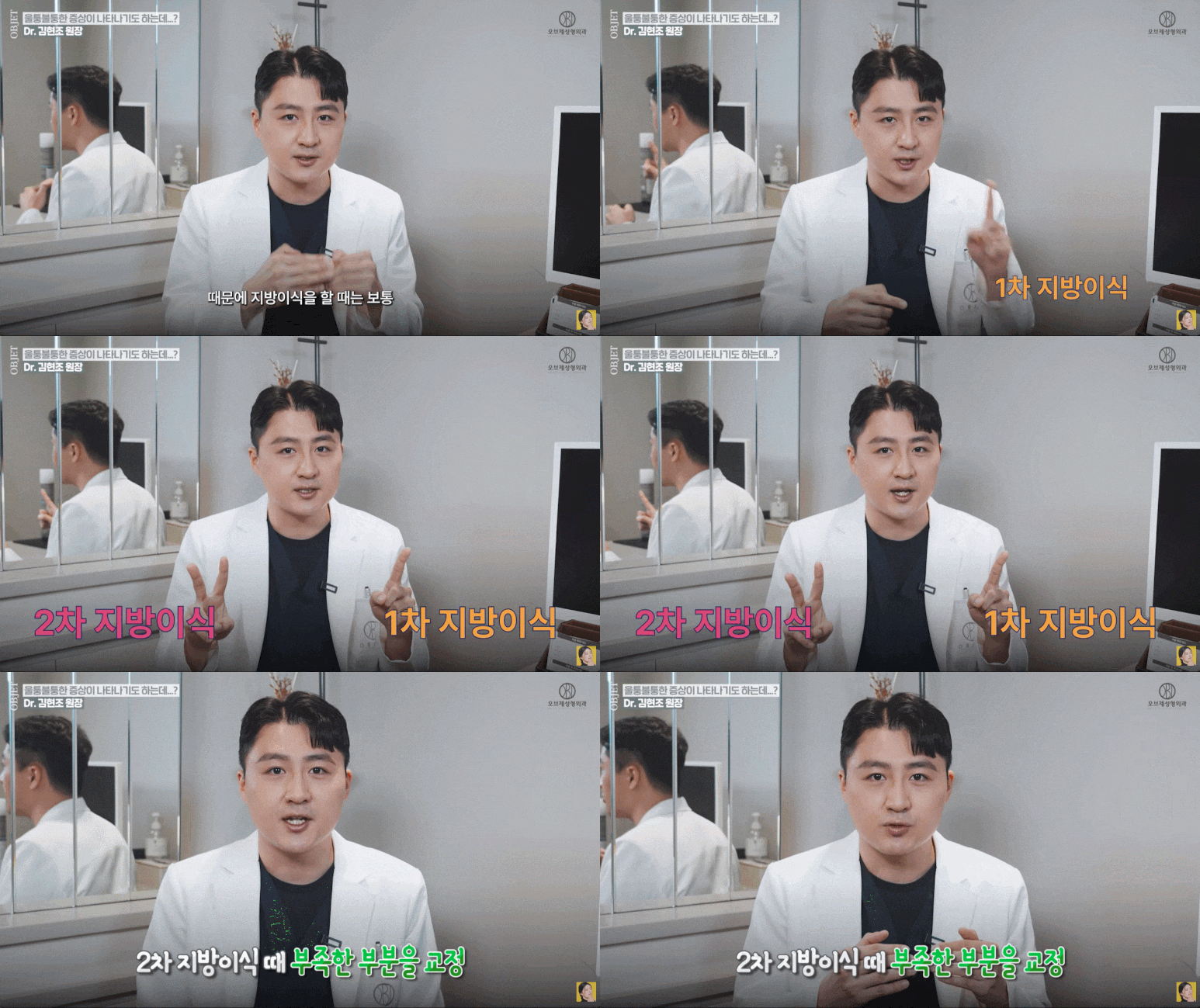
That is why, when doing fat grafting in Gangnam,
the procedure is usually performed in two stages,
with the first and second sessions separated.
After the first session,
any 부족한 areas are corrected in the second session,
helping to restore overall volume.
Q5
What surgeries are good to combine with fat grafting?
As the aging process continues,
subcutaneous fat in the face decreases,
and the tissue gradually sags and descends.
So fat grafting in Gangnam is often performed
in areas where volume has been lost as fat decreases.
Although fat grafting alone is also commonly done,
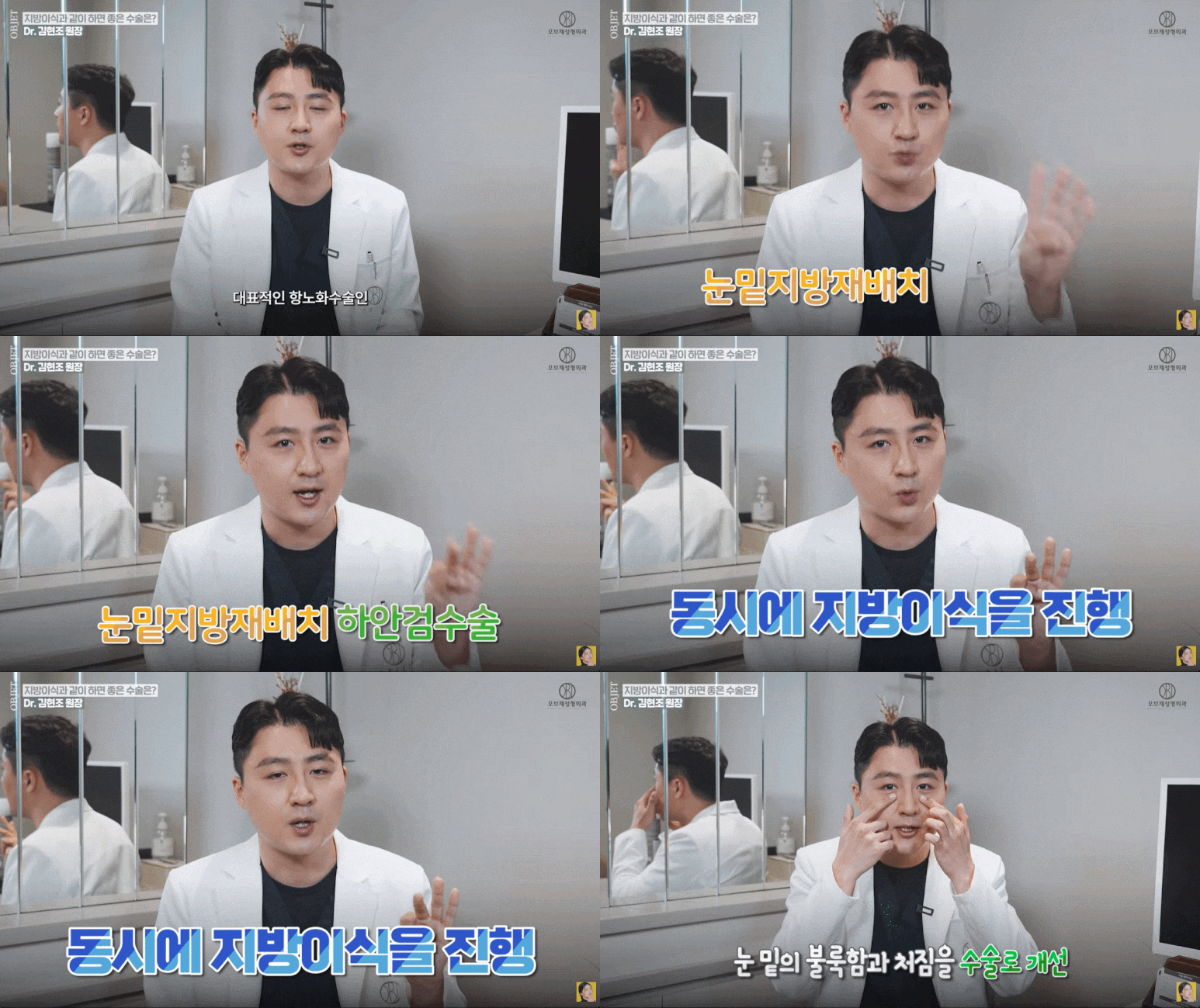
it is often performed at the same time as representative anti-aging surgeries
such as under-eye fat repositioning or lower blepharoplasty.
And if the bulging fat or sagging under the eyes is improved surgically,
then adding volume to the upper cheeks or under-eye area through fat grafting
can create a much more youthful appearance.
Q6
How is anesthesia performed?
It is performed under local sedation anesthesia.
If you think of it like a sleep endoscopy or colonoscopy,
that may be easier to understand.
Using medications with sedative and analgesic effects,
such as midazolam, propofol, and ketamine,
the patient is put to sleep at the start of surgery.
While the patient is asleep,
local anesthesia is administered,
so they do not feel pain during the procedure.
Because only a small amount of sedative is used,
patients can wake up quickly after surgery.
Q7
How should you care for yourself after fat grafting?
The area where fat was harvested is sutured with absorbable thread
and then taped.
The fat grafted area is also covered with a dressing material called DuoDERM.
There is no special disinfection required.
After the first surgery, you can monitor the fat absorption over time
and plan a second fat grafting procedure.
There is no need to wear compression garments after surgery.
However, because fat grafting in Gangnam is performed using a syringe
to transplant fat into the desired area,
the surgical site may swell and bruise.
This usually subsides within 1 to 2 weeks.
For fat grafting,
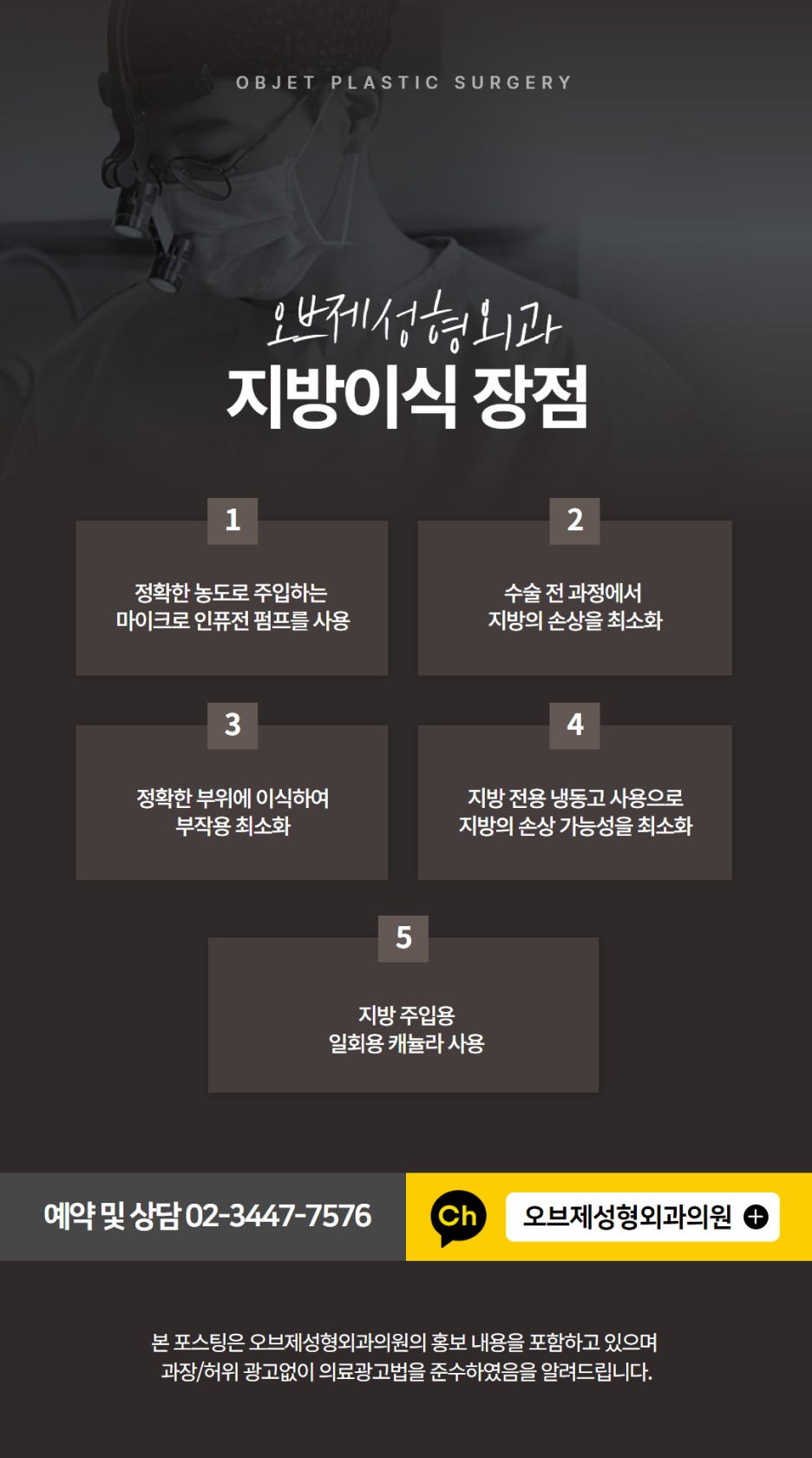
the survival rate is extremely important.
That is why, at Objet Plastic Surgery,
we take care to minimize fat damage throughout the overall process,
including fat harvesting, purification, and transplantation,
to improve fat survival.
In addition, to help improve fat survival
and increase duration,
we also perform Plus Fat Grafting,
which adds PRP (platelet-rich plasma) injections.
If you have any other questions about fat grafting
or need a consultation,
please contact Objet Plastic Surgery,
and we will provide detailed and friendly guidance.