Hello, this is Objet Plastic Surgery.
If you are considering rhinoplasty, you may search as many places as possible, such as Naver, Google, and YouTube, to learn various pieces of information about rhinoplasty. Since not everyone is satisfied after rhinoplasty, people look into many things to get the best possible result.

As you search, you may have heard people say that the nose looks the best about 2 weeks to 1 month after rhinoplasty.
Sometimes, people say that their nose looked good for 2 weeks to 1 month after surgery, but that the shape seemed to change little by little over time. Many also say they feel their nose has become crooked.
Why does the nose seem to change shape after rhinoplasty? And what should you do in such cases?
Today, we will explain in detail how to respond when the nose becomes crooked or changes shape after rhinoplasty, or when a complication is suspected. If you are currently considering rhinoplasty, please take a moment to focus and check this information!
What if your nose suddenly becomes crooked after rhinoplasty?
Could it be because of ��?
Rhinoplasty is a very difficult surgery. That is because each patient has a different natural nose shape and structure, and their desired nose line (straight, slightly curved, etc.) is also different.
In fact, this applies not only to rhinoplasty but also to eye surgery, lifting procedures, and all other surgeries. That is because all plastic surgeries are performed in a way that is optimized for each patient’s individual condition and needs.
Even so, the reason rhinoplasty is especially difficult is that, compared with other surgeries, it is hard for the surgeon to directly control the symptoms that may appear after surgery. Let’s compare it with eye surgery as a simple example.
Eye surgery, represented by double-eyelid surgery, often leaves patients worried right after surgery because swelling and bruising are severe, and they wonder whether the surgery was done properly or whether they will dislike the shape. But as the swelling and bruising gradually subside and time passes, the eye shape the patient wanted often becomes visible, and the results stabilize.
But rhinoplasty is the opposite. Unlike eye surgery, rhinoplasty requires graft material. In particular, the cartilage used to support the nasal tip can bend or be absorbed in some cases.
The cartilage mainly used for nasal tip surgery includes septal cartilage, ear cartilage, and costal cartilage (autologous or donated). In order to create a beautiful nasal tip shape, the material needs to provide enough support for the columella while forming a round and natural appearance. That is why cartilage is commonly used for the nasal tip.
Although cartilage sounds very soft by name, it is actually fairly stiff. It also has a strong tendency to return to its original shape.
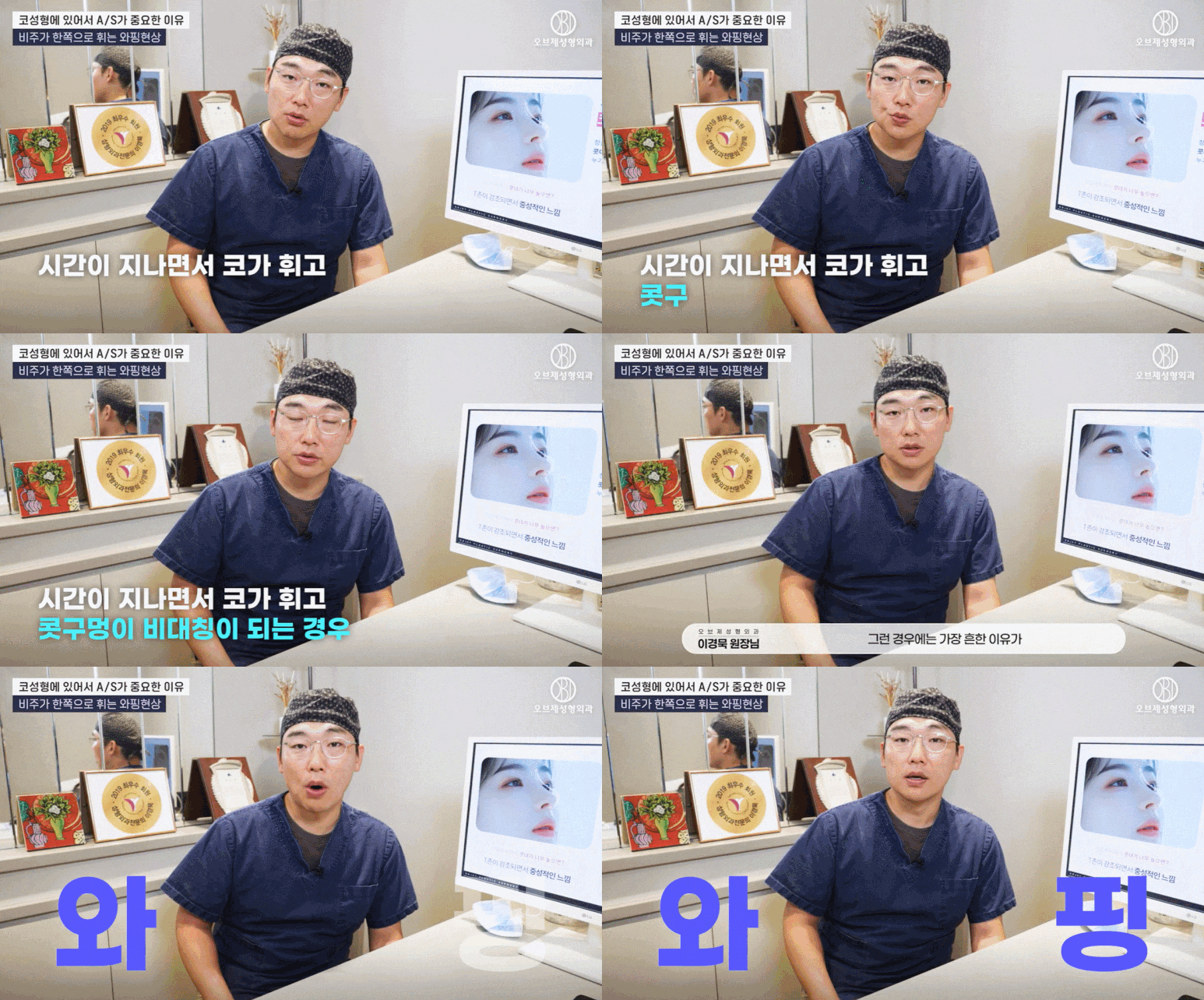
So, immediately after rhinoplasty, there may be no symptoms at first, but over time the columella may suddenly become crooked, and symptoms of a rhinoplasty complication such as uneven nostrils or an overall crooked nose shape may appear. This happens because the cartilage supporting the nasal tip from the columella has returned to its bent original shape.
This symptom, in which the cartilage used at the nasal tip becomes bent, is called warping. It refers to the phenomenon in which cartilage used in rhinoplasty twists or bends over time.
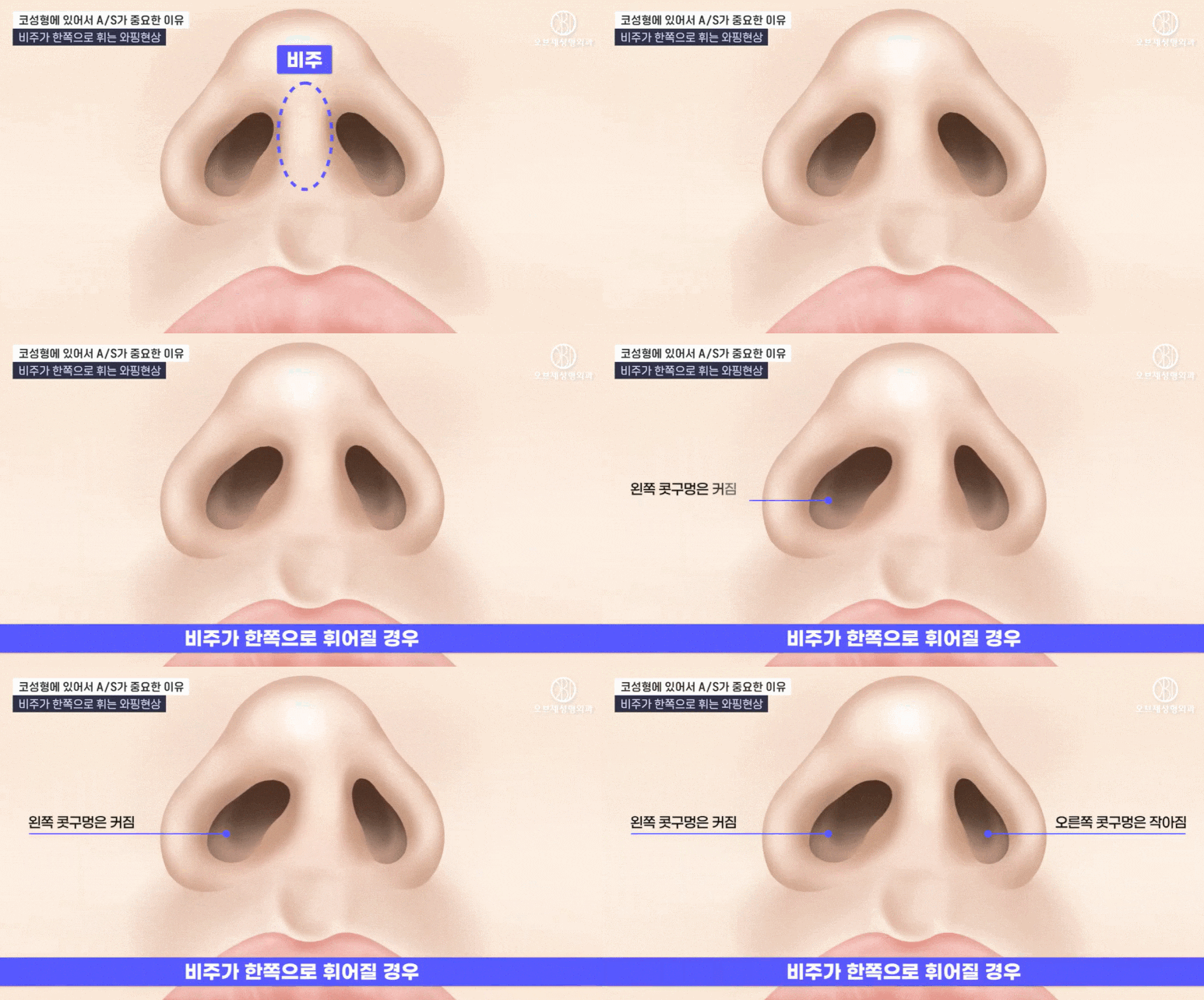
Then, since cartilage naturally tends to return to a bent shape, will everyone’s nose become crooked after rhinoplasty because of warping? Not necessarily.
Preventing warping plays a decisive role in preventing rhinoplasty complication symptoms.
Uneven nostrils, a crooked nasal tip,
Do I have to live with it?
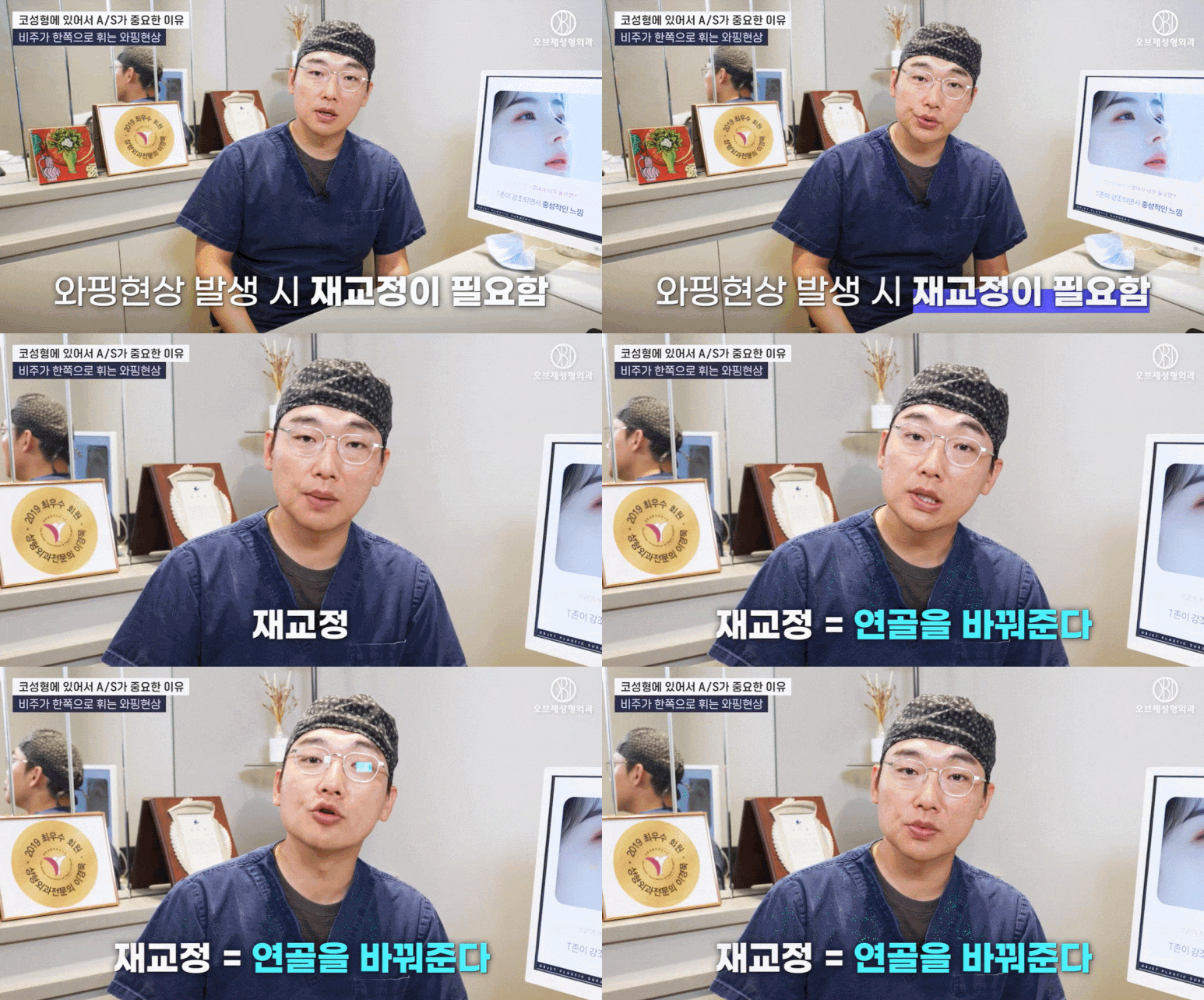
The warping phenomenon mentioned above can definitely occur. That means it is also something that can be sufficiently addressed.
First, if the nasal tip has already become crooked or the nostrils appear asymmetrical, revision correction is needed. Revision correction means replacing the bent cartilage with straight cartilage again.
However, what matters most is preventing warping before surgery.
At Objet Plastic Surgery, to prevent warping, we precisely check the shape of the cartilage used for the nasal tip during rhinoplasty. Cartilage is used as a surgical material only when its shape is intact.
In particular, when autologous costal cartilage is used, the harvest site is also selected carefully. At Objet Plastic Surgery, when using autologous costal cartilage, the 7th and 8th costal cartilages are selected and harvested.
Autologous costal cartilage from those locations has a naturally straighter shape than costal cartilage from other locations. Therefore, even as time passes, the likelihood of warping, where the cartilage bends, is significantly lower, which is an advantage.
However, the 7th and 8th costal cartilages are located deep inside the chest, making them difficult to harvest, so the harvesting process is complicated. Even so, Objet Plastic Surgery continues to use the 7th and 8th costal cartilages in order to reduce rhinoplasty complication symptoms. Although they are not easy to harvest, the procedure is performed by a director with extensive experience in rhinoplasty using autologous costal cartilage, so safe and satisfying rhinoplasty is possible at Objet Plastic Surgery.
For a natural-looking nose or a glamorous nose,
be sure to check whether rhinoplasty aftercare is provided!
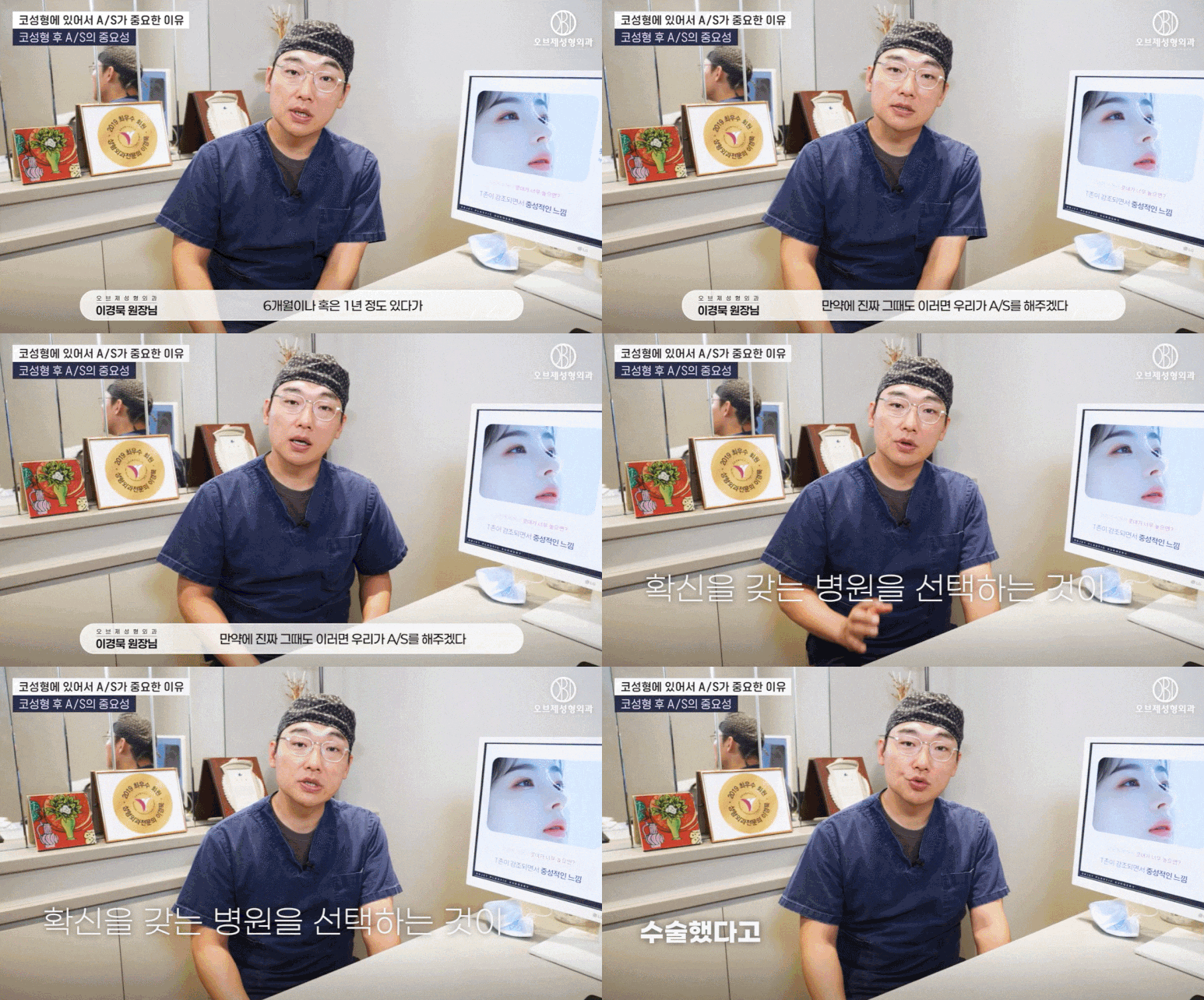
When getting rhinoplasty, do not consider only the cosmetic outcome. Be sure to check how care is provided after the surgery. Only with thorough care after rhinoplasty can you respond wisely when complications are suspected.
Therefore, if you suspect a rhinoplasty complication, it is important to choose a hospital that can provide thorough aftercare and support, including A/S.
When a patient reports discomfort after surgery, simply telling them to wait because it is only swelling and will get better with time is not a good solution. Just because the surgery is over does not mean the relationship with the patient is over.
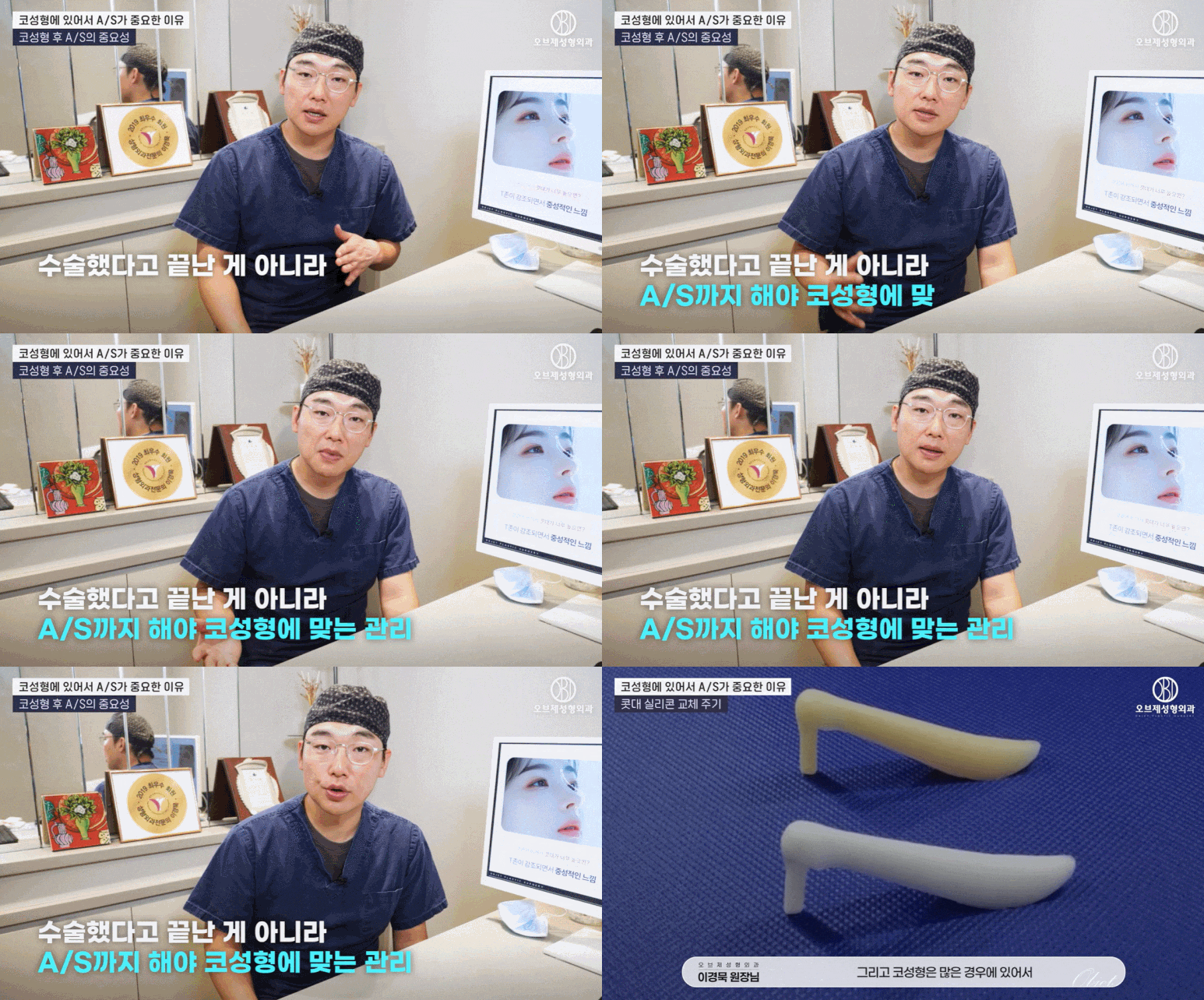
Continuously checking the patient’s current condition after surgery and providing thorough A/S when revision is needed or when problems arise can be considered the proper rhinoplasty process.
That is why, when consulting with a clinic for rhinoplasty, it is a good idea to check whether they provide proper post-operative care as well.
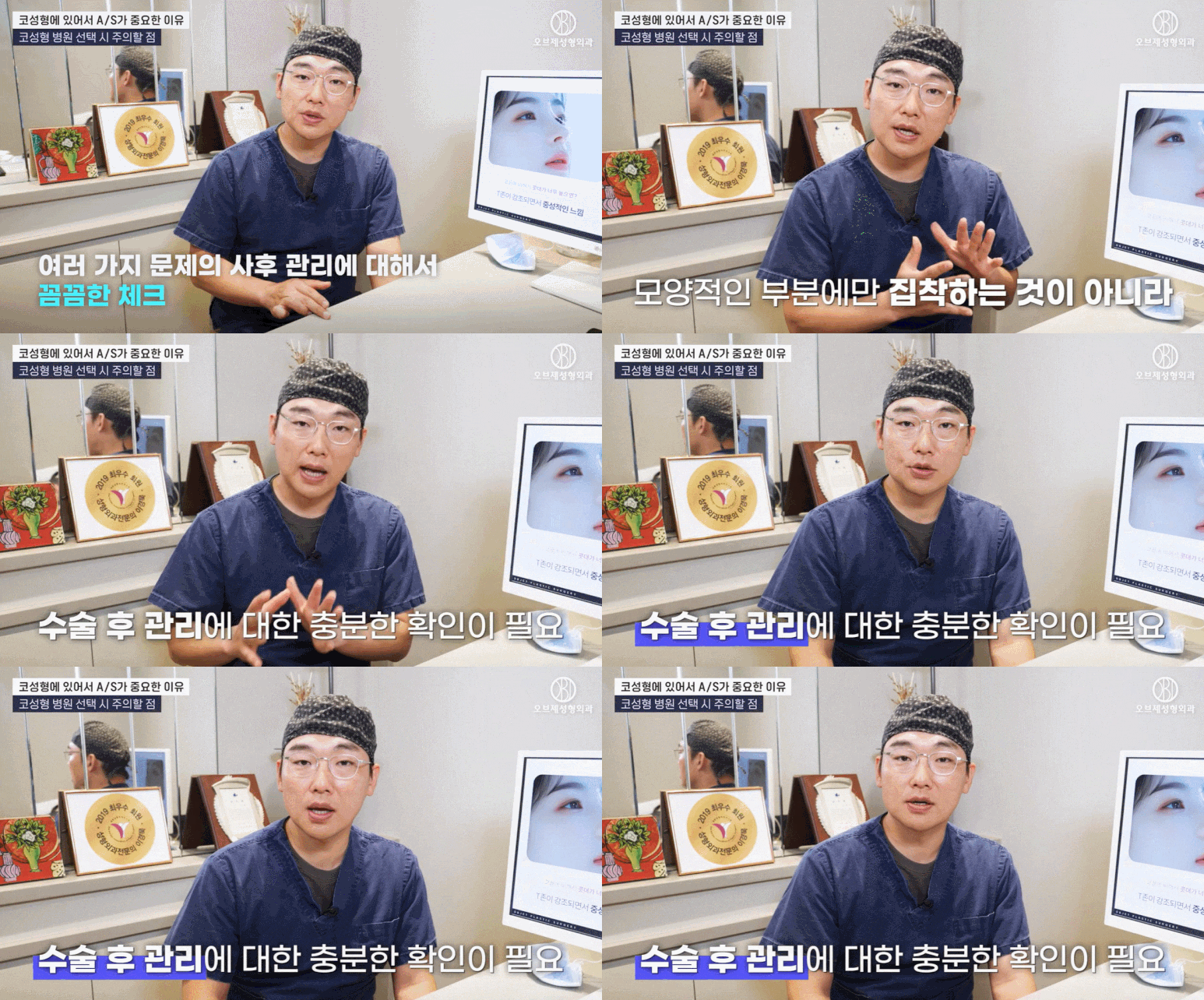
Because rhinoplasty is a difficult plastic surgery, the process of choosing a clinic should also be handled carefully.
Do not dismiss it lightly as simply a step toward looking better, and once again, we emphasize choosing a clinic that provides thorough care even after surgery. That is how important post-operative care is in rhinoplasty.
Objet Plastic Surgery believes that true rhinoplasty includes thorough management after surgery, which is why we also provide thorough A/S support. We always do our best to help you achieve satisfying rhinoplasty results.
If you are hesitating because you are worried about rhinoplasty complications, or if you need a detailed and careful consultation, please feel free to visit Objet. We will answer you with clear explanations that are helpful from the patient’s perspective!
This has been Objet Plastic Surgery. Thank you.
| Rhinoplasty consultation and inquiries |
|---|
| Phone quick consultation |
| Kakao easy consultation |
-
This post is medical information written by Objet Plastic Surgery Clinic in compliance with the Medical Advertising Act.
-
Results may vary depending on the individual, and side effects may occur.
We strongly recommend having 충분히 consult with medical staff in advance before deciding on the procedure.