Hello.
This is Objet Plastic Surgery.
Have you ever had trouble sleeping at night because your nose was blocked?
As you end up breathing through your mouth,
your throat gets dry,
and when you wake up in the morning,
you do not feel refreshed.
When you search and think,
"Is surgery the only option now?"
you may end up feeling even more confused.
Terms you have never heard before, such as
deviated septum and hypertrophic rhinitis,
start appearing one after another,

and you may also have been unsure
whether to go to an otolaryngology clinic
or a plastic surgery clinic.
So today,
I would like to clearly organize this concern for you.
I will explain step by step
what causes nasal congestion
and what criteria you should use
when choosing a clinic,
so that it is easy to understand.
If you read this post to the end,
you will be able to identify
what the problem with your nose is
and clearly understand
what standards to use when choosing a clinic.
When nasal surgery for rhinitis is needed,
common causes
First, let’s take a step-by-step look at
which factors in rhinitis
make breathing difficult.
- Deviated septum
Many of you may be hearing this
for the first time.
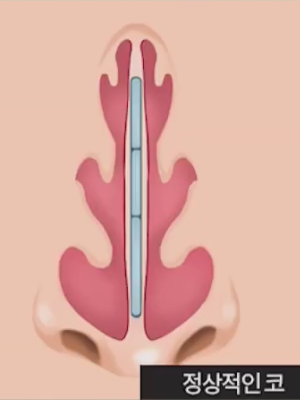
The septum refers to the partition-like structure
standing in the center of the nose.
Simply put, you can think of it
as the wall that separates
the left and right sides of the nose.
Normally, this wall should pass straight
through the middle of the nose.
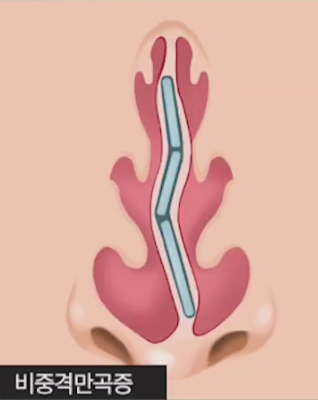
"Curved" means "bent" or "warped."
When the septum is bent,
the curved side becomes narrower,
making it harder for air to pass through.
The opposite side may be relatively wider,
but the overall airflow becomes unbalanced
because of the narrowed side,
and in the end both sides become
less comfortable for breathing.
That is why it can feel
like your nose is blocked.
- Hypertrophic rhinitis
Hypertrophic rhinitis is a problem caused by
swelling of the mucous membrane inside the nose.
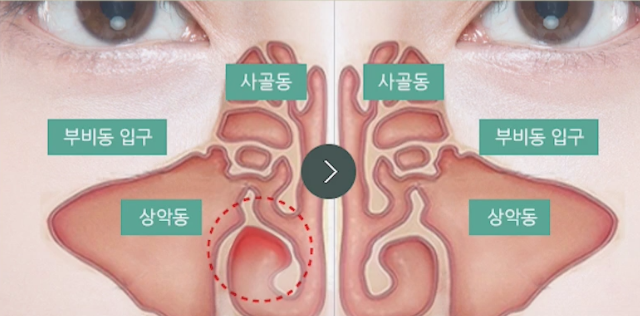
Inside the nose, there is a structure called
the inferior turbinate.
It warms and humidifies the air that enters
through the nose.
It may be easier to understand if you think of it
as the filter function of an air purifier.
But what happens if this inferior turbinate
is repeatedly irritated?
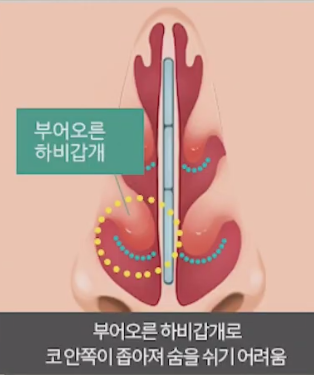
For example, when repeatedly exposed to
fine dust or cold air,
the mucous membrane of the inferior turbinate
begins to swell.
This is the body’s natural response to protect
the nose from external irritation,
but the problem is that if this continues,
the mucous membrane does not return
to its original state.
The swollen state becomes fixed.
Then the space inside the nose narrows,
air cannot pass through properly,
and eventually nasal congestion can become chronic.
By now, you should have a general understanding
of the causes.
So you may be wondering how these problems
are treated.
Let’s briefly look at how each cause is addressed.
In the case of a deviated septum,
a procedure is performed to correct
the bent septum.
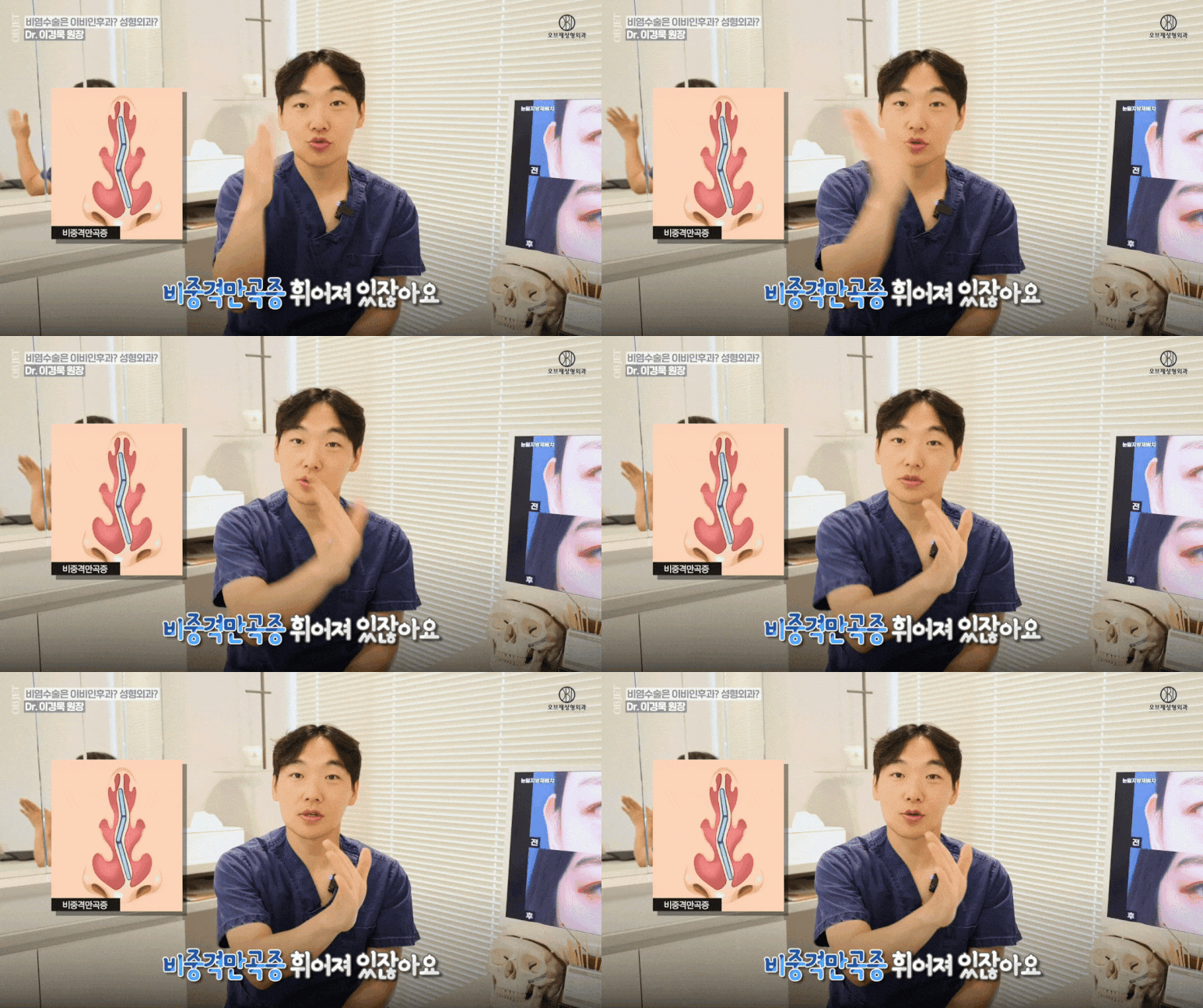
Through the inside of the nose,
the bent cartilage and bone are removed
or straightened and then fixed again in the center.
As mentioned earlier,
the septum acts as a partition
that divides the inside of the nose
into left and right sides, right?
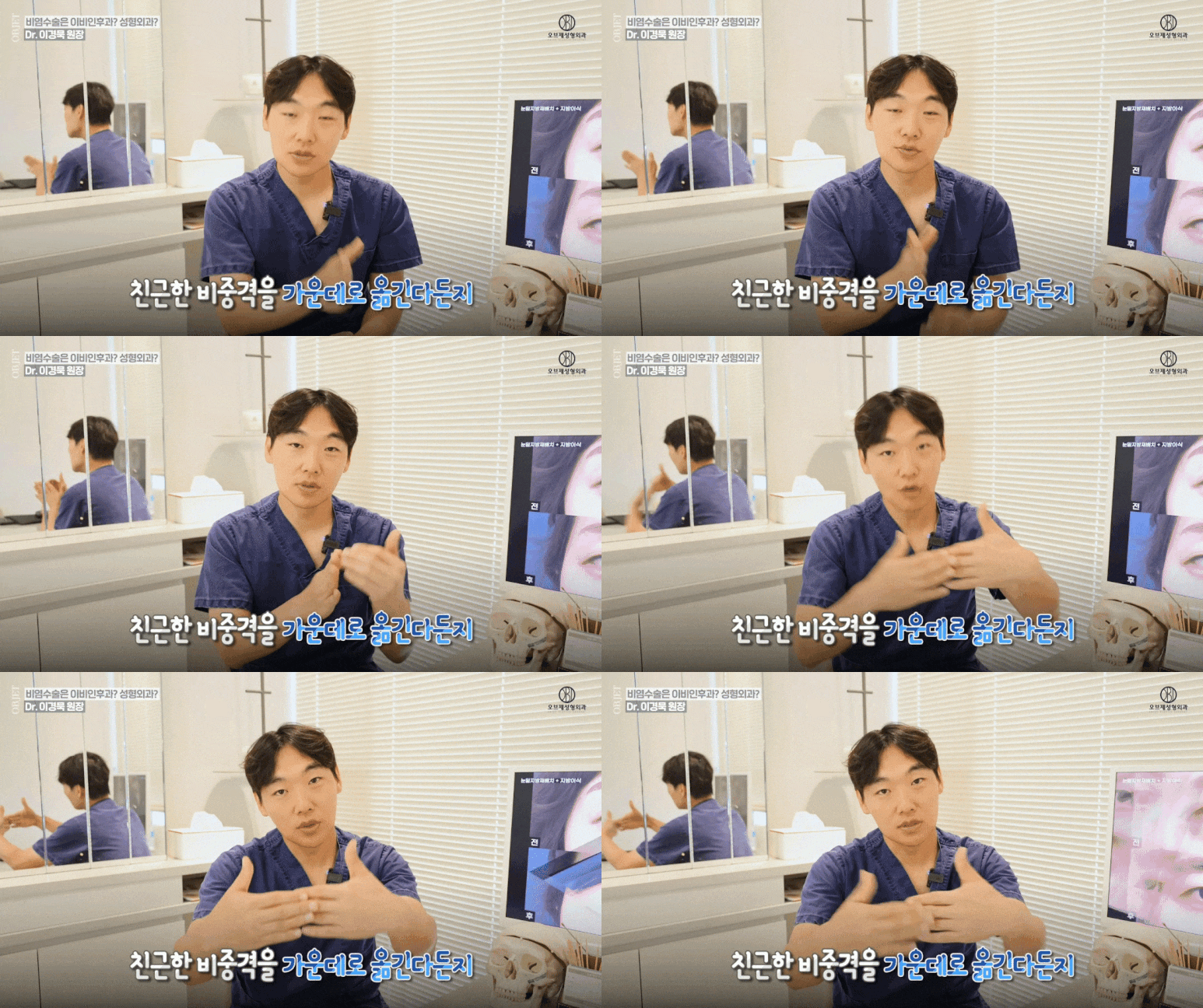
You can think of this as straightening
a partition that had been tilted to one side.
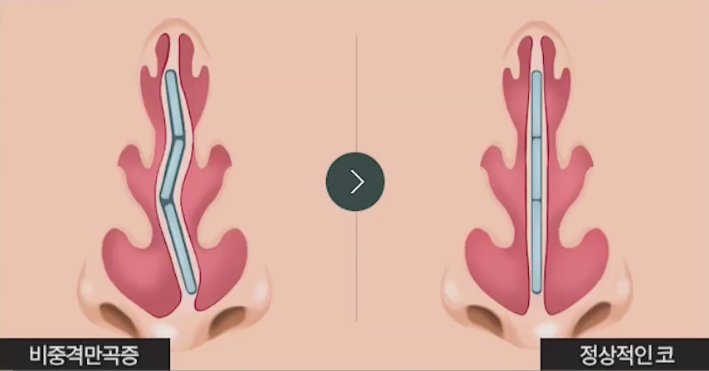
Then the narrowed side becomes wider,
and air can flow evenly through both sides.
In the case of hypertrophic rhinitis,
treatment is performed to reduce the volume
of the swollen inferior turbinate.
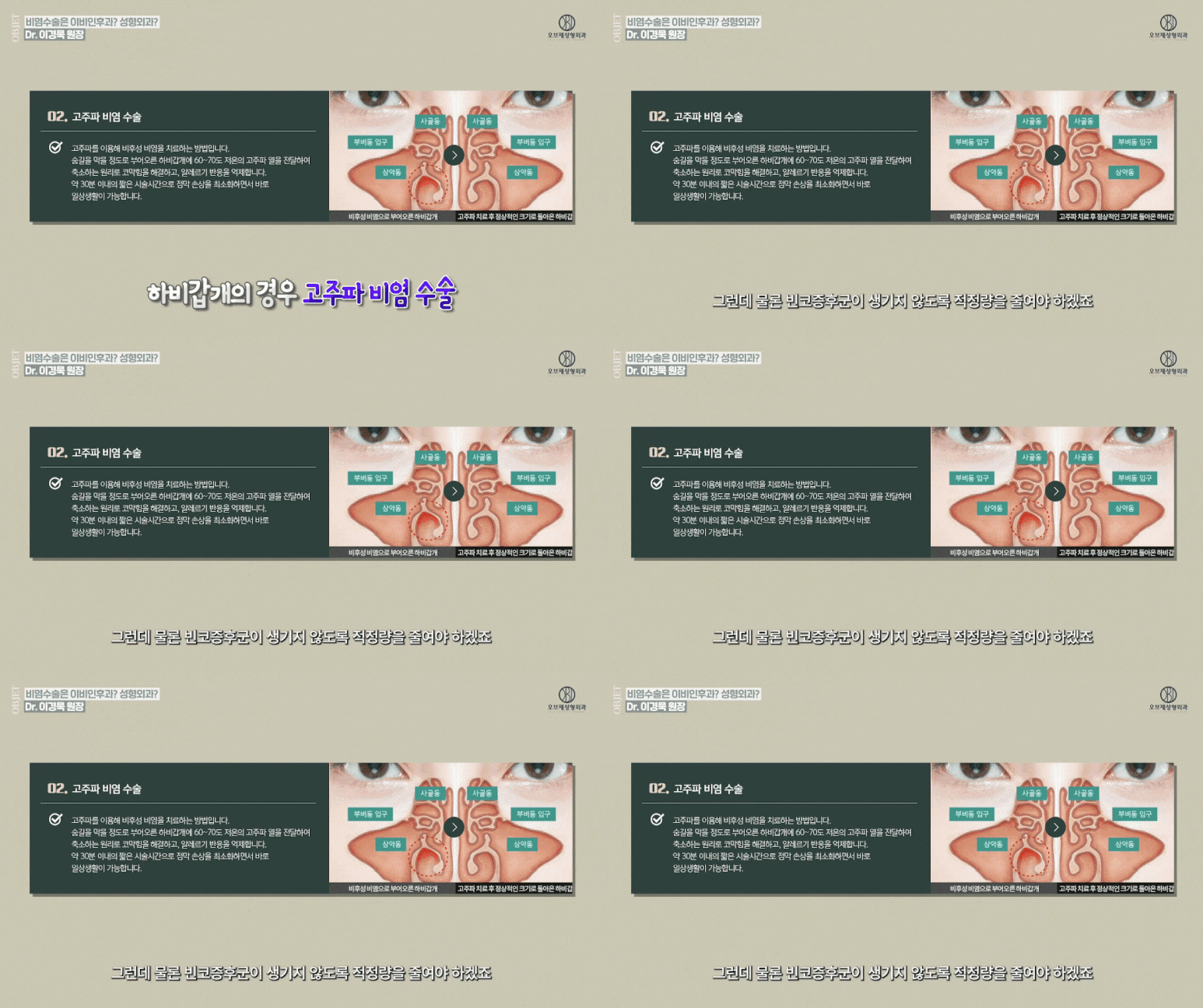
This is done by shrinking
the swollen mucosal tissue using methods
such as laser or radiofrequency.
We compared the inferior turbinate
to the filter of an air purifier earlier, right?
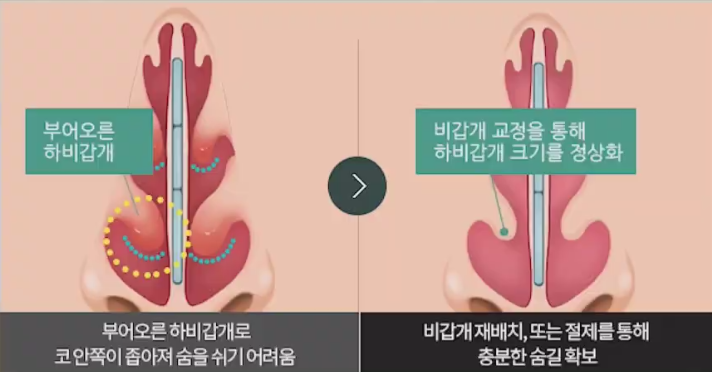
You can think of it as the process of making
a filter that has become thick
from dust build-up thin again.
Then the blocked airway is restored,
and breathing becomes much easier.
In this way, if you approach the problem
with the appropriate method for each cause,
the nasal congestion issue can be improved
sufficiently.
So where should you have the surgery?
If you have read this far,
you are probably now thinking this.
"I understand the causes and surgical methods,
but should I go to an otolaryngology clinic
or a plastic surgery clinic?"
To give the conclusion first:
"It does not really matter."
Whether it is otolaryngology
or plastic surgery is not an absolute standard.
In practice, both departments
perform rhinitis surgery,
and the surgery itself is not considered
to be highly difficult.
What is more important to check instead
are two other things.
The first is whether an accurate diagnosis
can be made.
In addition to the causes mentioned earlier,
there may be hidden problems,
and in many cases multiple causes
are working together.
You need to identify this accurately first
in order to properly determine
what kind of surgery is needed.
That is why it is important to closely examine
the internal structure of the nose through
CT scans or endoscopic examinations
and find exactly where the problem is.
The second is whether there is experience
in considering both function and appearance.
Nasal surgery for rhinitis is not simply
about opening a blocked nose.
After surgery, the nose should still look natural,
and it may even look better than before.
In particular, surgery that involves
the septum affects the overall structure of the nose,
so if appearance is not considered as well,
you may regret it later.
"I can breathe well, but my nose shape
has become strange"
is one case,
and
"The shape looks nice, but I still find it hard
to breathe"
is another.
That is why it is most important
to find an experienced medical team
that can perform surgery while considering both.
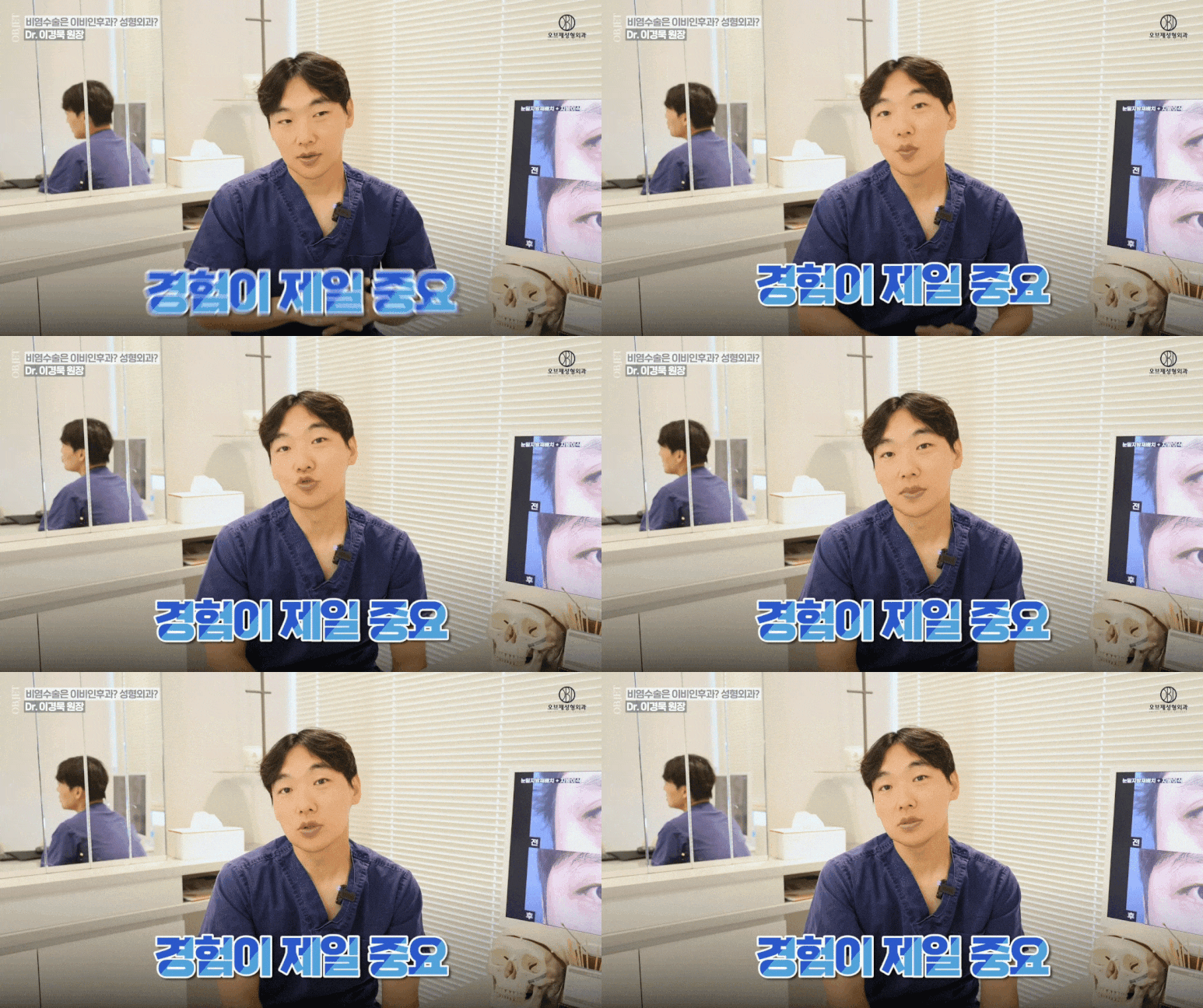
What you should look at here is not the clinic name,
but whether they actually have that experience
and skill.
Therefore, when consulting,
I recommend that you be sure to ask
the following questions.
"Can you improve both function and appearance?"
"How will the nose shape change after surgery?"
"How many similar cases have you handled?"
If they give clear answers to these questions,
you can trust them.
If a place meets all of these criteria,
you can feel comfortable seeking a consultation
regardless of whether it is otolaryngology
or plastic surgery.
Today, we looked at the main causes
of nasal surgery for rhinitis,
the surgical methods,
and the criteria for choosing a clinic.
In the end, what matters is
to accurately understand the structure of your nose
and meet an experienced medical team
that can perform surgery while considering both
function and appearance.
If you have not found such a place yet,
you can visit Objet Plastic Surgery.
Objet Plastic Surgery has a system that carefully
checks each step, from the first consultation
through structural analysis, functional testing,
and surgical planning.
In addition, based on our long experience
in rhinoplasty, we can confidently say
that we also perform surgery with
breathing improvement and rhinitis relief
in mind.
If you have suffered from nasal congestion
for a long time,
now, when you are considering nasal surgery
for rhinitis, may be your chance
to regain comfortable breathing.
We hope that your current concern leads to
more comfortable breathing
and satisfying results.
We sincerely support you through that process.
This has been Objet Plastic Surgery.
Thank you.
<🔽🔽Video recommended to watch together🔽🔽>
| Consultation and inquiries for nasal surgery for rhinitis |
|---|
| Quick phone consultation |
| Kakao easy consultation |
-
This post is medical information written by Objet Plastic Surgery Clinic in compliance with the Medical Advertising Act.
-
Treatment effects may vary depending on the individual, and side effects may occur.
We recommend that you make a decision about treatment only after sufficiently consulting with the medical staff in advance.