Before and after a facelift,
the difference in naturalness is determined by
“this”

Hello, this is Obje Plastic Surgery.
Lately, when you look in the mirror,
have you been feeling increasingly worried
because your face looks more saggy than before?
You may have looked into thread lifting or laser procedures,
but
if you’ve found yourself thinking,
“Wouldn’t that still be a bit insufficient...?”
then you may have started looking into facelift surgery as well.
Among people who visit us with concerns about a facelift,
many often ask how much lifting effect they can expect,
and how long the recovery period will be.

So today, we will go over the facelift process,
changes before and after, and the recovery process,
step by step.
Q1: “Where is the incision made in facelift surgery?”
In facelift surgery, the first important step is
to accurately identify which area has sagged.
Over time, the tissue around the cheeks and neck
gradually sags downward due to gravity.
As a result, the sagging cheek and neck area
blurs the overall facial contour
and makes the face look older.
If this sagging tissue is pulled
in the correct direction,
the sagging cheek line rises,
and the jawline and neck line are refined,
giving the overall face a clearer
and more youthful appearance.
To effectively lift sagging tissue,
the key is deciding in which direction
and by what method to pull the area.

If you simply pull upward
in a vertical direction,
problems can arise.
For example, if the tissue beside the cheek
is lifted vertically,
tissue may gather around the cheekbone,
making the cheekbones look swollen
or
creating an unnatural sense of volume.
Therefore, for a more natural
and smooth result,
pulling diagonally toward the back
is much more effective.
In other words, for natural results,
the sagging tissue must be lifted diagonally
toward the ear, outward from the line connecting
the outer corners of the eyes and the corners of the mouth.
To do this, the incision line is usually designed
to start inside the scalp,
pass in front of the ear,
and continue behind the ear.
This design creates a structure that allows the sagging tissue along the facial line
to be pulled in the correct direction.

If the neck tissue also needs to be lifted,
the incision line may be extended further
down below the hairline behind the ear.
Another important point is scarring.
The reason the incision line is designed
along the hairline is to make the scar
from surgery as inconspicuous as possible
in daily life.
Then the scar is hidden by the hair and behind the ear,
allowing for natural healing and making it less noticeable
in everyday life.
There is one thing to keep in mind.
A facelift is not simply a procedure that pulls only the skin.
Because skin is thin and has limited elasticity,
pulling only the skin means that, over time,
it will inevitably sag again quickly.
Just as wrapping an object in thin plastic wrap may make the outer surface look tight,
if the inside remains unchanged, the shape will quickly collapse.
Skin is the same.
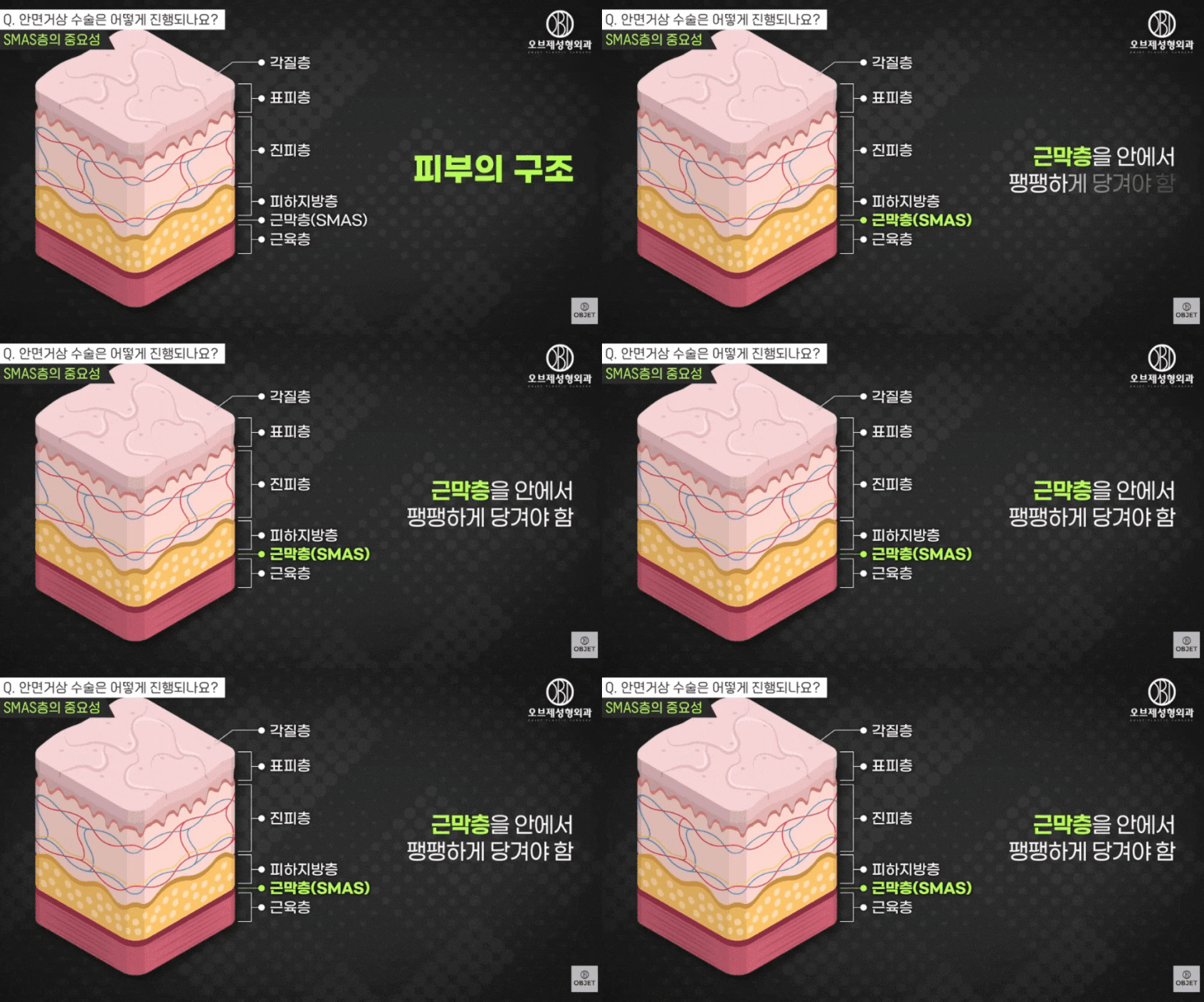
That is why the core of facelift surgery is
to pull and secure the SMAS layer beneath the skin as well.
Facial skin is composed, from the outside inward, of
epidermis → dermis → subcutaneous fat → SMAS layer → muscle.
Among these, the SMAS layer is a tissue
that is much firmer than skin,
and because it directly contacts the muscles,
it is closely connected to facial expressions.

Therefore, lifting and securing this layer together
can fundamentally improve structural sagging
throughout the face and help the surgical results
last longer.
However, there is one part that requires
the greatest caution when working with the SMAS layer.
That is the facial nerve.
Near the SMAS layer,
the facial nerve that creates facial expressions runs through the area.
If this nerve is damaged,
temporary sensory loss or even facial paralysis can occur,
so extreme caution is needed.
That is why the process of dissecting the SMAS layer
is the most important and skill-demanding part
of facelift surgery.

At Obje Plastic Surgery,
we place the highest priority on performing
the dissection and fixation of the SMAS layer
with delicacy and safety.
Based on extensive clinical experience
and precise anatomical understanding,
we focus on minimizing the risk of facial nerve damage
while creating natural, long-lasting results.
Also, after lifting the SMAS,
the excess skin must be appropriately trimmed
and sutured,
and as a skilled plastic surgeon, the suturing process can also be entrusted with confidence.
Q2. I have to go to work — how long is the recovery period?
You may be just as curious about the recovery process
as about the surgery itself.
A facelift involves a wide surgical area
and takes quite a bit of time,
so recovery also requires time.
First, immediately after surgery,
the first and second day are the most important period to be careful.

The main thing to watch for during this period is a hematoma.
A hematoma is swelling like bruising caused by pooled blood at the surgical site,
so early stabilization is very important.
During surgery, as tissue is dissected,
small blood vessels can be damaged.
In most cases, bleeding is well controlled,
but in some cases, bleeding may continue
and blood can collect at the surgical site.
If blood pressure suddenly rises at this time
or strenuous activity is performed,
the risk of hematoma increases further.
That is why resting during the first two days
is truly important.

About 7 to 10 days after surgery,
the stitches are removed.
At this stage, daily activities become possible little by little.
However, bruising and swelling may still remain.
Bruising varies from person to person,
but it usually fades gradually within 2 to 3 weeks.
Swelling also begins to subside gradually
after about 10 days.
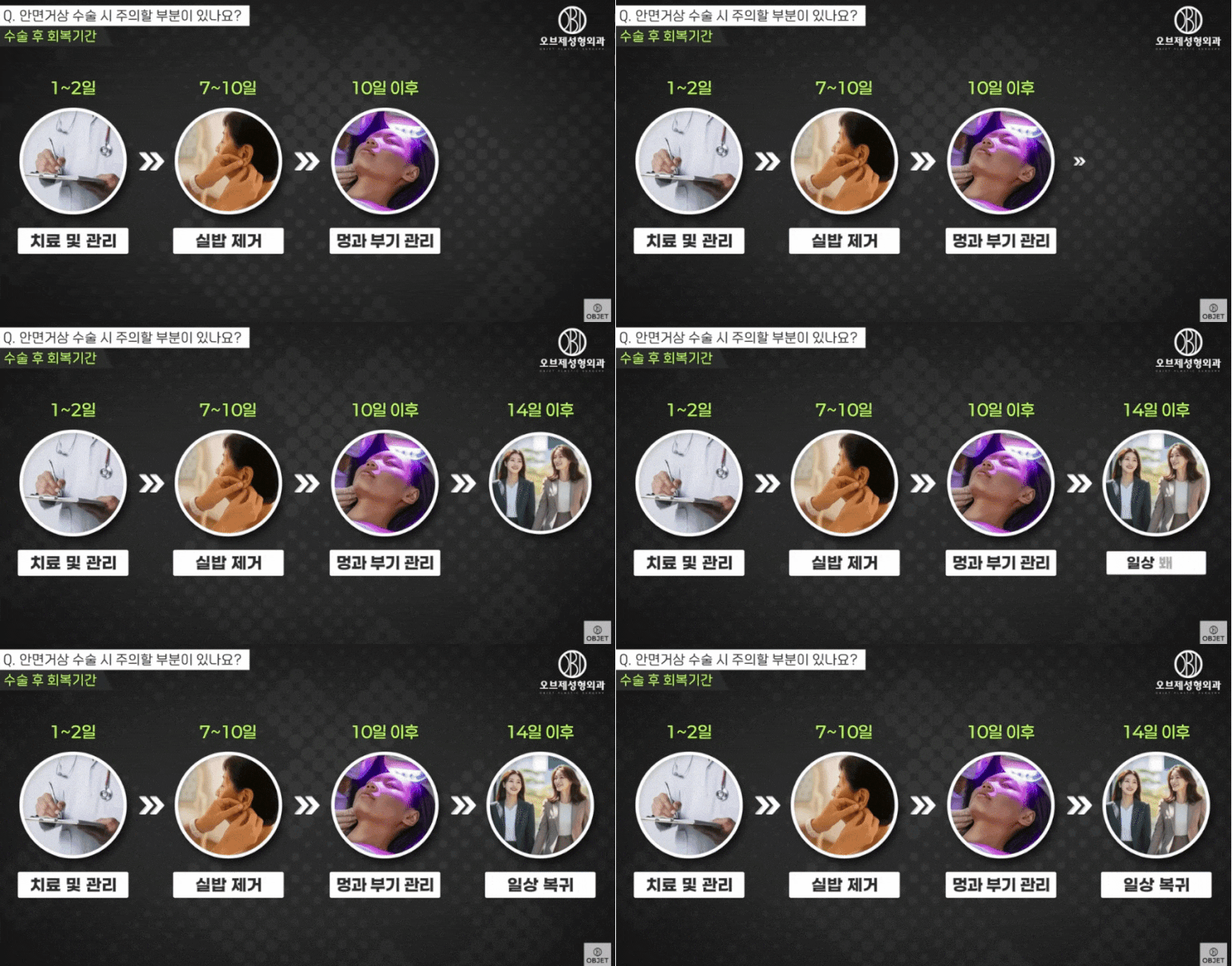
So most people can return to daily life
about 2 weeks after surgery.
This is also the time when returning to work may be possible,
if you cover bruising with light makeup
or use a mask.
There are also people who worry about scarring.
As mentioned earlier, the scar follows the hairline,
so it is not as noticeable as you might think.
It may take a few months to fade completely,
but for most people it gradually becomes lighter over time
and recovers to the point where it is not a major concern in daily life.

Today, we looked at the changes before and after a facelift
and the recovery process.
Facelift surgery is not something that can be decided lightly.
Factors such as skin elasticity and the degree of sagging
must be considered comprehensively.
Also, when choosing a clinic,
not only surgical skill but also
how systematically postoperative recovery is managed
must be carefully checked.
So before deciding on surgery,
we recommend that you make sure to ask about the points mentioned today during your consultation.
At Obje Plastic Surgery,
from the process of carefully examining the patient’s condition
to the recovery period that helps you return to daily life
based on extensive surgical experience,
we stay with you throughout.

We hope this article was even a little help
with your concerns.
Thank you for reading this long post.
This has been Obje Plastic Surgery. Thank you.
<🔽🔽Videos you may want to see together🔽🔽>
| Facelift consultation and inquiries |
|---|
| Quick phone consultation |
| Kakao easy consultation |
-
This post is medical information written by Obje Plastic Surgery Clinic in compliance with the Medical Advertisement Act.
-
The effects of the procedure may vary depending on the individual, and side effects may occur.
It is recommended that you consult thoroughly with medical staff in advance before deciding on the procedure.