Lower eyelid fat repositioning revision surgery?
Common traits of people who regretted it: they didn’t know ‘this’?
Hello.
This is Objet Plastic Surgery.
Have you had lower eyelid fat repositioning surgery,
but it didn’t produce the results you expected,
or did uncomfortable symptoms appear instead?
Even though you clearly had the surgery,
your under-eye area may still look puffy,
or your eyelid may seem to curl oddly,
so you might be blaming yourself,
wondering if you were careless with aftercare.
However, in most cases, it may be less about aftercare
and more about something that was missed during the surgery.
So today, we’ll explain step by step
the causes that make lower eyelid fat repositioning revision surgery necessary,
and how they are addressed.
It was fine at first…
What is the real reason it becomes puffy over time?
Among people considering lower eyelid fat repositioning revision surgery,
the most common case is when the under-eye area becomes puffy again.
In these cases, things were fine right after surgery,
but over time the under-eye area gradually bulged again,
or the puffiness remained from the very beginning.
So why does this happen?
To understand the cause,
we first need to know the structure under the eyes.
Under our eyes, there is a sac that contains fat.
The membrane that surrounds this fat sac is
called the orbital septum.
The orbital septum originally
plays the role of firmly holding the fat in place
so it does not protrude forward.
However, as we age,
or when bad habits are repeated,
this membrane gradually loosens.
When we blink every day,
make facial expressions, and rub our eyes repeatedly,
pressure continues to be applied to the orbital septum.
In addition, as we get older,
the collagen and skin elasticity that make up this membrane
naturally weaken.
Then the orbital septum can no longer
hold the fat properly,
and the fat gets pushed forward,
causing the under-eye area to look puffy.
That is why lower eyelid fat repositioning surgery
moves the protruding fat into the hollow area below,
so it blends in more naturally.
The problem arises here.
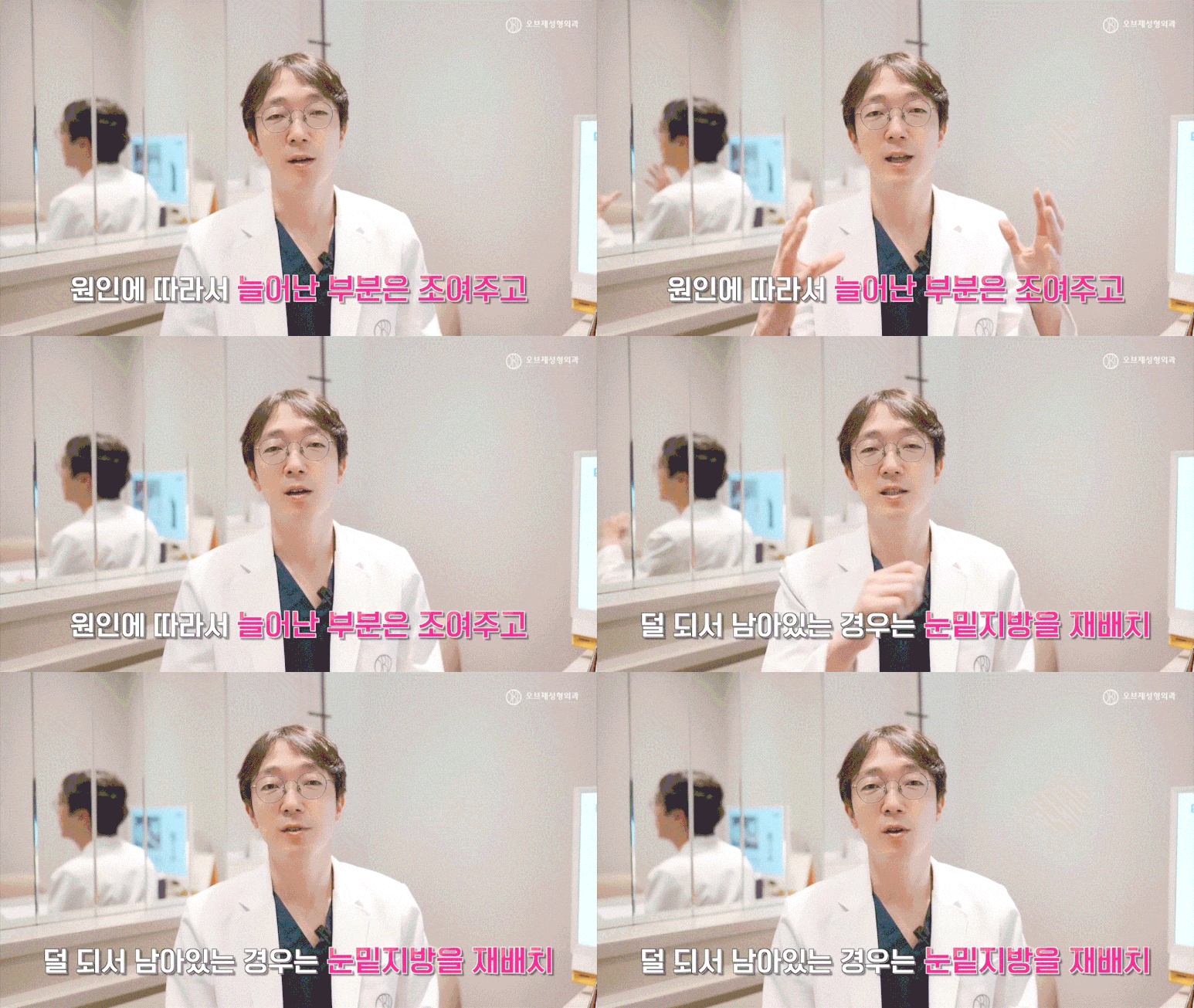
If only the fat is moved and the orbital septum is left as it is,
the repositioned fat may be pushed forward again over time.
Because gravity keeps acting,
and each time you make a facial expression,
the muscles move and
apply pressure to the fat,
but the membrane that should support it remains loose.
If your eyelashes are poking your eye and you have tearing,
this is a signal for OOOO
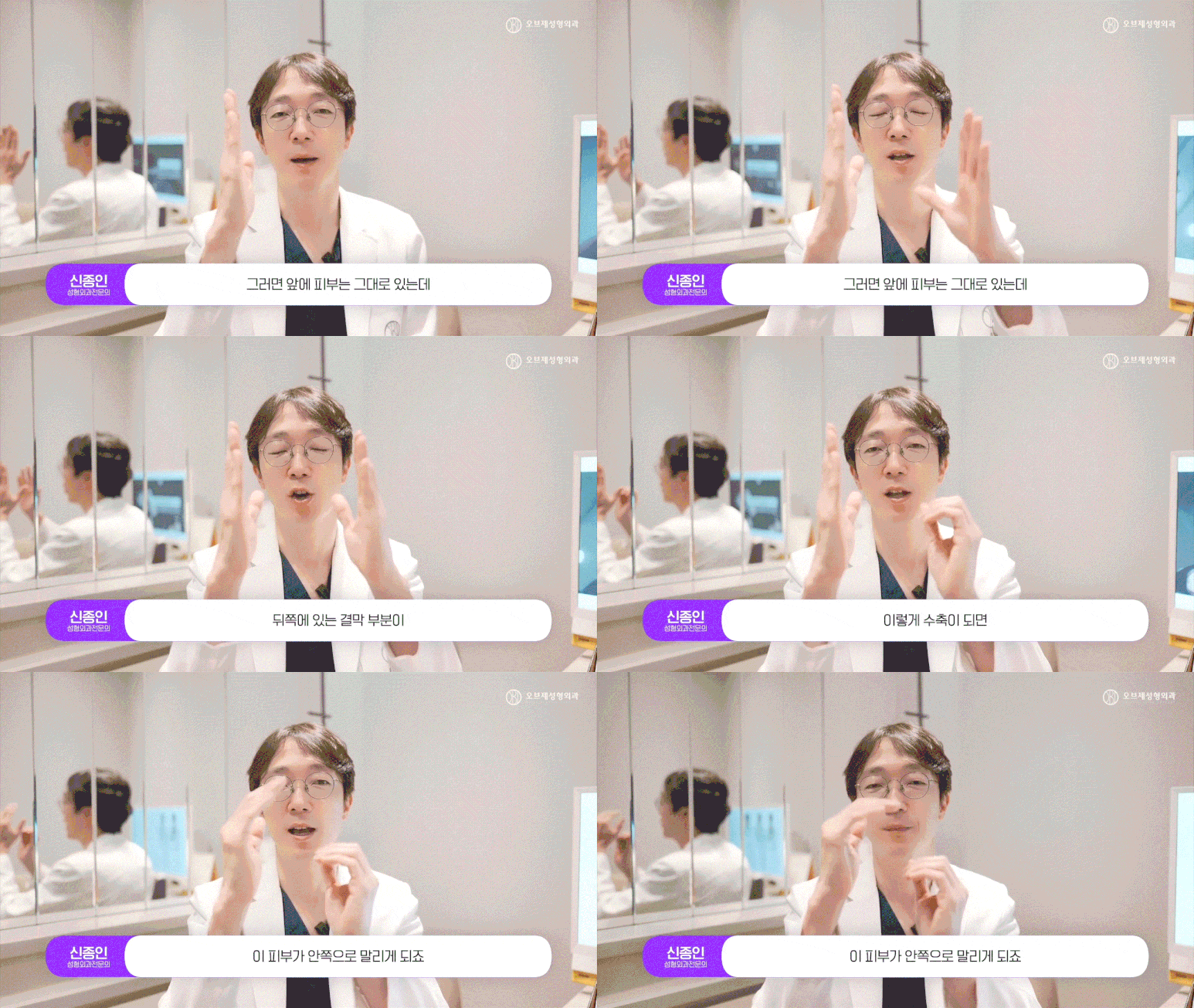
The second most common case is a symptom called entropion.
Entropion is a condition in which the eyelid turns inward,
causing the eyelashes to poke or irritate the eye.
This can cause constant tearing.
So why does entropion happen?
After surgery, our body
creates ‘scar tissue’ at the incision site
as part of the healing process.
Over time, this scar tissue tends to contract.
Let’s take a case where the conjunctiva was incised
during lower eyelid fat repositioning.
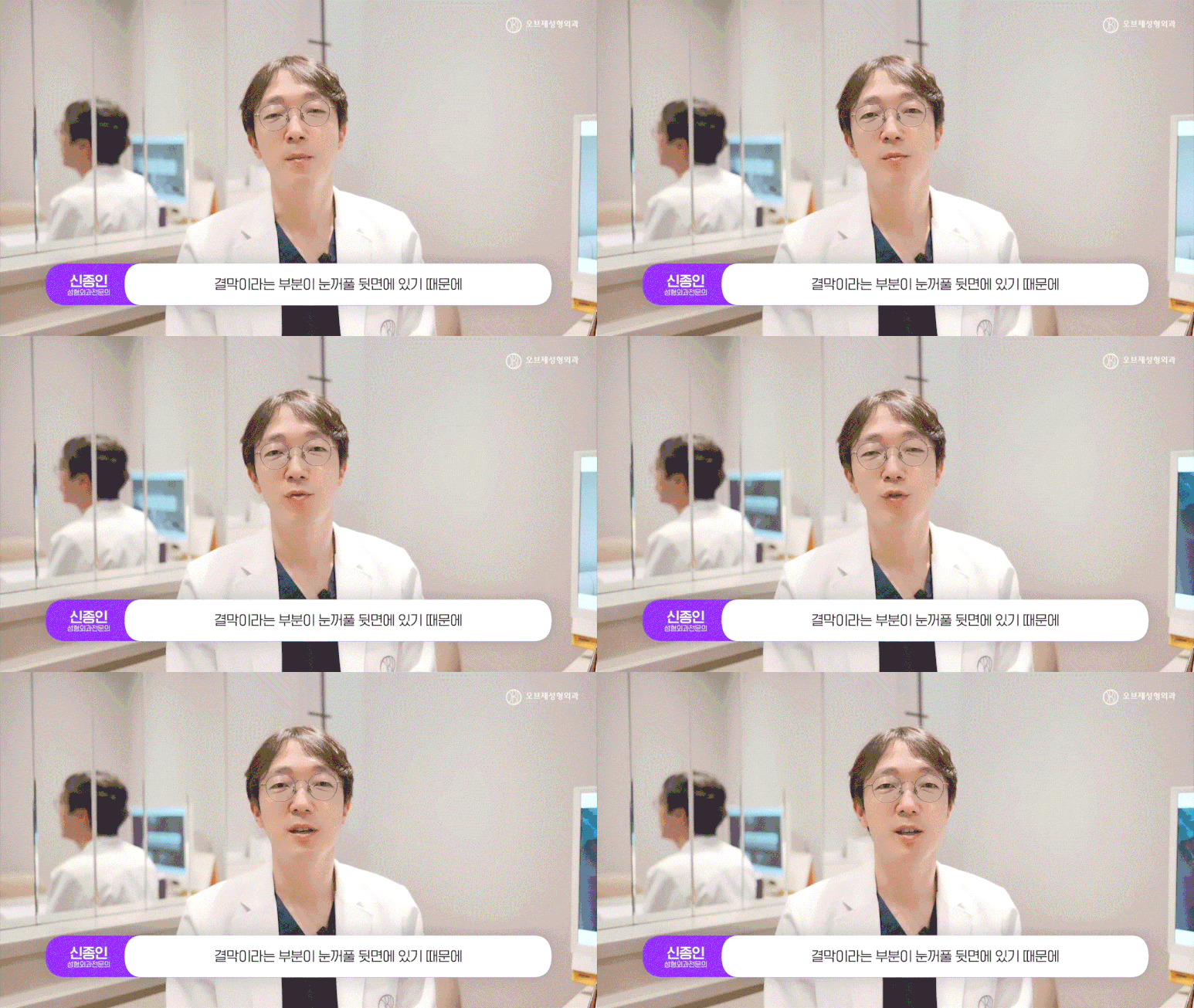
The conjunctiva is a thin mucosal tissue
on the inner side of the eyelid.
When this area is incised, scar tissue forms there,
and over time that scar contracts.
As this happens, the back side of the eyelid is pulled inward,
and the entire eyelid curls inward.
Normally, the eyelid should face outward,
but because a pulling force continues to act from the inside,
the shape changes.
Eventually, the eyelashes also turn inward
and continuously irritate the surface of the eye.
This leads to discomfort such as eyelashes poking the eye
or frequent tearing.
To avoid revision surgery? Septal reinforcement
is the key
So how do we solve these problems?
First, let’s look at the first case.
If the under-eye area becomes puffy again,
the fat repositioning should be combined with surgery to tighten
the loosened orbital septum.
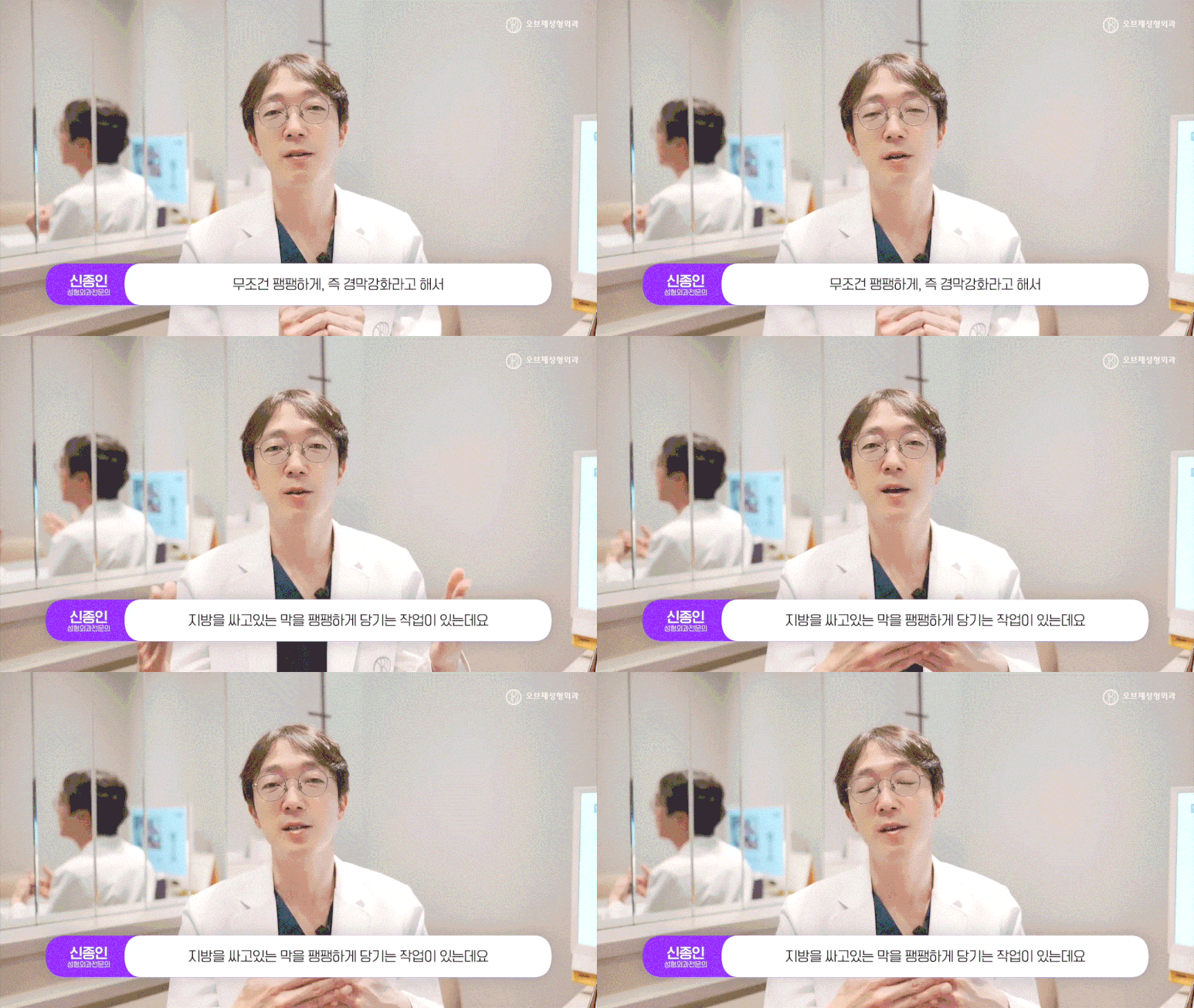
This process is called septal reinforcement.
After making an incision in the conjunctiva,
the loosened orbital septum is pulled to an appropriate tension
and firmly fixed.
At this time, it is not simply tied with a thread;
it must be sutured together with the surrounding tissue
to make the structure stable.
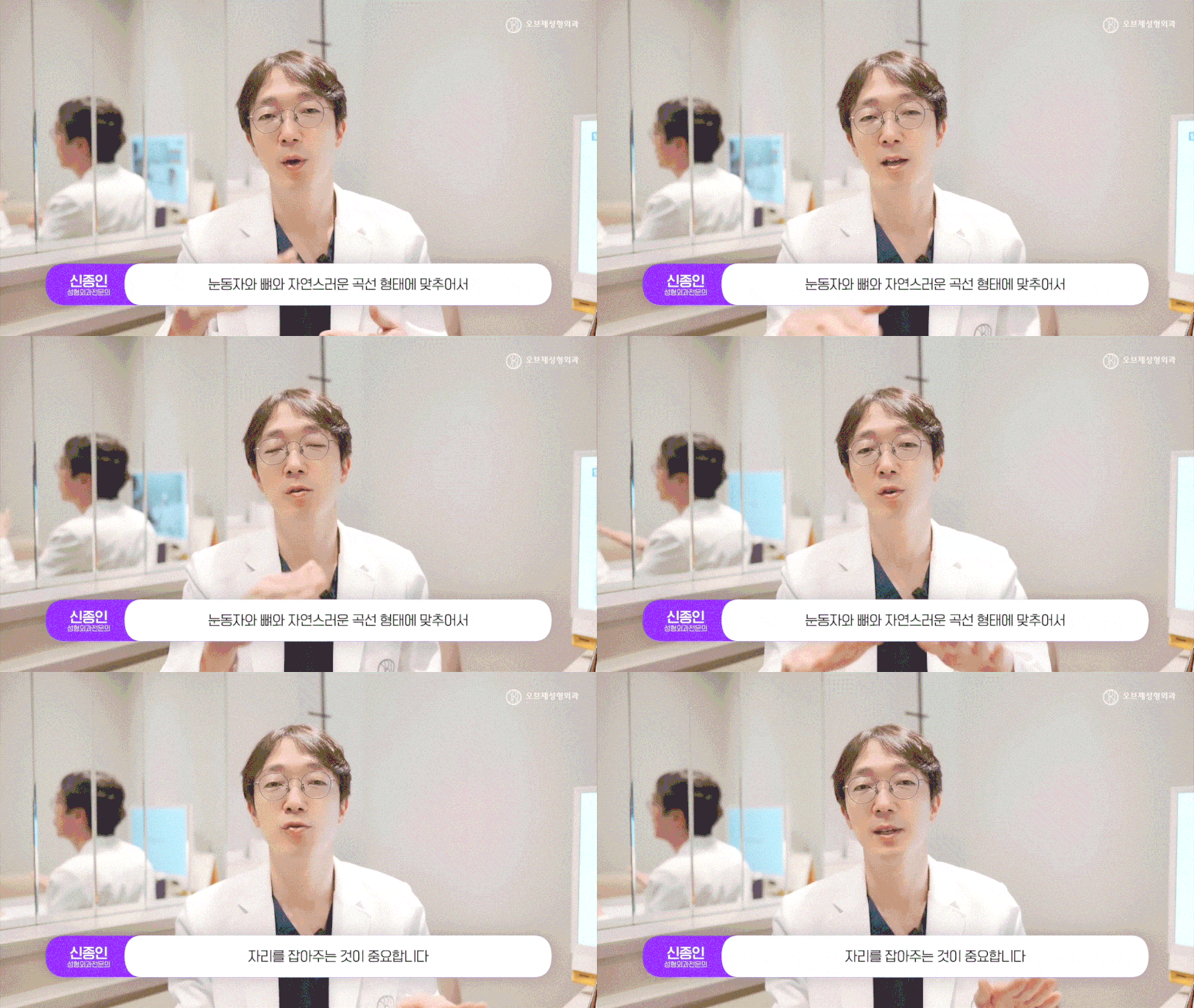
However, there is one important point here.
Pulling the septum too strongly is not necessarily better.
If it is tightened too much, the natural curve of the under-eye area can be lost,
making it look artificial instead.
Therefore, it is most important to position it according to
the natural curved shape of the eyeball and bone.
Achieving this balance
depends on the surgeon’s skill.
Next is how to treat entropion.
In this case, the hardened scar tissue that has contracted
needs to be gently released.
To explain it more simply,
a state where the eyelid curls inward
is similar to a shortened string pulling constantly from the inside.
There are two ways to address this string.
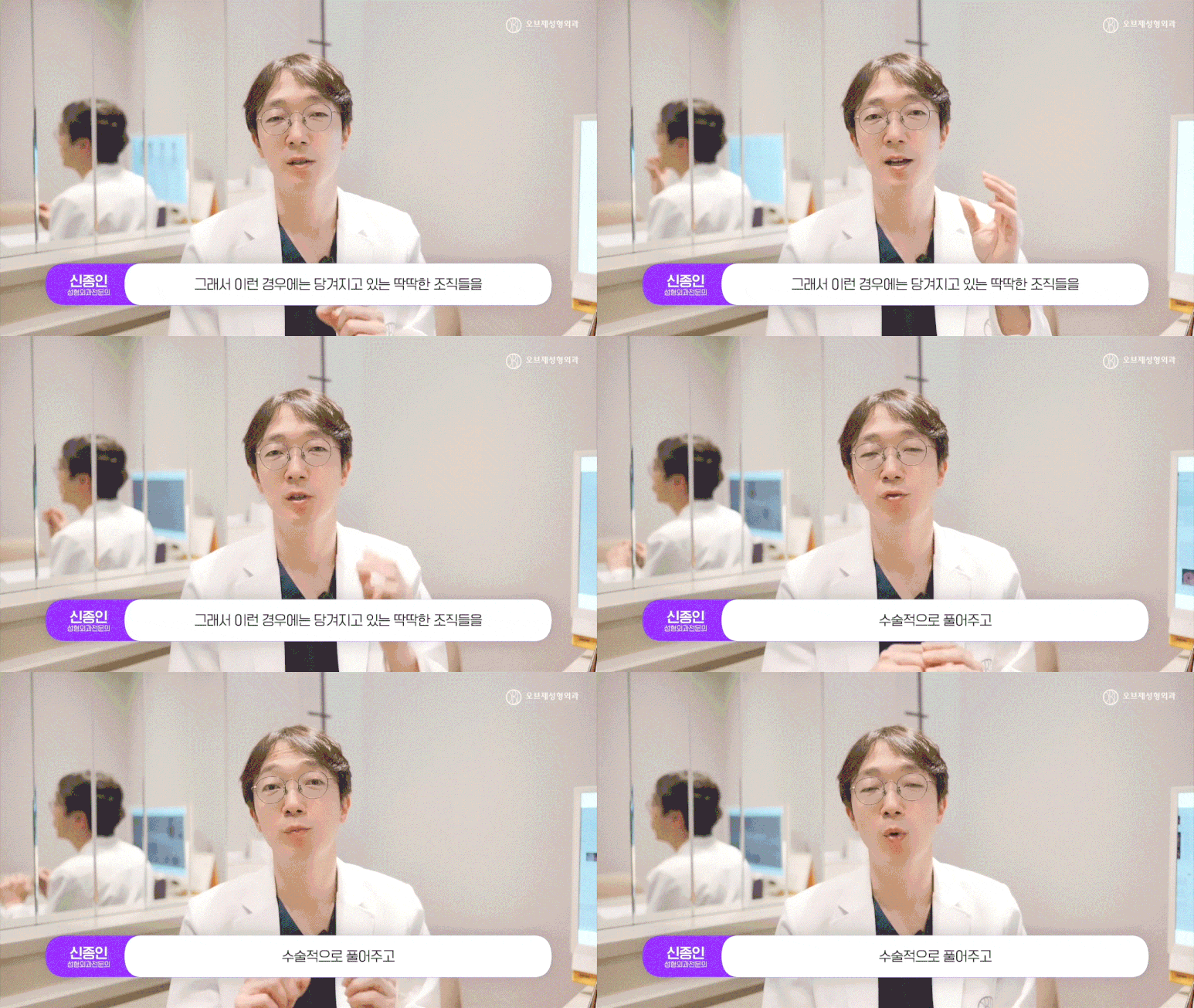
The first is to lengthen the shortened string itself.
The conjunctival area is incised again,
and the hardened, clumped scar tissue is carefully separated.
When the adhered areas are released like this,
the pulling force decreases,
and the eyelid can gradually flatten outward.
But sometimes this alone is not enough.
That is because the scar tissue has already contracted,
reducing the available space itself.
So the second method is needed.
It is to fill in the reduced space itself.
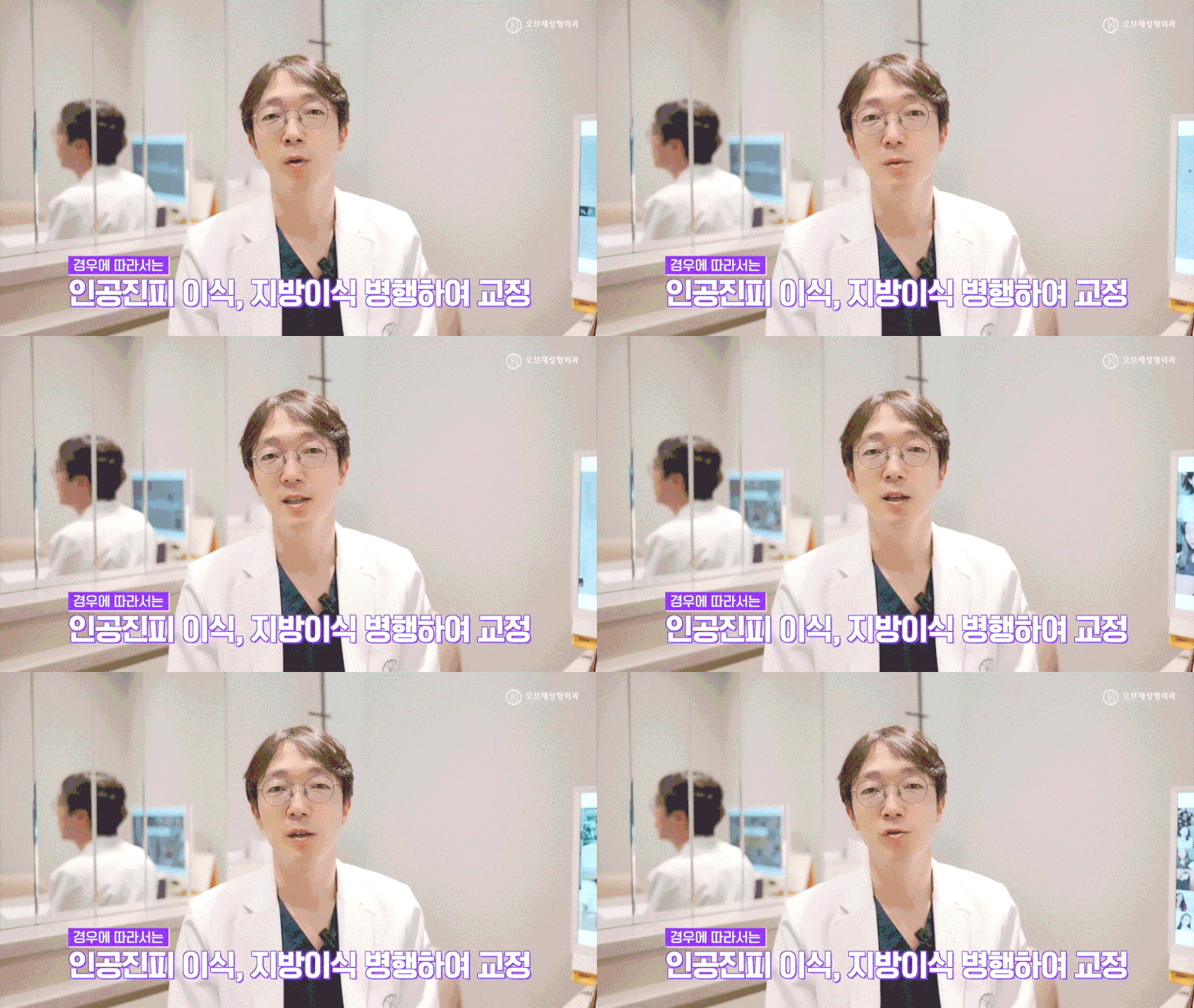
This is where artificial dermis
or autologous fat grafting comes in.
If this is inserted into the shortened space on the back side of the eyelid,
it can 확보 the tissue length, as if a cushion were supporting it.
With this, the pulled tissue relaxes,
and the eyelid can return to its original position.
Objet Plastic Surgery
has many years of experience in the field of lower eyelid fat repositioning surgery,
and has achieved stable results by handling a wide range of cases.
In particular, for lower eyelid fat repositioning revision surgery,
we believe that ‘accurate diagnosis and structural design’
are more important than anything else.
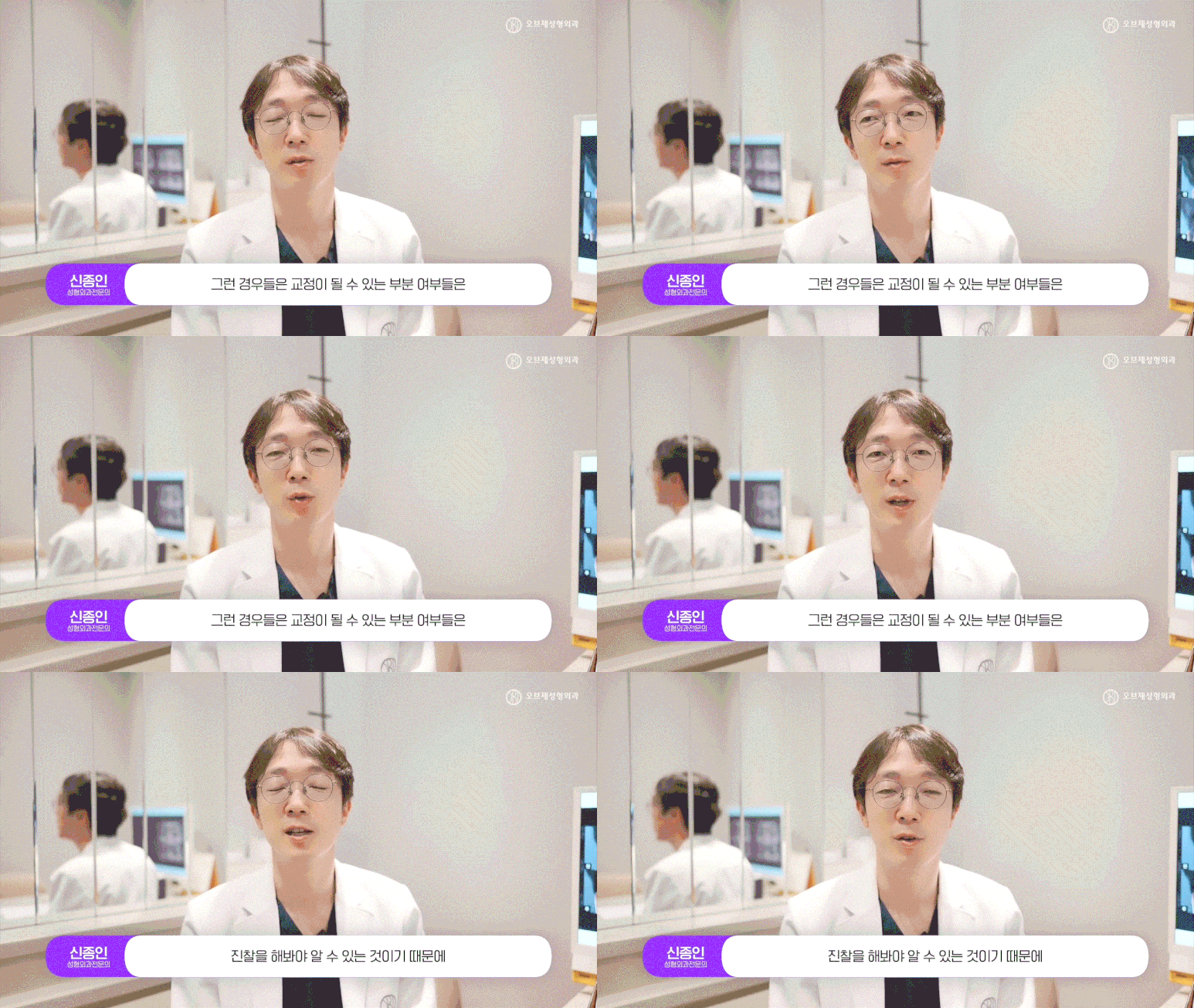
So after carefully analyzing each person’s eye structure
and skin condition,
we focus on designing the right balance for that individual.
Today, we looked at the two most common cases that occur after
lower eyelid fat repositioning surgery
and how to address them.
If the under-eye area has become puffy again,
septal reinforcement is needed.
If the eyelid has curled inward,
scar tissue needs to be released.
Because each cause and solution is completely different,
if you still feel discomfort after surgery,
we recommend that you do not simply dismiss it as a normal recovery process,
and instead receive an accurate examination.
You need to identify exactly which type your condition falls into
in order to find the most effective treatment method.
Most importantly,
what matters is not simply removing the symptoms,
but restoring a natural and balanced eye contour.
Since you have already undergone surgery once,
we hope you will make a careful decision this time
and achieve a result you won’t regret.
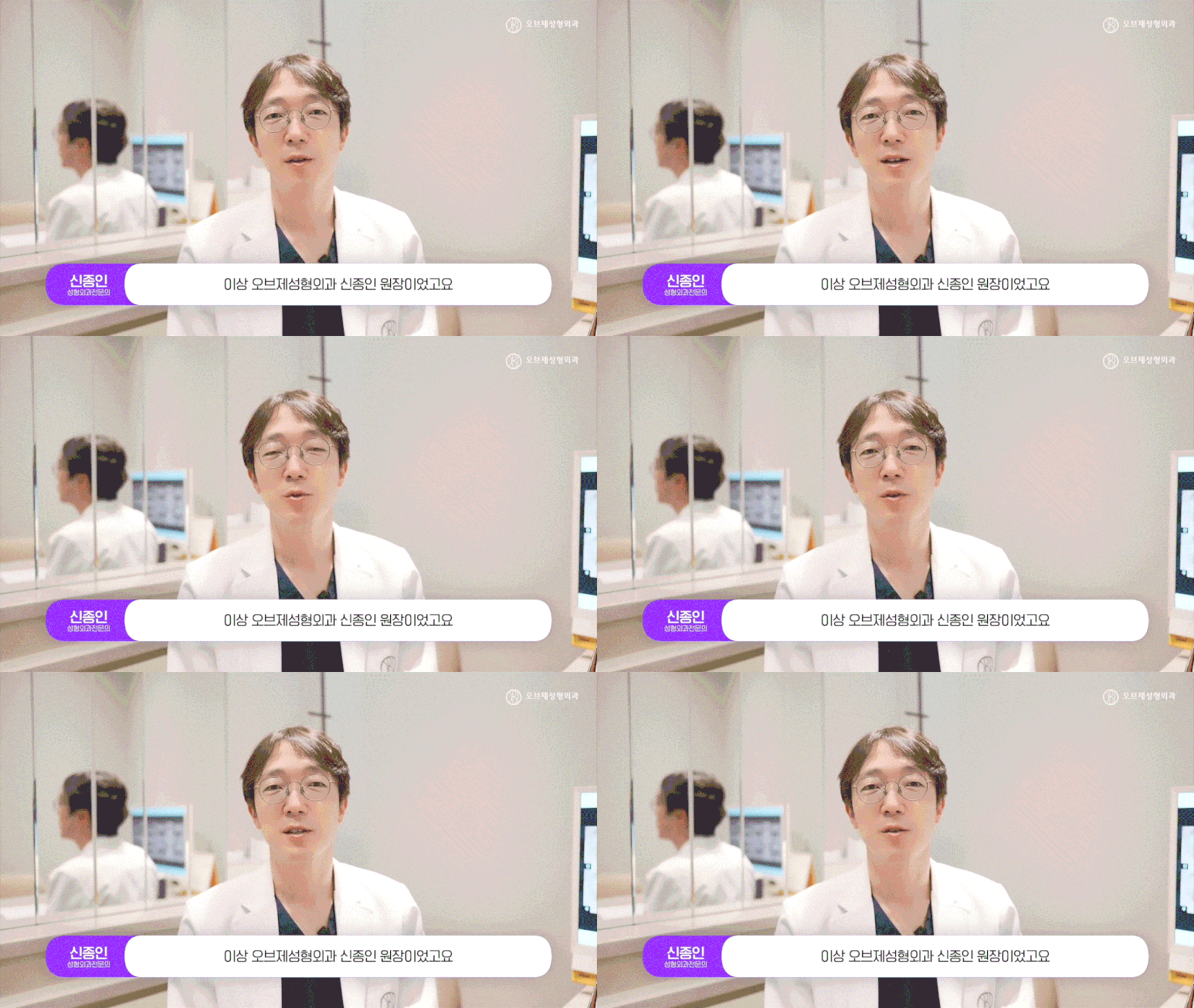
This has been Objet Plastic Surgery.
Thank you.
<🔽🔽Recommended video to watch together🔽🔽>
| Consultation and inquiries for lower eyelid fat repositioning |
|---|
| Fast phone consultation |
| Kakao simple consultation |
-
This post is medical information prepared by Objet Plastic Surgery Clinic in compliance with the Medical Advertising Act.
-
The effect of the procedure may vary depending on the individual, and side effects may occur.
We strongly recommend that you have a thorough consultation with medical staff in advance before deciding on the procedure.