Hello, this is Obje Plastic Surgery.
Are you considering revision nose surgery?
In particular, some of you may feel overwhelmed
because of contracture,
where the tip of the nose gradually turns up and becomes hard.
“Will it really be okay this time?”
We understand the worry about repeated failures
better than anyone.
That is why so many people search for
'a place that does contracture nose surgery well.'
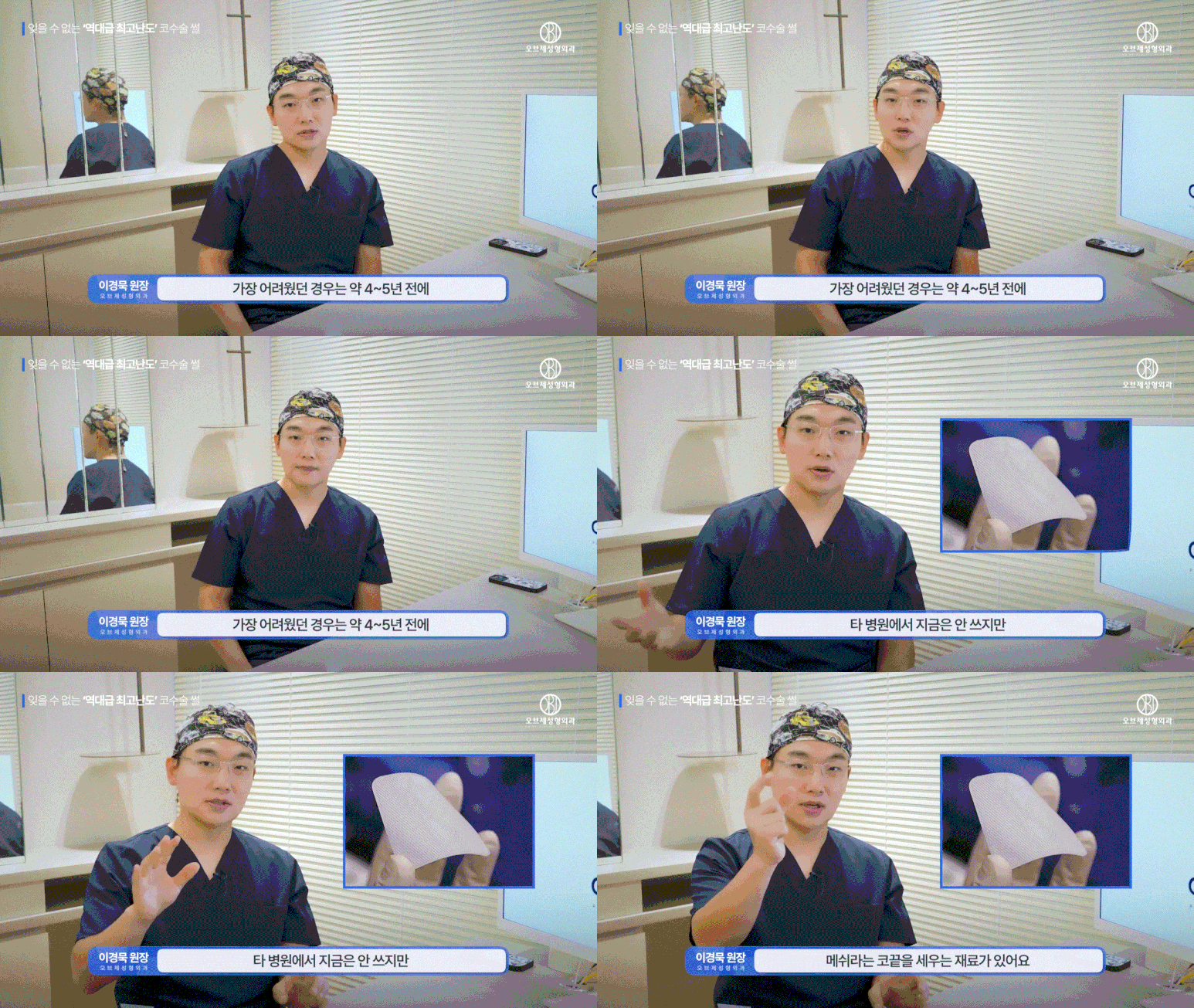
However, most clinics say that autologous rib cartilage must be used.
If you have already had surgery once or twice,
this can feel even more burdensome.
You may also worry that the tip of the nose will become too hard after surgery.
So today, we will explain in detail
the misconceptions about material selection in contracture nose surgery
and the key techniques that prevent recurrence.
If you are preparing for contracture nose surgery
and wondering whether rib cartilage is absolutely necessary,
or worrying that your nose might turn up again,
please read this post to the end.
Must it be autologous rib cartilage?
First, understand the real reason the nose turns up!
First, you need to understand what 'contracture' actually is
before you can understand the materials.
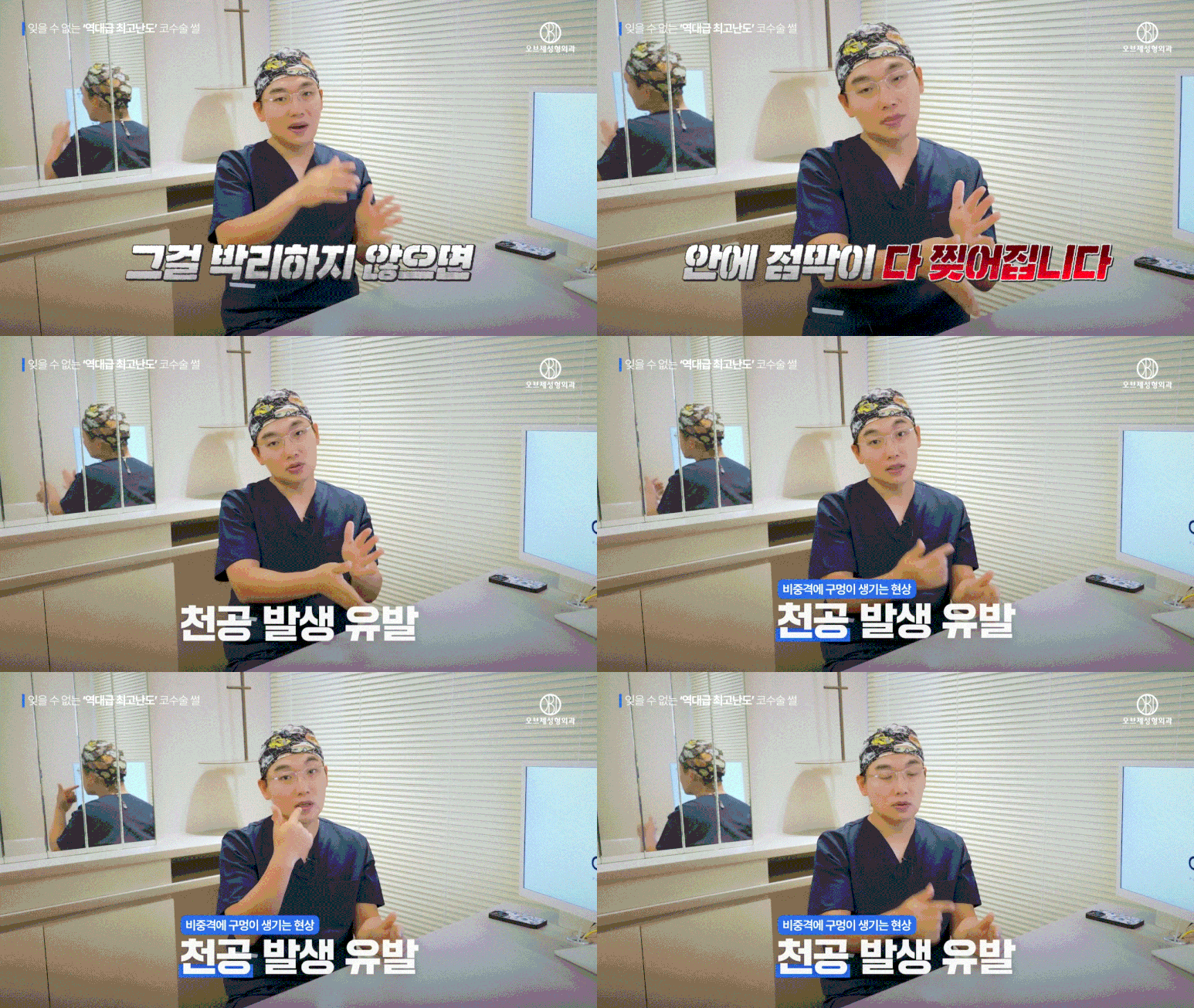
To put it simply, contracture is a kind of side effect
that occurs during the body's wound-healing process.
When you have nose surgery, the body recognizes that area as a scar
and tries to heal it.
At this time, new tissue is formed,
but the problem is that this tissue does not form as smoothly
as normal skin.
Just like the scab that forms when you hurt your knee
is harder than the original skin,
the surgical area is also filled with hard,
tough bands of scar tissue.
As these tissues gradually harden inside the nose,
they begin to pull the nose upward
because of their tendency to stick together and contract.
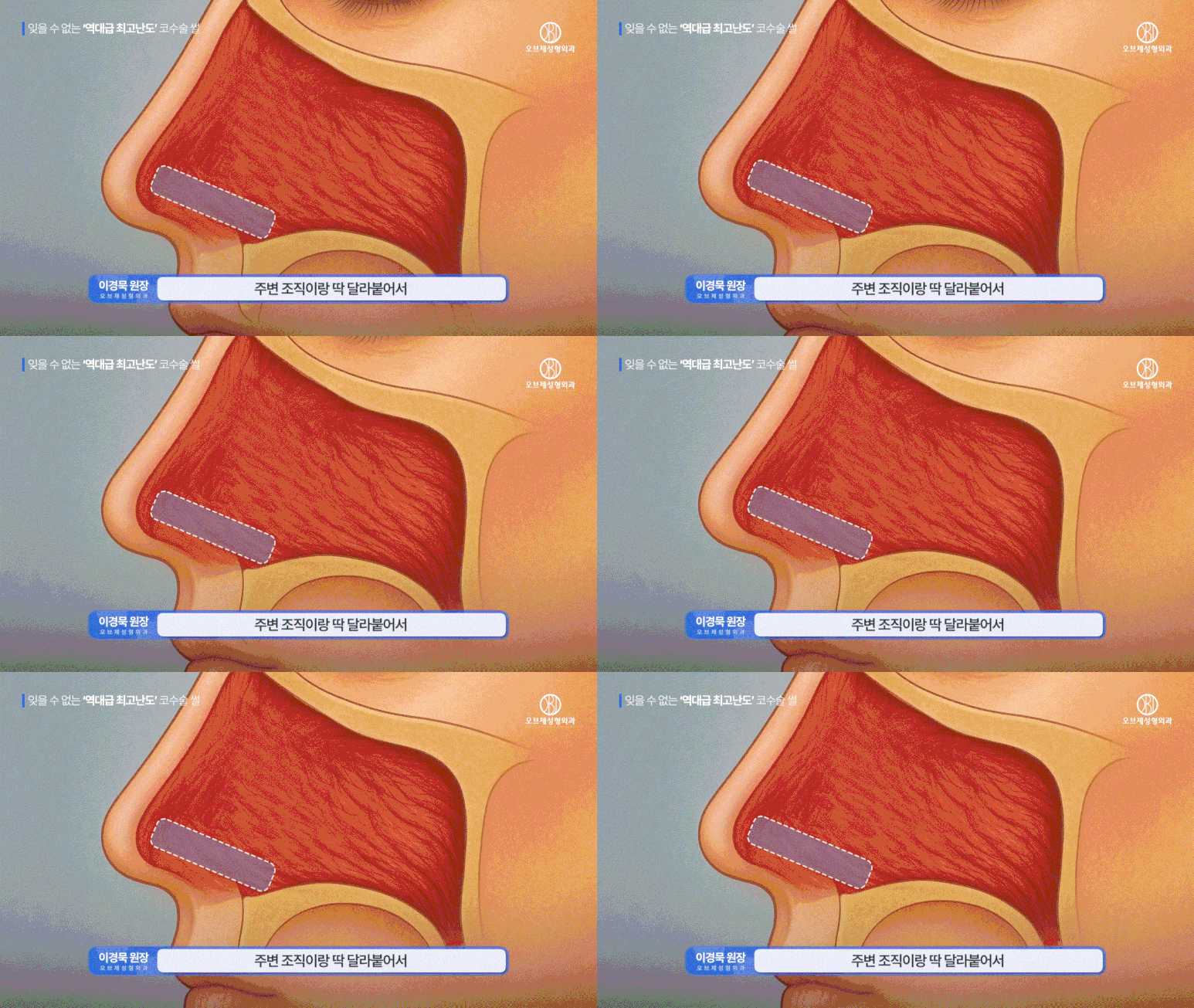
As a result, the tip of the nose gradually turns up,
and a contracture phenomenon appears,
where it feels hard to the touch.
What material should support such a strong pulling force?
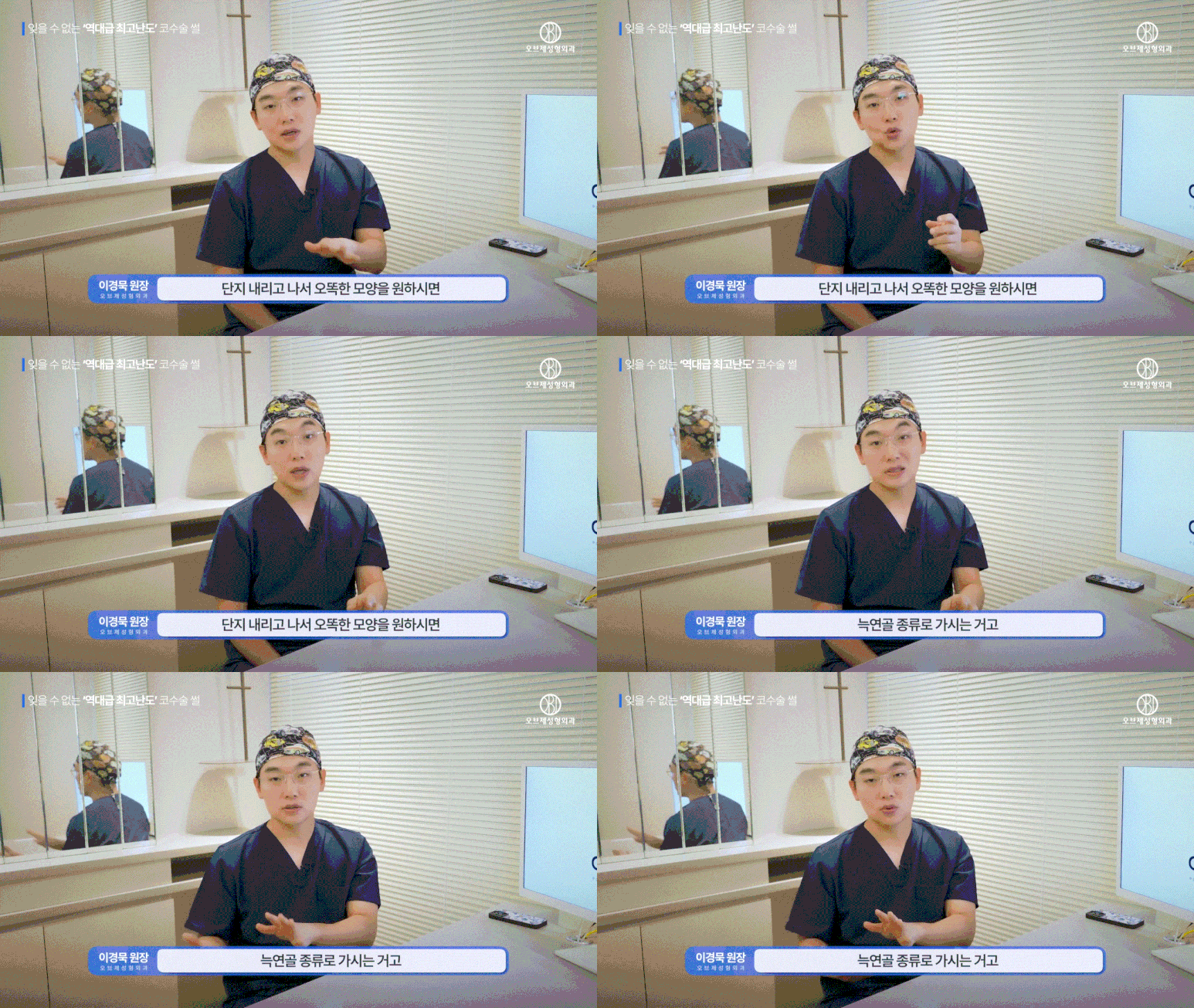
This is where 'rib cartilage' comes in.
Rib cartilage literally refers to the cartilage at the end of our ribs.
Because it has a property similar to bone in terms of firmness,
it is known as the most suitable material for acting as a support
that prevents contracted skin from being pulled upward.
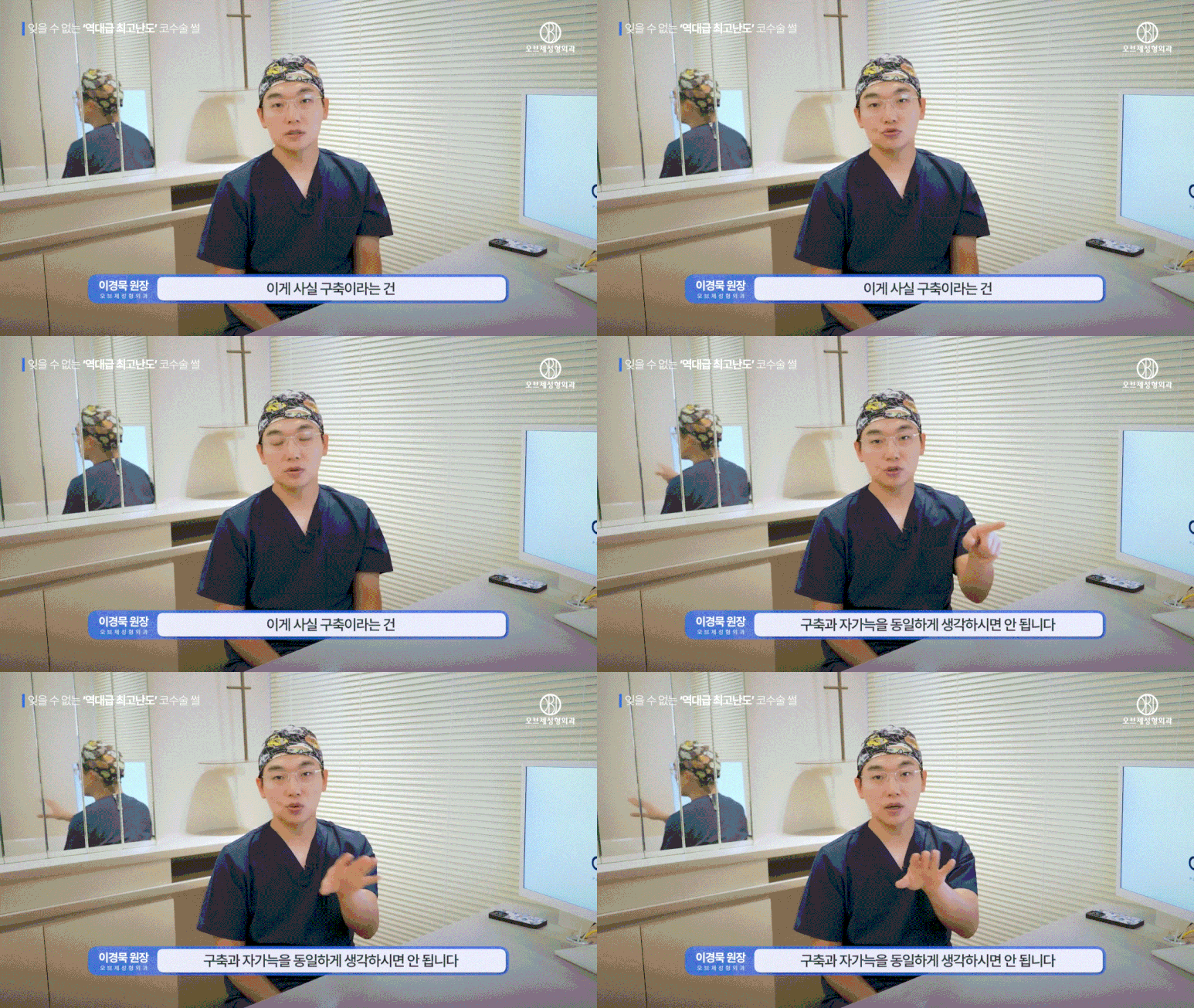
Of course, supporting the tip of the nose with a firm material is important,
but the truly fundamental solution is to remove the pulling force itself.
When looking inside the nose during surgery,
you can see white, tough bands of scar tissue
entwined like a spiderweb between normal tissues.
These scar bands are the main cause of the nose tip being pulled upward,
as they strongly tug on the skin from all directions.
What is needed at this point is the work of finding each of these scar bands one by one
and carefully cutting them.
When each scar tissue is delicately separated,
the force pulling the nose upward decreases,
and the skin regains its original flexibility.
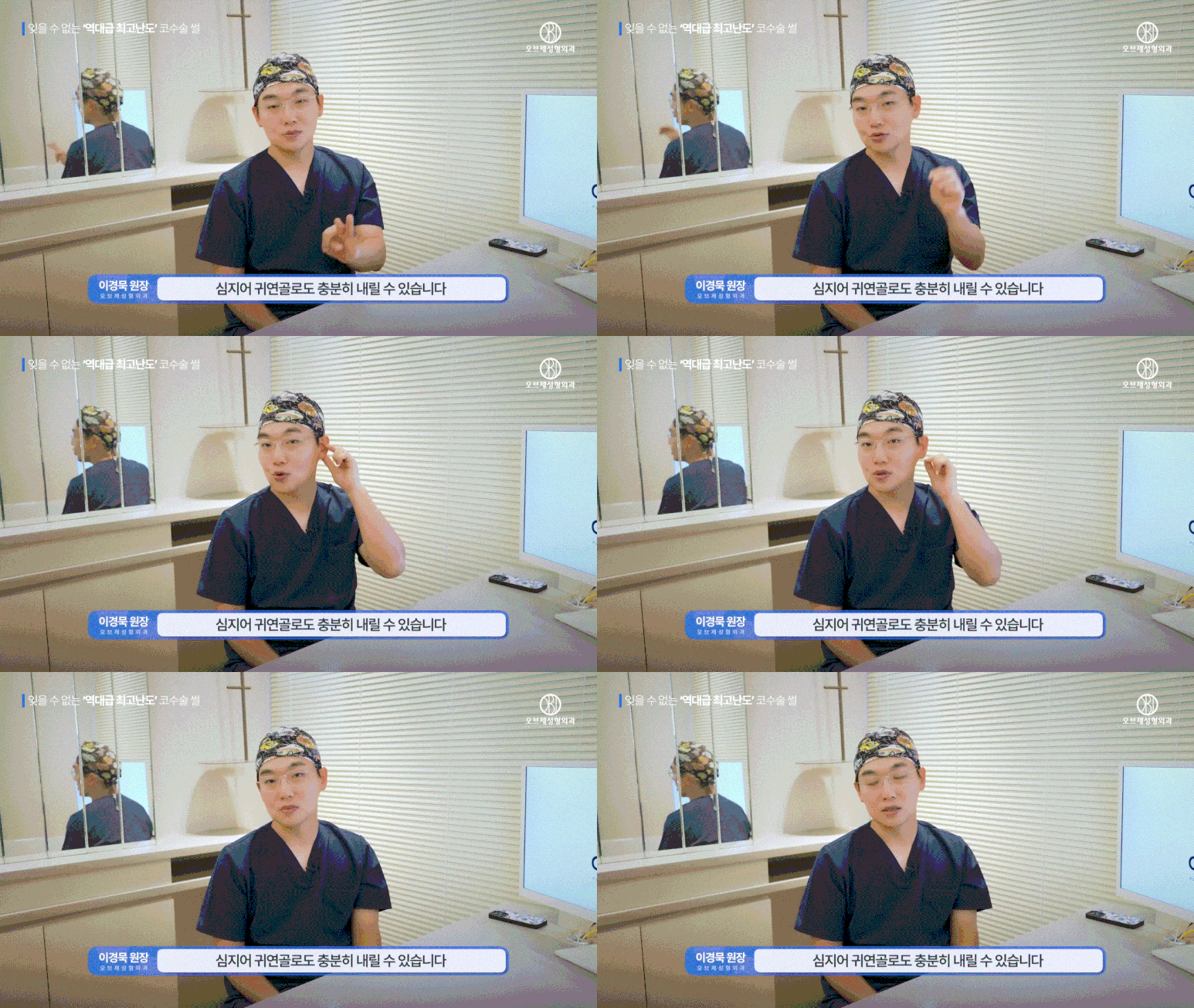
If the pulling force has been sufficiently reduced in this way,
you do not necessarily need firm rib cartilage.
A stable nose tip line can be created with ear cartilage alone.
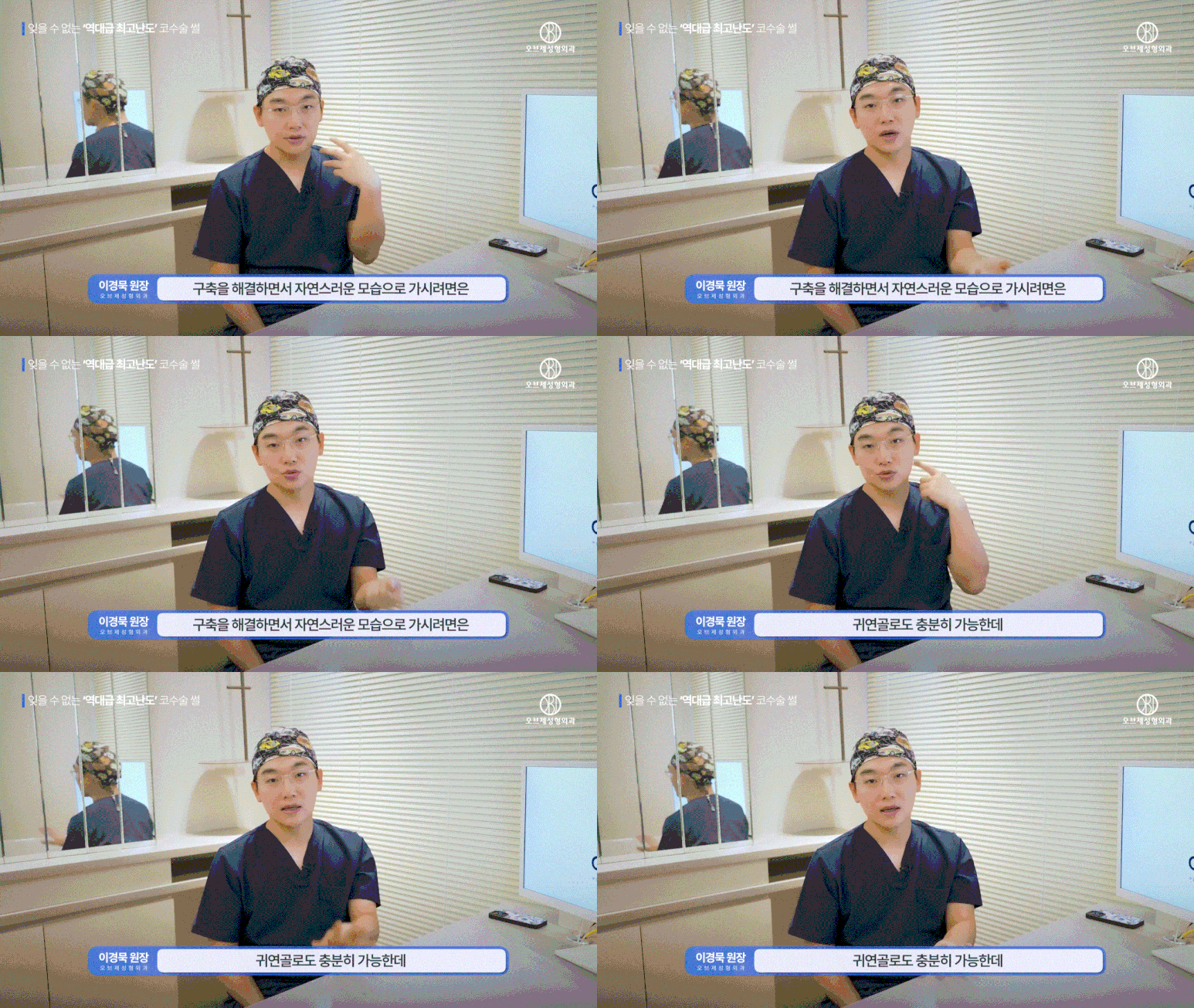
Of course, if you want a dramatic and high nose,
rib cartilage may be necessary,
but for a natural and soft-looking nose,
ear cartilage alone is fully sufficient.
Therefore, material selection can vary depending on the direction the patient wants.
What matters is not the unconditional use of rib cartilage,
but selecting the material that precisely matches the condition of your nose
and the shape you want.
How can we keep it from turning up again?
The key lies in this 'force'
The thing that people worried about contracture nose surgery fear most is that,
right after surgery, the nose looks fine,
but over time it begins to be pulled upward again.
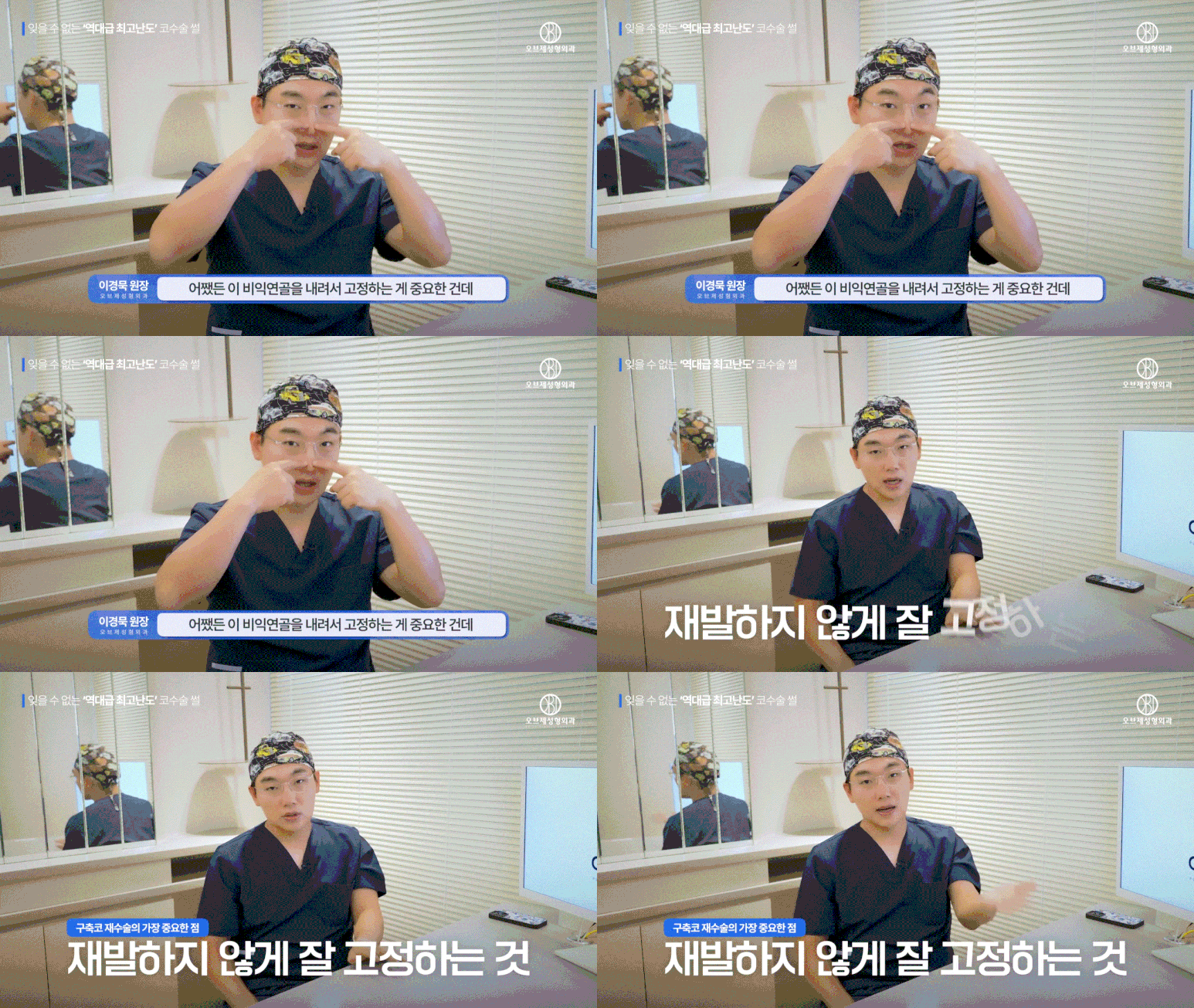
To prevent this risk of recurrence,
simply transplanting cartilage and increasing the length may not be enough.
A technique that secures it firmly is needed.
As mentioned earlier, a contracted nose has a spring-like tendency
to return to its original state.
If left alone, it can rise again over time because of the strong contracting force of the scar.
So simply lengthening it is not enough;
there needs to be a structure that firmly 'holds it down' in place.
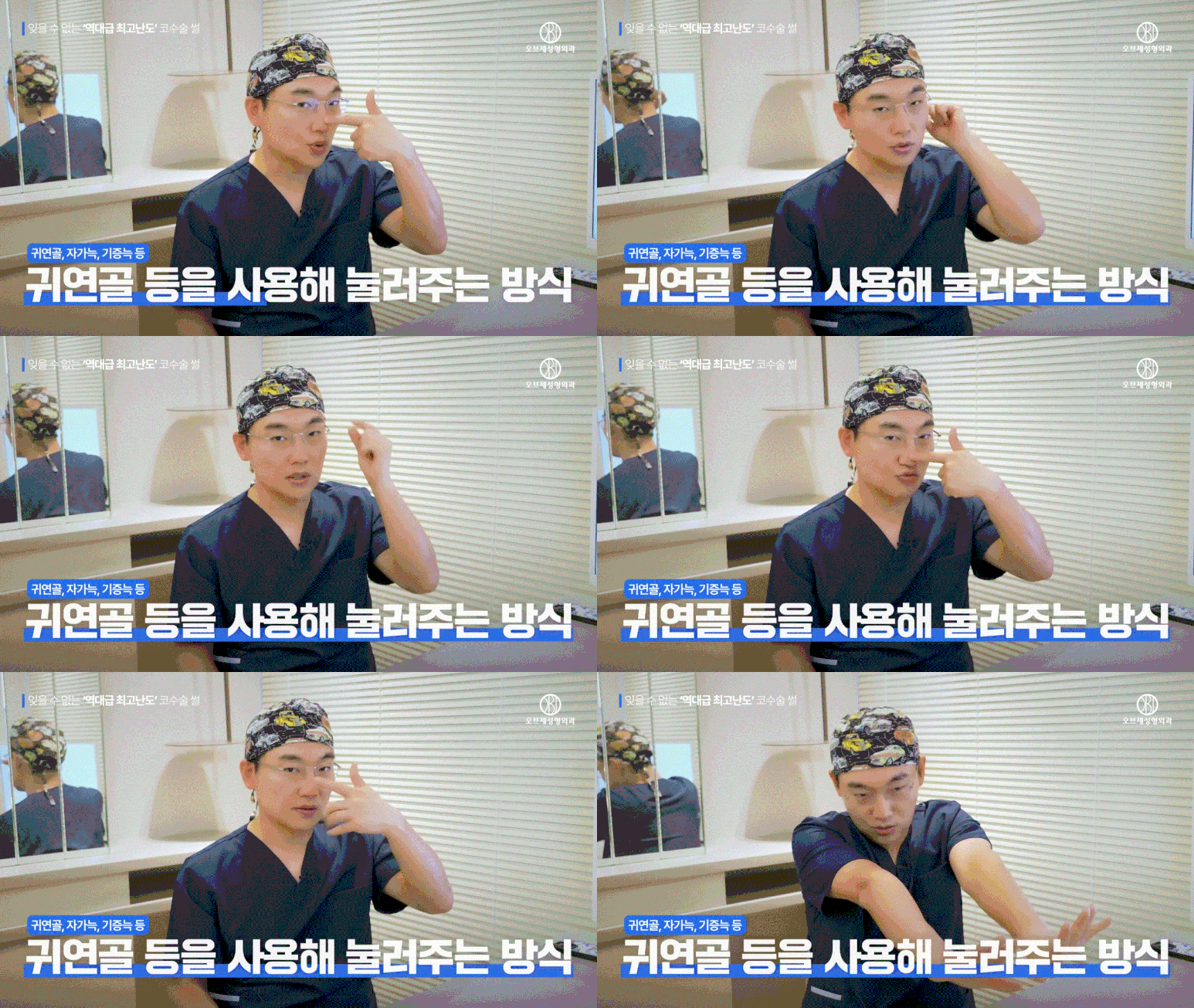
For example, after lowering the nose tip to the desired position,
if ear cartilage or another support cartilage is placed over it like a roof and pressed down,
it becomes possible to suppress the force that tries to pull the nose tip upward again over time.
Securing this kind of structural support
is an important step in preventing recurrence.
In the end, the success of contracture nose surgery depends less on
which material is used
and more on how precisely this structural balance is created.
So far, we have looked at material selection for contracture nose surgery
and tips for preventing recurrence.
When our clinic, Obje Plastic Surgery, performs revision nose surgery,
one of the areas we pay the most attention to is uncompromising detail.
Even after finishing all the suturing in the operating room,
we check the patient's side profile from a distance.
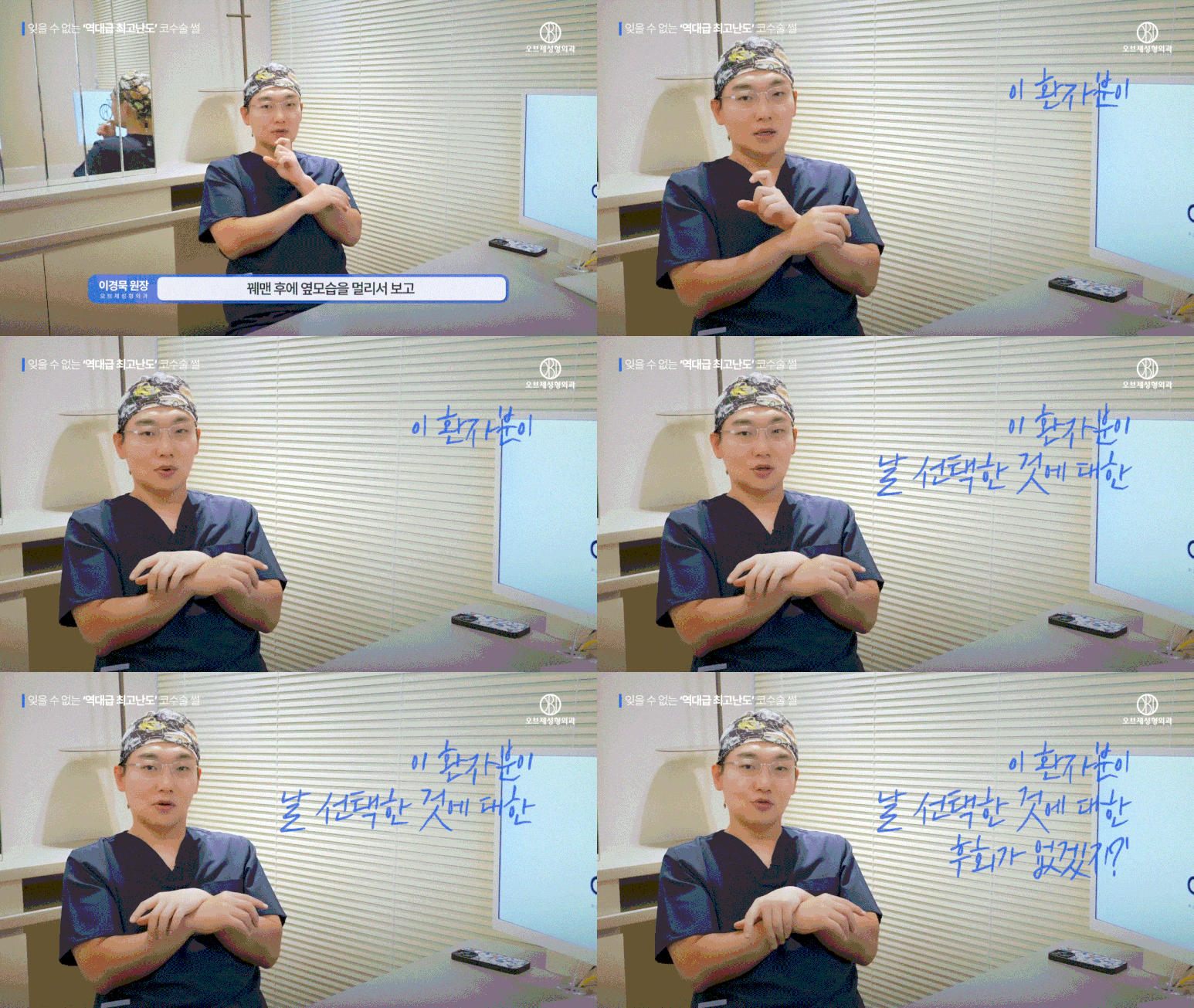
At that point, if even a very slight asymmetry is visible,
or if we find anything that the patient might later regret,
we do not hesitate to reopen the surgical site.
That is because after the swelling goes down,
there should be no regret even when we consider how it will look six months or a year later.
This kind of persistence—never ending the surgery with a casual
'good enough'—is what I believe truly makes the difference
that defines a place that does contracture nose surgery well.
If you have been putting off surgery,
please take the time to properly understand the condition of your nose and the direction you want,
and then find a clinic that selects the right material for that.
And above all,
please make sure it is a place with an obsessive attention to detail
and the persistence to never miss even small differences.
I hope this post has been helpful in your decision-making.
That was Obje Plastic Surgery.
Thank you.
<🔽🔽Recommended video to watch together🔽🔽>
| Consultation and inquiries for contracture nose surgery |
|---|
| Quick phone consultation |
| Kakao simple consultation |
-
This post is medical information written by Obje Plastic Surgery Clinic in compliance with the Medical Advertising Act.
-
Treatment results may vary depending on the individual, and side effects may occur.
It is recommended that you receive 충분히 상담을 진행한 후 시술을 결정하시는 것을 권장드립니다.