Upper Blepharoplasty Review,
Worried You Won’t Be Able to Go to Work Because of Swelling?

Hello. This is Obje Plastic Surgery.
Have your drooping eyelids been making your vision feel cramped lately,
and have you been considering surgery because the outer corners of your eyes are irritated?
That’s probably why you searched for upper blepharoplasty reviews.
But unlike what you expected, seeing photos of extremely swollen eyes
may have made you worry about recovery speed,
and whether the swelling will still be there by next month’s gathering,
leaving you with serious concerns about the recovery period.
After all, compared to when you were younger,
you can physically feel that wounds heal more slowly.
So today, we’ve prepared a post to help ease that anxiety.
Let’s look at why upper blepharoplasty in middle age is more likely to cause swelling,
and how you can shorten the recovery period.
- Why are 20s fine, but middle-aged eyes so swollen?
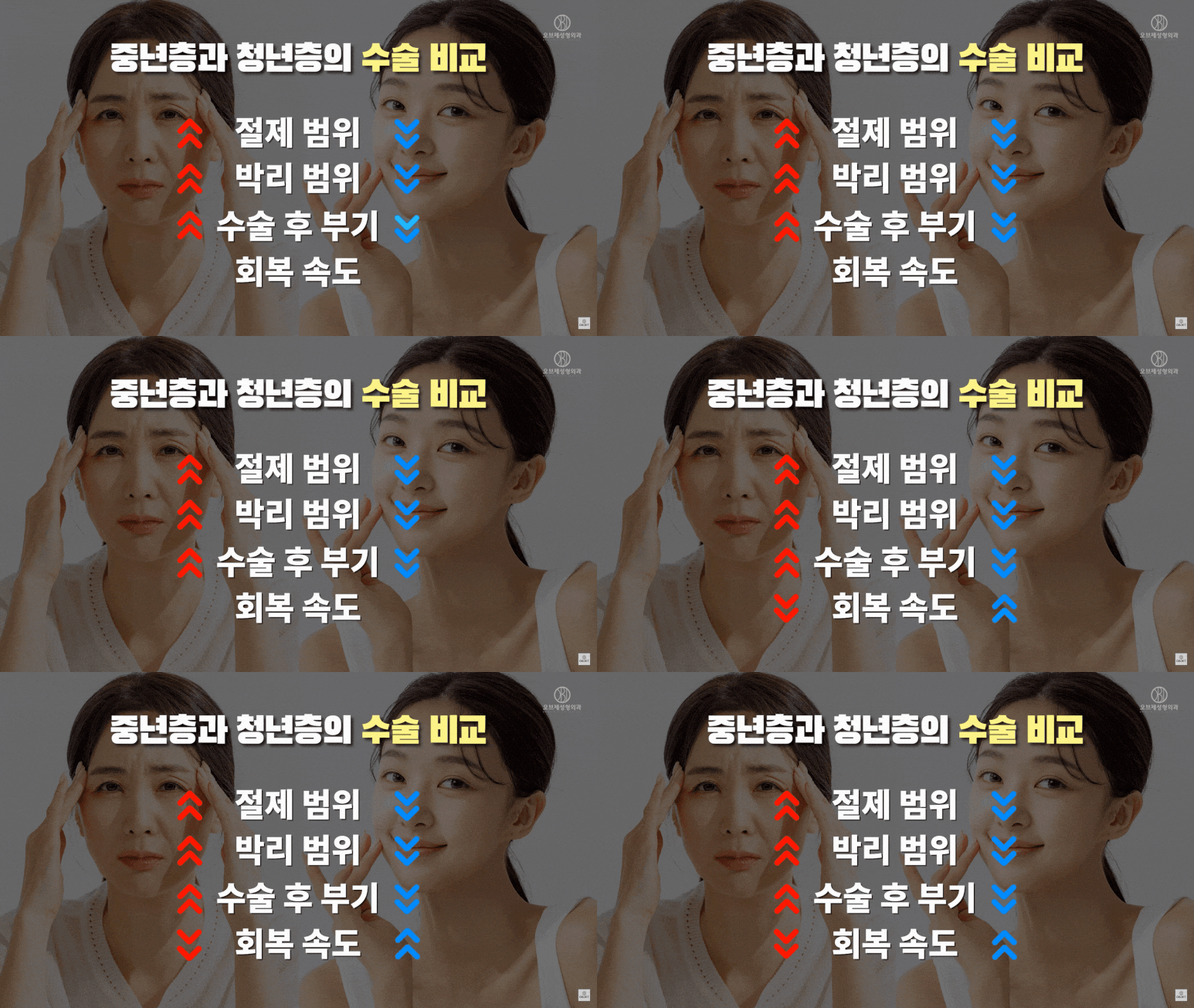
Many people ask this:
"It’s just a double eyelid surgery, so why is the swelling so bad?"
Upper blepharoplasty for middle-aged patients
is different from double eyelid surgery in your 20s.
In younger patients, the key is to create a line on relatively elastic skin,
so the incision range is smaller and tissue damage tends to be less.
By contrast, middle-aged eyelids are not just about
forming a crease.
In many cases, the sagging skin itself covers the field of vision,
and the function of the muscle responsible for opening the eyes
is also weakened.
That is why upper blepharoplasty includes
a process of widely removing skin
and lifting and realigning the sagging structures upward.
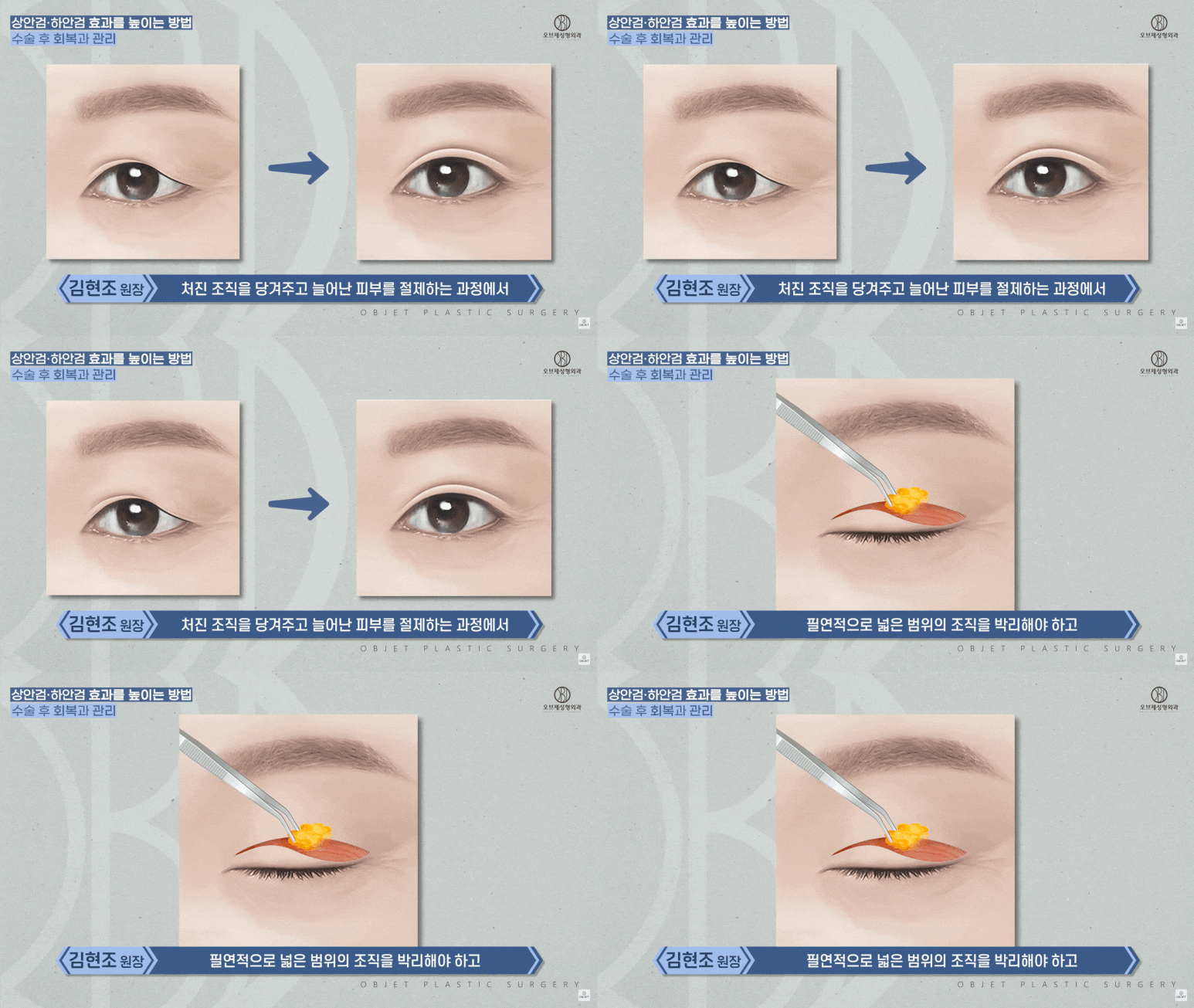
Because of that, the extent of dissection (separating tissues)
has to be wider, and the amount of incision can be greater.
It is not just a matter of trimming the skin;
the fat under the skin and, in some cases,
the position of weakened muscles also need to be adjusted.
Simply put, if we compare it to home repairs,
it is not just replacing the wallpaper,
but a major renovation that involves tearing down walls
and reinforcing the structure.
As the surgical area gets larger,
the body experiences a greater recovery burden,
and the swelling response can become more noticeable.
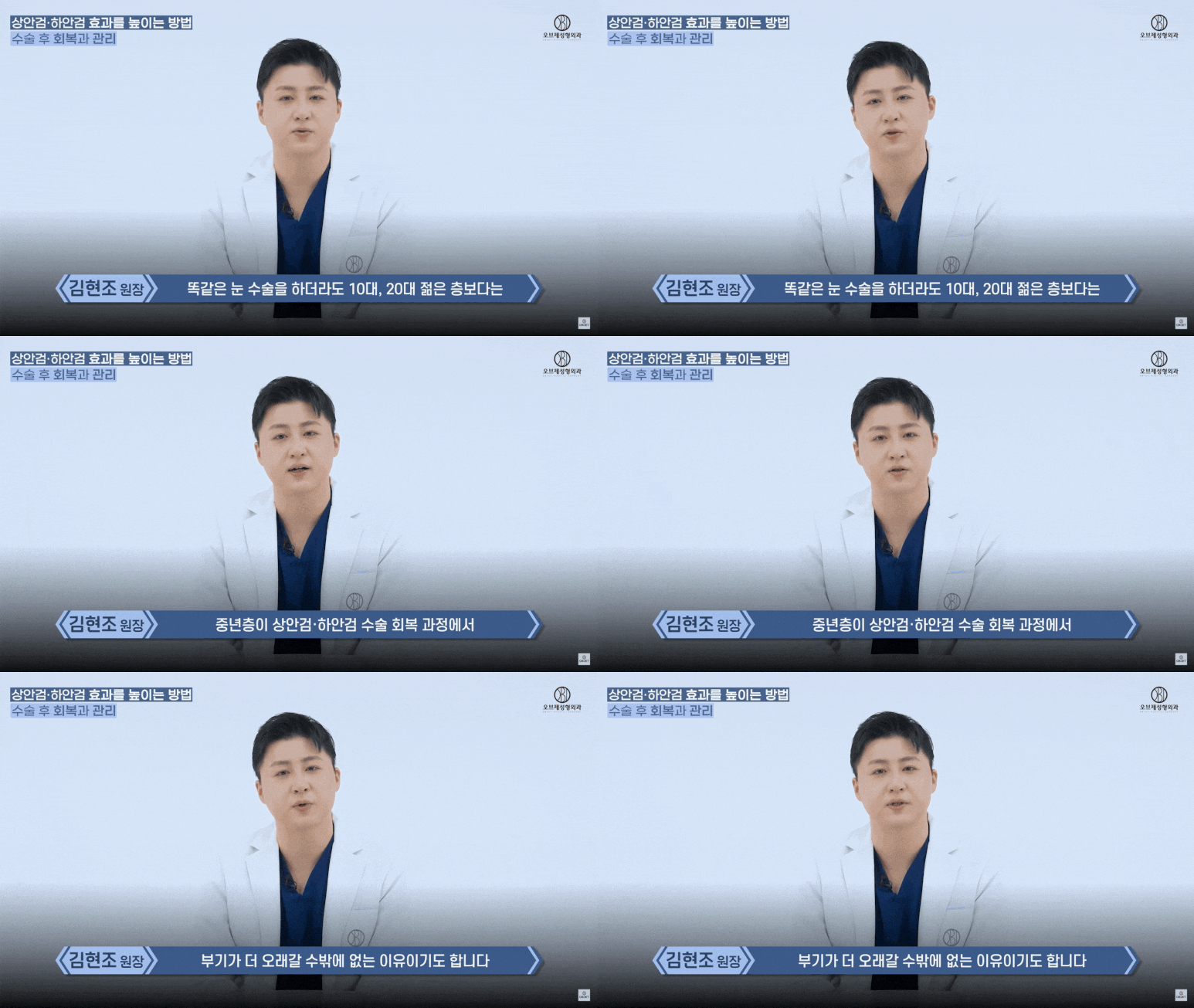
Another reason is that, in middle age,
vascular elasticity is lower than in younger years,
so the edema that develops after upper blepharoplasty
tends to drain more slowly.
So even with the same surgery,
swelling may last longer,
or the difference in swelling between morning and evening
may feel much larger.
In other words, if the swelling seems relatively severe, it is not because the surgery went wrong,
but because there were many necessary steps to achieve a definite lifting effect,
and the recovery process is simply showing itself as it is.
This is a natural process that must be accepted
for a clear lifting effect.
- If you want to reduce swelling, try getting this instead of ice packs!

If you’ve read this far,
you may naturally be curious about the recovery process.
After upper blepharoplasty,
people usually think of ice packs
as part of the recovery process.
Of course, ice packs are the most basic and important method
for reducing early swelling and heat immediately after surgery.
They help temporarily suppress excessive blood vessel dilation
and reduce bleeding and inflammatory responses.

However, ice packs are mainly meant to
temporarily calm the reactions that occur on the surface.
They have limits when it comes to directly accelerating
the internal healing process triggered by surgery.
That is why Obje Plastic Surgery takes it one step further.
To help a tired body recover quickly on its own,
we perform an intravenous infusion process that directly supplies
the materials and energy needed for recovery.
① Multiblue IV

This IV contains essential minerals such as selenium, zinc, copper, and manganese.
These minerals play the role of supporting engines that are essential in the body’s process
of regulating inflammatory responses and repairing damaged tissue.
After surgery, your energy may drop,
making it easy for the body to lack the energy needed for recovery.
When the nutrients needed at this time are replenished,
cell regeneration and wound healing can proceed more steadily.
As a result, it helps wounds heal
and swelling settle down faster.
② Glutathione IV
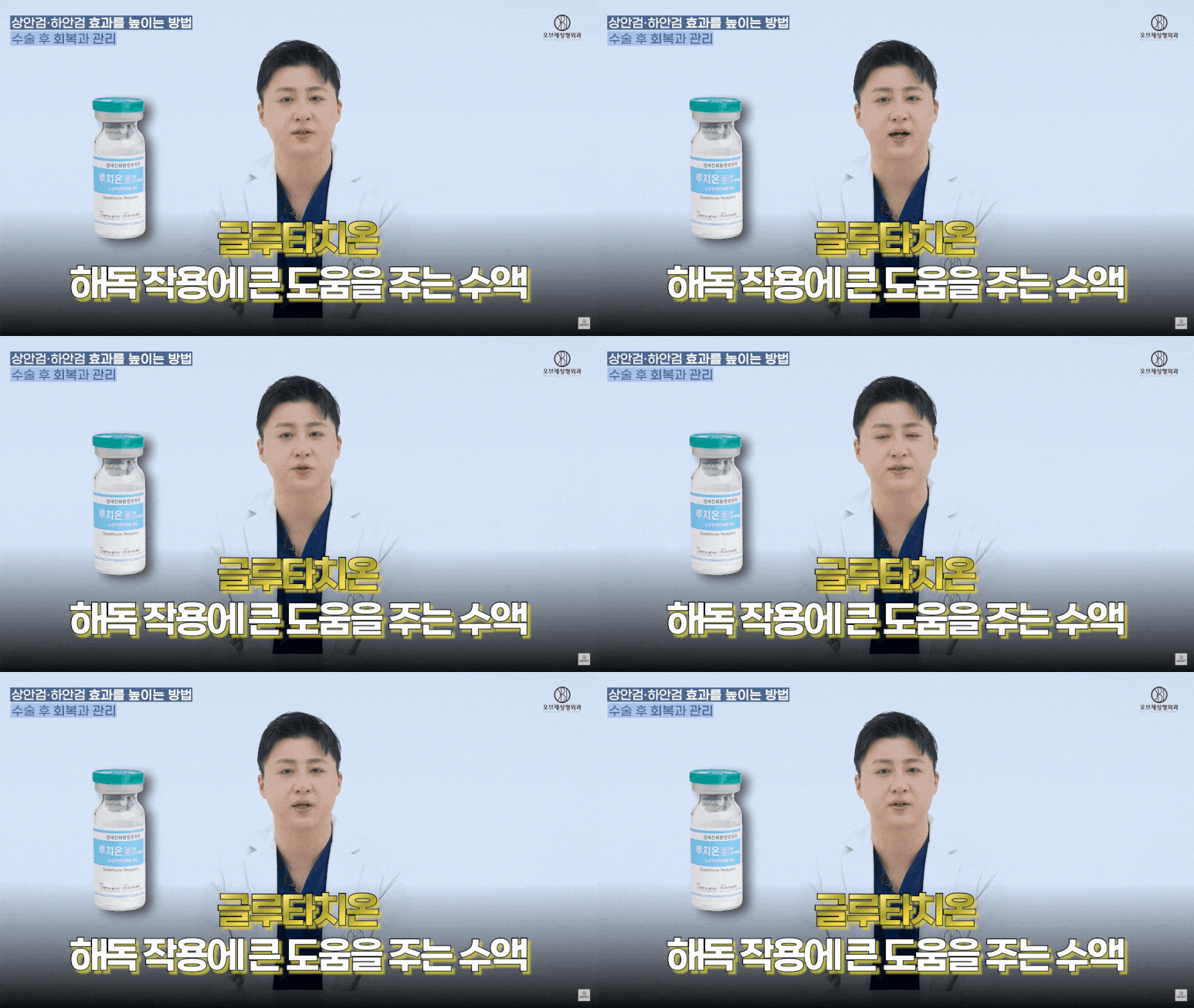
It is often known as the white jade injection,
but in fact, glutathione’s original function
is a powerful detoxifying effect.
Right after surgery, inflammatory and recovery responses
occur at the same time inside the body,
creating more waste products and oxidative stress
than usual.
If this is not properly managed,
the body may not be able to focus on recovery,
may become easily fatigued,
and swelling may take longer to resolve.
At this point, glutathione supports liver detoxification
and the antioxidant system,
helping reduce this burden,
and creating an environment where the body can focus its energy entirely on recovery.
In the end, these two IVs are not simply about reducing swelling,
but should be understood as recovery boosters that restart the body’s overall recovery engine
and reduce fatigue and stress that interfere with healing.
- What is the best partner to increase the effect of upper blepharoplasty?
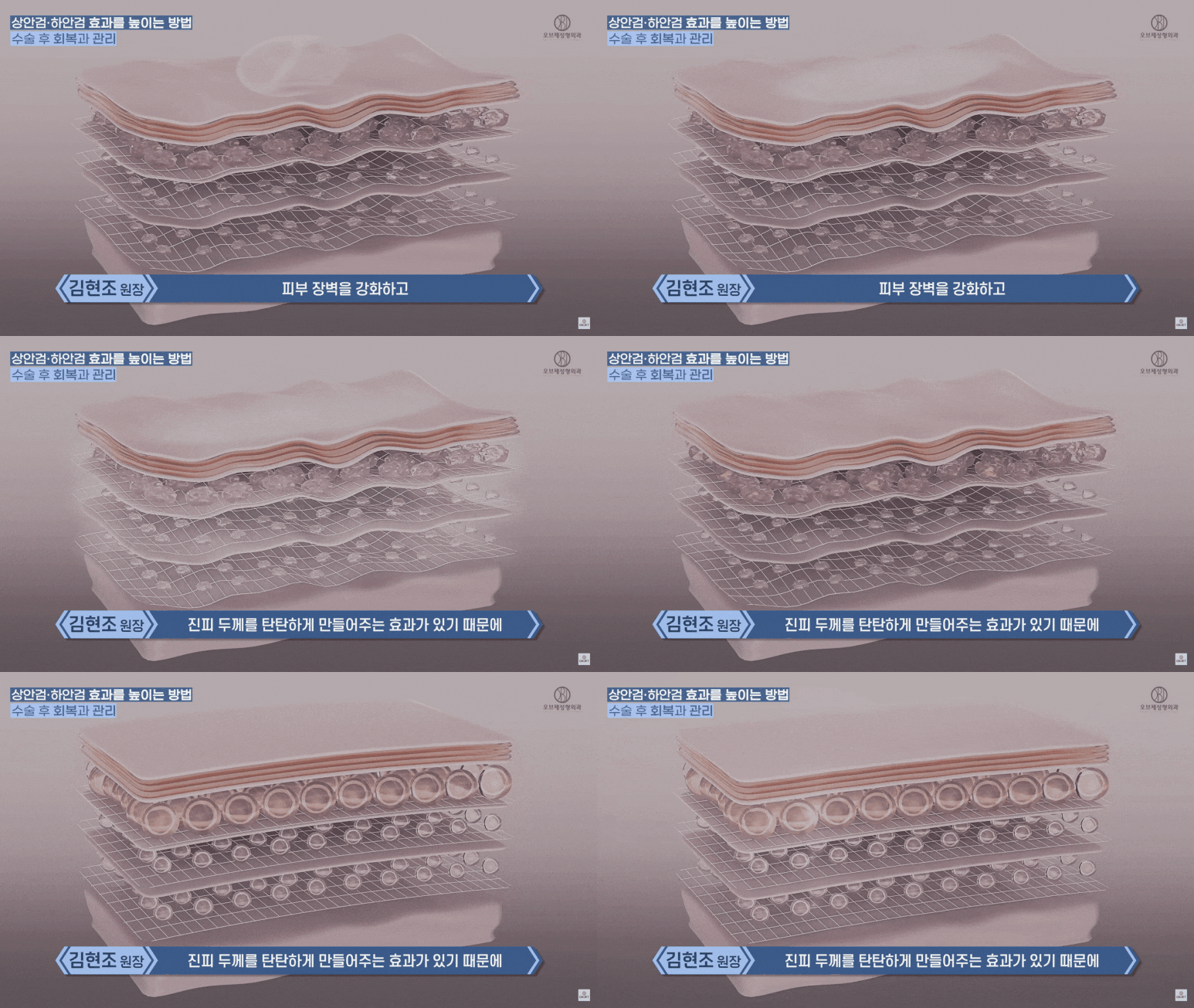
Upper blepharoplasty removes part of the sagging skin
and organizes the structure,
but it is not a procedure that completely changes
the skin’s texture or elasticity.
However, if the thinned skin around the eyes is left as it is,
even if the crease is well formed,
fine lines may reappear relatively quickly,
or dryness may become more noticeable.
That is why, at Obje,
we recommend combining upper blepharoplasty with a skin booster
(such as Rejuran, Vitaran, etc.).

In particular, skin boosters containing PN,
a salmon injection ingredient like Vitaran,
help increase the thickness and density of the dermis
and strengthen the skin barrier.
When this process is done together,
swelling recovery can also progress more steadily,
and fine lines or dryness that may appear around the eyes after upper blepharoplasty
can be addressed at the same time,
which can greatly improve overall satisfaction in upper blepharoplasty reviews.
Today we looked at the characteristics of upper blepharoplasty in middle age
and the recovery period.
For those who read today’s post,
you likely understood that for upper blepharoplasty in middle age,
the 'recovery process' is just as important as the result.

Even if the surgery itself goes very well,
the final refinement of the eye shape depends on how swelling and inflammation are managed afterward,
and how the skin condition recovers.
Therefore, if you are having surgery,
it is important to also look at what kind of care system the clinic has
for patient recovery.
Before upper blepharoplasty,
check whether they create a plan
that fits your eye condition,
and after surgery,
check whether they manage swelling and skin recovery
step by step for a much greater sense of reassurance.
If you have been putting off upper blepharoplasty
because you are afraid of a long recovery period,
you do not need to worry too much.
At a clinic that explains the surgical range your eyes need
and the recovery flow accurately,
plan recovery care that is right for you as well.
Just that process alone will greatly reduce anxiety about upper blepharoplasty reviews,
and make your confidence in the results much clearer.
This has been Obje Plastic Surgery.
Thank you.
<🔽🔽A helpful video to watch together🔽🔽>
| Upper Blepharoplasty Consultation and Inquiries |
|---|
| Phone quick consultation |
| Kakao easy consultation |
-
This post is medical information prepared by Obje Plastic Surgery Clinic in compliance with the Medical Advertising Act.
-
Treatment effects may vary depending on the individual, and side effects may occur.
We recommend having a thorough consultation with medical staff in advance before deciding on the procedure.