쌍수 절개 비절개, 헷갈릴 땐 이렇게 구분하세요 (박시현 원장 설명)
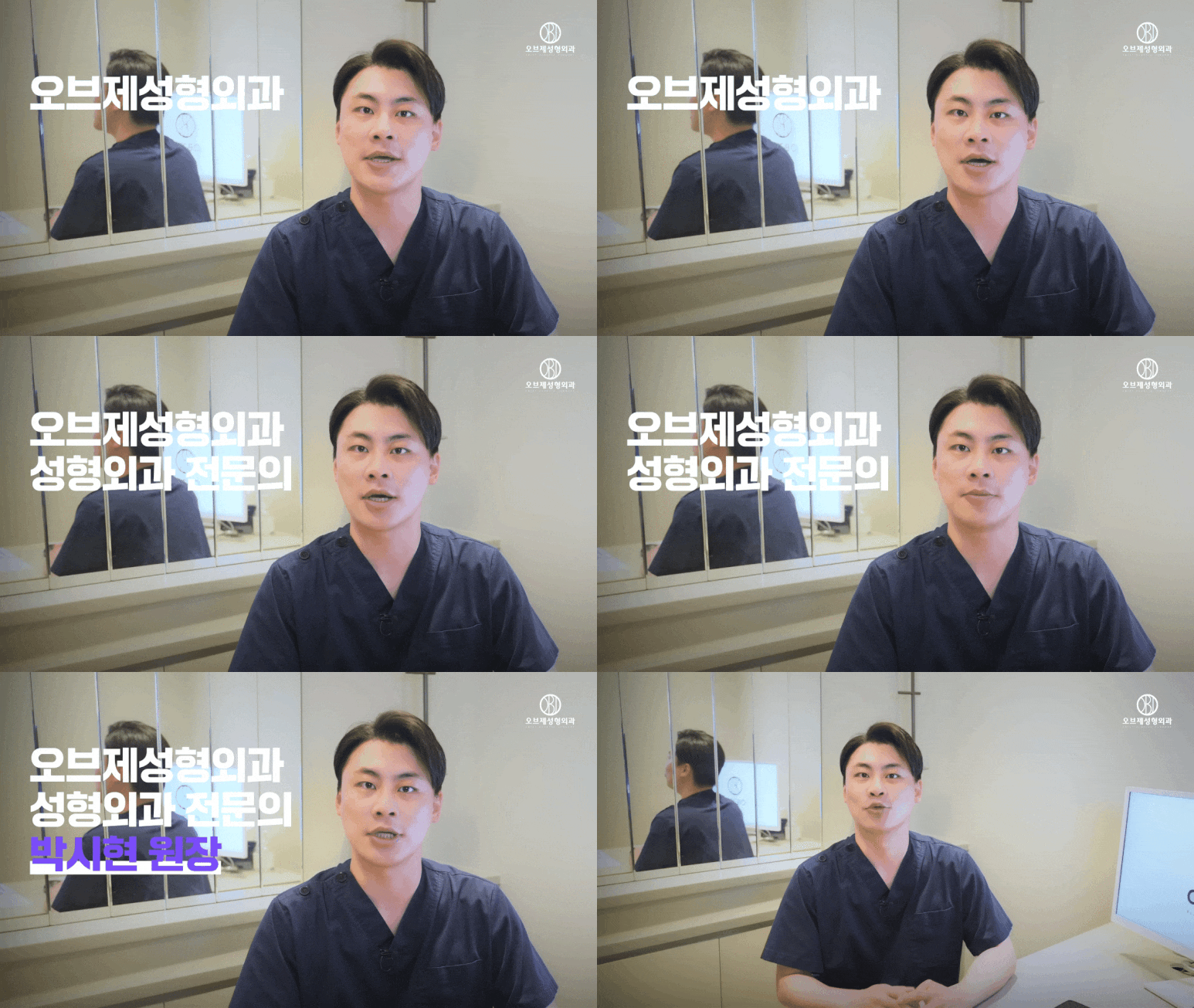
Hello. This is Objet Plastic Surgery.
These days, when we conduct consultations for double eyelid surgery,
we get questions like these very often.
"I want it to look as natural as possible.
Can it be done with a non-incisional method?"
"The non-incisional method has a shorter recovery period, right?"
If you are reading this article,
there is a high chance you are 고민 about the same thing.
If you search online,
you’ll see comments saying non-incisional methods are natural but easy to loosen,
and that incisional methods are definite but more burdensome.
But there is one key point
that needs to be addressed here.

The 기준 for choosing between incisional and non-incisional double eyelid surgery
is not simply “the method I want,” but rather
“what my eye structure allows.”
So today, we’ll go over the differences between the two surgical methods
starting from the structure of the eyelid,
and clearly organize which method is suitable for which type of eye.
If you read to the end,
it will definitely help you make the right choice
for your own eyes.
Q1. Incisional vs. non-incisional: why do results differ so much
when it’s the same double eyelid surgery?
To understand the difference between incisional and non-incisional double eyelid surgery,
we first need to know how a double eyelid is formed.
Our eyelids have a key muscle
that opens the eyes.
When this muscle contracts, the eyelid rises upward
and creates a fold in the skin—this is the double eyelid.
But for some people,
this fold forms naturally,
while for others, it does not.
The reason is the difference in how well the force of the eyelid-opening muscle
is transmitted to the skin.
If there is thick fat between the muscle and the skin,
or if the skin itself is thick and firm,
it becomes difficult for the muscle’s force to reach the skin.
So you can understand double eyelid surgery
as a procedure that connects the muscle and the skin.
Now, let’s look at the difference between the two methods.
Non-incisional double eyelid surgery does not involve cutting the skin.
Instead, only a few very small holes are made,
and sutures are passed through them
to connect the muscle and the skin.
The advantages of the non-incisional method are clear.
Since the skin is not incised, there is no need to worry about scars.
Recovery is also faster, so
usually, major swelling subsides in about 3 to 5 days after surgery,
and most bruising and minor swelling disappear
within about 2 weeks to a month.
That is why it is a preferred method for office workers and students
who need to return to daily life quickly.
But this may raise one question:
"Then why doesn’t everyone just choose the non-incisional method?"
Non-incisional surgery connects the muscle and skin
only through a very thin link called a suture.
However, if there is a thick layer of fat in between,
its weight can keep pulling on the suture over time.
Eventually, the suture may loosen,
or the adhesion may weaken,
causing the crease to fade or come undone.
On the other hand, incisional double eyelid surgery
involves making an incision along the eyelid line,
removing unnecessary fat in the area,
trimming loose skin or muscle,
and then directly suturing the muscle and skin together
to connect them.
Of course, because the skin is incised
and then sutured,
a fine incision line may remain.
However, since the incision line is created along the double eyelid crease,
it is hidden inside the crease when the eyes are open
and is not visible.
Because incisional double eyelid surgery
fundamentally corrects the internal structure,
it requires a longer recovery period.
Sutures are usually removed on day 5 to 7,
and major swelling may last about 1 to 2 weeks.
For about a month, the crease may appear darker and deeper than usual,
and over 3 to 6 months, as minor swelling gradually subsides,
it settles into a more natural and defined eye shape.
But because it takes time,
it has the major advantage of maintaining a clear crease for a long time
without worrying about it coming undone.
Q2. My eyes: incisional or non-incisional?
3 criteria used by Director Park Si-hyeon
If you’ve read this far, you probably have a fairly good understanding
of the structural differences between incisional and non-incisional double eyelid surgery.
Now let’s look specifically at
which method is suitable for your eyes.
First, eyes suitable for non-incisional double eyelid surgery
need to meet three main conditions.

First, the eyelid skin should be thin.
The thinner the skin, the more easily the movement of the muscle
is transmitted to the skin, and the better adhesion can be achieved
with sutures alone.
Second, there should be little fat.
If there is a lot of fat in the upper eyelid,
the sutures may not be able to withstand the weight of the fat,
making it more likely to loosen over time.
Third, there should be no sagging skin.
As we age and the skin stretches,
non-incisional methods cannot remove the loosened portion.
In the end, the key conditions for the non-incisional method are
"thin skin, little fat, and no skin sagging."
If these three conditions are met,
a non-incisional method can still create a beautiful and natural-looking
double eyelid.
Conversely, cases that require an incisional method
can be understood as the opposite of the non-incisional criteria.
First, when the eyelid skin is thick and firm.
Thick skin does not adhere well with sutures alone.
In addition, because the skin itself has weight,
it can press down on the crease.
Second, when there is sagging skin.
As the eyelid skin stretches with age,
that loosened portion needs to be removed
in order to create a clean and refreshed eye shape.
In the end, when choosing between incisional vs. non-incisional double eyelid surgery,
the key is not "which method is better," but rather
"which method fits the conditions of my eyes."
To summarize what we discussed today:
double eyelid surgery is not simply about
drawing a line on the eyes.
The movement of the muscles when opening the eyes,
the thickness and elasticity of the skin,
and the amount and distribution of fat
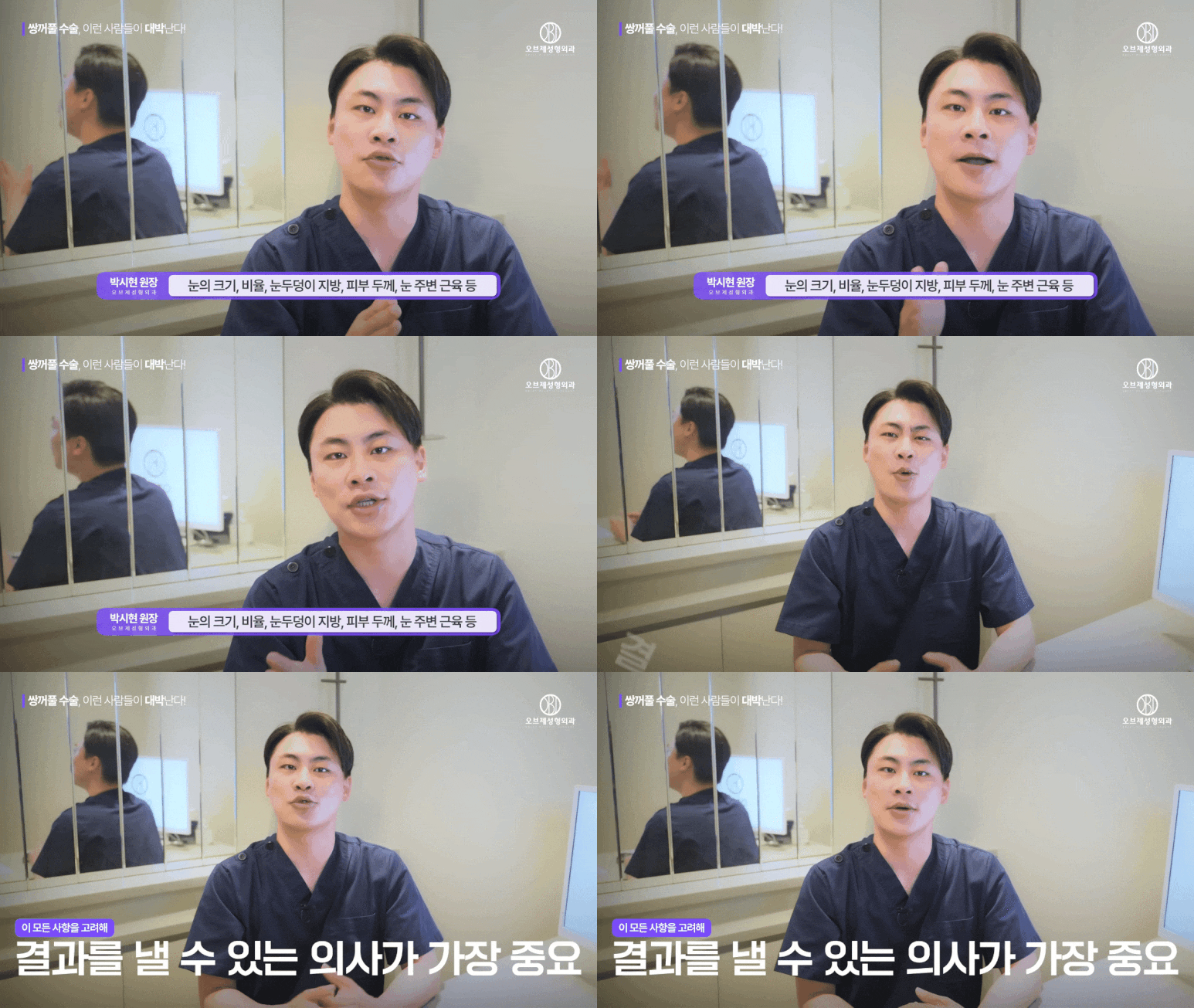
all need to be considered, along with the overall harmony of the face,
so that the appropriate method can be chosen.
Therefore, during your consultation,�e sure to ask these three questions.
Is my eyelid skin thin or thick?
Is there a lot of fat in my upper eyelids, or not much?
Do I have severe skin sagging?
The answers to these three questions
can be the most important criteria in deciding between
incisional and non-incisional double eyelid surgery.
Rather than deciding in advance based on online reviews,
we recommend having a thorough consultation with medical staff
who can accurately identify the characteristics of your eyes.
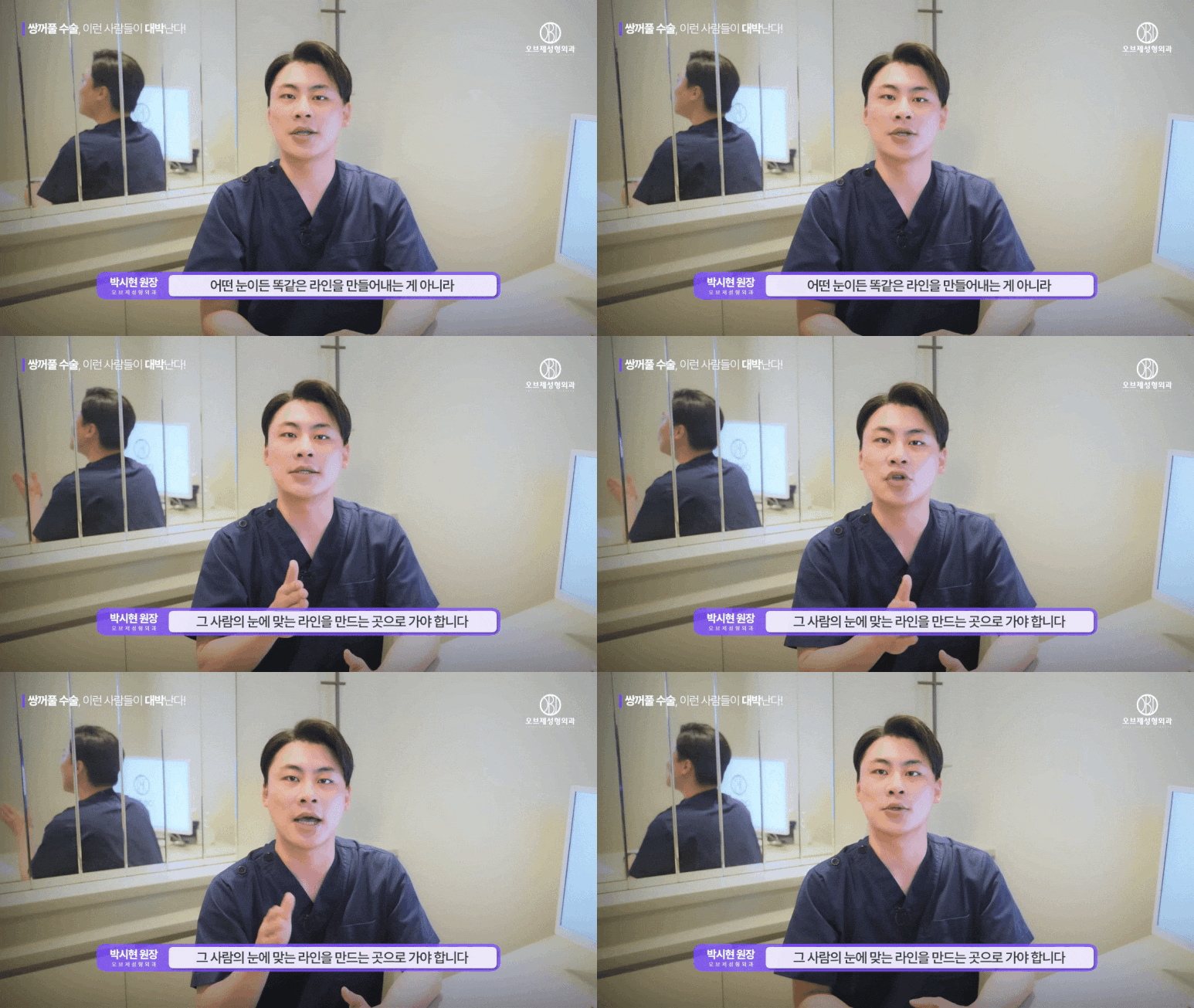
Director Park Si-hyeon of Objet Plastic Surgery
places the highest importance on a "customized solution"
that best fits each person's eye structure.
We hope that, as carefully as you have considered double eyelid surgery,
you will achieve results you won’t regret.

This has been Objet Plastic Surgery.
Thank you.
<🔽🔽A video you may find helpful🔽🔽>
| Eye surgery consultation and inquiries |
|---|
| Quick phone consultation |
| Easy Kakao consultation |
-
This post is medical information prepared by Objet Plastic Surgery Clinic in compliance with the Medical Advertising Act.
-
The effectiveness of treatment may vary depending on the individual, and side effects may occur.
We recommend that you fully consult with medical staff in advance before deciding on treatment.